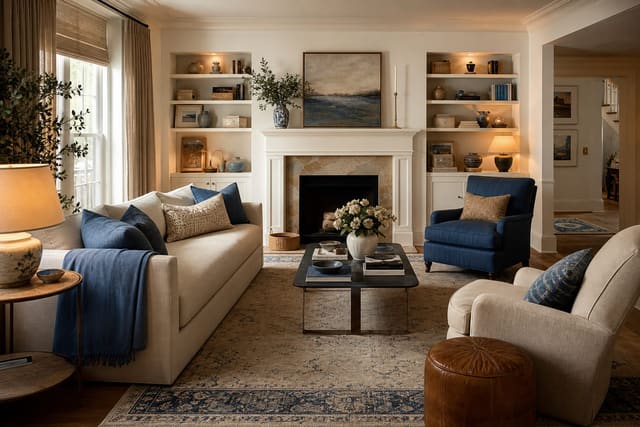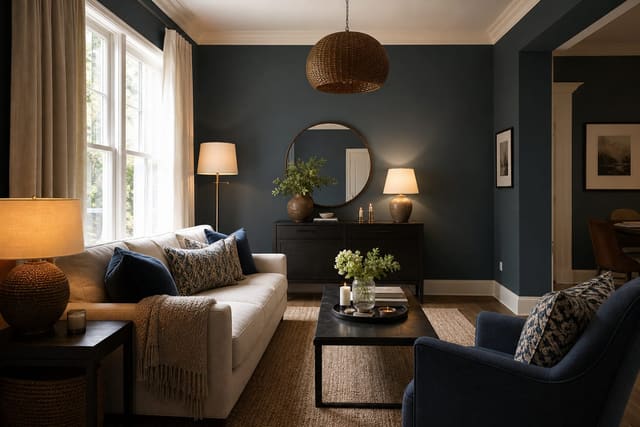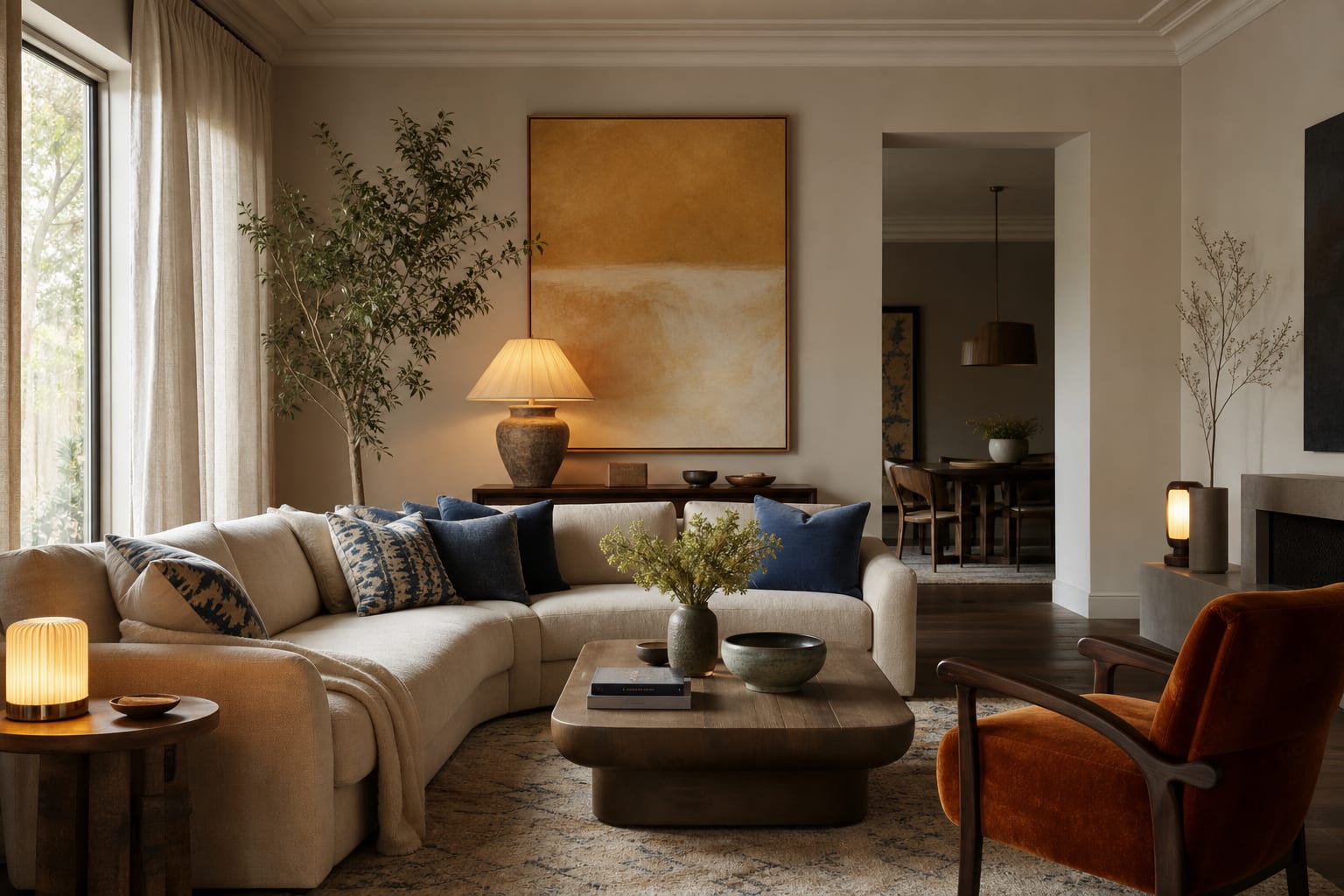
Color enters a neutral room safely through small, reversible additions — pillows, a rug, art, one accent chair — each previewable in AI before purchase so the choice is tested at room scale, not paint-chip scale. Grey is not a personality; it is often fear in a tasteful coat. Color confidence comes from repetition, not bravery: pick one color, prove it three times, then let it graduate.
What is the safest way to start adding color?
Choose one movable color, repeat it in three small places, and test it in the room's real light before touching paint. The safest first color isn't the trendiest shade — it's the one that already has a reason to belong in your room.
Look at what you're keeping: flooring, sofa fabric, wood tone, stone, tile, art, the view outside the window. Pull one color from that evidence. A moss green from a landscape print or a rust note from a brick fireplace feels less random than a shade chosen from a stranger's perfect room.
Use a 70-20-10 comfort ratio: about 70% neutral or existing, 20% softened color, 10% bolder accent. In a living room, that might mean the grey sofa and cream curtains stay while two 20-inch blue pillows, a 5-by-7-foot art print, and a glazed lamp introduce the new direction.
Don't judge color under weak light. A timid blue can go dull in a north-facing room, and warm terracotta can turn muddy under a cheap cool bulb. If the space looks flat before color enters, fix the light first with ideas from creating fake natural light in any room, then choose the accent.
Which low-commitment color moves build confidence fastest?
The best first moves are ones you can return, move, or hide in a closet. Paint should not be the first place a nervous decorator proves courage.
- Pillows with one clear job. Use two matching 20-inch covers, then add one smaller patterned pillow sharing the same color plus a room neutral, so the color reads as a rhythm, not a stray purchase.
- Art larger than instinct. Over a sofa, aim for a print about two-thirds of the sofa width, or group two frames 2 to 3 inches apart so the color reads as a deliberate block.
- Lampshades as a test zone. A pleated shade in olive, clay, denim, or saffron shifts the mood without touching furniture; keep the shade about 2 inches wider than the base on each side and use 2700K–3000K bulbs so color flatters at night.
- Textiles for real coverage. A throw, an entry runner, or curtain panels cover enough surface area to matter. Hang curtains 6 to 8 inches above the casing and extend the rod 8 to 12 inches past the trim so color frames the window.
Mirrors help when they reflect light or a controlled accent, and hurt when they double a messy shelf. Before placing a colored object opposite a mirror, apply the same discipline as using mirrors to amplify light.
Test this on your own room photo with ReDesign — keep the doorway, walls, windows, main furniture, and fixed features visible so the preview solves the room you actually have.
Common mistakes that keep color feeling risky
- Buying the boldest version first. If you love emerald, start with eucalyptus, moss, or deep olive before the jewel-tone sofa.
- Adding one colorful object and stopping. Repeat the hue three times at different heights: low in a rug, middle in a pillow, high in art or a shade.
- Testing color only on a phone screen. Screens brighten and smooth everything; order a fabric swatch or tape up a 12-by-18-inch paint sample board instead.
- Ignoring the neutral undertone. Warm grey, cool grey, beige, wood, and metal are all visual ingredients — a dusty rose pillow can charm beside mushroom walls and clash beside blue-grey upholstery.
- Spreading tiny accents everywhere. One 24-by-36-inch artwork, two substantial pillows, and one colored lamp usually feel calmer than a dozen scattered objects.
Use AI design to preview color before you commit
AI design lets you test the degree of color, not just the hue. Upload a straight photo of the real room and ask for versions that keep furniture, flooring, and layout intact, so you see whether blue pillows or clay curtains actually work in the space you own.
Shoot from the doorway or back corner so the preview includes two walls, the floor, ceiling line, windows, and the largest furniture. Capture one daylight version and one with lamps on after sunset — color that charms at noon can turn theatrical at 9 p.m.
Run focused tests instead of a total makeover: one version with the accent only in pillows and art, one with it in curtains, one with a bolder painted niche. Keep the sofa and rug identical across versions so you know the color worked, not the staged furniture.
If your room has several openings, color may already be arriving from the hallway or kitchen. Borrow the sightline logic from fixing a room with too many doorways: quiet the neighboring spaces first, then let one room hold the stronger accent.
How do you know when the room is colorful enough?
A room has enough color when you can name the palette in one sentence. "Cream, warm grey, olive, and black" sounds controlled; "grey, beige, teal, pink, yellow, brass, navy" sounds like unedited shopping.
Use the doorway test: stand at the entrance and give yourself three seconds. If your eye lands on one strong color spot and two supporting ones, you're set — if it jumps to five unrelated colored objects, remove one accent before adding another.
Renters should stop before a change needs permission: colored lampshades, art, bedding, curtains, peel-and-stick panels, and removable wallpaper behind open shelves build confidence without risking a deposit. Owners can let the movable version win first — if the color survives a month in textiles and art, move to a painted door, powder room, or 3-foot accent strip.
The goal isn't a colorful room. It's a room where color feels intentional enough that you stop second-guessing everything you bring through the door.
Frequently Asked Questions
Where should I add color first in a neutral room?
Start with throw pillows and a rug. Both are reversible, both are visible from the doorway, and both shift the room's overall read more than wall paint at a similar cost.
Will an accent wall feel dated?
No — single accent walls are back in style as deep, moody zones like forest green, navy, or terracotta rather than the flat grey accent wall of the 2010s. Pick a deep color in a different family than the existing wall.
What is the safest bold color to start with?
Deep green and warm terracotta work in almost any neutral room. Both pair easily with oak, walnut, and white-oak wood tones without requiring a full palette overhaul.
How much color is too much for a neutral room?
Three bold accent items is the sweet spot: a rug, one piece of art, and pillows or a chair. More than that turns the room into a color story instead of a calm room with an accent.
Does AI preview color additions before I commit?
Yes. Upload a photo of the neutral room and AI can preview a rug, pillows, an accent wall, or a chair in the new color before you buy anything or open a paint can.
> Try this: Ready to see this on your own room? Open ReDesign and run the preview.
Three transformations to try
1. Terracotta rug + green pillows in neutral room 2. Navy accent wall behind neutral sofa 3. Forest green accent chair in neutral room