Choose ipe if you want a 50 to 75-year deck and accept high upfront cost plus annual oiling; choose composite if you want low-maintenance synthetic boards and accept higher heat retention and a 25 to 30 year lifespan. The decision turns on installed cost, yearly maintenance hours, and surface temperature on a hot afternoon.
Which decking material should I buy: ipe or composite?
Choose ipe for longevity and a real-wood look; choose capped composite for zero seasonal labor and predictable color. If lowest upfront cost is the priority, you're likely comparing pressure-treated pine instead. Ipe (Brazilian walnut) is a Class A fire-rated tropical hardwood that resists rot and insects without preservatives; capped composite is wood-flour-and-polyethylene wrapped in a PVC or HDPE cap that resists stains and fade.
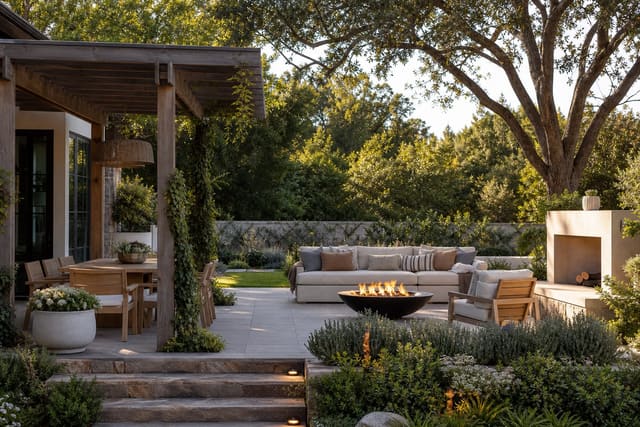
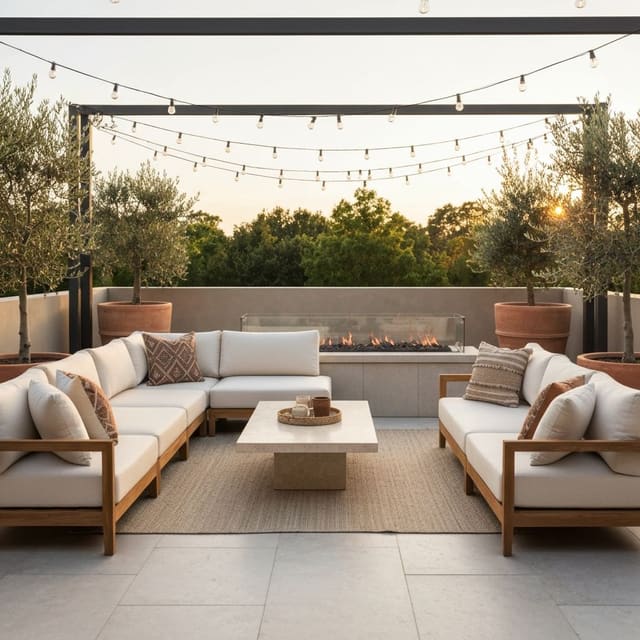
For a poolside deck, pick ipe in a natural or light oil, or a light-color composite — dark composite looks great in photos but is unusable barefoot at 2 p.m. in July. Ask any installer for thermal data on the specific board and color, and treat anything over 130 F at 90 F ambient as a no-go for bare feet. For a covered or shaded deck, composite makes more sense since the heat issue disappears and maintenance savings compound; for sun-exposed decks where you want patina, unoiled ipe weathers to silver-gray. Review patio design ideas to decide whether you're building a deck or a covered patio, since a roof changes the math.
Compare ipe vs composite decking on cost, lifespan, heat, and maintenance
This spec table reflects 2025 US mid-market installed pricing for a 400 sq ft deck on a standard pressure-treated frame.
| Spec | Ipe hardwood | Capped composite |
|---|---|---|
| Installed cost per sq ft | $14 to $25 | $8 to $15 |
| Material-only per sq ft | $7 to $12 | $4 to $9 |
| Lifespan | 50 to 75 years (oiled) | 25 to 30 years |
| Surface temp delta (vs air, full sun) | +25 to +35 F | +40 to +60 F (dark) / +25 to +35 F (light) |
| Annual maintenance hours | 4 to 8 (oiling) | under 1 (rinse) |
| Warranty | None beyond installer | 25 to 50 year manufacturer |
| Slip resistance (wet) | Good | Excellent (textured caps) |
| Sustainability | FSC ipe only; harvest scrutiny | 60% to 95% recycled content |
| Resale impact | Strong on high-end homes | Neutral to positive on mid-market |
Three shortcuts that match real client conversations:
- Under $10 per sq ft, you're in pressure-treated pine or cedar territory, not this comparison. See pressure-treated decking ideas.
- Full sun plus barefoot use (pool, kids) means specify ipe or a light-color composite explicitly. Trex Transcend Lineage, TimberTech Advanced PVC, and Deckorators Voyage stay cooler than entry-tier lines.
- Under a roof or pergola, composite wins on lifetime cost since ipe's longevity premium doesn't pay back without weather stress.
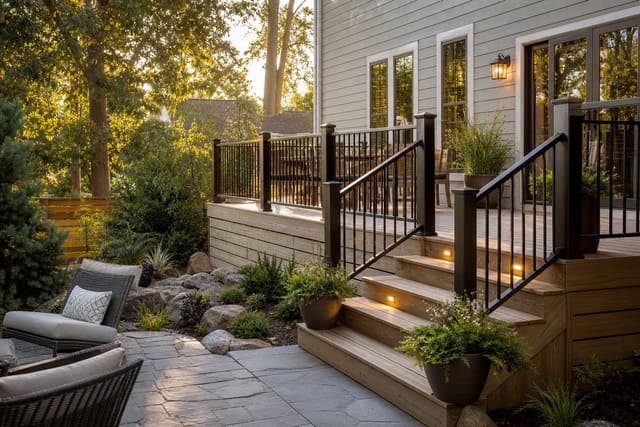
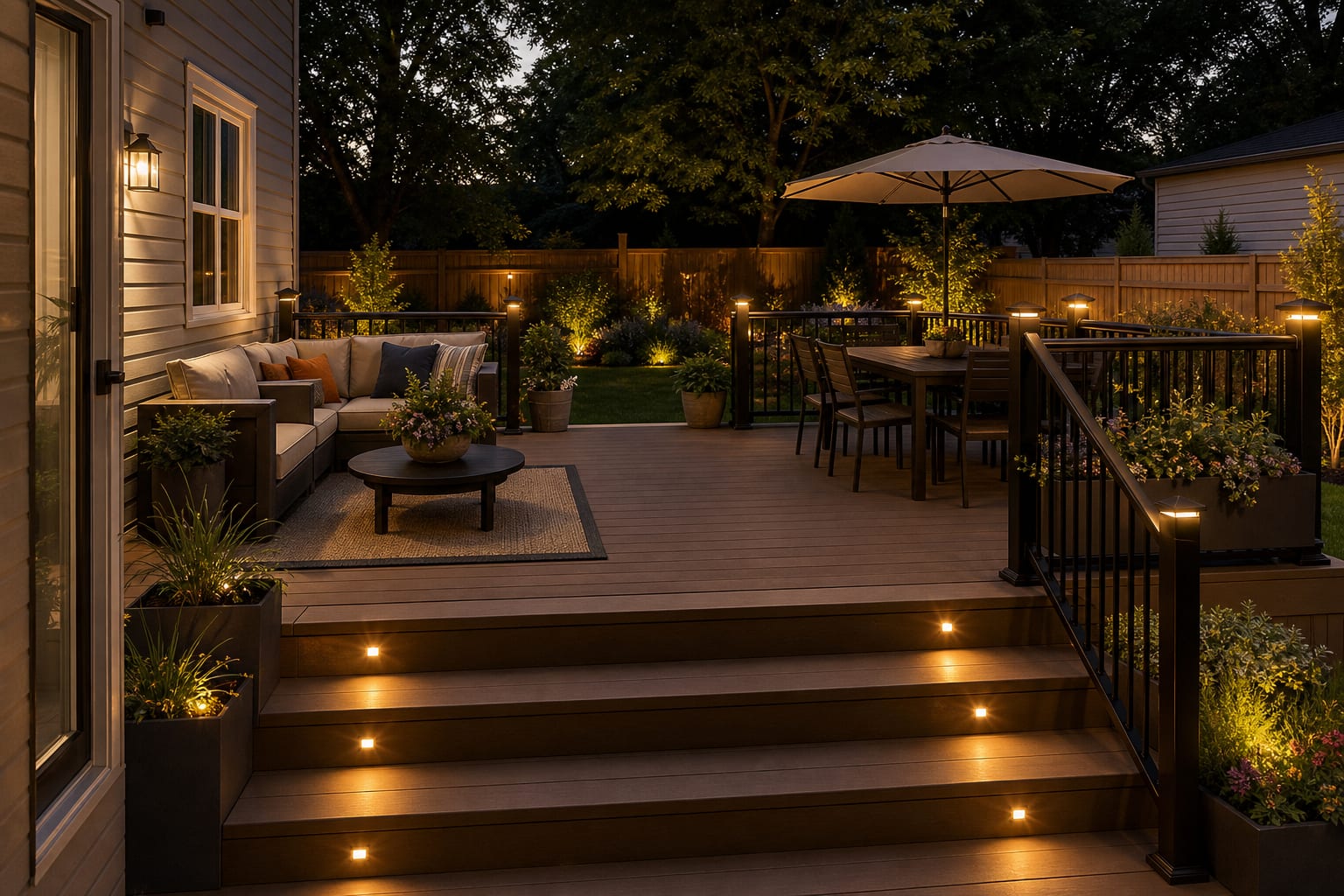
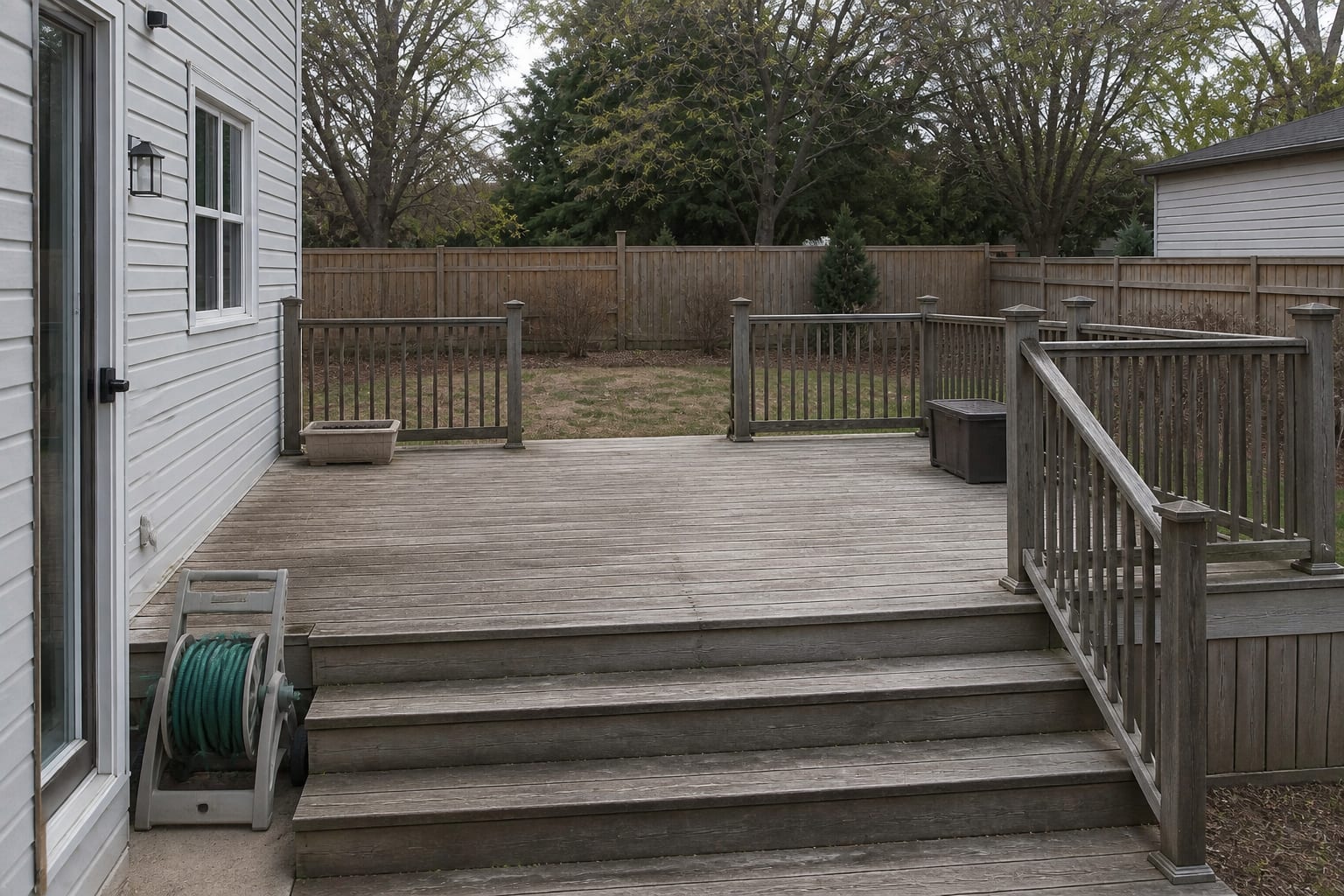
Preview ipe vs composite on your actual deck photo before you bid the job. Seeing both finishes against your siding, railing, and yard beats any sample chip.
Common ipe and composite decking mistakes to avoid
- Wrong fasteners on ipe. The wood is dense enough to split standard stainless screws; pre-drill pilot holes and use hidden fasteners rated for tropical hardwoods (Camo Marksman, Eb-Ty), or expect to crack 5% to 10% of boards.
- Film-forming finishes on ipe. The wood oxidizes and expands seasonally, so film coatings peel within 18 months. Use a penetrating UV-stabilized oil (Penofin Hardwood, Ipe Oil) annually, or let it weather to silver-gray and skip oiling.
- Composite over wood-spaced framing. Most composite lines need 12 in. on-center joist spacing (10 in. for diagonal patterns); standard 16 in. wood-deck spacing produces a spongy deck and voids the warranty.
- Dark composite in hot climates. A dark board in Phoenix is unusable barefoot from June through September. Light colors (Rope Swing, Whitewash, Foggy Wharf) stay 15 to 20 F cooler; for a dark deck, ipe or a high-end PVC like Azek Vintage Mahogany handles heat better.
- Ignoring the frame. Both materials need a pressure-treated frame with flashing, joist tape, and drainage; budget $2 to $4 per sq ft for this on any rebuild. Pair your choice with a render from best AI design apps before committing.
Use AI design to preview ipe vs composite on your own deck before you commit
Sample boards never look like the installed deck against your trim, siding, railing, and pool surround. Upload a straight-on photo showing the back of the house, any railing, and a full sightline to the yard, then render oiled chocolate ipe, weathered silver-gray ipe, light composite, and dark composite on the same angle.
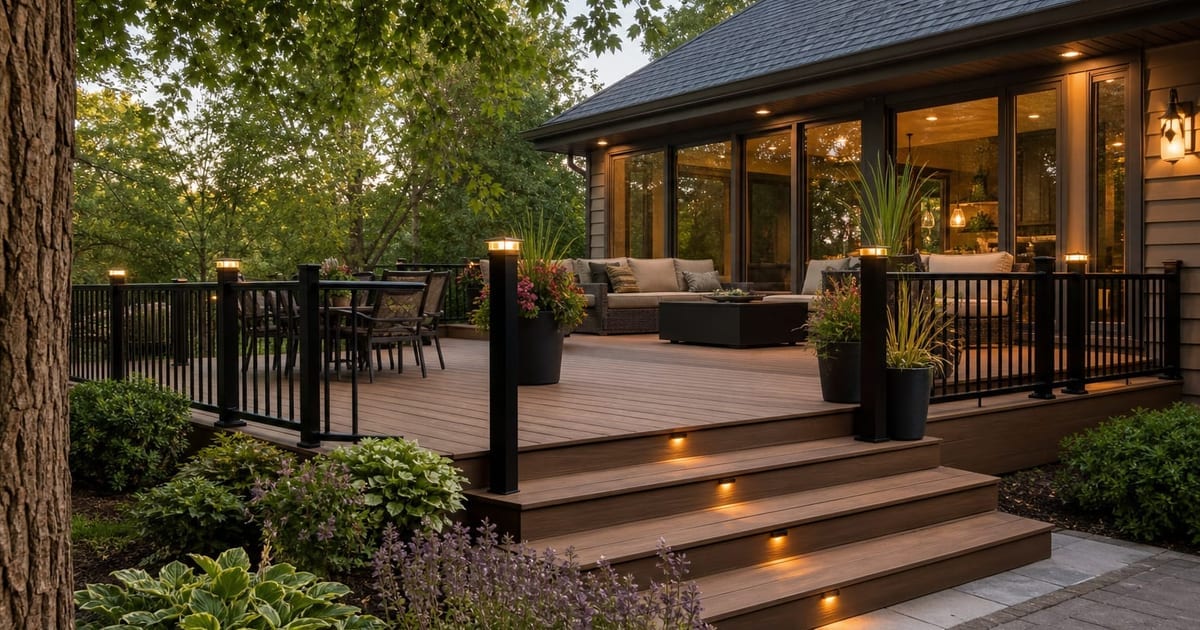
Be specific: ask for a 400 sq ft deck in oiled ipe with hidden fasteners and black aluminum railing, or Trex Transcend Whitewash with a horizontal cable rail. If dark composite makes the house feel heavier, adjust the railing or step to a lighter board; if silver-gray ipe ties into an existing fence, that's a case for the bigger budget.
Frequently Asked Questions
Is ipe or composite cheaper over 20 years?
Over 20 years the two usually land within 10% of each other. Ipe installs at $14 to $25 per sq ft plus about $80 a year in oiling materials; composite installs at $8 to $15 with near-zero upkeep, but its shorter 25 to 30 year lifespan offsets the install savings.
Does composite get dangerously hot?
Dark composite can reach 150 F in full summer sun, hot enough to burn bare feet within seconds. Light-color composite stays 15 to 20 F cooler, and newer high-end PVC lines (TimberTech AZEK Vintage, Trex Transcend Lineage, Deckorators Voyage) use cooler-surface formulations closer to ipe. Ask for measured surface-temperature data, not marketing claims.
Can I install ipe over a composite-spec frame?
Yes — ipe works fine on the standard 16 in. on-center pressure-treated frame and is more flexible on spacing than composite. The reverse causes problems: composite on that same frame will feel spongy and may void the warranty, since most lines need 12 in. on-center spacing.
How often does ipe need oiling?
Once a year to keep the chocolate-brown color, or never if you're fine with a silver-gray patina. A 400 sq ft deck takes 4 to 8 hours of labor and 2 to 3 gallons of penetrating UV oil ($120 to $180). Skipping oiling only affects appearance; the wood turns silver within 12 to 18 months.
Which is better for a poolside deck?
Ipe in natural oil or a light-color capped composite (Trex Whitewash, TimberTech AZEK Lawrence) both stay 15 to 25 F cooler than dark composite. Ipe has good wet slip resistance; composite's textured caps are even better. Avoid dark composite poolside in sun-heavy climates, since thermal performance matters more than the sample-chip look.