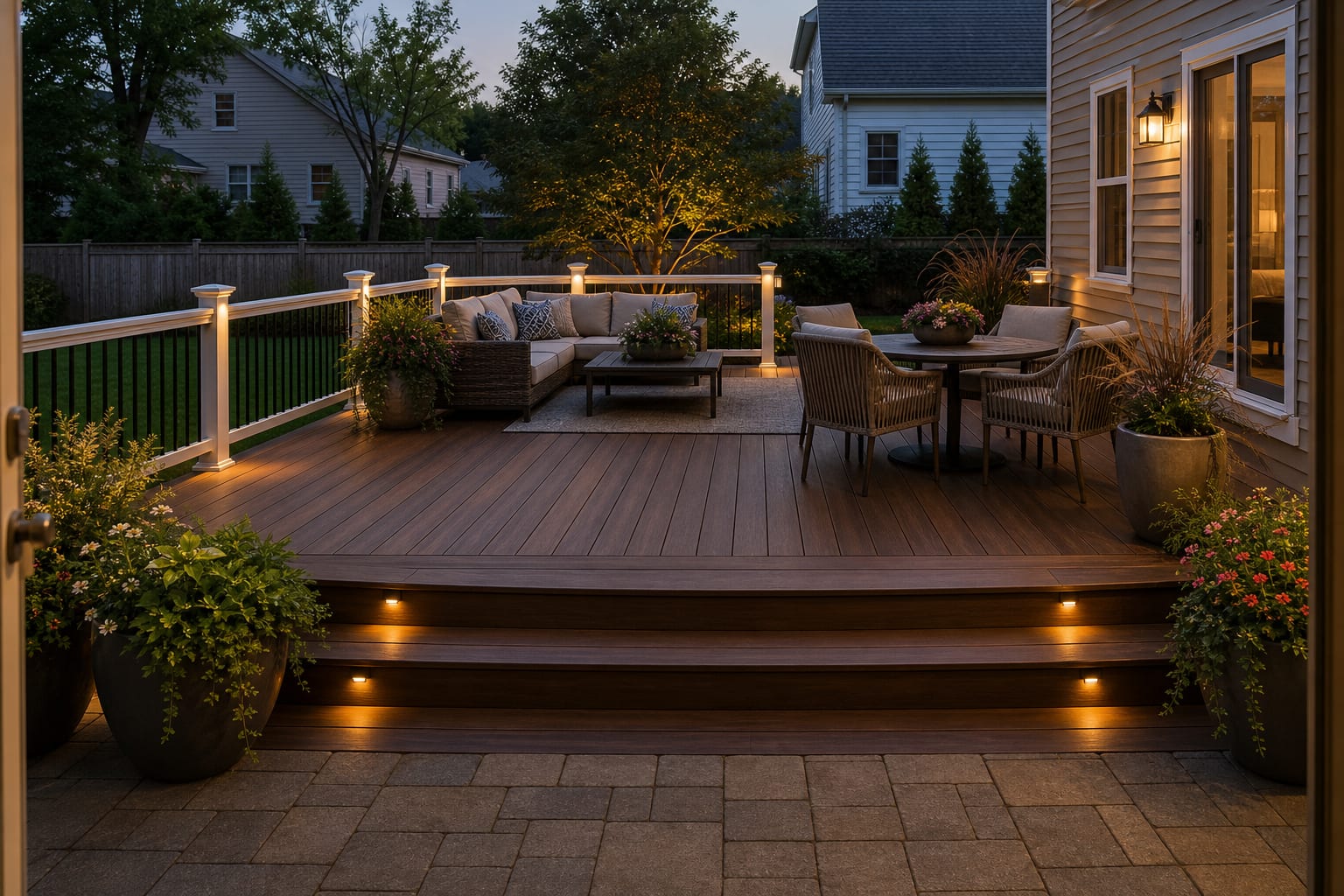
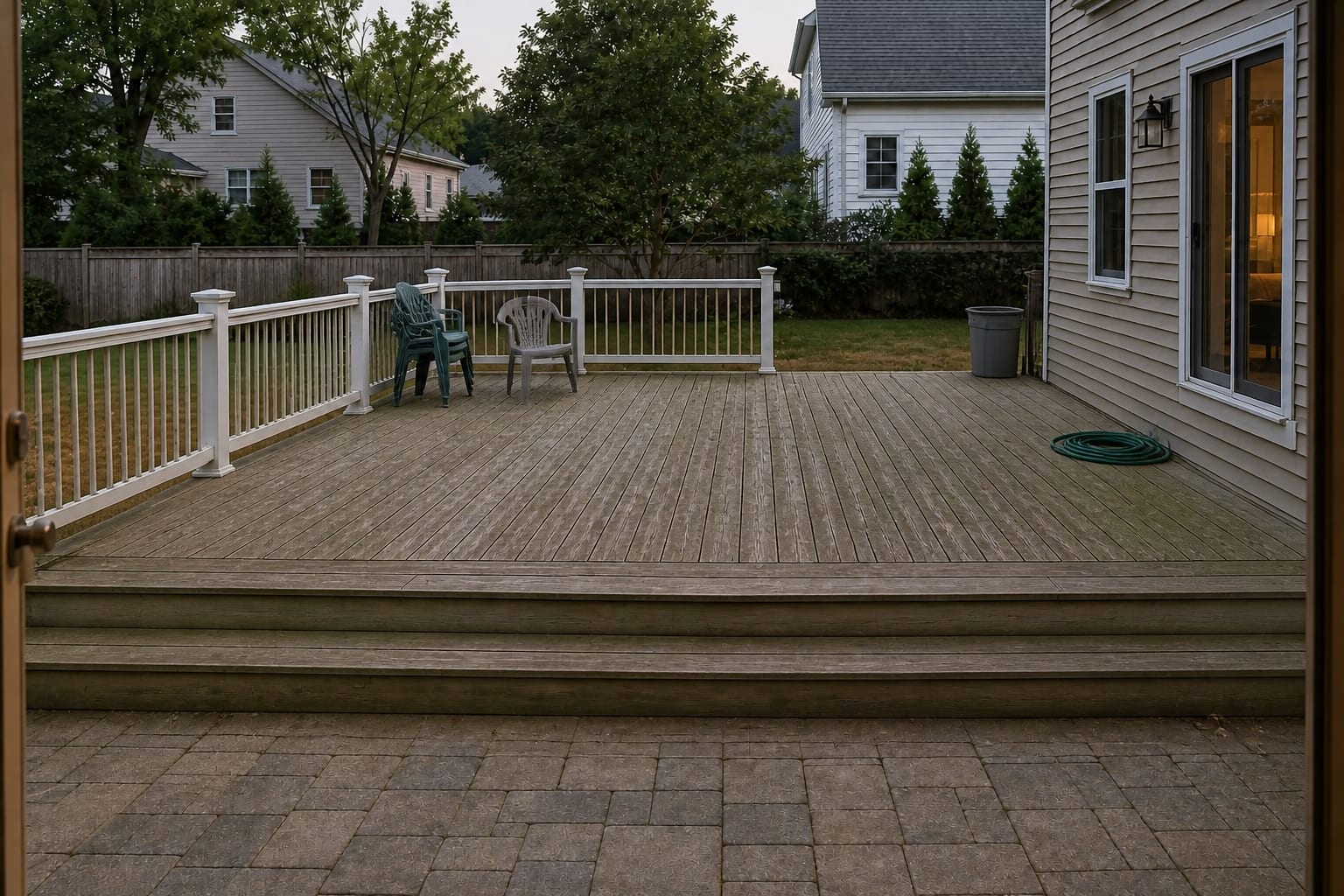
Pressure-treated wood decking can look sharp when you design it like an outdoor room instead of a temporary compromise: choose dry, straight boards, stain a mid-tone color, seal every cut end, add a contrasting picture-frame border, and finish with black metal rails and one anchoring planter per corner.
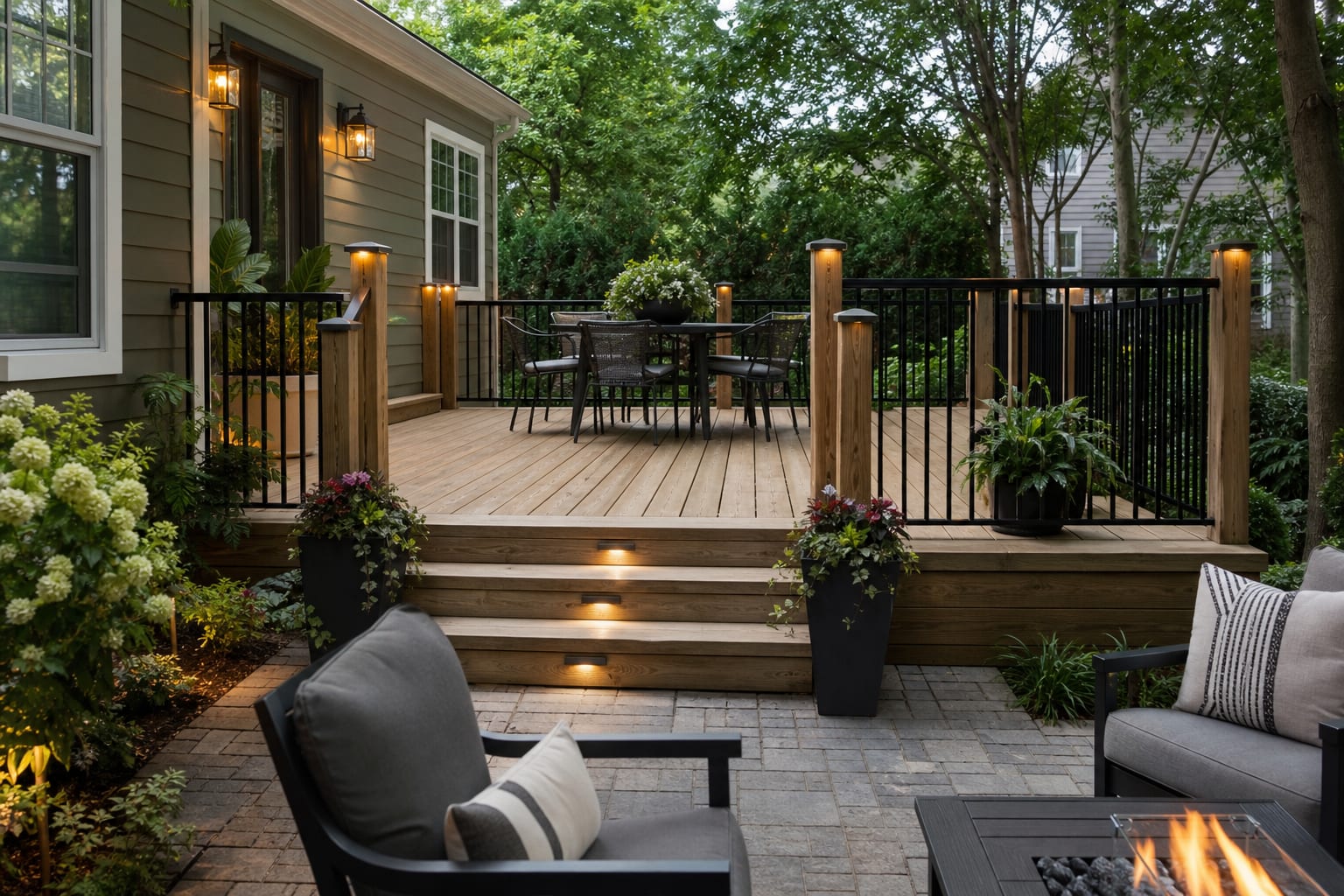
Is pressure-treated wood good for a deck?
Pressure-treated wood works well for a deck when the frame is built correctly, boards dry before finishing, cut ends get sealed, and the surface is maintained rather than ignored. It won't look like teak or ipe on delivery day, but it's widely available, structurally solid, and far cheaper than premium hardwood or capped composite.
Don't ask treated lumber to mimic a hardwood it isn't. Give it proportion, shade, color control, and clean edges instead. A 12' x 16' deck with straight boards, a picture-frame border, wide steps, and simple black rail details will usually beat a bigger deck with leftover-looking boards and a default white railing.
Set expectations for movement early. Treated lumber can shrink, cup, check, and shift as moisture leaves it. Buy the straightest boards available, reject anything with severe crown or twist, and plan spacing once the material dries — many builders install wet boards tight together since gaps open later, but dry boards often want a 1/8" to 1/4" gap. Follow local code and your contractor's guidance, since climate changes the behavior.
Which design choices make a pressure-treated deck look intentional?
The strongest pressure-treated decks use trim-like decisions to control a humble material. A picture-frame border hides board ends and gives the eye a clean outline; a small deck may need only one border board, while a 16' x 20' deck can handle a double border to keep the field organized.
- Run boards toward the longest view. If the deck projects 10' from the house but spans 18' wide, boards running away from the door make the shallow depth feel more generous.
- Widen the main stair. A 48" to 60" stair facing the yard reads as an invitation; a code-minimum 36" stair reads like a service exit.
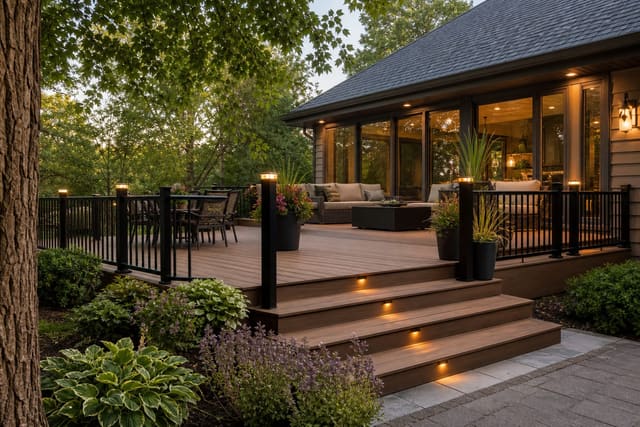
- Contrast the railing with the wood. Black metal balusters, dark cable rail, or stained wood posts look crisper beside warm, knotty boards than bright white vinyl.
- Zone furniture with real clearances. Leave about 30" behind dining chairs and keep a 36" route from the door to the grill.
- Use one large planter, not several small pots. A 24" to 30" planter with grasses, dwarf shrubs, or herbs softens rails and corners without cluttering the path.
If you're weighing a budget treated deck against premium alternatives, compare maintenance in ipe versus composite decking before assuming cheaper boards are the wrong call. Sometimes the honest plan is treated framing and decking now, with a better railing, lighting, or shade plan later.
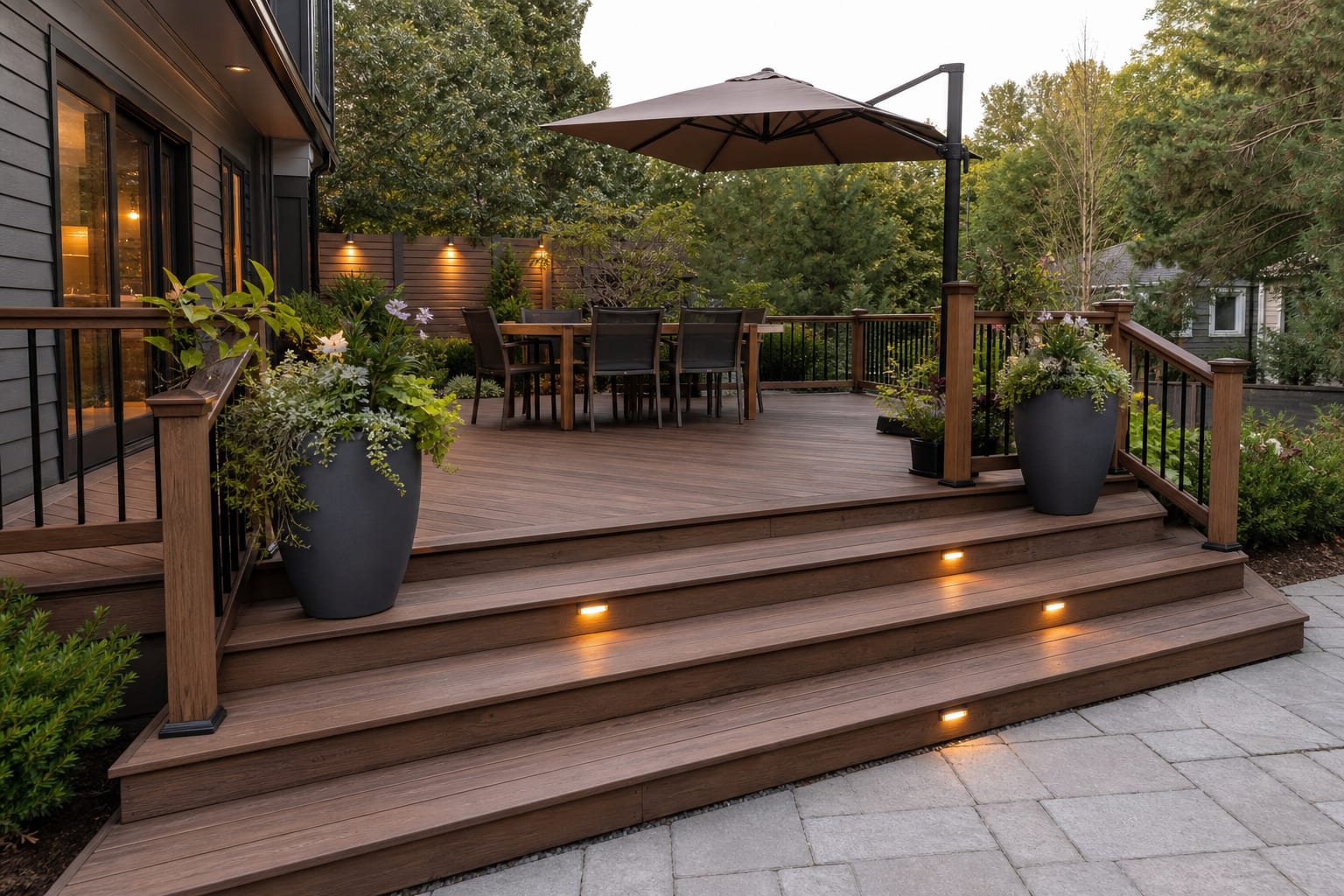
Test this on your own photo with ReDesign before committing — keep the house edge, horizon line, hardscape, planting beds, and main path visible so the preview solves the space you actually have.
What mistakes make a pressure-treated deck age badly?
Most failures aren't dramatic construction disasters — they're small decisions that let a forgiving-on-cost material age poorly.
- Staining too early causes blotching. If water still beads or a board feels damp, wait and retest per the manufacturer's instructions.
- Skipping cut-end treatment leaves stairs, posts, and trimmed boards exposed right where water sits; treat every field cut with an end-cut preservative.
- Undersized furniture makes the deck feel cheaper than the boards are. One compact sofa and two chairs often beats six scattered folding pieces.
- No drainage under planters creates stains and soft spots. Use pot feet, skip saucers on the deck, and rotate heavy containers.
- An afterthought railing breaks the composition. Pair a warm brown deck with black, charcoal, or a matching stain rather than a mismatched white kit.
Covered sections change the math, too. Coordinate board tone with ceiling, posts, and furniture using ideas from covered deck ideas for outdoor rooms — shade can deepen a brown stain but also make a dark deck feel heavy.
How can AI design help you preview a pressure-treated deck?
The hard question isn't whether the lumber is affordable — it's whether your deck will look intentional once stain, railing, steps, furniture, and lighting come together. Upload a straight photo from your most-used door, then preview one change at a time: mid-tone stain, darker border, black rail, wider steps, planters.
Keep the siding, stairs, rail posts, and at least one furniture zone visible. A stain that looks great as a swatch can turn orange beside brick or too dark under a covered roof. If the deck looks calmer with fewer colors and larger pieces, trust that direction.
How should you finish, light, and maintain a pressure-treated deck?
A good finish reduces visual noise instead of adding to it. Clear sealer protects while leaving the pale or greenish cast visible. Semi-transparent stain adds color while still reading as wood. Solid stain hides more grain and can rescue an older deck but wears more like a coating over time.
| Decision | Better choice for most PT decks | Why it works |
|---|---|---|
| Stain color | Warm gray, weathered brown, or soft walnut | Calms knots; pairs with black, bronze, or natural furniture |
| Board edge | Picture-frame border | Hides cut ends, makes budget boards look planned |
| Lighting | 2700K–3000K shielded fixtures | Flatters wood, keeps stairs readable |
| Furniture scale | 7' outdoor sofa or 48" round table | Reads as furnished, not leftover |
| Maintenance rhythm | Annual inspection plus cleaning as needed | Catches loose fasteners and failed finish early |
Plan lighting before final trim goes on: mark the first and last tread with step lights, keep rail lights out of seated sightlines, and give grill-area fixtures clearance for heat and smoke. For multi-level decks, see deck lighting ideas for stairs and rails while wiring is still accessible.
Pressure-treated decking usually wins on material cost, but the cheapest version isn't always the best value. Better boards, a clean border, and a real stain schedule make a modest deck feel designed for years — spend on what you touch daily: stair edges, rail caps, layout, and the finish underfoot.
Frequently Asked Questions
Should pressure-treated decking be stained or left raw?
Stained. Raw PT lumber turns grey-green and silver within 18 months and reads cheap; a transparent or semi-transparent stain in cedar, walnut, or charcoal tones lifts the same boards into a finished deck.
How long should I wait before staining pressure-treated wood?
3–6 months for kiln-dried after treatment (KDAT) lumber, 6–12 months for standard wet PT. The wood needs to release treatment moisture before stain will bond properly.
What's the best board pattern for a PT deck?
Run boards perpendicular to the main viewing line with a picture-frame border around the perimeter to hide cut ends. Herringbone patterns tend to look forced on long decks.
How long does a pressure-treated deck last?
15–25 years for the structure if joists and posts are properly flashed and the deck drains well. Surface boards typically need a stain refresh every 2–3 years and replacement around year 12–15.
Should railings match the deck stain?
Not exactly match — contrast works better. Black powder-coated aluminum railings with cable or thin pickets give a stained PT deck a more refined look than wood-on-wood railings, which crowd the composition.
> Try this: Ready to see this on your own outdoor space? Open ReDesign and run the preview before you buy materials, plant, drill, or move furniture.
Three transformations to try
1. Stained PT deck with black railings 2. PT deck with picture-frame border 3. Multi-level PT deck with planters