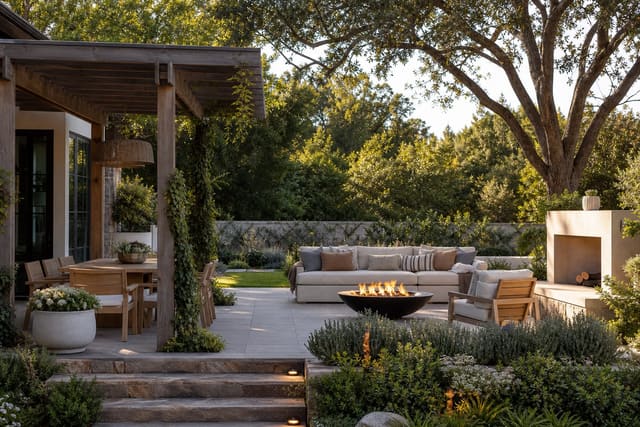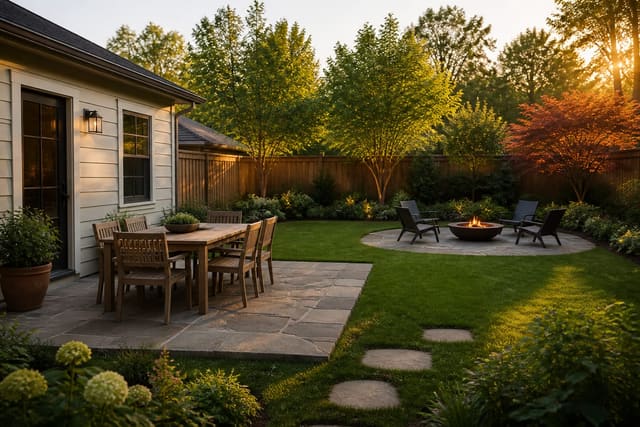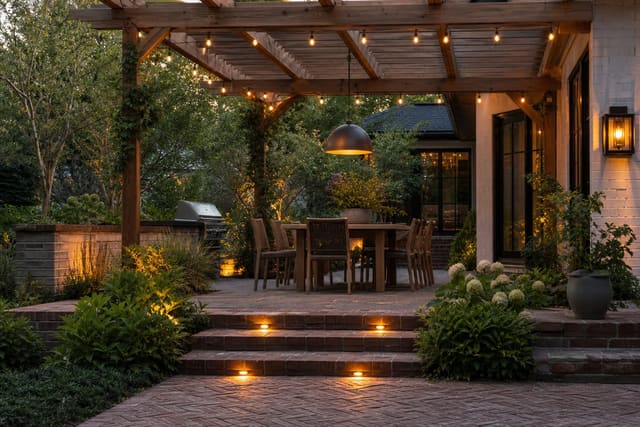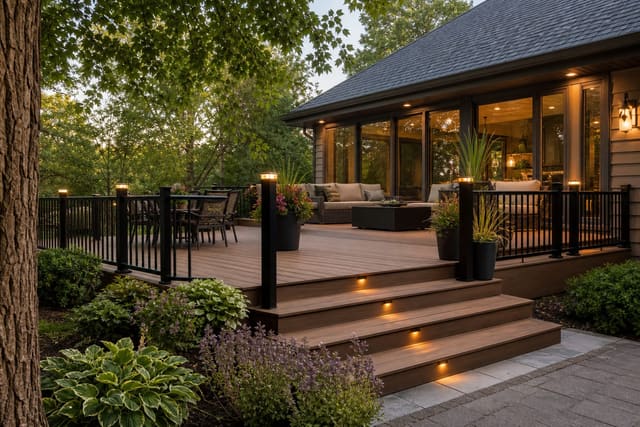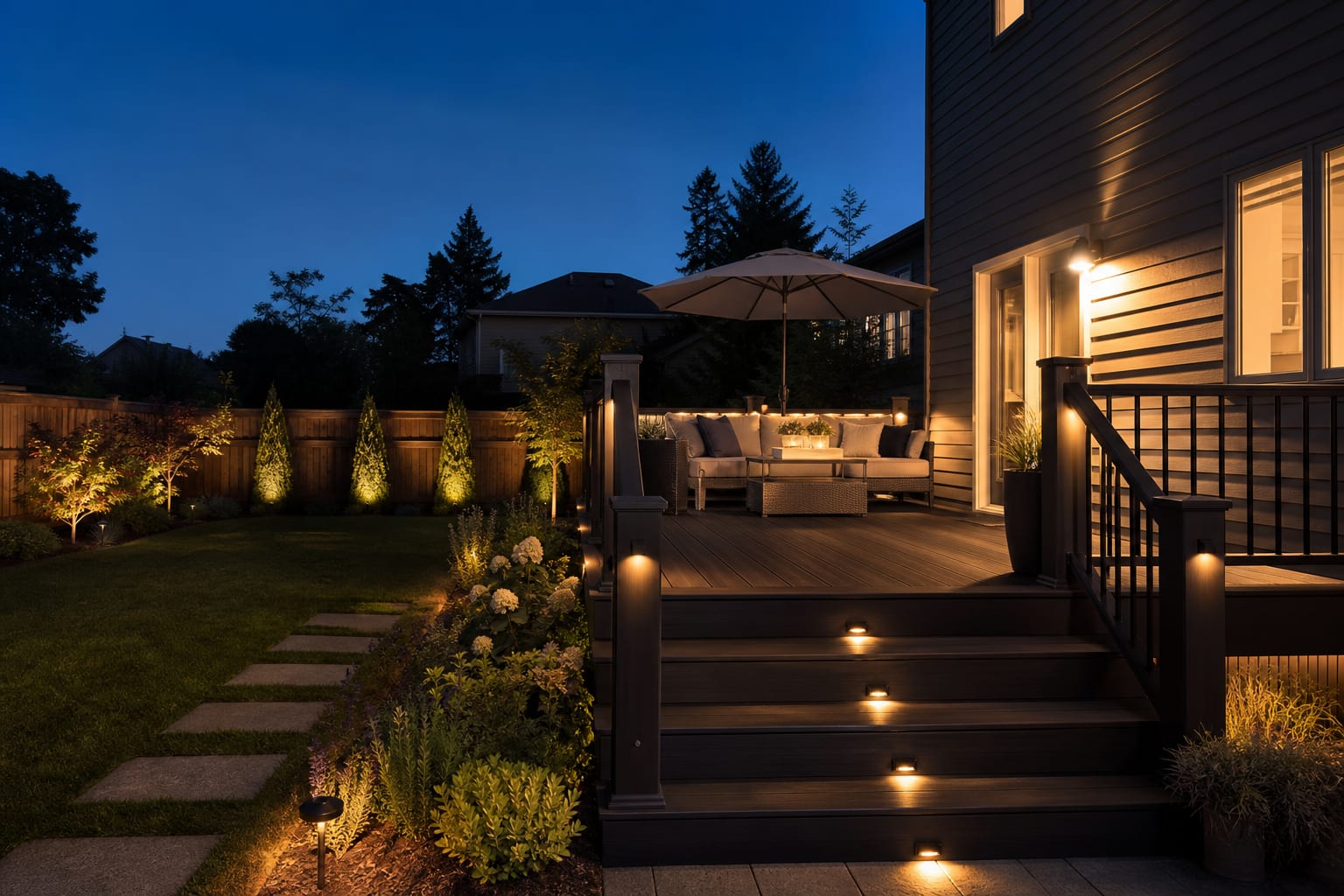
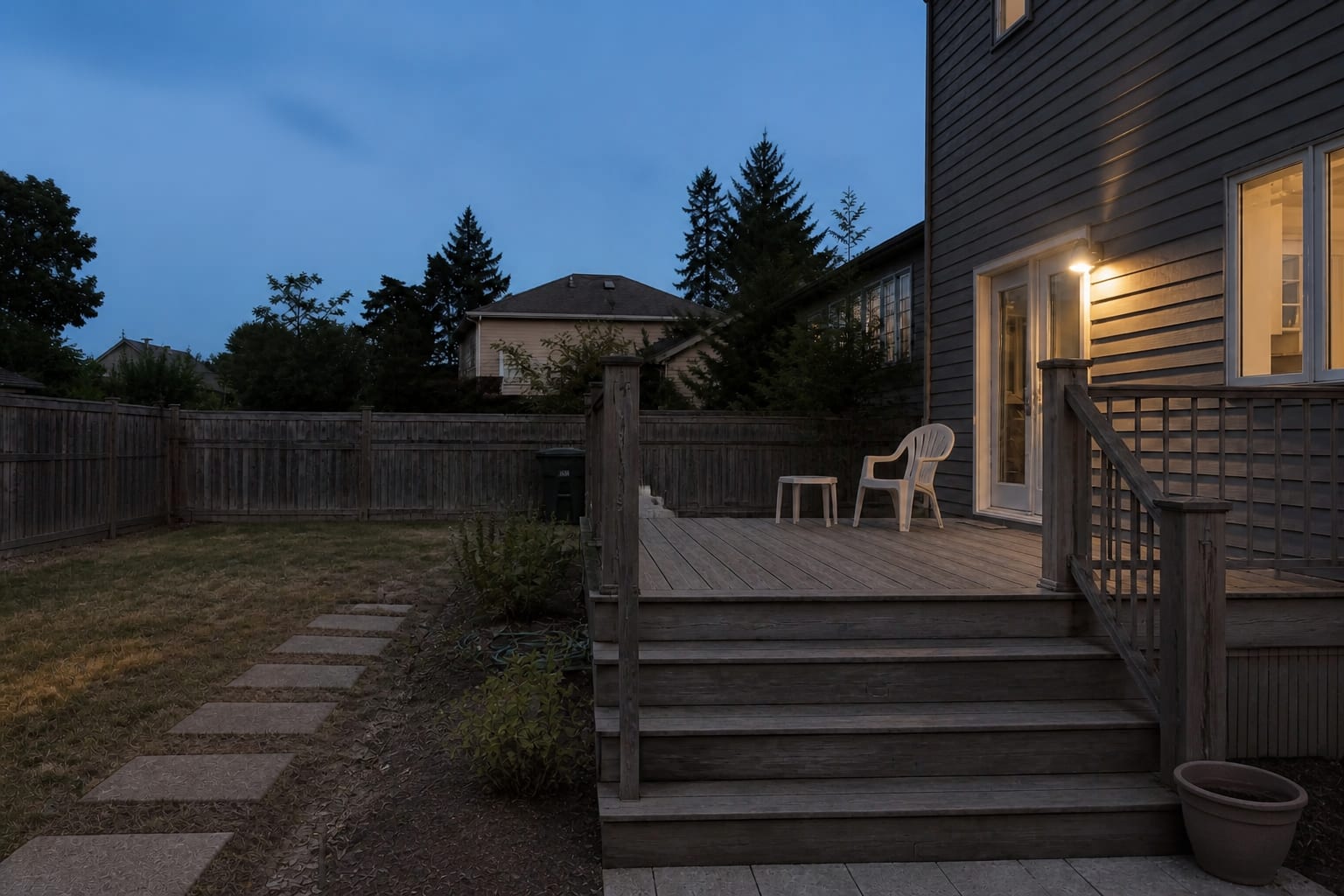
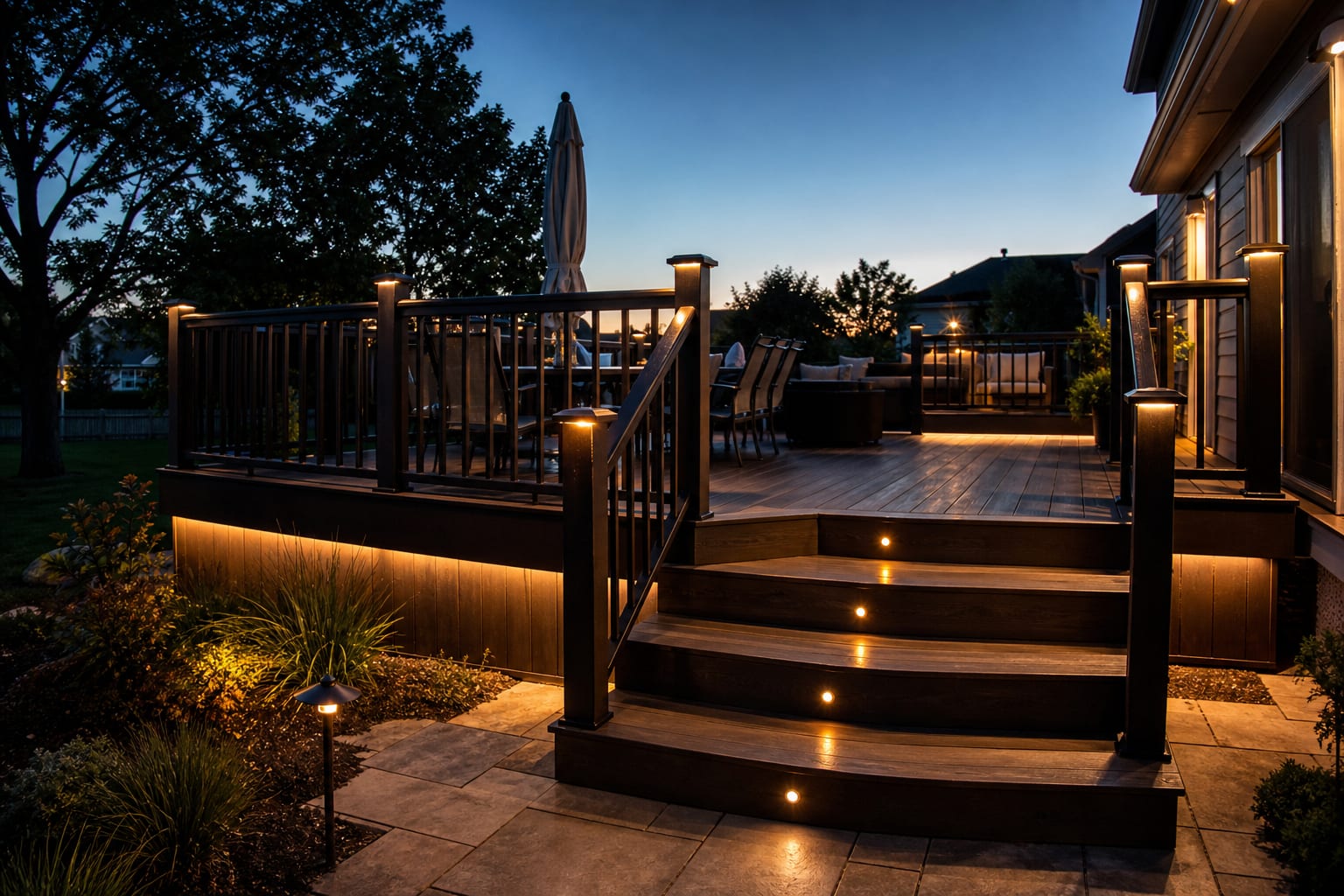
A deck feels safe and finished when warm 2700K light marks stair treads, railings, and the perimeter in three layers: recessed riser lights for navigation, low rail or post lights for atmosphere, and an under-deck wash that ties the structure to the yard. Never make string lights the main plan; they're atmosphere, not navigation.
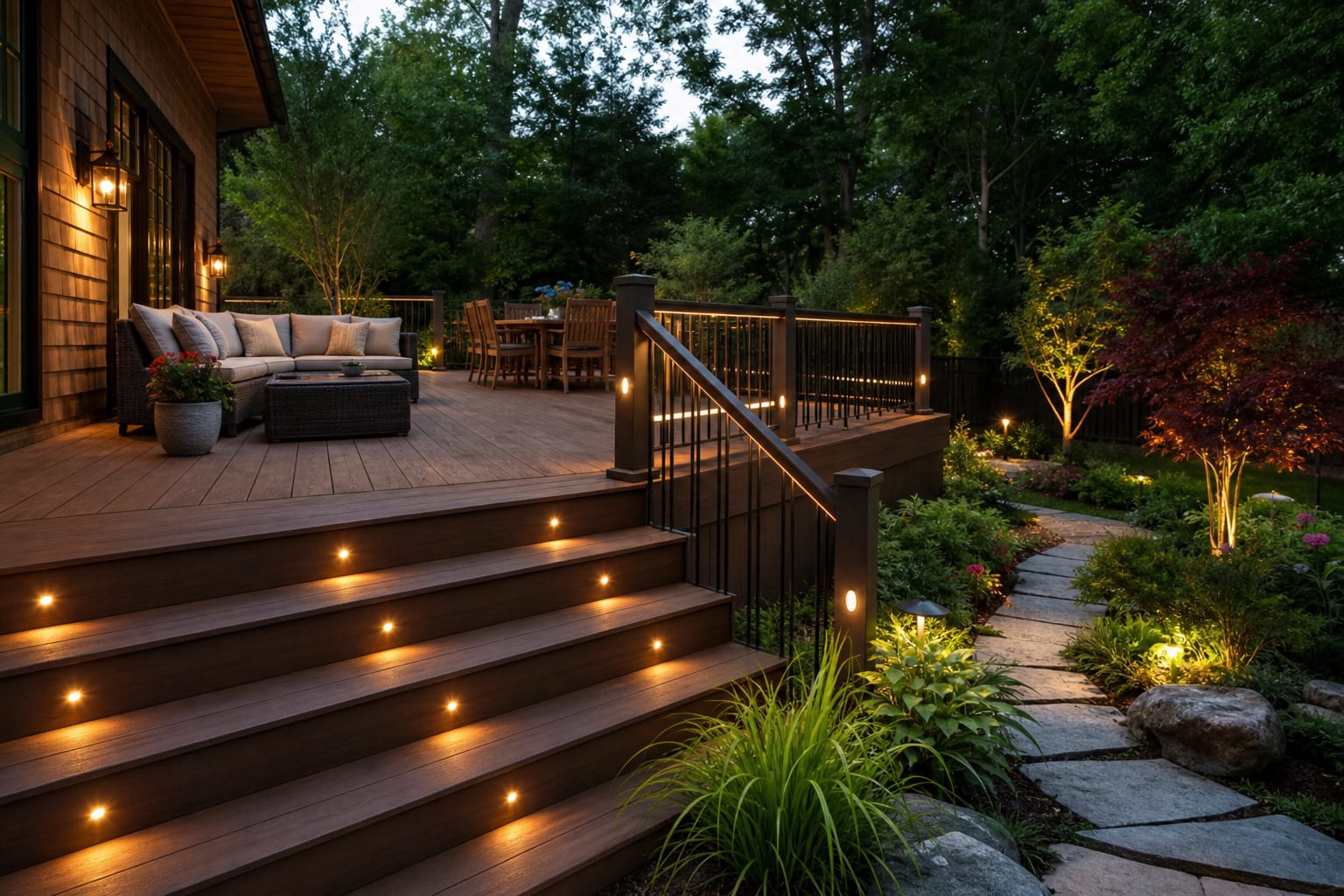
What makes a deck feel safe and atmospheric after dark?
A safe deck uses low, shielded light to reveal edges, steps, railings, seating, and cooking zones without putting bare bulbs in your eyes. It should read in layers: a soft perimeter glow, clear tread light where feet move, a little vertical light near faces, and one warmer focal accent.
The first decision is glare control, not fixture style. If you can see the lamp from a seated chair, it's too exposed. Look for louvered step lights, frosted rail caps, down-facing sconces, and recessed lighting that washes across the boards instead of punching upward.
| Deck zone | Best lighting layer | Useful spec |
|---|---|---|
| Stairs and landings | Recessed riser lights or under-tread strips | Light every tread, or at minimum the top, bottom, and turns. |
| Railing runs | Post cap lights or under-rail strips | Space with the posts, often every 6-8 feet. |
| Dining area | Dimmable sconce, covered pendant, or umbrella light | Softly light the table without spilling into the neighbor's yard. |
| Lounge area | Low rail glow, floor lanterns, or shielded wall light | Aim for face-friendly warmth, not task brightness. |
| Under-deck or patio below | Linear or puck under-deck lighting | Use damp- or wet-rated fixtures based on exposure. |
Deck material changes the effect: dark composite absorbs light, pale pressure-treated boards reflect it, and oily hardwoods like ipe highlight beautifully but show harsh dots from bad fixtures. Compare the mood in a decking material comparison — the same 2700K fixture looks different on charcoal composite versus warm hardwood.
Test this on your own photo with ReDesign before finalizing a plan. Keep the house edge, horizon, hardscape, and main path visible so the preview solves the space you actually have.
Which deck lighting ideas actually change how you use the space?
- Recessed stair lights, not just the stringer. Center small louvered or frosted fixtures on wide steps; use two per tread past 48 inches so the middle doesn't disappear.
- Warm LED strip under the handrail for a clean, fixture-free look. Use an exterior-rated channel with a diffuser, keep it below seated eye level, and dim it so the rail glows instead of outlining the deck.
- Post cap lights on alternating posts when the rail rhythm is already strong. Lighting every post on a small 10x12 deck can feel like too much.
- Under-deck lighting for the space below. Aim down and slightly outward, and choose wet-rated housings if wind-driven rain reaches the area.
- A dedicated task light at the grill. A shielded sconce, magnetic grill light, or covered downlight beats cooking by rail glow alone.
- A recessed channel under built-in bench lips to mark the seating edge, stopped before the corner so it doesn't glare at people on the stairs.
- One pendant, only under real cover. A damp-rated pendant over a covered dining table works if it's coordinated with rail and stair lights — see this covered deck lighting plan rather than letting the pendant do all the work.
- Lanterns and rechargeable table lamps as the flexible layer, added after hardwired step and rail lights already solve movement, not instead of them.
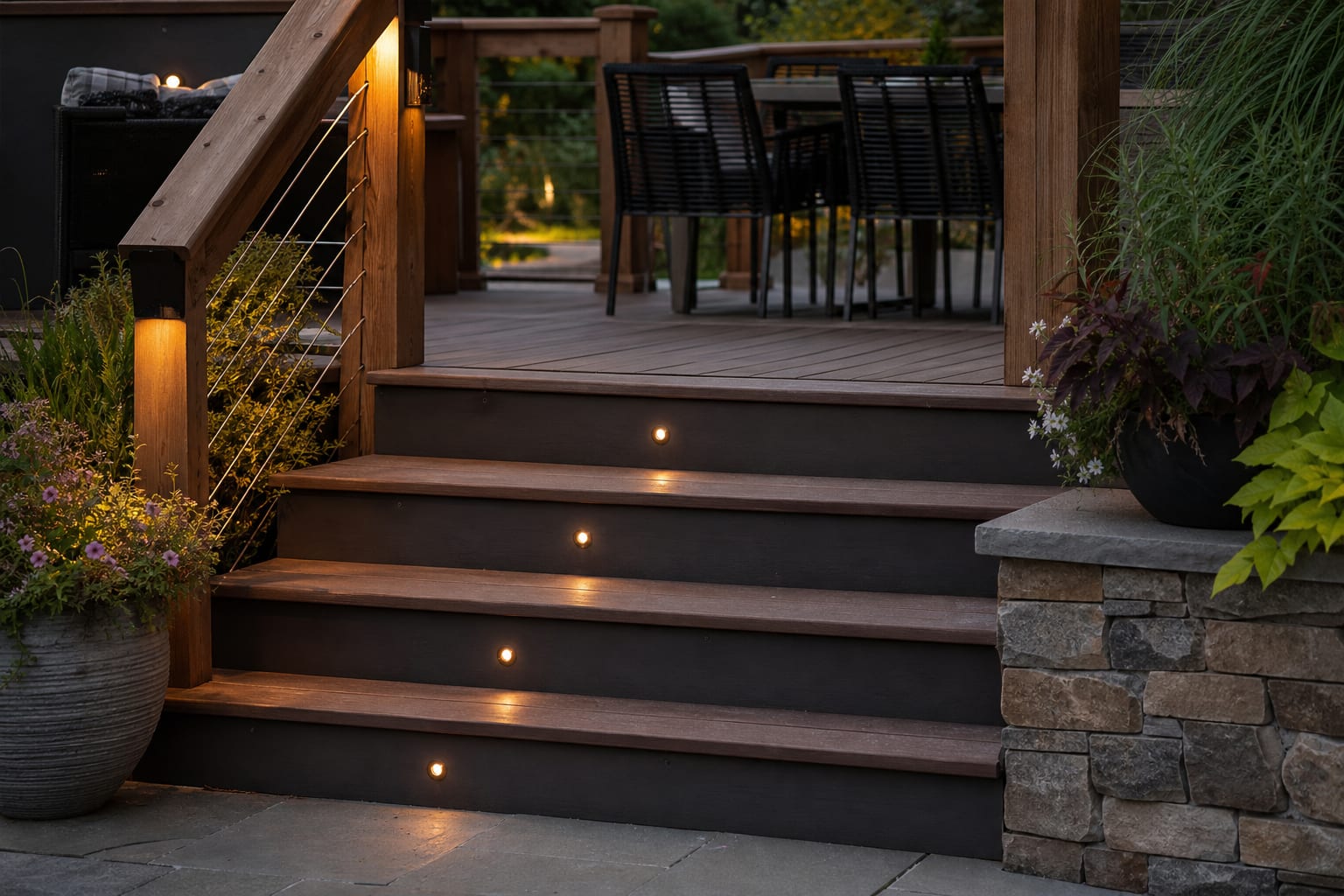
What deck lighting mistakes make the yard feel harsh?
The most common mistake is one bright security light near the back door doing all the work. That creates glare at the door, shadows at the stairs, and a dead yard beyond the beam. Replace it with two or three lower layers placed where people actually move.
Cool white fixtures are another trap. On cedar, ipe, pressure-treated pine, composite, brick, and outdoor cushions, 4000K light reads flat and unfriendly; stay near 2700K unless the house exterior is crisp white or gray, where 3000K can work.
Don't cap every rail post with the same bright light just because the kit shipped that way. A tight row of identical glowing tops looks busy from inside the house — break the rhythm at gates, emphasize the stairs, and let some posts stay dark.
Skipping waterproofing is the costly error: use the correct wet or damp rating, protect wire connections outdoors, and keep transformers accessible. Older or budget boards can still look intentional with modest fixtures — see pressure-treated deck upgrade ideas before assuming a full replacement is needed.
Solar fixtures work for planters and rail accents, but they're unreliable as the only light on stairs or a main route to the yard. Use low-voltage wiring for the path people take every night.
How can AI design help preview deck lighting before you commit?
Deck lighting is hard to judge in a showroom because the real test is the view from your back door at dusk. Upload a straight-on photo and preview a few plans: rail glow with recessed stair lights, post caps with under-deck lighting, or a covered dining version with one warm pendant plus dim perimeter light.
Keep the preview grounded — request the same railing, same stair location, realistic 36-inch clearances, visible fixture positions, and 2700-3000K light. If it invents a new roof or moves the stairs, rerun it with stricter instructions.
The best result isn't the prettiest night scene; it's the version that shows whether the stair edge reads clearly, the dining table feels comfortable, the grill has task light, and the deck still looks like your house after dark.
Frequently Asked Questions
What color temperature should outdoor deck lights be?
2700K warm white reads natural against wood and stone. Cooler 3500-4000K fixtures wash a deck blue and clash with interior light visible through nearby windows.
How many stair lights does a deck need?
Use one recessed light per tread, or every other riser, on runs of four steps or more. Below four steps, a single landing-side wall light covers the run.
Are low-voltage or solar deck lights better?
Hard-wired low-voltage fixtures give consistent brightness, full color-temp control, and roughly 20-year fixture life. Solar caps work for railings on small decks but dim noticeably a few hours after sunset.
Where should I avoid placing deck lights?
Avoid uplights at seated eye height, exposed bulbs within 8 feet of a dining table, and high-mounted floodlights that wash the whole deck flat instead of layering light.
Do deck lights need their own switch?
Yes. Group deck lighting on a dedicated dimmer or smart relay so the ambient layer can run after the safety layer shuts off, paired with a photocell or astronomical timer.
> Try this: Ready to see this on your own outdoor space? Open ReDesign and run the preview before you buy materials, plant, drill, or move furniture.
Three transformations to try
1. Recessed stair lights with warm under-deck glow 2. Low railing lights and post caps 3. Pergola string lights with shielded path lights