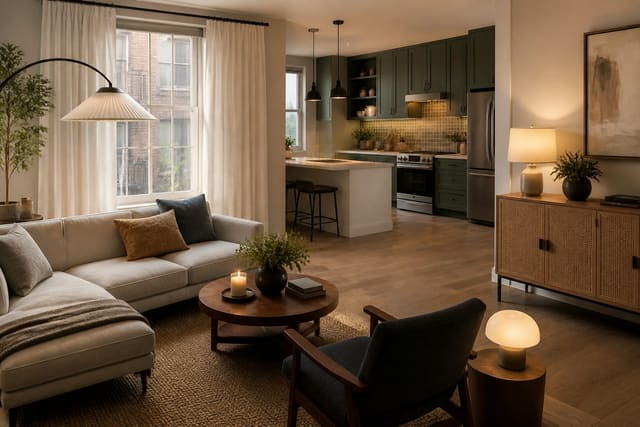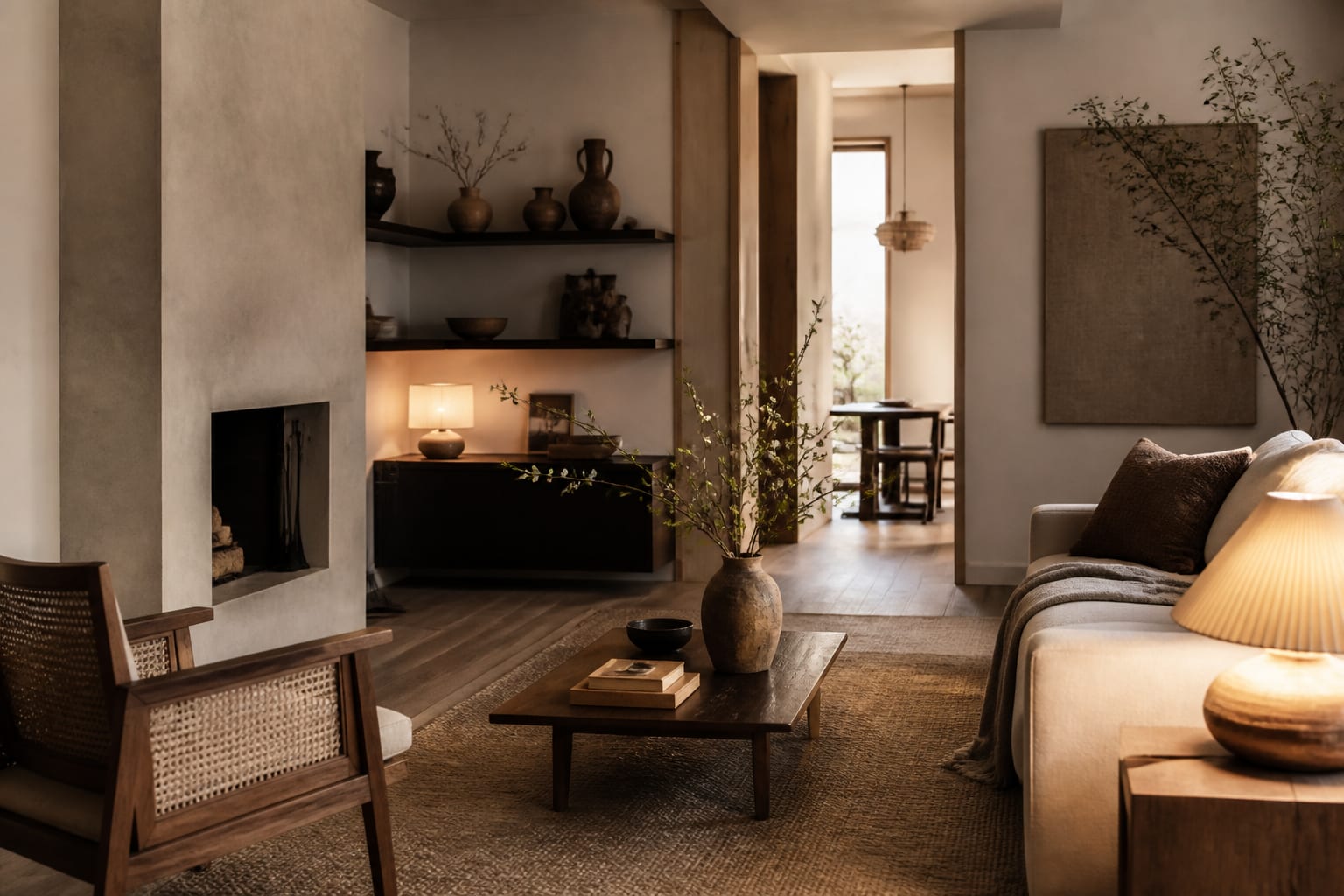
Accessories are where most japandi rooms quietly fail, because the temptation is to buy more when the discipline is to buy less. Choosing japandi home accessories well means treating each object as a deliberate decision rather than a gap-filler. The best rooms in this style hold a handful of honest, well-made pieces in wood, stone, and ceramic, arranged with breathing room around them. This guide covers scale, material, palette, and placement so your finishing touches read as calm and considered instead of cluttered.
Lead With Natural, Handmade Materials
The material of an accessory matters more than its shape in japandi rooms. Reach first for ceramic, stoneware, raw wood, stone, glass, and natural fiber, since these carry the warmth and honesty the style depends on. A hand-thrown vase with a visible glaze drip or a wooden bowl that shows its grain brings character that mass-produced plastic simply cannot match. The maker's hand should be felt in at least a few of your pieces.
Imperfection is a feature here, rooted in the Japanese idea of wabi-sabi. A slightly uneven rim, a matte unglazed surface, or a weathered patina adds soul and keeps a room from feeling like a showroom. Pair these tactile pieces with smoother surfaces so the contrast reads as intentional rather than rough, letting each object set off the next.
When layering textiles, choose linen, wool, and cotton in their natural undyed states wherever possible. A nubby linen cushion roughly 18 inches square works as a quiet anchor on a sofa or bench, large enough to feel substantial without overwhelming the seat. Drape a wool throw nearby and add a flat-weave runner underfoot, letting each fiber bring its own texture to the mix. This commitment to natural, often handmade materials is the single most reliable way to make an accessory collection feel genuinely japandi rather than merely minimal, and it is the part most shoppers underestimate when they shop for a quick refresh on a budget.
See also our guide to AI Room Design Rental Apartment for more on japandi home accessories.
Get Scale and Proportion Right
Scale is the discipline most people skip, yet it determines whether a grouping looks calm or chaotic. The reliable approach is to vary height deliberately, combining a tall element, a medium one, and a low one so the eye travels in a gentle line. A branch in a vase standing 24 inches tall beside a stack of two books and a small ceramic dish reads as a balanced trio rather than a random pile. Odd numbers of objects almost always sit more comfortably than even ones.
Negative space is part of the composition, not wasted room. Leave clear surface around each grouping so objects can be appreciated individually, and resist the urge to fill every flat plane. As a rough discipline, let any styled surface stay at least half empty, which gives the arrangement room to breathe and keeps it from tipping into clutter.
Proportion also applies to the room as a whole. A common balance to aim for is a 60/30/10 split, with 60 of the scheme in your dominant warm neutral, 30 in a secondary tone such as wood, and 10 in a quiet accent like charcoal. Apply the same thinking to a shelf or table so no single object dominates the view. When a tall vessel anchors one end, balance it with lower mass at the other, keeping the visual weight even across a span that might run 4 feet or more along a console or sideboard.
For a related angle on japandi home accessories, read AI Interior Design Small Spaces.
Build a Disciplined Muted Palette
Color is where japandi accessories either cohere or clash. Anchor everything in a warm neutral base of greige, oatmeal, clay, and soft brown, then allow a single restrained accent to provide quiet contrast. Black is the classic choice, used sparingly in a frame, a candle holder, or the line of a vase, because it grounds the softer tones without shouting for attention.
Wood is effectively part of the palette. Pale oak and ash bring lightness, while walnut or teak add depth, so mixing two wood tones can create subtle layering as long as the undertones stay warm. Treat stone and ceramic the same way, choosing pieces that sit within the same hushed range so groupings feel related rather than assembled at random. Even your metals should stay muted, leaning toward aged brass or blackened steel over anything shiny.
Avoid the trap of introducing several competing accent colors. The calm of a japandi room comes from tonal restraint, where interest is built through texture and finish rather than bright hue. If you crave a touch of life, let it come from a single green plant rather than a colorful object. A controlled palette means you can swap individual accessories in and out over time and the room stays cohesive, since every new piece already belongs to the same quiet, warm family you established from the very start of the project, so the room evolves without ever needing a full reset.
Style by Function, Not Just Decoration
Japandi accessorizing rewards objects that earn their place by being useful as well as beautiful. A ceramic pitcher that actually holds water, a wooden tray that corrals remotes, and a woven basket that hides clutter all serve a purpose while contributing to the look. This functional honesty echoes Scandinavian practicality and keeps the room from feeling staged or precious. Pieces that work hard tend to age into the space rather than feeling like temporary props.
Lighting counts as an accessory and sets the entire mood. Choose warm bulbs around 2700K for lamps and sconces so the light flatters wood and stone rather than washing them out. A paper lantern, a low ceramic table lamp, and a couple of unscented candles let you build soft, layered illumination that shifts comfortably from day to evening without ever feeling harsh.
Greenery is the final functional flourish. A single sculptural plant or a few cut branches in a stoneware vessel introduces living texture and a quiet hit of green that pairs naturally with timber. Keep planting restrained and architectural rather than lush, since one well-chosen specimen does more than a crowd. When every accessory either serves a task or brings genuine life, you avoid the decorative clutter that undermines so many rooms, and the space feels both calm and quietly purposeful in equal measure, which is the result the whole style is built to deliver.
Here are the common mistakes to avoid: - Filling every surface instead of leaving generous negative space around each grouping - Choosing glossy synthetic objects that clash with the warm, handmade character of natural materials - Introducing several bright accent colors rather than a single restrained, quiet accent - Lining up accessories at one uniform height instead of varying tall, medium, and low elements - Buying decorative objects with no function while ignoring useful, beautiful pieces that earn their place
Bring the look home with Re-Design
Styling accessories is easier when you can test before you buy. With Re-Design you can upload a photo of your room and preview japandi groupings on your real shelves and surfaces, trying ceramic vessels, a wool throw, and a single sculptural plant in your actual palette. Seeing the scale and color against your own walls helps you avoid the cart full of pieces that look wrong once they arrive.
Frequently Asked Questions
How many accessories should a japandi room have?
Far fewer than most styles. Aim for a handful of deliberate, well-made pieces and leave generous empty space around them. A styled surface that stays at least half clear usually looks calmer than one packed with objects, which is the goal here.
What materials suit japandi accessories best?
Ceramic, stoneware, raw wood, stone, glass, and natural fibers like linen and wool lead the look. Handmade pieces with slight imperfections add warmth and soul. Avoid glossy synthetics, which break the honest, tactile feeling the style relies on.
Can I use color in japandi accessories?
Keep color restrained. Anchor the scheme in warm neutrals and allow one quiet accent, often black, used sparingly. For a touch of life, add a single green plant rather than several bright objects, so the grouping stays cohesive and calm.