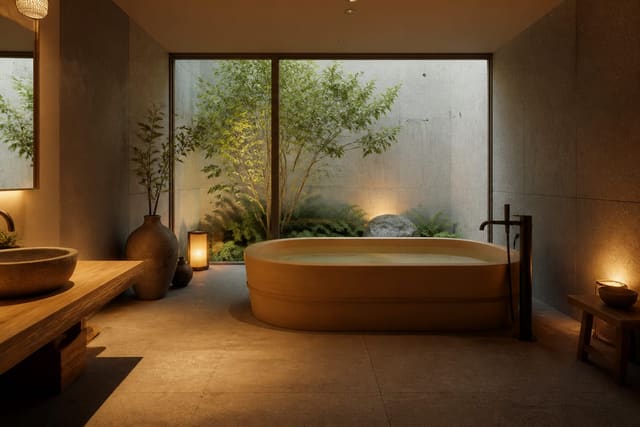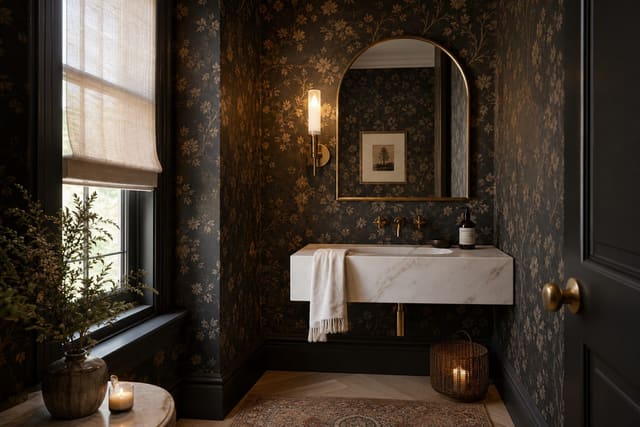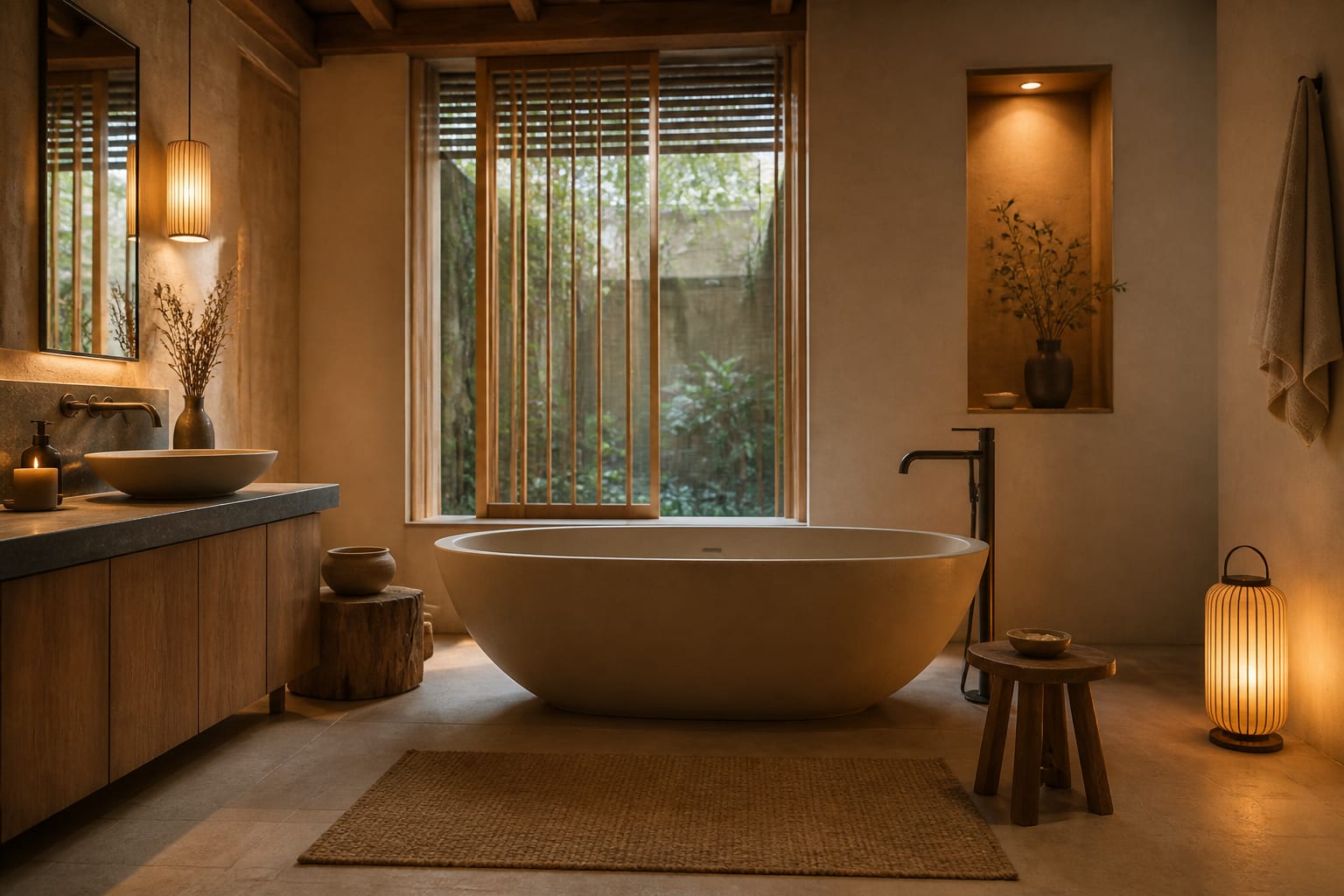
Most bathroom makeovers chase glossy tile and chrome, but japandi bathroom ideas argue the opposite: warmth beats shine every time. The look pairs Japanese restraint with Scandinavian coziness, so you get pale oak, honed stone, and a hushed palette instead of a cold, clinical box. It is forgiving for small rooms because clutter is the real enemy, not square footage. Done right, the space feels like a quiet bathhouse rather than a showroom, and it ages gracefully instead of dating within a season.
Build the Palette Around Warm Neutrals
Color sets the entire mood here, so begin with a base of soft, warm neutrals rather than stark white. Think oatmeal, clay, putty, and a gentle greige on the walls, then ground the scheme with a single quiet accent like charcoal or ink black on a frame or faucet. This restrained range is what separates japandi from a generic spa bathroom, where everything tends toward icy gray. Many people overcorrect with bright white and end up with a sterile feel that the warm tones here deliberately avoid.
Wood is the heart of the warmth. Pale oak, ash, or teak on a vanity or a slatted bench introduces grain and honey tones that immediately soften the room. Keep finishes matte and natural so the timber reads as organic rather than lacquered. Pair it with honed stone or unpolished porcelain that mimics the look of weathered concrete, and the two materials will read as a pair rather than competing surfaces.
Resist the urge to add bright color. A japandi palette earns its calm from tonal layering, not contrast, so depth comes from texture and material instead. A linen curtain, a ceramic tray, and a smooth river-stone bath mat can all sit within the same narrow color band yet feel rich because each surface catches light differently. When every element shares this muted family, the eye relaxes and the small details finally get room to breathe, which is the quiet luxury the whole style is reaching for.
See also our guide to Japanese Soaking Tub Ideas for more on japandi bathroom ideas.
Choose Low, Quiet Fixtures and Storage
Fixtures should recede, not announce themselves. Swap a tall, fussy vanity for a low, wall-mounted cabinet in natural wood that lets floor show beneath it, which makes even a compact bathroom feel more open. A simple vessel basin in matte stone or unglazed ceramic continues the handmade, grounded feeling that defines the style. The exposed floor underneath is a small trick that visually expands the room and keeps the eye moving.
Hardware is where many bathrooms go wrong. Choose taps and handles in brushed brass, matte black, or aged bronze rather than shiny chrome, and keep their lines clean and geometric. The goal is hardware that feels intentional and quiet, almost invisible until you reach for it. Wherever possible, conceal exposed plumbing behind panels so the wall reads as one calm plane rather than a tangle of pipes.
Storage deserves the same discipline. Japandi rooms look serene because daily clutter is hidden, so plan closed cabinets, a single open shelf for a few curated objects, and woven baskets for towels and laundry. Limit what stays on the counter to three or four beautiful, useful things. A stool that doubles as a side table, a ladder rail for a folded towel, and a recessed niche in the shower all reduce the number of bulky accessories competing for attention. When storage is calm and considered, the bathroom finally stops feeling like a utility room and starts feeling like a retreat you actually want to linger in.
For a related angle on japandi bathroom ideas, read Powder Room Design Tiny.
Layer Natural Texture and Greenery
Texture is what keeps a muted room from feeling flat or cold. Bring in linen for towels and a window shade, a chunky cotton bath mat, and a few smooth ceramic vessels for soap and brushes. Each of these adds a tactile layer that the eye registers as warmth, even when the color stays restrained. The slight irregularity of handmade pottery is a deliberate part of the look, and it rewards a closer glance the longer you spend in the room.
Wood and stone should appear in more than one place so they feel woven through the room rather than tacked on. A teak shower mat, an oak shelf, and a stone soap dish create quiet repetition that ties the scheme together. Mixing matte and lightly polished surfaces gives the space dimension without any shine that would break the calm. Aim for two or three honest materials rather than a dozen, since restraint is what makes the layering feel intentional.
Greenery is the final, essential layer. A single sculptural plant such as a snake plant, a small fern, or a trailing pothos introduces living texture and a touch of organic green that pairs beautifully with timber. Keep planting sparse and architectural rather than lush, since restraint is the whole point. One well-placed plant in a simple stoneware pot does more for a japandi bathroom than a crowd of foliage ever could, reinforcing the sense of a tended, peaceful space that someone clearly cares for.
Get the Lighting and Layout Right
Lighting can make or break the mood, and japandi leans firmly toward soft and warm. Avoid a single harsh ceiling fixture and instead layer light from a few low sources, choosing warm bulbs that flatter wood and skin alike. A wall sconce beside the mirror, a small lamp on a shelf, and dimmable overheads let you shift the room from morning function to evening calm. Dimmers are an inexpensive upgrade that quietly change how the whole bathroom feels after dark.
Natural light deserves protection and gentle filtering. A linen or rice-paper-style shade softens daylight without blocking it, echoing the shoji screens that inspire the style. If privacy allows, frosted lower panes keep the window clear at the top so light still pours in. Daylight bouncing off pale wood is one of the most flattering effects you can build into the space.
Layout should prioritize flow and negative space. Resist filling every wall, and let some areas stay deliberately empty so the eye can rest. Group the vanity, mirror, and storage as one quiet zone, then keep the bathing area visually separate and uncluttered. Even in a tight footprint, leaving breathing room around each fixture makes the whole room feel intentional. A wet zone with a simple bench, a clear floor, and a single framed view of greenery captures the unhurried, grounded spirit that makes japandi bathrooms so easy to live in day after day.
- Install a low wall-mounted oak vanity with a matte stone vessel basin for grounded warmth
- Layer linen towels, a cotton bath mat, and a teak shower mat for tactile depth
- Swap chrome taps for brushed brass or matte black hardware with clean geometric lines
- Add a single sculptural plant in stoneware to bring living green against pale timber
- Filter the window with a linen or rice-paper shade for soft, diffused daylight
- Hide daily clutter in closed cabinets and woven baskets, leaving the counter nearly bare
- Choose honed stone or unglazed porcelain surfaces instead of high-gloss reflective tile
- Layer warm, dimmable light from a sconce and small lamp rather than one harsh fixture
Bring the look home with Re-Design
Before committing to a single tile or tap, see the look on your actual space. With Re-Design you can upload a photo of your current bathroom and preview a japandi treatment in seconds, testing warm oak vanities, muted clay walls, and matte black fixtures against your real layout. It removes the guesswork and the costly returns, so you can shop with confidence once the calm scheme genuinely suits your room.
Frequently Asked Questions
What colors work best in a japandi bathroom?
Lean on warm neutrals such as oatmeal, clay, putty, and soft greige, then add one quiet accent like charcoal or ink black. Depth should come from natural texture and tonal layering rather than from bright or contrasting color.
Can japandi style work in a small bathroom?
Yes, and it often suits compact rooms beautifully. Low wall-mounted storage, hidden clutter, and a restrained palette make tight spaces feel open and calm. The style relies on negative space and simplicity, both of which flatter a smaller footprint.
Which materials define the japandi bathroom look?
Pale woods like oak and teak, honed stone, unglazed ceramic, and linen are the core materials. Matte finishes, handmade pottery, and a single architectural plant reinforce the warm, grounded, and uncluttered feeling at the heart of the style.