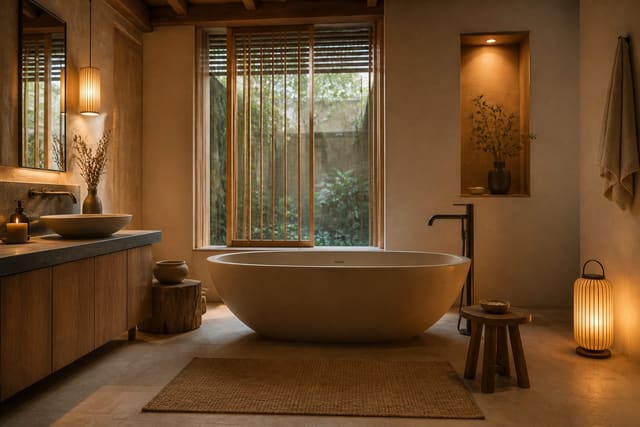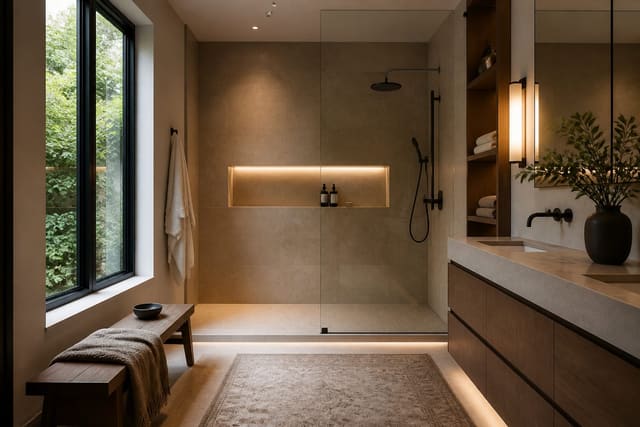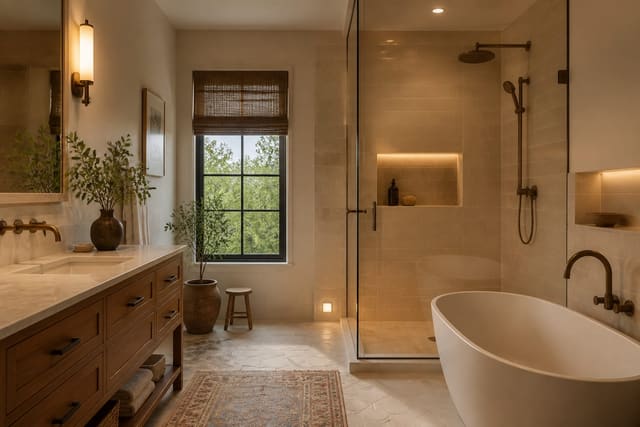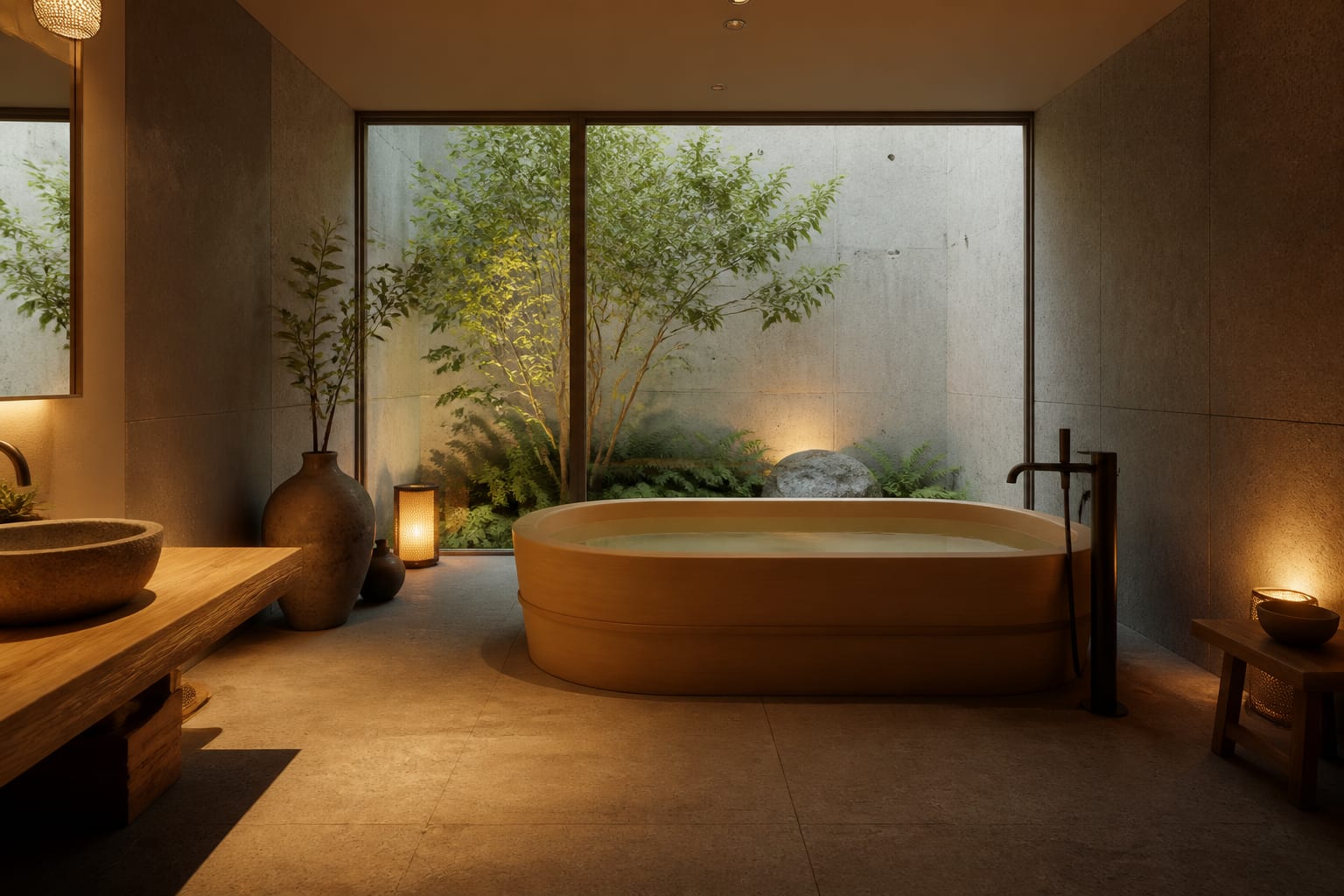
A Japanese soaking tub is the rare fixture that does more by being smaller. Where a Western tub asks you to lie back in shallow water that goes cold, an ofuro is built tall and short so you sit upright and submerge to the shoulders in deep, hot water. That single design choice changes everything: it fits in a footprint a standard tub cannot, it uses less water to reach a real soak depth, and it turns the bath into a deliberate ritual rather than a quick rinse. If you have a small bathroom and thought a real tub was off the table, this is the one to consider.
What makes a Japanese soaking tub different?
The geometry is the whole point. A traditional ofuro runs roughly 27 to 34 inches deep and only 40 to 48 inches long, the opposite proportions of a Western tub that stretches 60 inches but holds shallow water. You enter and sit, knees bent, with the water rising to your shoulders, which keeps your whole body warm in a way a reclining bath never manages. Because the water is deep and contained in a tight footprint, it stays hot longer, and many tubs include a built-in seat ledge so the posture feels natural rather than cramped.
That compactness is a gift for small bathrooms. A soaking tub can slot into a 48-inch nook that would reject any standard tub, freeing the rest of the room for a separate shower or vanity. In a Japandi bathroom, the tub becomes the quiet centerpiece, its clean lines echoing the calm, uncluttered aesthetic. The ritual matters as much as the dimensions: in Japanese practice you wash and rinse fully before entering, so the soak water stays clean and is purely for relaxation. Designing for that habit, with a wash area beside the tub, is what makes an ofuro authentic rather than just a deep bath.
How do you handle weight, depth, and plumbing?
A deep tub holds a deep volume, and that water is heavy. A full soaking tub can weigh several hundred pounds once filled, so before anything else, confirm the floor can carry it. On an upper floor especially, you may need to reinforce the joists or add blocking, and a structural check early is far cheaper than discovering the problem after install. Locate the tub near a load-bearing wall when you can, since that is where the framing is strongest.
Depth also changes the plumbing. Filling a tub 30 inches deep takes more hot water than a shallow bath, so a larger water heater or an on-demand unit keeps you from running cold mid-fill. Many owners add an in-line heater or a recirculating system to hold the soak at temperature for a long bath, which is the entire point of the fixture. The drain and overflow sit higher than on a standard tub, so the rough-in is different; flag this with your plumber early. If the tub shares space with a shower, treat the floor like a walk-in shower zone with proper waterproofing so the wash area and tub coexist without water damage.
Which material should you choose?
Material is where a soaking tub gets personality, and each option soaks and ages differently. Hinoki cypress is the classic: a Japanese wood that releases a clean, citrus-cedar scent when hot and insulates the water naturally, so it stays warm with no added heater. It demands more care, needing to be kept damp or fully dry to avoid cracking, but nothing else delivers the full sensory ofuro experience. Acrylic is the practical middle ground, light, warm to the touch, easy to clean, and the most affordable path to the deep-soak shape.
Stone and concrete tubs feel substantial and hold heat well, though they are heavy and cold to first touch, so they pair best with radiant-floor warmth nearby. Hammered copper is striking and naturally antimicrobial, developing a living patina over years, but it shows water spots and costs the most. Stainless steel, common in modern Japanese homes, is durable and hygienic if a touch industrial. Choose by how you want the bath to feel and how much upkeep you will actually do; a hinoki tub rewards a ritualist and frustrates anyone who wants to fill it and forget it.
Soaking tub ideas to design around
The tub is the anchor, and the surround is what turns it into a retreat. A few directions worth stealing:
- Set a hinoki tub against a window with a private garden or courtyard view so the soak looks onto greenery.
- Build a teak or stone deck around an acrylic tub so it reads as built-in and gives you a ledge for a candle and tea.
- Pair the tub with a wall-mounted hand shower and a low wooden stool for the traditional wash-before-soak ritual.
- Use a stone or pebble tile floor underfoot to extend the natural-material feel and add grip in the wet zone.
- Recess the tub into a niche lined with vertical wood slats and light it with a single warm 2700K sconce for a cocooning glow.
- Place a copper tub freestanding under a skylight so daylight catches the hammered surface and the patina shifts through the day.
Keep the palette restrained, wood, stone, linen, and one metal, so the tub stays the focus. The whole appeal is calm, and a busy surround undercuts the very ritual the fixture is built for.
See your ofuro in place with Re-Design
A soaking tub is a structural and emotional commitment, and a showroom photo cannot tell you whether it suits your actual bathroom. Upload a picture of your space to Re-Design and drop a deep hinoki, a freestanding copper, or a recessed acrylic tub into the real footprint to test scale and sightlines. You can preview the tub against a window, framed by wood slats, or beside a separate shower zone, and judge whether the proportions feel serene or crowded before you reinforce a single joist. That preview turns an intimidating remodel into a clear decision, so you commit to the material and placement that genuinely fit your room.
Frequently Asked Questions
How deep is a Japanese soaking tub?
Most run 27 to 34 inches deep, considerably taller than a standard Western tub. The extra depth lets you sit upright with water at your shoulders, keeping your whole body submerged and warm. That posture, knees bent and torso vertical, is why the tub can be so short, often just 40 to 48 inches long, while still delivering a deeper, hotter soak than a reclining bath.
Do Japanese soaking tubs fit in small bathrooms?
Yes, that is one of their biggest advantages. Because the design trades length for depth, a soaking tub fits a 40-to-48-inch footprint where a standard 60-inch tub never could. That frees space for a separate shower or a vanity in a compact bathroom. Just confirm the floor framing can support the filled weight, since deep water is heavy, especially on an upper level.
What material is best for a soaking tub?
It depends on your priorities. Hinoki cypress gives the authentic scent and natural insulation but needs careful upkeep. Acrylic is the easiest and most affordable, warm and light. Stone and concrete hold heat and feel substantial but are heavy and cold to first touch. Copper is beautiful and antimicrobial but pricey and patinas over time. Match the material to how much maintenance you will realistically do.
Do you wash before getting in a soaking tub?
In Japanese practice, yes. You rinse and wash your body fully at a separate wash station before entering, so the tub water stays clean and is reserved purely for soaking. This is why authentic ofuro layouts include a wash area with a hand shower and stool beside the tub. Keeping the soak water clean also lets a household reuse it across several baths, the traditional approach.