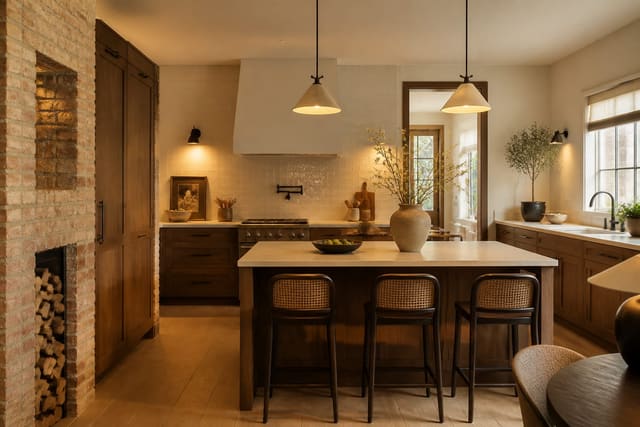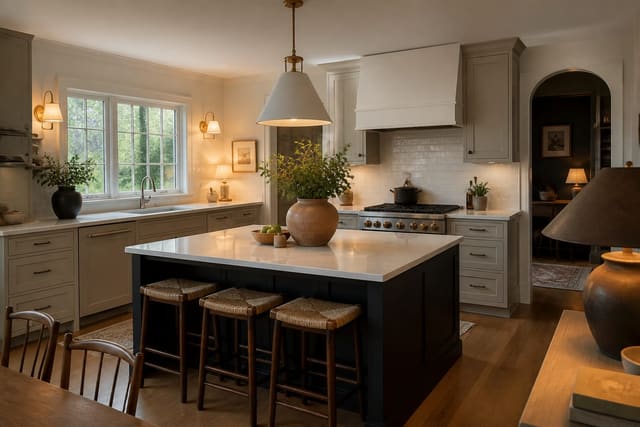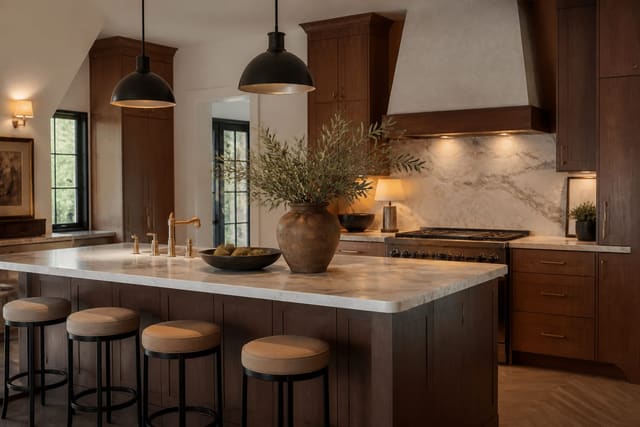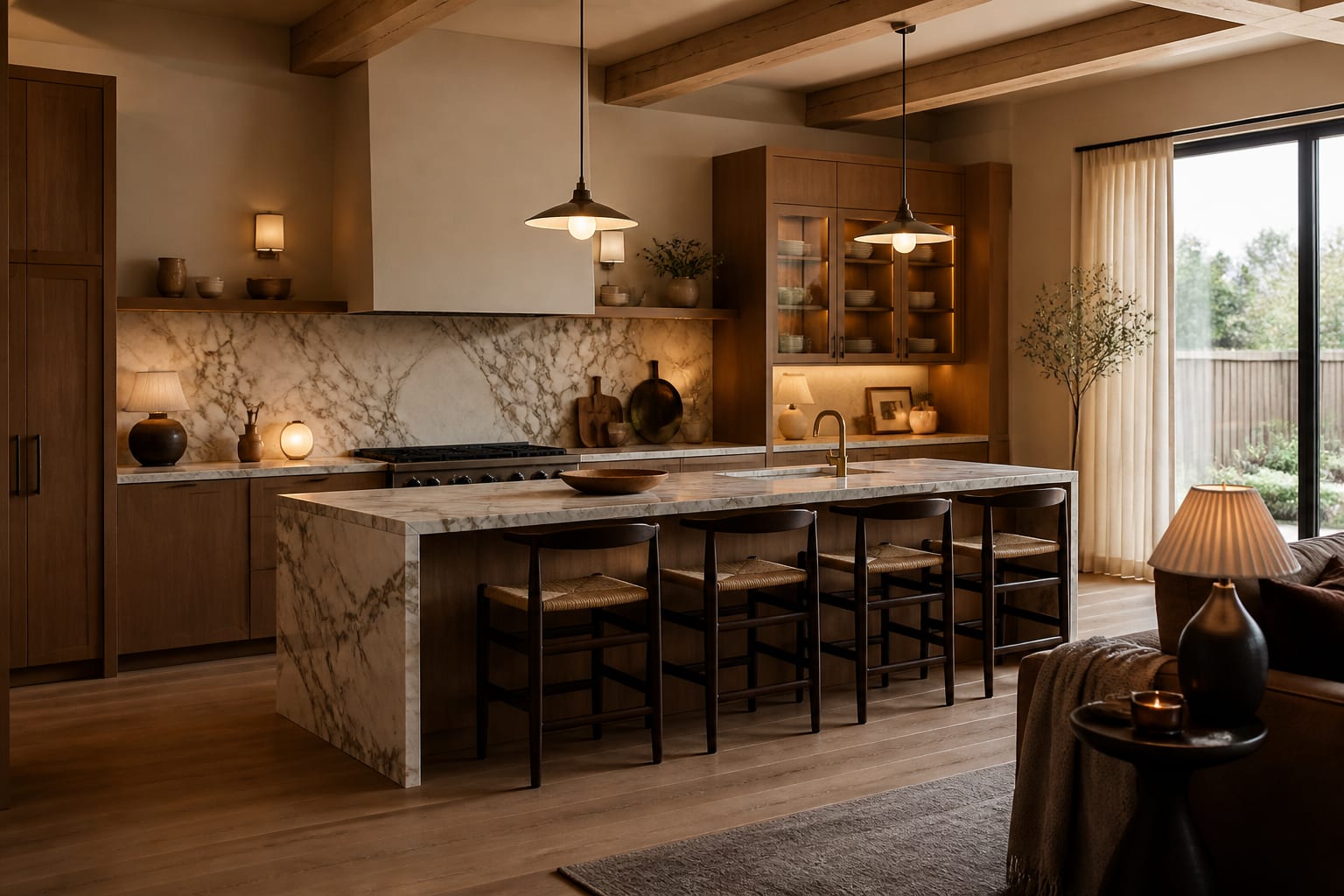
The 2026 kitchen finally retires the all-white, all-gray box. The strongest direction this year is warmth with restraint: stained walnut and white oak, honed stone instead of polished, and one confident color anchoring the room. Cold minimalism is out; lived-in, tactile, and slightly imperfect is in. If you are choosing finishes now, bet on materials that age well rather than the loudest showroom display.
What is driving the 2026 kitchen
The broad shift is from clinical to comfortable. After years of flat-front white cabinets under bright LED strips, homeowners are reacting against kitchens that look like rental listings. The 2026 kitchen behaves more like a room you would furnish than a workspace you would scrub. That shows up in three ways: natural materials with visible grain and texture, warmer artificial light around 2700K instead of cool 4000K, and a willingness to commit to a single saturated color rather than hedging with safe neutrals.
Manufacturers are following. Cabinet lines that pushed slab doors in five shades of white now lead with stained oak and reeded fronts. Quartz makers are releasing honed and matte surfaces because the mirror-polish era is fading. Even appliance brands are leaning into integrated panels so the refrigerator and dishwasher disappear into the cabinetry, leaving the eye to land on the stone, the wood, and the hardware instead of a wall of stainless steel.
The practical upside is that these choices are durable, not disposable. A honed countertop hides etching and fingerprints far better than a glossy one. Stained wood ages into character instead of chipping like paint at the corners. Unlacquered brass develops a patina many people now prefer to the factory shine. You are buying finishes that look better in year five, which is exactly what a kitchen that costs as much as a car should do.
There is also a cost logic behind the trend. A mid-range kitchen remodel runs roughly $25,000 to $50,000, and finishes are where that number swings the most. Spending on stained oak fronts and a honed quartzite counter, then saving on a quieter backsplash and standard appliances dressed in panels, lands the 2026 look without chasing the most expensive showroom option. The aesthetic actually rewards restraint, which is rare in a trend cycle.
The trends worth copying in 2026
- Color-drench a single element: paint the island or the lower run a deep olive, clay terracotta, or muddy blue, and keep everything else quiet so the color reads intentional.
- Specify rift-cut white oak or walnut for at least the perimeter or island; the straight, calm grain is the signature look of the year.
- Swap polished stone for honed quartzite or soapstone counters, then run the same slab a few inches up the wall as a low backsplash.
- Mix two metals on purpose: unlacquered brass faucet and pulls with matte black or aged nickel on the lighting and hinges.
- Add fluted or reeded detail on the island face or a tall pantry to bring texture without color.
- Build a furniture-style island with turned or tapered legs and a contrasting wood top so it reads like a freestanding piece.
- Hide the appliances: panel-ready refrigerator, dishwasher, and even the hood so the cabinetry stays continuous.
None of these require gutting the room. Repainting one cabinet run, replacing hardware in mixed metals, and adding a fluted panel can shift a kitchen toward 2026 for a fraction of a full remodel. If you are doing a larger project, sequence the stone and cabinet decisions first, since they set the temperature for everything else.
The smartest budget play is to pick one signature move and execute it well rather than spreading a small budget across everything. A single color-drenched island with new brass pulls, left to stand against otherwise simple cabinets, reads as a deliberate design decision. Trying to do honed stone, stained wood, mixed metals, and fluted detail all at once on a tight budget usually produces a watered-down version of each. Commit to the element that does the most visual work for your specific room, and let the rest stay quiet.
How layout is changing alongside the finishes
Finishes get the attention, but the 2026 kitchen is also rethinking how the space works. The single oversized island is giving way to either a smaller, more sculptural island or two purpose-built zones: one for prep, one for gathering. Designers are pulling the cooktop off the island and back to the wall so the island reads as furniture rather than a control panel bristling with outlets and a downdraft.
Walk-in pantries and dedicated coffee or beverage zones are the most-requested additions, often carved out of an adjacent closet or a stretch of wall that previously held upper cabinets. The trade-off many people are making is fewer upper cabinets overall, replaced by open shelving in wood or a single floating shelf in stone, which keeps the room from feeling boxed in. If you cook seriously, a 36-inch range and a tall faucet with a separate pot filler still earn their place, but the visual goal is calm, not gadget overload.
Lighting tracks the same logic. The flat wash of recessed cans is being supplemented by a pair of sculptural pendants over the island, under-cabinet strips at 2700K to wash the backsplash, and often a small lamp on the counter for an evening glow. Treating kitchen light like living-room light is a quiet but defining part of the 2026 shift, and it costs far less than new cabinetry. The same goes for hardware: longer pulls, around 6 to 8 inches on drawers, and a mix of knobs and bars read more current than a single uniform pull repeated everywhere.
Before you commit, study the bones. A great finish on a frustrating layout is a daily annoyance, so it is worth pressure-testing your work triangle and clearances first. A thorough kitchen layout guide will tell you whether the trendy island actually fits the way you move through the room, and where 42 inches of aisle space matters more than another drawer.
Preview your 2026 kitchen in Re-Design
Seeing the change rendered on your real walls makes the budget conversation concrete. Once you know which direction looks right, you can scope the project honestly. A clear-eyed kitchen remodel cost guide helps you separate the finishes that deliver the 2026 look cheaply from the ones that quietly double the bill.
Frequently Asked Questions
Are white kitchens out of style in 2026? Not gone, but no longer the safe default. White is now a backdrop that needs warmth added through wood, stone, or a saturated accent. A fully white-and-gray kitchen reads dated; a warm-white with oak and brass still looks current.
What countertop is trending for 2026? Honed and leathered finishes are leading, especially on quartzite and soapstone, because they hide etching and fingerprints. The detailing matters too, since the countertop edge profile guide shows how a softer eased or mitered edge supports the calmer 2026 look better than a glossy bullnose.
Is color drenching too risky for resale? Done on a removable element like an island or lower cabinets, it is low risk because repainting is cheap. Earthy, muted tones such as olive and clay are far safer than bright primaries and have shown staying power across recent forecasts.