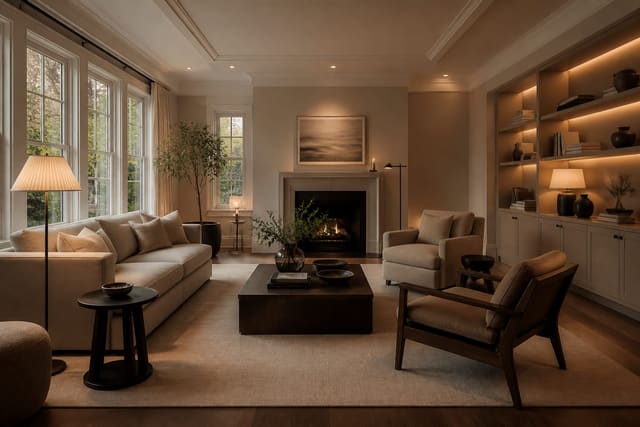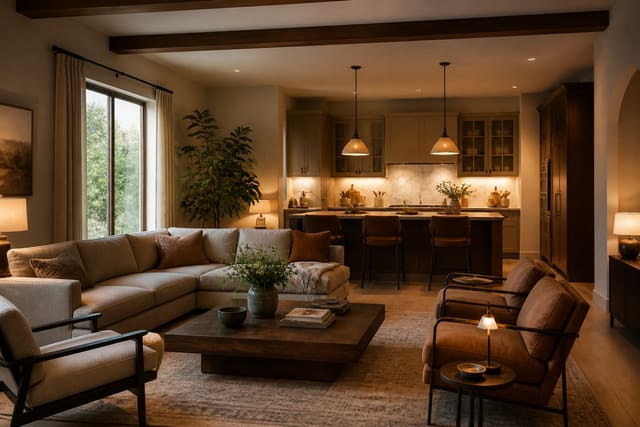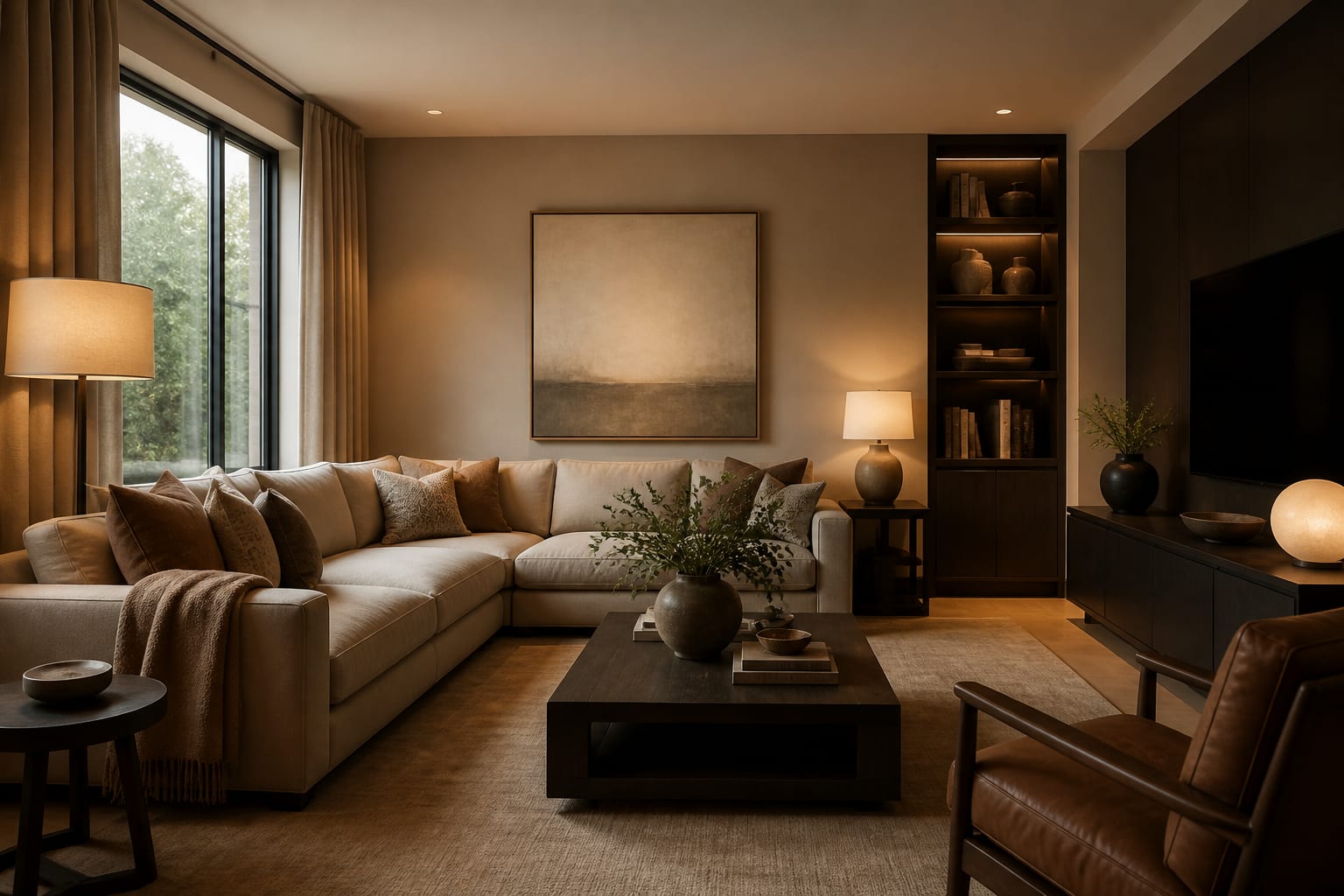
An L-shaped living room reads as a problem only because people try to furnish it as a single rectangle and run out of ideas at the bend. The smarter way to see it is as two connected rooms sharing a corner, each with its own job. One leg becomes the main seating area; the shorter leg becomes a reading nook, a dining spot, a desk, or a play zone. The corner where they meet is not dead space; it is the hinge that ties the two functions together. Zone the L deliberately and the awkward shape becomes a flexible floor plan most rectangular rooms would envy.
Why the L-shape confuses people
The trouble starts when you treat an L-shaped room like a long rectangle and push all the furniture along the walls. That turns the longer leg into a corridor and strands the shorter leg as leftover floor with no clear purpose. People end up with a sofa facing a wall, a chair marooned in the bend, and a short leg that collects clutter because nobody decided what it is for. The shape gets blamed, but the real issue is the lack of a plan for two distinct areas.
The shift that fixes it is mental: stop counting one room and start counting two. Decide the primary function, almost always a seating and television or fireplace group, and give it the longer, more visible leg. Then assign the shorter leg a real, named job. A 9-foot stub leg is enough for a reading chair and a lamp, a small desk, a pair of armchairs, or a 4-foot dining table for two. Naming the function is what stops the short leg from becoming a dumping ground.
The corner is the part people fear, and it is actually the most useful spot in the room. A sectional sofa is the natural fit, since its own L drops perfectly into the architectural L and faces seating toward both legs at once. If a sectional is too much, a tall plant, a floor lamp, or a corner shelf occupies the bend and keeps it from reading as a void. For the underlying layout principles, our guide to living room layout ideas covers anchoring furniture to focal points, which applies double in an L.
How do you zone an L-shaped room?
Zoning an L is mostly about giving each leg its own rug and its own focal point. Under the main seating group, lay a rug at least 8 by 10 feet so the front legs of the sofa and chairs sit on it and the area reads as one bound island. Under the secondary zone, use a smaller rug, a round 5 or 6-foot one under a reading chair, or a 5 by 8 under a desk, to mark it as a separate room without building a wall. Two rugs in coordinating tones tell the eye there are two purposeful areas here.
Focal points seal the zoning. The main group orients toward the television, fireplace, or window; the secondary zone turns toward whatever suits it, a bookshelf for the reading corner or the window light for a desk. When each leg points at its own focus, the bend stops feeling like a fold in the room and starts feeling like the place where two complete spaces meet. The same approach scales up to open-plan homes, and our notes on open-plan living and kitchen ideas get into using rugs and furniture as soft dividers.
Mind the traffic path through the corner. People will walk from one leg to the other, so keep a clear lane of 30 to 36 inches through the bend and do not block it with a chair or a table corner. Plan the walkway first, then place the furniture around it, so the two zones connect smoothly instead of forcing a detour every time someone crosses the room.
What furniture works best in an L?
The sectional is the marquee piece for an L-shaped room, but it is not the only option, and forcing one into a small L backfires. Match the furniture to the proportions of each leg:
- A right-size sectional that tucks into the corner and seats both legs, sized so each arm stops at least a foot short of the perpendicular wall.
- A standard sofa on the long leg plus a pair of swivel chairs near the bend, which is more flexible than a sectional in a tight L.
- A console table behind a floated sofa to divide the seating zone from the secondary zone behind it.
- A compact 36 to 42-inch round dining table on the short leg, seating two to four without crowding the corner.
- A slim desk, 42 to 48 inches wide, along the short leg's wall for a work zone that does not eat the seating area.
- A bench or window seat under a window on either leg to add seating without blocking the floor.
Scale each piece to its leg, not to the whole room. A sectional that is right for a generous L overwhelms a narrow one, where two smaller pieces preserve the walkways. If you are weighing a sectional against a standard sofa for the corner, the tradeoffs in seating count and flexibility are real, and a swivel chair near the bend often serves the corner better than another fixed seat.
Common mistakes to avoid
The failures in an L-shaped room are nearly always about ignoring the two-zone reality. Watch for these anti-patterns:
- Pushing all the furniture against the walls, which turns the long leg into a hallway and strands the bend.
- Leaving the short leg unassigned, so it collects clutter instead of serving a named function.
- Cramming an oversized sectional into a tight L, dropping walkways below 30 inches and blocking the corner traffic lane.
- Using one rug for the whole room, which erases the distinction between the two zones.
- Burying the corner with a chair that nobody can reach or that blocks the path between legs.
- Orienting both zones at the same television, leaving the secondary area with no focus of its own.
Budget realistically too. A good sectional sized for an L runs roughly $1,500 to $4,000, and adding a second zone, a rug, a chair, and a lamp adds maybe $600 to $1,500. Spending the whole budget on a too-big sectional and nothing on the short leg is the classic L mistake, since it leaves half the room undefined and unused.
Try your layout in Re-Design
The bend is exactly what makes an L-shaped room hard to picture from a floor plan, since a sectional that looks right on paper can swallow the walkway or fall short of the corner in reality. Upload a photo of your room into Re-Design and test how a sectional, a floated sofa, or a two-zone layout sits in your actual L before you order anything. You can preview a reading corner versus a small desk on the short leg, swap one large rug for two smaller ones, and confirm the corner reads as a hinge rather than a void. Seeing the plan in your real room removes the guesswork the shape usually creates.
Frequently Asked Questions
How do you arrange furniture in an L-shaped living room?
Treat the L as two zones. Put the main seating group on the longer leg facing a focal point, and give the shorter leg its own job, a reading corner, desk, or small dining spot. Anchor the corner with a sectional or a tall piece. Use a separate rug under each zone so the room reads as two purposeful areas rather than one awkward run of furniture.
Does a sectional work in an L-shaped room?
Yes, a sectional is often the ideal piece because its own L drops into the room's corner and faces seating toward both legs at once. The key is sizing it so each arm stops at least a foot short of the perpendicular wall, keeping walkways at 30 to 36 inches. In a tight L, a standard sofa plus swivel chairs can serve the corner better than a sectional.
What do you do with the corner of an L-shaped room?
Use it as the room's hinge. A sectional fits there naturally; if not, fill the bend with a tall plant, a floor lamp, a corner shelf, or a console. The goal is to keep the corner from reading as dead space while preserving a clear 30 to 36-inch walkway through it so traffic moves freely between the two legs of the room.
How do you make an L-shaped room feel less awkward?
Stop furnishing it as one rectangle. Assign each leg a clear function, anchor the corner, and give each zone its own rug and focal point. Float seating off the walls where the room is wide enough so the long leg does not feel like a corridor. Once both legs have a purpose and the bend connects them, the awkward shape becomes a flexible, well-used plan.