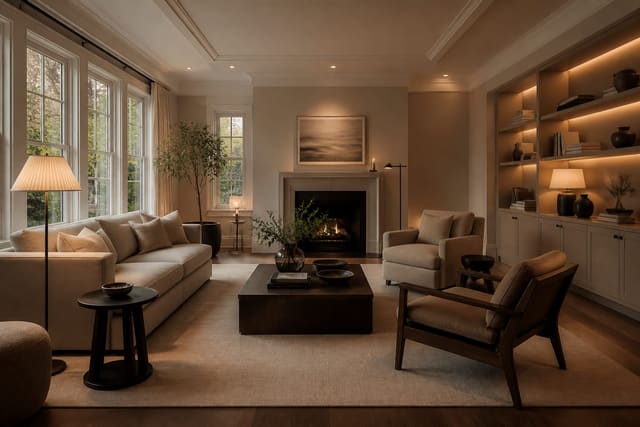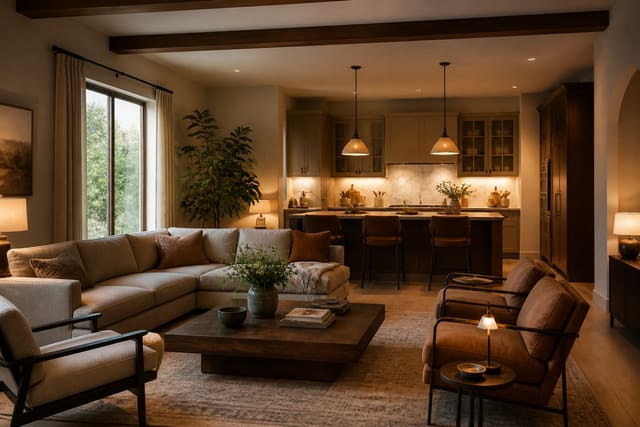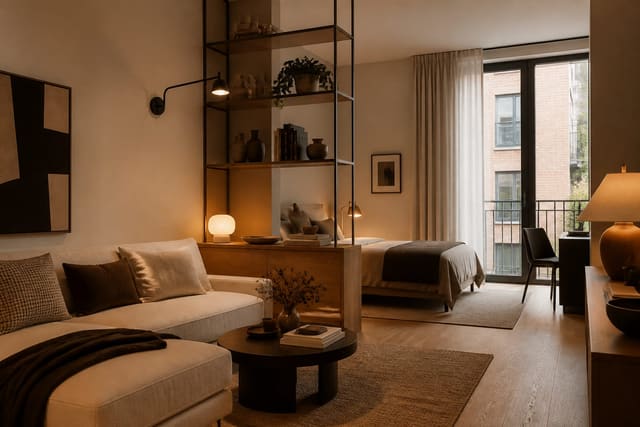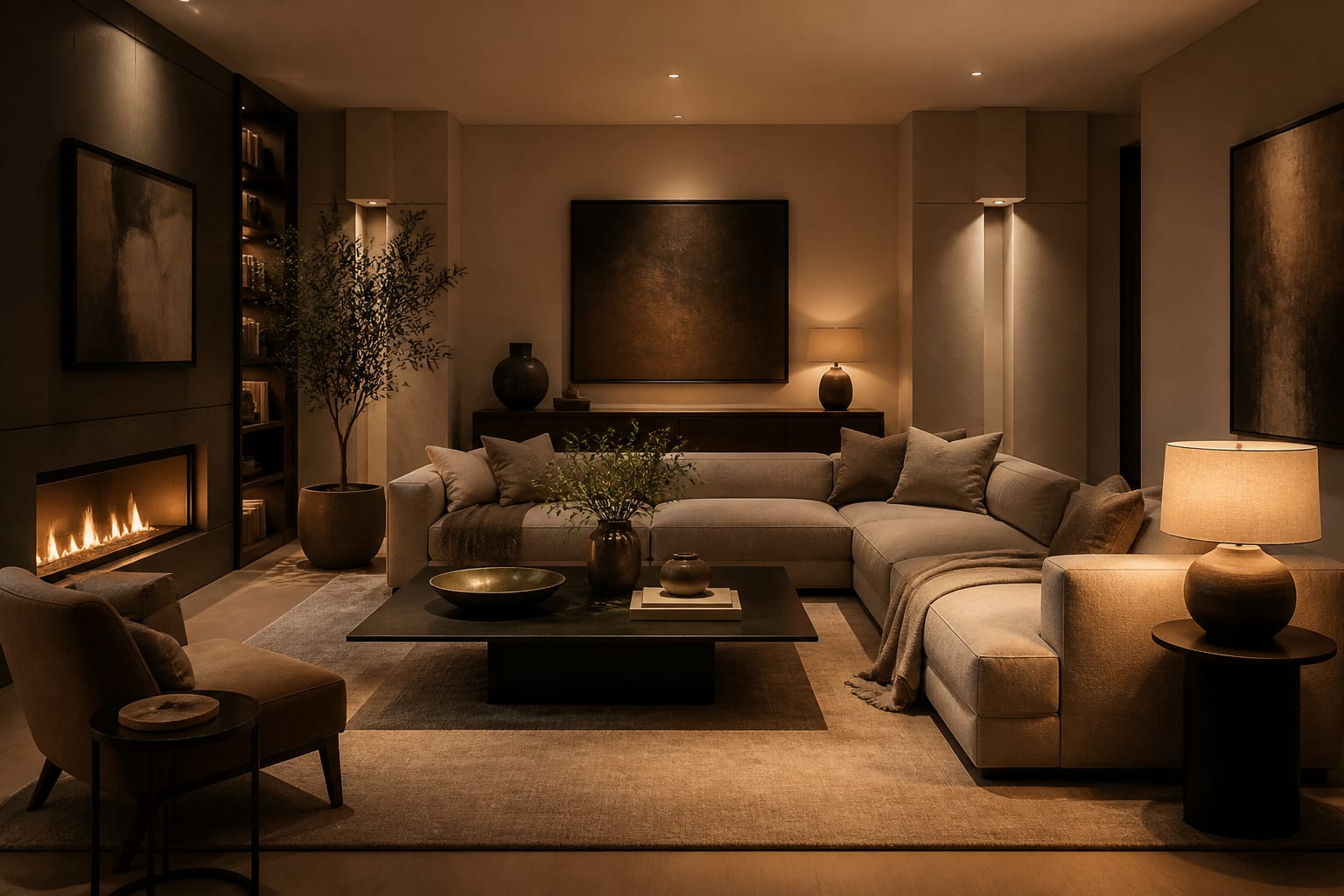
A living room with no natural light is not a lost cause, but the usual advice to slap white paint everywhere makes it worse. White walls need daylight to look crisp; under artificial light alone they go gray and dingy. The smarter approach treats the room as a space that will always be lit by lamps, so you lean into a warm, layered scheme that flatters bulb light instead of fighting for a sun that never comes. With the right fixtures, reflective surfaces, and a color palette chosen for lamplight, a windowless room can feel cozy and intentional rather than gloomy and starved.
Why white paint backfires in a windowless room
White walls are sold as the answer to any dark room, but they depend on natural light to do their job. Daylight is broad, cool, and bright, and it makes white read clean and luminous. Under warm artificial light alone, the same white turns dull and slightly yellow-gray, and because there is no sun to bounce, it never achieves the airy brightness people are chasing. A windowless room painted stark white often ends up feeling colder and sadder than one painted a warm tone.
The better move is to embrace lamplight and choose colors that glow under it. Warm neutrals like soft greige, putty, and warm white with a touch of yellow look rich rather than dingy at 2700K. Deeper, saturated colors can work beautifully too, since a windowless room is the one place a moody, enveloping scheme reads as a deliberate choice rather than an accident of poor light. The room is going to be a lamplit space at every hour, so design it as one. The same principle drives any good layout for a dark room, where furniture placement should keep walkways clear of shadow and put seating near the brightest sources.
How do you light a room with no windows?
The whole strategy is layering, because no single fixture can replace a window. Build five to eight sources at different heights so light comes from everywhere and no corner falls into shadow. Start with an even ambient base from recessed downlights spaced 6 to 8 feet apart or a torchiere bouncing off the ceiling, then add table and floor lamps for the warm mid-level glow that lamplight does best, and finish with accent light on art and shelving. Aim for roughly 20 lumens per square foot of ambient output, so a 200-square-foot room wants around 4,000 lumens spread across those sources.
Keep every bulb at 2700K so the room reads warm and consistent, and choose a CRI of 90 or higher so your fabrics and skin tones do not look washed out. Put each layer on a dimmer, because a windowless room benefits enormously from being able to shift from bright daytime-substitute light at full output to a soft evening glow. One trick that genuinely helps: a daylight-mimicking floor lamp or a few 5000K bulbs reserved for a single fixture you switch on during the day can give a hit of cooler, brighter light when you want the room to feel awake, while the rest of the scheme stays warm. In an open-plan living and kitchen where the seating area sits far from any window, borrowing brightness from the kitchen's task lighting and keeping the two zones on separate dimmers helps the dark end feel connected and lit.
What reflective and visual tricks fake daylight?
Mirrors are the most effective tool you have. A large mirror, ideally 30 by 40 inches or bigger, placed opposite or beside a light source bounces that light deeper into the room and doubles its apparent reach, mimicking the way a window throws light across a space. Position one to reflect a bright lamp or a piece of backlit art rather than a blank dark wall, so it is actually multiplying light. Glossy and satin surfaces help too: a lacquered side table, a satin-finish wall, or a glass coffee table all catch and scatter lamplight where a matte surface would swallow it.
The eye also craves a bright focal point, the thing a window normally provides. A backlit faux window with a frosted panel and LED panel behind it reads convincingly as daylight and gives the room a glowing anchor. A large piece of bright art with its own picture light, or an illuminated niche of shelves, does the same job of pulling the eye to a luminous spot. Pale, reflective flooring or a high-pile cream rug bounces light back up and warms the whole floor plane, which lifts the entire room. These visual cues trick the brain into reading the space as brighter than the raw lumen count alone would suggest. Even a studio-style living area carved out of a windowless interior space can feel open when a big mirror and a backlit panel stand in for the missing window.
Common windowless-room mistakes to avoid
The dark, cramped feeling in a windowless living room usually traces to these repeat errors: - Painting the walls stark white, which goes gray and dingy under artificial light with no daylight to make it crisp. - Relying on one overhead fixture, which leaves hard shadows and dark corners that scream cave. - Mixing color temperatures, so a 2700K lamp clashes with a 4000K downlight and the light reads uneven. - Skipping mirrors and reflective surfaces, which wastes the lamplight you do have instead of bouncing it around. - Choosing only matte, dark, light-absorbing finishes everywhere, leaving nothing to catch and scatter the light. - Forgetting a bright focal point, so the eye has no luminous anchor to stand in for a missing window.
Preview your windowless room in Re-Design
Designing a room you will only ever see under lamplight is hard to judge in your head. Upload a photo of your windowless living room into Re-Design and preview how a warm greige scheme, a layered set of lamps, and a large mirror change the feel before you buy paint or fixtures. You can test a moody saturated wall color against a soft neutral, add a backlit faux window, or place a mirror opposite a lamp and see how much brighter the room reads. That preview lets you compare strategies against your actual furniture and proportions, so you commit to the combination that makes the space feel warm and awake rather than dark and forgotten.
Frequently Asked Questions
Should I paint a windowless living room white?
Usually not. White paint needs daylight to look crisp, and under warm artificial light alone it turns dull and slightly gray. Warm neutrals like greige and putty look richer at 2700K, and a deeper saturated color can read as a deliberate, cozy choice in a room that will always be lamplit. Design for the artificial light the room actually has rather than a sun it never gets.
How do you light a living room with no windows?
Layer five to eight sources at different heights so light comes from everywhere and no corner stays dark. Build an even ambient base, add table and floor lamps for warm mid-level glow, and finish with accent light on art. Target about 20 lumens per square foot, keep every bulb at 2700K with a high CRI, and put each layer on a dimmer so the room can shift from bright to soft.
Do mirrors help a room with no natural light?
Yes. A large mirror placed opposite or beside a light source bounces that light deeper into the room and roughly doubles its apparent reach, mimicking how a window spreads light. Position it to reflect a bright lamp or backlit art rather than a dark wall so it actually multiplies light. Glossy and satin surfaces add to the effect by scattering lamplight instead of absorbing it.
How can I fake daylight in a windowless room?
Give the room a bright focal point the way a window would. A backlit faux window with a frosted panel reads as daylight, and a large piece of bright art with a picture light or an illuminated shelf niche does the same. Add a daylight-mimicking lamp or a single fixture with 5000K bulbs for a cooler daytime hit, and use mirrors and pale flooring to bounce all that light around.