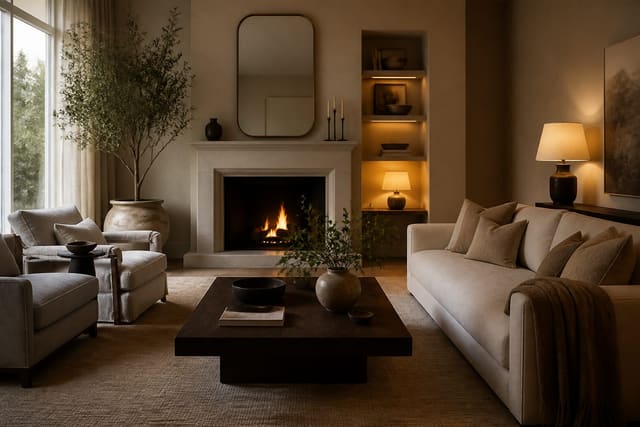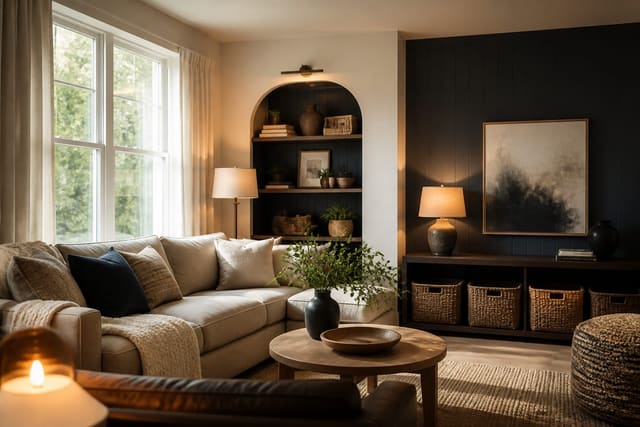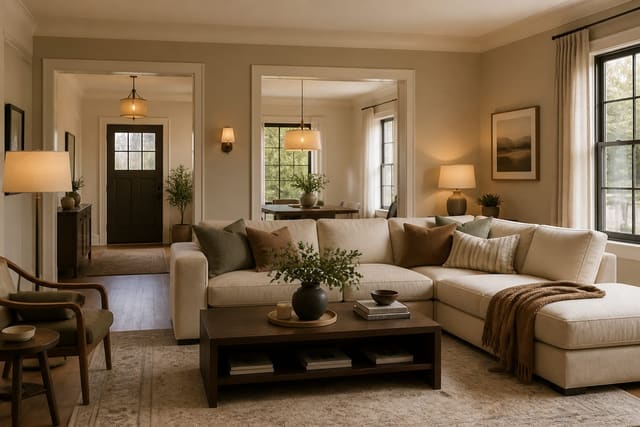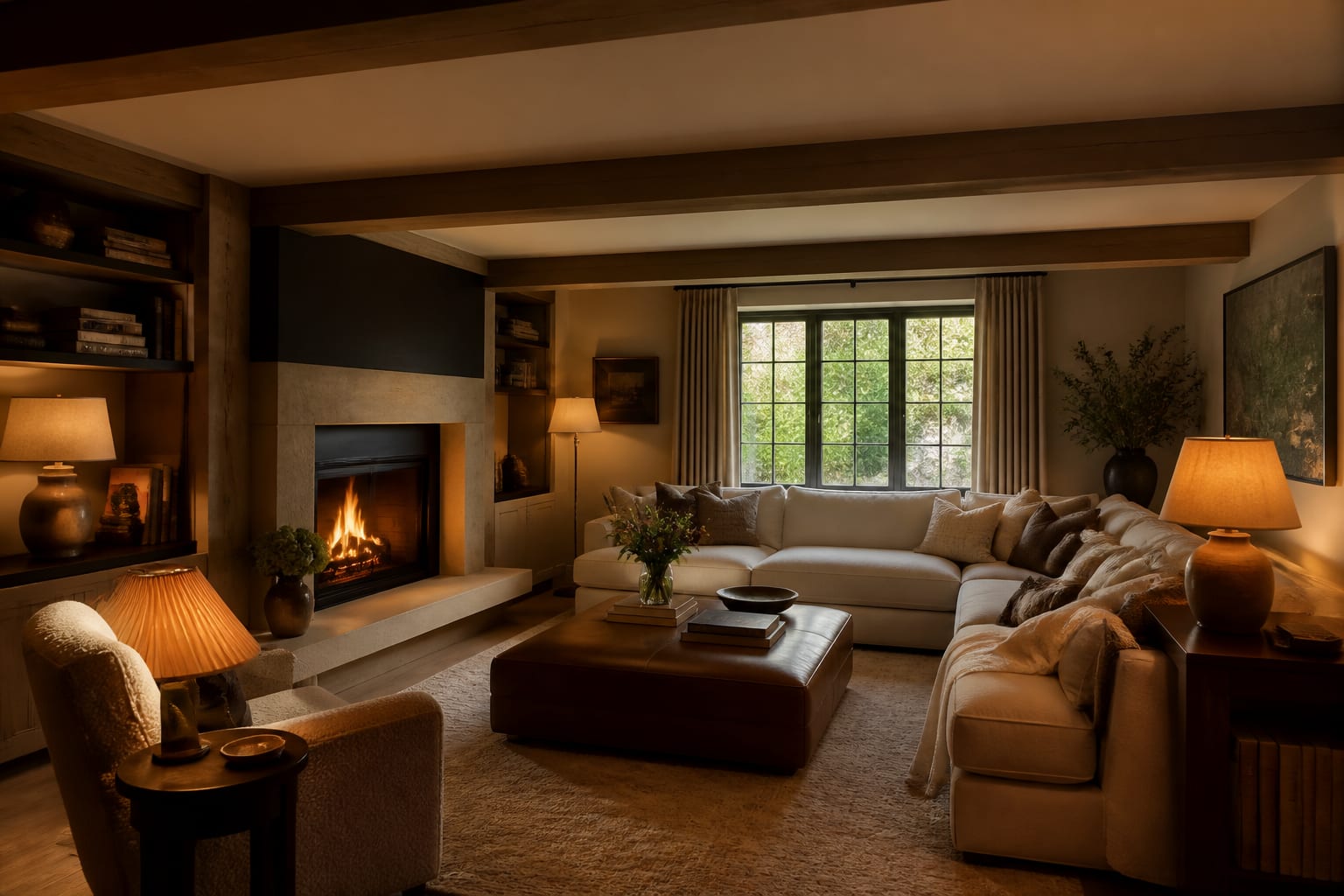
The instinct in a low room is to paint the ceiling a contrasting color to "define" it, and that is precisely what makes the ceiling press down on you. Height is an illusion built from where the eye stops, so the real goal is to remove the hard line where wall meets ceiling and pull the gaze upward with vertical movement. A standard 8-foot ceiling can feel a foot taller without a single structural change, just by managing color, furniture height, window treatments, and light. The tricks below are the ones designers actually use, and most of them cost less than a gallon of paint.
How does color make a ceiling feel taller?
Color is the cheapest height trick you have. The single most effective move is to paint the walls and ceiling the same light shade, which dissolves the crisp line where they meet and stops the eye from registering exactly where the wall ends. When that boundary blurs, the room reads as one continuous, taller volume. Soft whites, pale grays, and barely-there pastels work best because light colors recede.
If you prefer a defined ceiling, at least keep it lighter than the walls and skip the dark, contrasting ceiling that visually caps the room. A satin or eggshell finish on the ceiling bounces a little extra light, which lifts it further. Carrying the wall color slightly up onto the ceiling by a few inches, or painting crown molding the wall color rather than white, both trick the eye into reading more height. For a deeper rundown of cost-effective color and finish choices, our guide to making a room look expensive on a budget covers how paint strategy punches above its price. Avoid busy, large-scale patterns on the ceiling, which pull attention to the very surface you want to ignore.
Which vertical lines stretch a wall?
The eye follows lines, so anything vertical in a low room adds perceived height. Vertical striped wallpaper is the classic example: thin stripes running floor to ceiling lead the gaze upward and make an 8-foot wall feel closer to 9. Board-and-batten or shiplap installed vertically rather than horizontally does the same with architectural texture, and it is a satisfying weekend project; our roundup of weekend DIY room projects includes paneling work that fits a low-ceiling fix.
Tall, narrow furniture and decor reinforce the effect. A bookshelf that runs nearly to the ceiling, a slim floor-to-ceiling mirror, or a vertical gallery of stacked art all create upward sightlines. Even tall, slender plants or a single statement palm pull the eye up toward the ceiling. The principle is consistency: a few strong vertical elements beat a room full of low, horizontal ones. Mount window casings and any trim to emphasize the vertical, and resist wide horizontal bands like a dark chair rail at 32 inches, which slices the wall in half and shortens it.
What furniture and decor lower the visual ceiling?
Low furniture is counterintuitive but powerful: the lower your sofa, bed, and tables sit, the more bare wall shows above them, and that expanse of wall reads as height. Choose a sofa with a back height under 30 inches, platform beds, and low-slung mid-century pieces that hug the floor. A 14-inch-tall coffee table and low media console keep the room's mass near the ground where it belongs.
Keep the area above furniture relatively open so the eye can travel up the wall unobstructed. Hang art a touch higher than usual, with the bulk of the piece sitting above the typical 57 to 60 inch center, so it carries the eye upward rather than anchoring it low. Mirrors are your friend here: a tall leaning mirror reflects the ceiling and doubles the sense of vertical space. Avoid tall, top-heavy furniture like a 7-foot armoire or a hutch with a bulky upper cabinet, which fills the precious wall above and crowds the ceiling. If you are replacing dated trim or fixtures as part of the refresh, our guide to upgrading builder-grade finishes pairs well with these height moves.
How should you handle curtains and lighting?
Window treatments make or break a low room. The rule is to hang the curtain rod at or near the ceiling line, not just above the window frame, and let the panels fall to the floor so the fabric runs the full wall height. Mounting the rod 2 to 4 inches below the ceiling and extending it a few inches past each side of the window draws a tall vertical frame around the glass and tricks the eye into perceiving a taller wall. Floor-length panels that just kiss the floor beat short, sill-length curtains every time.
Lighting should wash upward rather than press down. Skip the bulky flush-mount fixture that hangs low and announces the ceiling height; choose a slim semi-flush, recessed cans, or a low-profile fixture instead. Better still, add uplighting: wall sconces, a torchiere floor lamp, or LED strips atop a tall cabinet bounce light across the ceiling and make it glow and recede.
Here are the common mistakes to avoid in a low-ceiling room: - Painting the ceiling a dark or contrasting color, which caps the room and presses it down. - Hanging a bulky flush-mount fixture that drops below 8 inches and emphasizes the low ceiling. - Mounting curtains at the window frame instead of near the ceiling, cutting the wall short. - Choosing tall, top-heavy furniture like a 7-foot armoire that fills the wall above. - Running a dark horizontal chair rail at 32 inches that slices the wall in half. - Adding large-scale ceiling patterns that pull the eye straight to the surface you want to downplay.
See it first in Re-Design
Height tricks are hard to picture because so much depends on how lines and color read together in your specific room. Upload a photo of your low-ceilinged space to Re-Design and preview the changes side by side: paint the walls and ceiling one continuous light shade, drop in low-profile furniture, raise the curtains to the ceiling line, and add vertical paneling to see which combination opens the room most. Because you can re-design the same photo several ways in seconds, you find out whether same-color walls or vertical stripes does more for your 8-foot ceiling before you buy paint or commit a weekend to paneling. It turns a guessing game into a clear before-and-after.
Frequently Asked Questions
What paint color makes a low ceiling look taller?
Paint the walls and ceiling the same light color so the dividing line disappears and the room reads as one taller volume. Soft whites and pale grays work best because light colors recede. If you want a defined ceiling, keep it lighter than the walls and avoid any dark, contrasting ceiling, which visually caps the room and makes it feel lower.
How high should I hang curtains with a low ceiling?
Mount the rod near the ceiling line, about 2 to 4 inches below it, rather than just above the window frame, and let the panels fall to the floor. Running the fabric the full wall height and extending the rod a few inches past each side of the window draws a tall vertical frame that makes the whole wall feel taller.
Does low furniture really make a ceiling look higher?
Yes. Lower furniture leaves more bare wall visible above it, and that open expanse reads as height. Choose a sofa under 30 inches at the back, platform beds, and low coffee tables and consoles. Keep the wall above relatively clear so the eye can travel upward, and skip tall, top-heavy pieces that crowd the ceiling.
What lighting works best for low ceilings?
Use fixtures that wash light upward and hang close to the ceiling. Slim semi-flush mounts, recessed cans, wall sconces, and a torchiere floor lamp all light the ceiling without dropping into the room. Avoid bulky flush-mount fixtures that hang low, since they draw attention to exactly how little headroom there is.