You can change how a room feels in two days for less than $100, no contractor required. The five projects below each fit a weekend, each stay under a hundred dollars, and each deliver more visible payoff than buying one new piece of furniture would. Pick one Saturday morning and the room looks different by Sunday night. The skill ceiling on every one of these is low, so a first-timer with a screwdriver, a roller, and a level can finish any of them without a single specialized tool.
Five projects, one weekend each
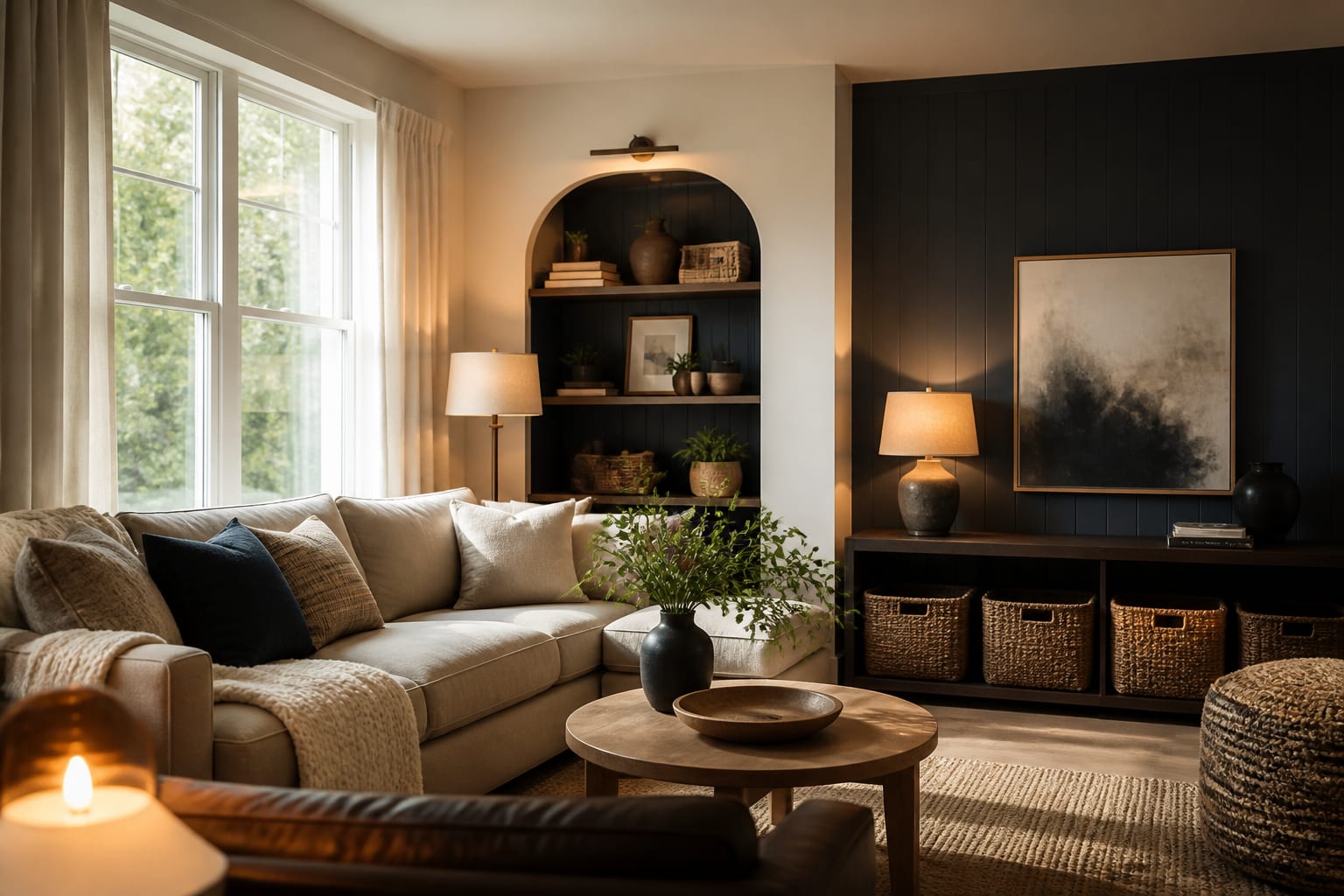
The accent wall is where I would start. A single wall of paint reframes the whole room and costs $30 to $45 for a quart, a roller, and tape, and it dries enough for a second coat within a few hours. Choose the wall the eye lands on first, usually the one behind the bed or sofa, and tape your edges the night before so Saturday is just rolling. A deep, moody color works best on the accent wall because it adds depth without committing the whole room to a dark tone, and a quart is plenty for one wall under 120 square feet.
Hardware is the fastest win. Pulling the builder knobs off a kitchen or dresser and installing solid pulls at $4 to $12 each takes an afternoon with a single screwdriver, and a drill makes it faster. A dozen fronts updates for under $150 in materials, and the new finish reads across the whole room. If the old holes do not line up with the new pulls, a drilling template from the same hardware aisle costs about $8 and keeps every hole straight and evenly spaced. For the trickier swaps like faucets and fixtures, this guide to upgrading builder-grade finishes walks through the ones worth the extra hour.
Floating shelves and repainted furniture round out the bigger jobs. A pair of 24-inch floating shelves costs $25 to $50 and turns dead wall space into storage you can style. Mount them into studs or use rated drywall anchors, because a shelf that sags or pulls out of the wall undoes the whole afternoon. Repainting a tired dresser or table takes a $15 quart of furniture paint, a scuff-sand, and two thin coats, turning a thrift-store find into a focal piece for the price of lunch. A bonding primer skips most of the sanding on slick laminate, which cuts the job from a full day to a single afternoon.
The weekend project shopping list
Here is what to keep on hand so any of these projects can start without a second store trip:
- A quart of wall paint, roller, and painter's tape: $35
- Twelve cabinet or drawer pulls in one finish: $80
- Two 24-inch floating shelves with brackets: $40
- A quart of furniture paint plus sandpaper: $20
- Peel-and-stick backsplash for a 15-square-foot wall: $90
- A basic drill, level, and screwdriver set: $45
That list tops out near $310, but you rarely do all five in one weekend, so any single project stays comfortably under $100 in materials. Buying the drill and level once means every project after the first costs only its own supplies, which is how a $45 tool kit pays for itself by the second weekend. The backsplash is the surprise performer. Peel-and-stick tile at $6 to $10 per square foot covers a 15-square-foot kitchen run for $90 to $150, and a sharp utility knife plus a level gets it up in an afternoon with no grout. Clean the wall with degreaser first so the adhesive grips, because a backsplash that lifts at the corners after a month is the most common DIY regret in this category. Start from a bottom corner and work upward in a straight line off your level, since a backsplash that drifts even a quarter inch per row looks crooked by the time you reach the top. If you want each project to also read as high-end, pair it with these tactics to make a room look expensive on budget.
Common mistakes to avoid
The first mistake is skipping prep. Hardware swaps go sideways when the new pulls have a different screw spacing than the old holes, so measure the center-to-center distance, usually 3 or 3.75 inches, before you buy. Five minutes with a tape measure saves a return trip and a wasted Saturday. The same rule applies to shelves and tile, where a quick measurement up front prevents the bulk of beginner mistakes.
The second is rushing paint. Two thin coats with proper dry time between them beat one thick coat that drips and peels, and that patience is the difference between a project that looks done and one that looks rushed. Furniture especially needs a light sand first or the paint will not grip. Give each coat the four to six hours the can specifies, even if it feels dry to the touch sooner, because recoating too early is what causes the streaky finish people blame on cheap paint.
The third is ignoring the ceiling. In rooms with low headroom, a horizontal shelf or a wide accent can make the space feel shorter, so these low-ceiling design tricks help you choose projects that lift the room instead of pressing down on it.
The fourth is starting without a finish line. A weekend project sprawls into three weekends when you have not decided exactly where the shelves go or which color the wall will be. Spend twenty minutes Friday night marking your stud locations, taping your edges, and laying out the hardware, and the actual work on Saturday goes twice as fast with half the mistakes.
Preview Your Weekend DIY Project in Re-Design
Frequently Asked Questions
What is the best weekend DIY project for a quick room change? An accent wall. For $30 to $45 in paint and tape it reframes the entire room, and it dries fast enough to finish in one Saturday. No other single project changes a space as much for as little money.
How much does a peel-and-stick backsplash cost to DIY? Around $6 to $10 per square foot, so a typical 15-square-foot kitchen run lands between $90 and $150 in tile. It installs with a utility knife and a level in an afternoon, with no grout or wet saw required.
Can a beginner repaint furniture in a weekend? Yes. A $15 quart of furniture paint, a quick scuff-sand, and two thin coats turn a dated dresser into a focal piece. The only real rule is to sand lightly first and let each coat dry fully before the next, and a bonding primer can skip most of the sanding on slick laminate.