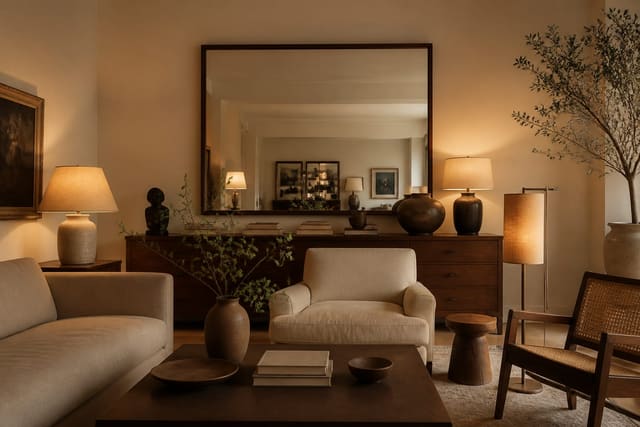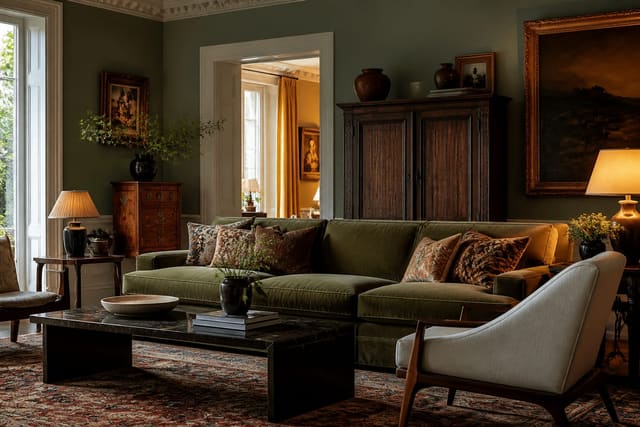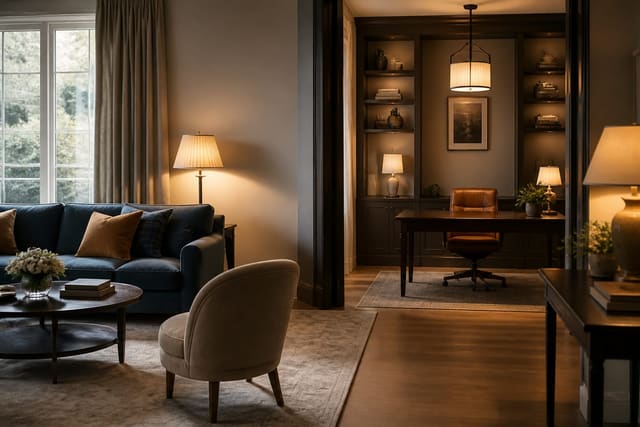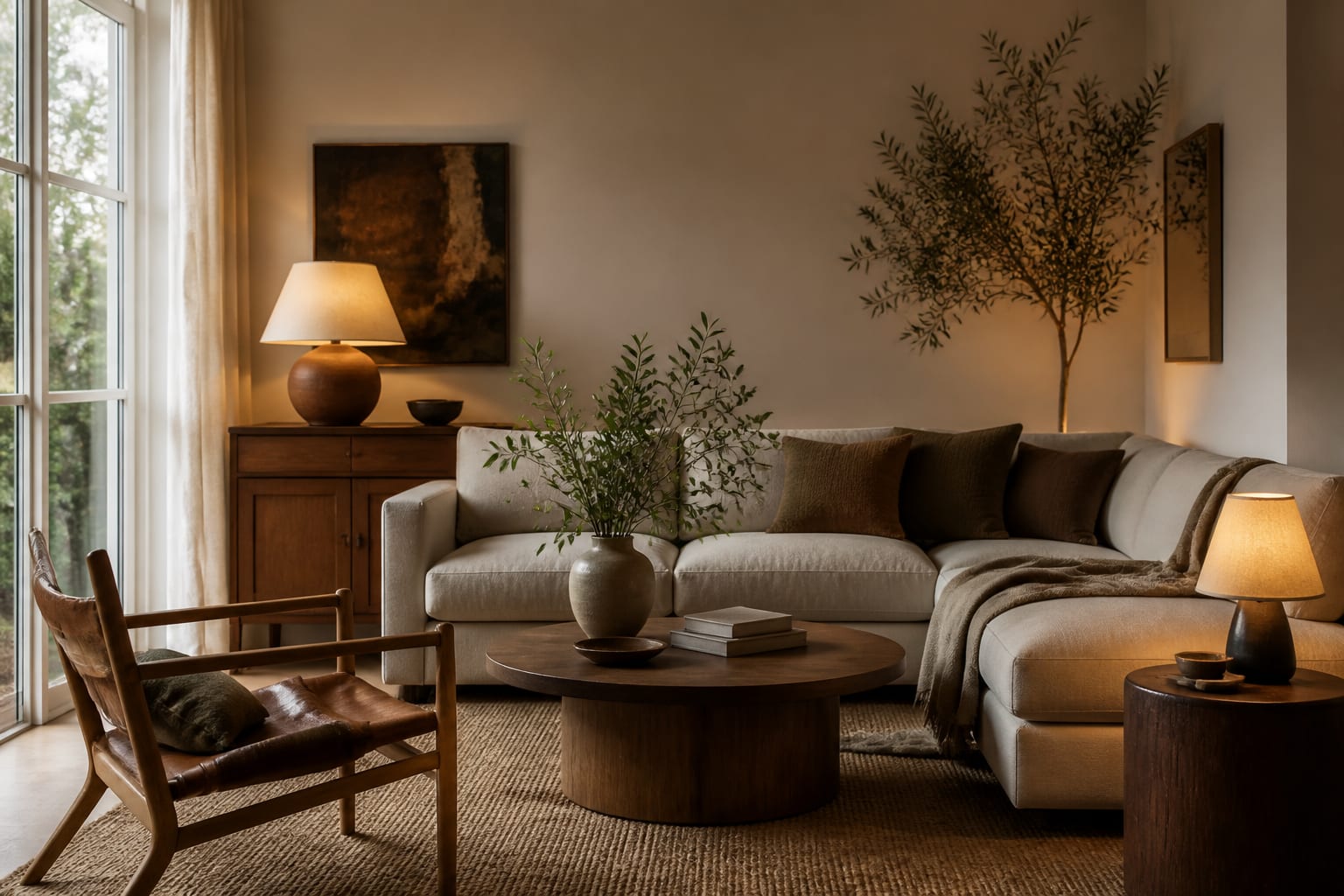
A small budget does not mean a cheap-looking room; it means you cannot afford to spend in the wrong order. After years of watching people blow $1,500 on a sofa and then live with bad lighting and bare walls, I am convinced sequencing matters more than the total. Spend on the surfaces and light that touch the whole room first, and save the statement pieces for last. Get the order right and a $1,500 room can look like a $5,000 one.
Why spending order beats spending more
The surfaces that wrap an entire room set the tone before any furniture arrives. That is why $120 of paint changes a space more than a $600 accent chair. Lighting comes next because even a well-furnished room looks flat under a single harsh ceiling fixture. Layering a $40 floor lamp and a $30 table lamp at 2700K warm temperature does more for a living room than another throw pillow ever will. If your room already fights you on natural light, the targeted color and fixture choices in our dark room design solutions stretch a small budget the furthest.
Think of it as building from the box inward. The walls, ceiling, and the light filling them are the box; nail those and almost anything you put inside looks better than it has a right to. Skip them and even a $2,000 sofa sits in a room that still feels like a rental, because the eye reads the whole envelope before it ever lands on the furniture. People reverse this order constantly and then wonder why their nice pieces look cheap.
Lighting deserves a harder push than it usually gets, because it is where small money buys the most drama. A single overhead fixture flattens a room and casts everyone in it in the worst possible light, while two or three warm sources at different heights make the same space feel layered and lived-in. For around $230 you can add a floor lamp, a table lamp, and a dimmable bulb in the existing fixture, and that change reads as more expensive than a piece of furniture costing three times as much. If you only have $300 left after paint, spend it here before anything else.
Only after surfaces and light are handled do I spend on a single anchor: the sofa, the bed, or the dining table. This is the one place to push your budget, because it sets the scale and quality bar for everything around it. Everything else, the rug, art, and pillows, can be inexpensive and swapped as your taste shifts. A well-made anchor in a neutral fabric will outlast three trendy impulse buys and still look right when your style moves on.
Scale is the part of this people get wrong most often, and it costs nothing to get right. A loveseat that is six inches too small for the wall it sits against makes a room feel like a doll house, while an oversized sectional in a 10-by-12 space swallows the floor and blocks the path. Measure the wall, tape the footprint on the floor, and live with the outline for a day before you buy. The most expensive mistake on a small budget is a correctly priced piece in the wrong size, because you cannot return your way out of a scale error without losing time and restocking fees.
Where to put your first $1,500
Here is a budget I would actually run for a small living room, and it leaves room to adjust:
- Paint, primer, and supplies: $250 for walls, trim, and ceiling.
- Layered lighting: $230 for two lamps and a dimmable smart bulb set.
- Anchor seating: $650 toward one well-built sofa or loveseat.
- Area rug, large enough to sit under the front furniture legs: $200.
- Art and accessories from thrift, print shops, and clearance: $170.
That split, roughly 17% on surfaces, 15% on light, and 43% on the anchor, keeps the room from looking like a showroom of compromises. The rug line is the one people most want to cut, and it is the one I defend hardest, because a rug that is too small makes a whole room feel like a waiting area. Buy the size that tucks under the front legs of your seating, even if it means a flatter weave to hit the price.
Mixing a few high and low pieces is also what makes a budget room read as intentional, and our guide on how to blend design styles shows how to combine a cheap thrift find with one good piece so the whole thing looks collected rather than cobbled together. A $30 thrifted brass lamp next to a real sofa reads as taste; ten matching big-box pieces read as a catalog you could not quite afford.
Common mistakes to avoid
The most common error on a tight budget is buying many small things instead of fewer good ones. Ten $40 decor pieces total $400 and still leave a room feeling cluttered and unfinished, while that same $400 toward a real rug anchors the space. Resist the urge to fill every surface; empty space is free and reads as intentional. A room with three deliberate objects on a shelf looks more expensive than one with thirty.
The second mistake is buying trend-driven big-ticket items. A $700 sofa in this season's color is a $700 regret in two years, while a neutral one carries every trend you layer on top with $30 pillows. Buy timeless where it is expensive and trendy where it is cheap. The fastest way to date a room is to spend your largest dollars on the thing most likely to fall out of fashion.
A third trap is forgetting that one room often has to do two jobs on a small footprint; planning for that from the start, as we cover in our dual-purpose room layouts, prevents an expensive re-buy when the office also has to host guests. Decide up front whether the sofa needs to fold flat or the desk needs to hide, and buy once for both jobs instead of twice.
Preview your budget room in Re-Design
Frequently Asked Questions
What should I buy first on a small design budget? Start with paint and lighting, because they touch the entire room and cost the least relative to their impact. A fresh wall color and layered, warm lighting make even old furniture look intentional. Spend on a single anchor piece only after those surfaces are handled.
How much of my budget should go to one big piece? Roughly 40% to 45% is reasonable for the room's anchor, like a sofa or bed. That piece sets the quality bar everyone notices, so it is worth the concentration. Keep the rest spread thin across swappable, inexpensive decor.
Is it worth hiring help on a small budget? Usually not for a single room; the design fee can eat a quarter of your total. A few hours of paid virtual consultation can be worth it for layout, but for a sub-$2,000 project, your money goes further into the room itself. Use free tools to plan instead.