A mid century modern home office is one of the few design choices that genuinely improves how you work—the clean lines reduce visual distraction while the warm wood tones keep the space from feeling sterile. Most people get it half right by picking the iconic tapered-leg desk but then surrounding it with the wrong chair or the wrong light.
The details matter more than the headline pieces. The right pendant, the right credenza height, the deliberate use of a single saturated accent color—these are the moves that take a room from "inspired by" to the real thing. The ideas below are ranked from structural to finishing, so you can implement them in order without backtracking.
Choosing The Right Desk And Chair Pairing
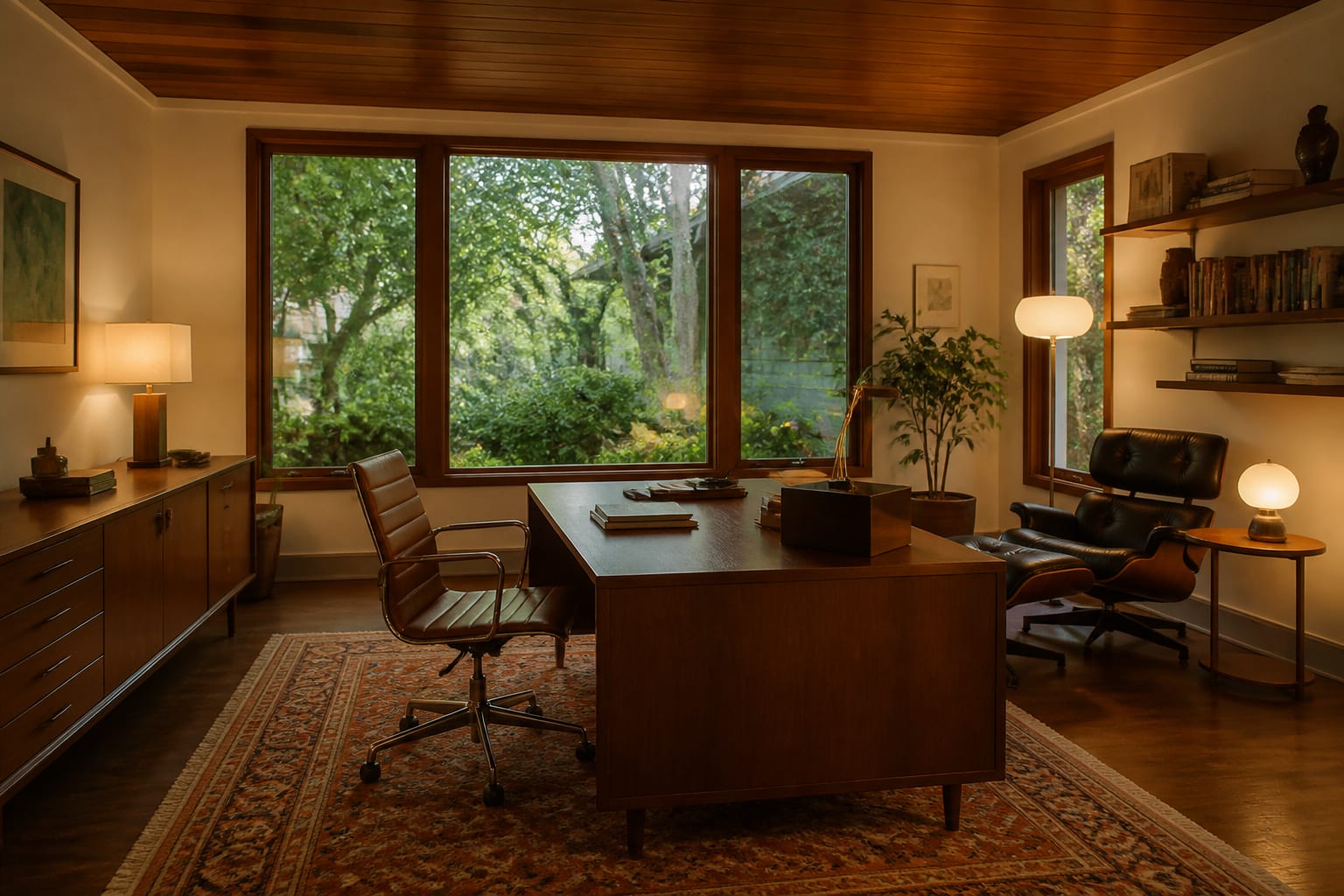
The desk is the room's spine, and in mid century modern design it should be low-slung with tapered legs in walnut, teak, or ash. Aim for a surface height between 28 and 30 inches—slightly lower than a standard desk—which encourages a relaxed, reclined posture that reads as intentional rather than ergonomically accidental. Avoid desks with heavy aprons or thick stretchers; the visual lightness of the leg-forward silhouette is the whole point.
The chair should either match the period exactly—an Eames DAW, a Knoll Tulip, a vintage swivel in leather—or complement it through material contrast. A low-profile saddle-leather executive chair in cognac or black plays well against lighter wood. What kills the look is a modern mesh task chair with aggressive lumbar wings and visible plastic adjustment levers. If ergonomics are a priority, hide the mechanism under a period-appropriate slipcover or choose a chair that conceals its adjustability.
Keep the desk surface mostly clear. One ceramic lamp, one leather-trimmed desk pad, and a single object of interest—a sculptural paperweight, a small plant—is the editorial limit. Clutter reads as a different decade entirely.
See also our guide to Cottagecore Home Office Ideas for more on mid century modern home office ideas.
Lighting That Honors The Era
Mid century modern lighting leans on three silhouettes: the arc floor lamp, the globe pendant, and the angled arm desk lamp. The arc lamp is the most dramatic; a black or brass stem with a white or rattan dome shade at roughly 60 to 65 inches high fills vertical space without requiring overhead wiring changes. It also creates a pool of warm light that defines a reading or thinking zone separate from the working desk area.
For the desk itself, an articulated arm lamp in black or brushed brass—think a Luxo-style knockoff or a genuine vintage Anglepoise—gives you direct task light without heating the surface. Bulb temperature should sit at 2700K to keep the warm wood tones from going gray. Anything cooler than 3000K will fight the walnut and make the space feel like a hospital corridor.
If you have overhead cans, swap in amber-tinted Edison-style bulbs or add a dimmer. Control over light level throughout the day is more useful than any single fixture choice, because the quality of a mid century room shifts dramatically from morning to evening.
For a related angle on mid century modern home office ideas, read Industrial Home Office Ideas.
Color, Materials, And The 60/30/10 Breakdown
The most reliable color structure for this style follows a 60/30/10 ratio: 60 parts neutral wall and floor, 30 parts warm wood, 10 parts saturated accent. The neutral is usually a warm white, soft greige, or low-chroma sage. The wood does most of the heavy visual lifting through the desk, shelving, and any credenza. The accent color—one color, used three to four times—is where personality lives.
Mustard yellow, olive green, burnt orange, and slate blue are the canonical accent choices. Each one has documented precedent in mid century textile design and plays well against walnut grain. Use the accent in a desk chair cushion, a ceramic object, a small rug detail, and possibly a single wall of paint if the room is large enough. Resist the urge to add a second accent; it splits the room's identity.
Materials beyond wood should include at least one of: wool, leather, rattan, or terrazzo. These textures reference the period's interest in honest, tactile materials and prevent the room from reading as a flat catalog shot. A small wool rug under the chair, even 3 by 5 feet, grounds the whole desk zone.
Storage That Stays In Period
Visible storage is the fastest way to break mid century character if handled carelessly. The solution is a low credenza—typically 18 to 20 inches tall—on tapered legs that runs along one wall. This piece handles cables, files, and equipment while doubling as a display surface for a lamp, a plant, and one or two curated objects. It keeps the room's visual floor low, which makes ceilings feel taller.
Open shelving, if you use it, should be asymmetrical and deliberately sparse. The mid century aesthetic does not favor wall-to-wall shelving packed with books. Instead, a floating teak shelf at roughly 60 inches from the floor—eye level when seated—holds a small collection of objects and books with negative space between clusters. That breathing room is doing design work.
For cables and technology, use leather-wrapped cable ties, wooden cable boxes that match the desk finish, or tuck everything behind the credenza. The era obviously predates laptops, but the principle holds: if it reads as purely functional hardware, conceal it. The room should look like it could have existed in 1962 even if it has to function in the present.
- Swap your overhead lighting for a brass arc floor lamp with a linen drum shade.
- Add a low walnut credenza on tapered legs to handle storage without visual bulk.
- Use a single mustard or burnt-orange accent repeated in chair cushion, ceramic, and rug detail.
- Hang one large-scale abstract print in black, white, and your accent color above the credenza.
- Place a 3-by-5-foot wool rug in a geometric or abstract pattern under the desk chair.
- Keep the desk surface to three objects maximum: lamp, pad, and one sculptural item.
- Add a low rattan or woven pendant over a reading chair to define a secondary zone in the room.
Bring the look home with Re-Design
Before committing to a walnut desk or a new pendant fixture, use Re-Design to upload a photo of your current home office and preview exactly how mid century modern pieces will look in your actual space. The AI renders furniture silhouettes, wood tones, and accent colors against your real walls and floor so you can confirm the palette works before buying anything. It takes seconds and eliminates the expensive guesswork of ordering furniture you end up returning.
Frequently Asked Questions
What is the most essential piece for a mid century modern home office?
A low-profile desk with tapered legs in walnut or teak is the foundation piece—everything else arranges itself around it. Get the desk right first, then match the chair and lighting to its proportions and finish.
Can I mix mid century modern with other styles in a home office?
Yes, but limit the mixing to one complementary style at most—typically Japandi or organic modern, which share the preference for natural materials and clean lines. Avoid industrial or maximalist elements, which fight the streamlined silhouettes that define the period.
What wall color works best with walnut furniture?
Warm white (like a cream or off-white with yellow undertone) and soft sage green are the two most reliable choices because they amplify the warm grain in walnut without competing with it. Avoid cool grays or stark white, which make the wood look orange rather than warm.