A mid century modern living room works best when you commit to low, clean-lined furniture and let warm wood tones carry the room. Skip the matched showroom set and build around two or three statement pieces instead. The style rewards restraint: a walnut sideboard, a tufted sofa on splayed legs, and a single sculptural lamp do more than a crowded room ever will. Below are specific, buildable ideas for furniture, color, lighting, and layout that keep the look authentic without turning your living room into a museum piece.
Choosing Furniture With Authentic Mid Century Lines
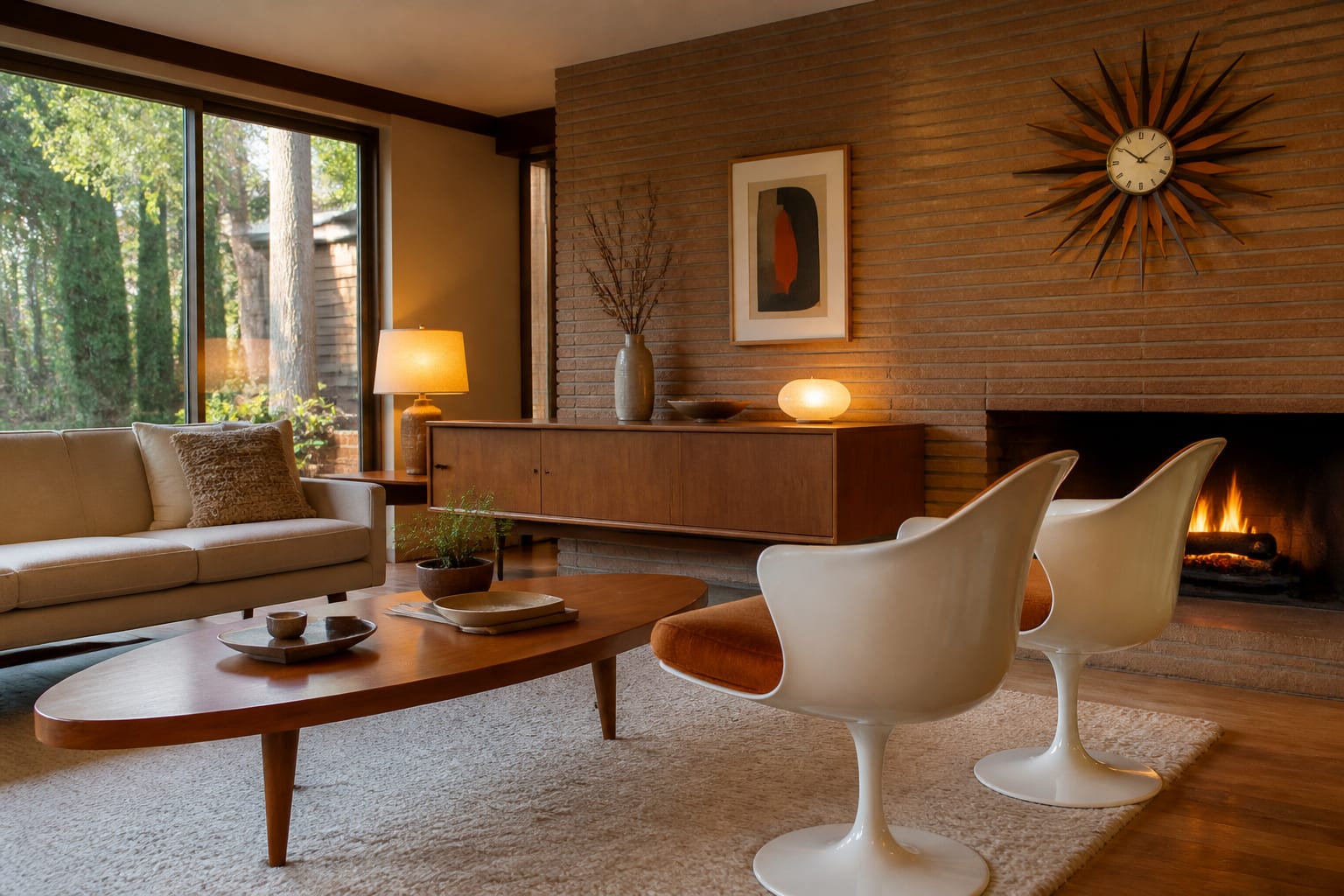
The backbone of a mid century modern living room is furniture with low profiles, tapered legs, and honest materials. Start with the sofa, since it sets the height for everything else. Look for a frame that sits roughly fifteen to seventeen inches off the floor, with thin track arms and legs that splay outward at a slight angle. Walnut and teak are the signature woods here, prized for their warm grain and the way they age. A tufted bench seat reads more period-correct than deep, overstuffed cushions. Pair the sofa with a pair of lounge chairs rather than a matching loveseat, because contrast in form keeps the room from feeling like a furniture catalog. A classic shape like a molded shell chair or a leather-and-wood frame chair introduces a sculptural element at seating height. For tables, choose pieces with slim metal hairpin legs or solid wood legs that echo the sofa. A round coffee table softens the geometry of a rectangular room and improves traffic flow. Avoid bulky media consoles; a long, low credenza with sliding doors hides electronics while reinforcing the horizontal lines the style depends on. Materials should feel natural and tactile, so mix wood with woven cane, leather, and wool rather than glossy lacquer. Scale each piece to the room rather than buying the largest version available, since the style depends on furniture reading as light and almost weightless. A nesting side table or a slim magazine rack with wooden dowels fills gaps without adding visual mass. Quality matters more than quantity, because a few well-built pieces with honest joinery outlast a room packed with filler. When every piece shares a low center of gravity and a visible leg, the room gains that unmistakable mid century rhythm where furniture appears to float just above the floor.
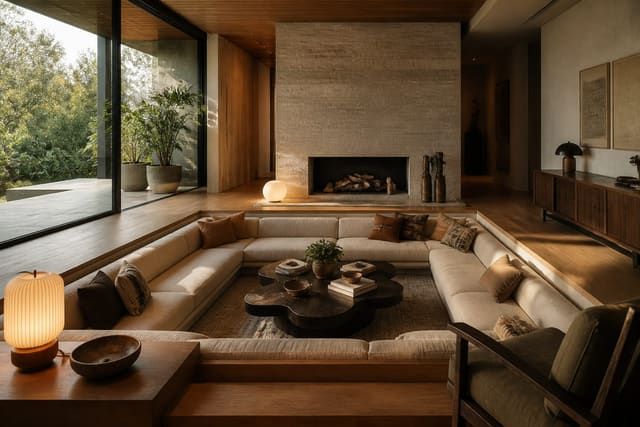
See also our guide to Sunken Living Room Ideas for more on mid century modern living room ideas.
Building a Warm Mid Century Color Palette
Color is where a mid century modern living room either sings or falls flat, and the trick is balancing warm neutrals with a few saturated accents. Begin with a grounded base: walls in a soft white, warm beige, or muted greige let the wood tones and bold accents do the talking. Against that backdrop, layer in the earthy hues the era is known for, such as mustard yellow, burnt orange, avocado green, and a deep teal. The key is proportion. Pick one dominant accent and one supporting accent rather than scattering five colors around the room. A mustard sofa with olive and walnut accents feels intentional, while a rainbow of cushions feels chaotic. Use these warm tones on the largest soft surfaces, like an area rug or the sofa upholstery, then echo them in smaller doses through throw pillows, a ceramic lamp base, or framed graphic art. Black is a useful punctuation mark here, appearing in slim metal legs, a wire light fixture, or a picture frame to sharpen the softer palette. Avoid cool gray as a primary color, since it drains the warmth the style relies on. If you want pattern, lean on geometric prints with simple repeating shapes rather than busy florals. Repeating your dominant accent at least three times across the room, perhaps a rug, a pillow, and a vase, gives the eye a path to follow and makes the color feel planned. Plants earn their place here too, since the deep green of a rubber tree or a fiddle-leaf fig reads as a natural accent that complements the earthy scheme. A well-chosen palette makes the room feel sunlit even on gray days, and it ties the wood, textiles, and architecture into one cohesive mid century statement.
For a related angle on mid century modern living room ideas, read Cottagecore Living Room Ideas.
Lighting And Sculptural Statement Pieces
Lighting carries enormous weight in a mid century modern living room because the fixtures double as sculpture. Rather than relying on a single overhead light, build layers that you can dim and adjust through the evening. A globe or starburst pendant works beautifully over a seating area, casting a warm glow while serving as a deliberate focal point above the coffee table. Floor lamps with arched arms reach over a sofa or reading chair and add a graceful curve that contrasts the straight furniture lines. Table lamps with ceramic or wood bases and conical shades sit naturally on a credenza or side table, giving you pools of light at seating height. Choose warm bulbs in the twenty-seven hundred Kelvin range so the glow flatters wood tones and skin alike. Beyond lighting, a single sculptural object can anchor the whole room. A spindly atomic-era clock, a ceramic vase with an organic silhouette, or an abstract bronze figure introduces the playful, optimistic spirit the era championed. Place these pieces with breathing room around them so they register as art rather than clutter. A large piece of abstract or geometric wall art above the sofa completes the composition and draws the eye upward. Position your lighting at three different heights, perhaps a pendant up high, a floor lamp at mid level, and a table lamp down low, so the room never flattens into a single harsh layer. Simple dimmer switches let you tune each source independently, which matters in a style built around warm, controlled ambiance. The goal is a room where light and form work together, so that when you switch on the lamps at dusk, the furniture, the glow, and the sculptural accents all feel like parts of one considered mid century scene.
Layout And Open Flow For Smaller Rooms
A successful mid century modern living room treats open space as a design feature rather than empty square footage to fill. The style emerged alongside open-plan homes, so the layout should encourage easy movement and clear sightlines. Float the sofa a few inches off the wall when the room allows, and angle a lounge chair toward it to create a conversation grouping rather than pushing everything to the perimeter. Keep at least thirty inches of walking clearance around the main pathways so the low furniture never blocks the eye. In a smaller room, scale matters more than ever: a compact two-seat sofa with exposed legs reads lighter than a sectional, and seeing the floor beneath your furniture makes the whole space feel larger. Use a single area rug to define the seating zone, choosing one large enough that the front legs of the major pieces rest on it. This anchors the arrangement without crowding the room. A wall-mounted credenza or shelving unit frees up floor space while delivering the horizontal storage the style favors. Resist the urge to fill every corner; one well-placed plant in a ceramic or tripod-legged planter adds life without clutter. Position seating to take advantage of natural light from windows, since the era prized indoor-outdoor connection. Mirrors with simple wood or brass frames bounce that daylight deeper into a small room and visually double the space. Keep window treatments minimal, choosing simple linen panels or woven shades that frame the view rather than smothering it in heavy drapery. When the layout breathes, the clean furniture silhouettes stay visible and the room delivers that relaxed, airy confidence that defines the best mid century interiors, even in a modest footprint.
- Float a low walnut sofa off the wall to anchor a conversation grouping.
- Hang a starburst or globe pendant directly above the coffee table.
- Add a single molded shell chair to break up matching seating.
- Layer a mustard or rust wool rug under the front sofa legs.
- Mount a long credenza with sliding doors to hide electronics neatly.
- Place an arched floor lamp behind the sofa for warm evening light.
- Display one sculptural ceramic vase with organic curves on the credenza.
Bring the look home with Re-Design
Seeing these mid century modern living room ideas in your actual space removes the guesswork before you buy anything. With Re-Design, you upload a photo of your current living room and preview walnut furniture, warm color palettes, and sculptural lighting mapped onto your real walls and windows. Test a mustard sofa against your floor, swap in a starburst pendant, or check how a credenza fits along a short wall. You compare several directions in minutes, which makes committing to furniture and paint far easier and less expensive when the pieces actually arrive.
Frequently Asked Questions
What furniture defines a mid century modern living room?
Low sofas with tapered wooden legs, walnut or teak credenzas, and sculptural lounge chairs define the look. Choose pieces with clean lines, exposed legs, and honest natural materials. Mixing a few statement shapes beats buying a single matched furniture set for an authentic result.
Which colors work best in a mid century modern living room?
Start with a warm neutral base of soft white or beige, then layer earthy accents like mustard, burnt orange, olive, and teal. Pick one dominant accent and one supporting tone. Add black through metal legs or frames to sharpen the warm palette without overwhelming it.
Can mid century modern style work in a small living room?
Yes, the style suits small rooms well because its low, leggy furniture shows the floor and feels airy. Choose a compact sofa with exposed legs, one area rug to define the seating zone, and wall-mounted storage to keep precious floor space open and uncluttered.