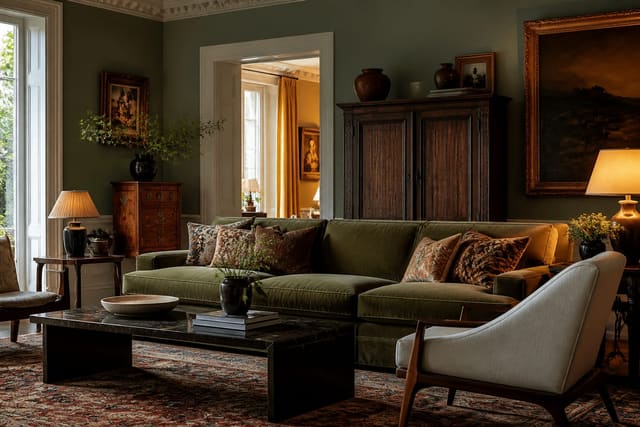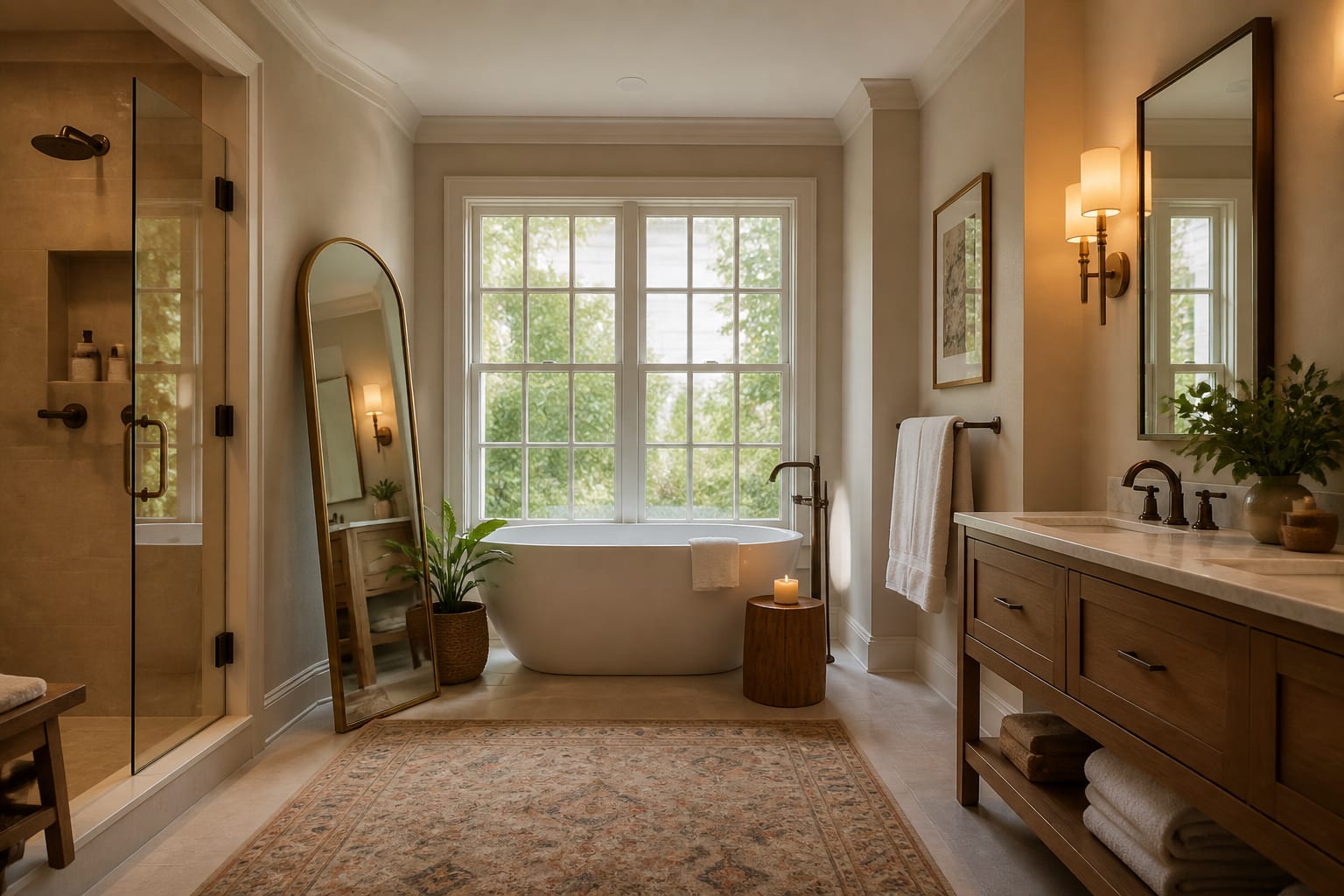
A mirror is the cheapest way to double the daylight and apparent size of a room, but only if you place it deliberately. The reflective surface simply repeats whatever sits in front of it, so a mirror facing a window throws sunlight deep into the space, while one facing a cluttered corner just doubles the mess. Position, height, and scale decide whether a mirror reads as a designer move or an afterthought. Get those three right and a dim, boxy room can feel brighter and noticeably larger without a single structural change or expensive renovation.
Where should you place a mirror to bounce light?
The most powerful spot for a mirror is opposite a window, where it catches the brightest daylight and throws it back into the darker side of the room. This effectively gives you a second window's worth of light without any construction. In a north-facing room that never gets direct sun, a large mirror on the opposite wall can lift the overall brightness dramatically and warm up the mood.
Placing a mirror perpendicular to a window works well too, especially on the wall beside it. From this angle the glass catches light at a slant and spreads it sideways rather than straight back, which softens glare while still amplifying daylight. Avoid hanging a mirror on the same wall as the window, since it then faces the dim interior and reflects shadow instead of sunshine. For the biggest effect, choose a mirror at least 30 inches wide so it captures a meaningful slice of the view. A pair of matched mirrors flanking a window can double the bounce while keeping the wall arrangement symmetrical and balanced.
See also our guide to AI Design Dark Room Solutions for more on mirror placement ideas.
How high should a mirror hang on the wall?
Hang the center of a decorative wall mirror 57 to 60 inches from the floor, the same eye-level standard galleries use for artwork. This puts the reflection at a comfortable height for most adults and keeps the mirror from floating awkwardly high or sitting too low. When a mirror hangs above a console or sofa, you can nudge it slightly so the bottom edge clears the furniture by 4 to 8 inches.
Bathroom mirrors follow a similar rule, centered roughly at eye level over the sink, usually around 60 inches to center. Above a fireplace mantel, lean toward the lower end of the range so the mirror relates to the mantel rather than the ceiling. The goal everywhere is a reflection that frames faces and useful sightlines, not the tops of heads or an empty stretch of ceiling. Consistent centering height across a room makes mixed mirror shapes and sizes feel intentional.
For a related angle on mirror placement ideas, read How To Mix Design Styles.
How big should a mirror be for its spot?
Scale is what separates a confident mirror from a stranded one. Over a piece of furniture, choose a mirror about two-thirds the width of the console, dresser, or sofa beneath it. A 60 inch console pairs naturally with a mirror roughly 40 inches wide, which anchors the pairing visually instead of leaving the mirror looking lost on a big wall.
For an empty wall with no furniture, a mirror can go larger and fill 60 to 75 percent of the available wall width to act as a statement. In tight entryways and powder rooms, even a modest 24 inch round mirror can open up the space if it reflects a light source. Resist the urge to cluster many tiny mirrors as a substitute for one well-sized piece, since small fragments scatter the reflection and rarely deliver the light-bouncing payoff that a single generous mirror provides.
When does a leaning floor mirror work best?
A tall mirror leaned against the wall is one of the easiest ways to add height and a relaxed, gallery-like feel to a room. Lean a floor mirror in a bedroom corner or beside a window where it can both reflect light and serve as a full-length dressing mirror. A piece around 65 to 70 inches tall reads as architecture rather than an accessory.
Leaning works because the slight backward tilt captures more of the ceiling and upper wall, which tricks the eye into reading extra vertical space. Anchor the base on a rug or against a baseboard so it cannot slide, and use a wall strap or anti-tip hardware in homes with children or pets. Place it where its reflection lands on something pleasing, such as a made bed or a leafy plant, rather than the back of a wardrobe. The casual lean suits bedrooms, dressing areas, and wide hallways especially well. A leaner roughly 2 to 3 feet wide gives a true head-to-toe reflection without overwhelming a modest bedroom corner.
Here are the common mistakes to avoid: - Hanging a mirror on the same wall as the window so it reflects the dim interior instead of light. - Centering the mirror too high above the standard 57 to 60 inch eye-level line. - Choosing a mirror far too small for the console or sofa it floats above. - Aiming the reflection at clutter, a trash can, or a busy doorway rather than something attractive. - Leaning a heavy floor mirror without anti-tip hardware in a home with kids or pets. - Clustering many tiny mirrors instead of using one generous piece that actually bounces light.
Bring the look home with Re-Design
Judging a mirror's angle and scale by imagination is tough, since the whole payoff depends on what it reflects. With Re-Design you can upload a photo of your room and preview a mirror opposite the window, over the console, or leaning in a corner before you buy or drill. Test how a 40 inch piece looks above a sofa versus a tall leaner against the wall, and check what each reflection actually captures. Seeing the bounced light in your own space makes the right placement obvious in seconds.
Frequently Asked Questions
Where is the best place to hang a mirror for more light?
Hang it opposite a window so it catches the brightest daylight and throws it back into the darker side of the room. A spot perpendicular to the window works too, spreading light sideways. Avoid the wall that holds the window itself, since the mirror would then reflect the dim interior rather than the sun.
What height should a wall mirror be centered at?
Center a decorative wall mirror 57 to 60 inches from the floor, the same eye-level standard galleries use for art. Above a console or sofa, let the bottom edge clear the furniture by 4 to 8 inches. Bathroom mirrors sit similarly, centered around 60 inches over the sink.
How big should a mirror be over furniture?
Choose a mirror about two-thirds the width of the console, dresser, or sofa below it. A 60 inch console pairs well with a mirror near 40 inches wide. For an empty wall, you can go larger and fill 60 to 75 percent of the wall width to make a confident statement.
Are leaning floor mirrors a good idea?
Yes, a tall leaning mirror adds height and a relaxed feel while doubling as a dressing mirror. The slight backward tilt captures more ceiling, which makes the room read taller. Always secure it with anti-tip hardware in homes with children or pets, and aim its reflection at something pleasant.