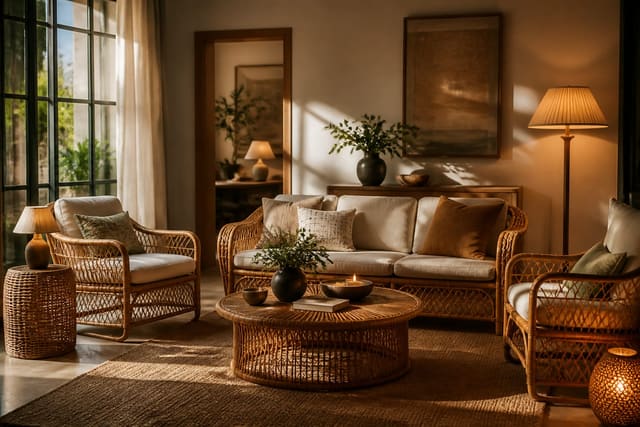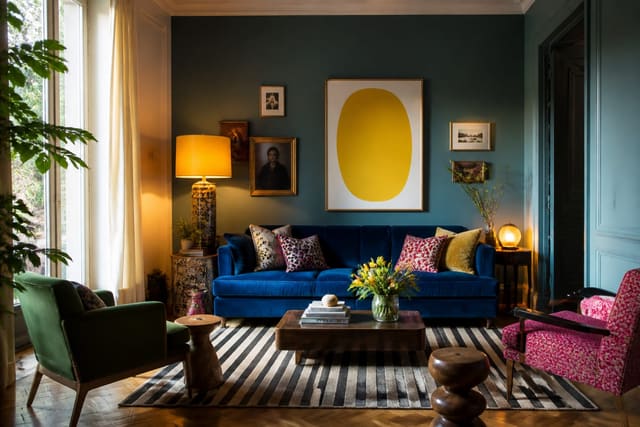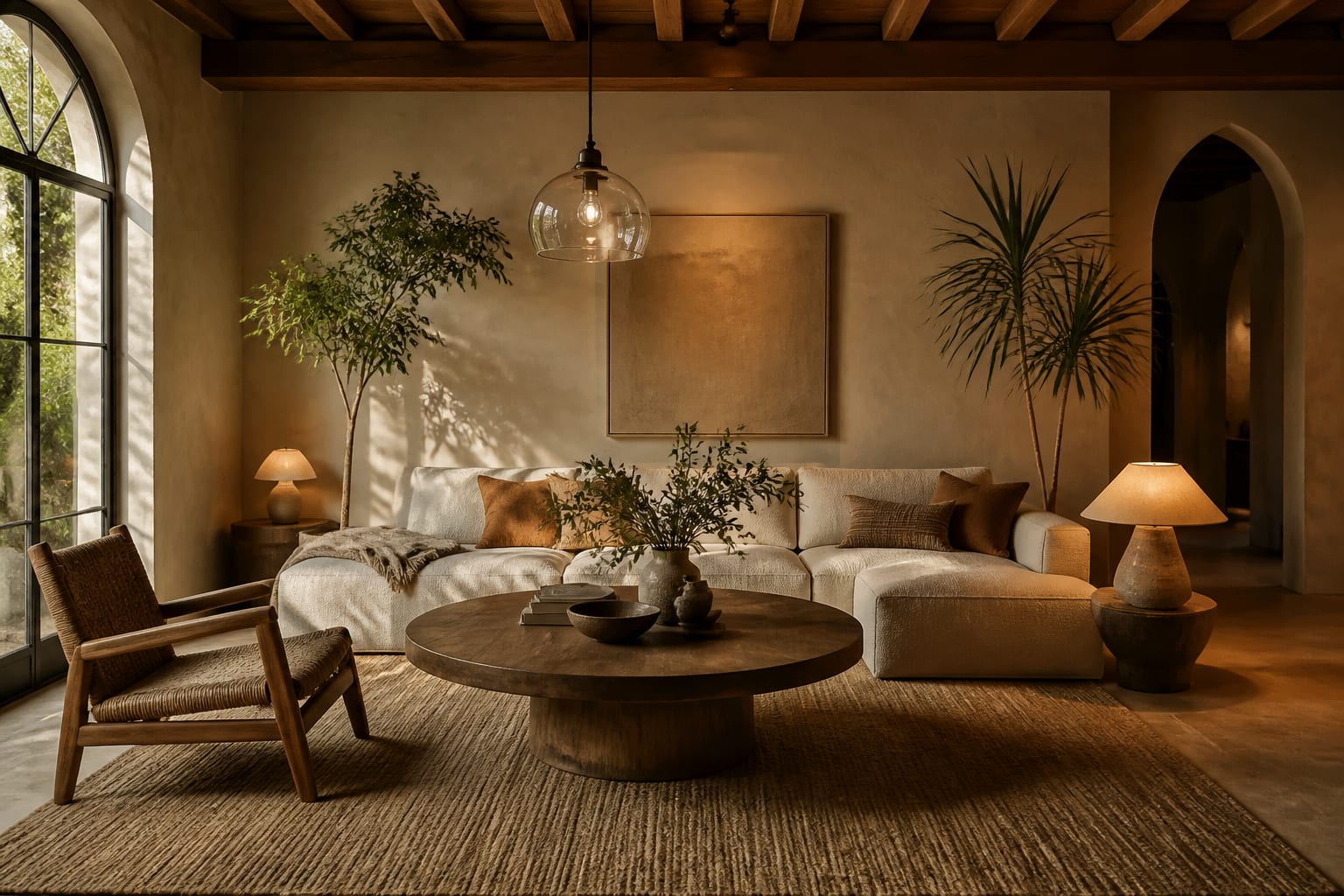
Modern boho is not just classic bohemian with fewer plants. It is a deliberate tension between two opposites: the clean, restrained lines of modern design and the warm, layered texture of boho, held in balance so neither takes over. Get the ratio wrong and you land in one of two ditches, a cold minimalist box or a cluttered free-for-all. The sweet spot is a room with simple architectural furniture as the structure and natural texture as the soul. This guide breaks down the palette discipline, the material mix, and the spatial rules that make the look feel intentional, plus the specific measurements that keep it from tipping into either extreme.
Understand the 70/30 Balance
The defining principle of modern boho is balance, and thinking in a rough ratio keeps you honest. Aim for about 70 percent modern foundation and 30 percent bohemian layering in any given room. The modern share covers the bones: a low-profile sofa with clean lines, simple cabinetry, architectural lighting, and an uncluttered floor plan. The boho 30 percent is everything that adds warmth and personality, like a vintage rug, a few woven baskets, trailing plants, and textured throw pillows. When that ratio holds, the room feels calm and current yet still personal. The number is a guide rather than a measurement, but picturing it stops you adding one boho flourish too many.
The modern half does the structural work, so let it stay quiet and confident. Choose furniture with straight or gently curved silhouettes and resist the urge to fill every corner. Negative space is a feature here, not a flaw, because the empty stretches give the eye somewhere to rest and make the textured pieces register as deliberate choices rather than clutter. A single oversized piece of art, a sculptural floor lamp, or one statement chair can carry more impact than a dozen small accessories. Confident emptiness is what makes the textured layers later feel chosen rather than accumulated.
The boho 30 percent is where restraint matters most, because this is exactly where the look usually goes wrong. Pick a handful of textured, characterful pieces and edit hard. One layered rug, two or three plants, a woven wall hanging, and a curated cluster of ceramics will read richer than a room stuffed with macrame and tassels. If you are unsure whether something belongs, ask whether it adds warmth without adding noise. When the answer is no, leave it out and trust the breathing room to do its job.
See also our guide to Rattan Furniture Ideas for more on modern boho style.
Build a Disciplined Palette and Material Mix
Color discipline is what makes modern boho read modern rather than chaotic. Limit the palette to three core colors plus a base of warm neutrals like off-white, greige, and natural wood tones. A typical scheme might pair a creamy base with terracotta, deep olive, and a muted black for grounding. The muted black is the modern signal: a slim black floor lamp, a thin picture frame, or black window hardware adds the crisp contrast that classic boho usually lacks, sharpening the whole room without making it cold. Used sparingly, that touch of black is what tells the eye this is deliberately modern.
Materials carry the boho warmth, and the trick is mixing natural texture against smooth, modern surfaces. Set rattan, jute, linen, and raw or lightly oiled wood beside cleaner finishes like matte ceramic, smooth plaster walls, and a simple metal or stone tabletop. The contrast is the point: a nubby boucle chair next to a sleek wooden console, or a hand-knotted wool rug grounding a low-slung leather sofa. Repeat each material at least twice across the room so the mix feels composed rather than accidental. That repetition is the difference between a curated material story and a pile of unrelated finishes.
Proportion and placement keep the palette working. When you hang art, center it at 57 inches from the floor, the standard gallery eye level, so it relates properly to the furniture below. Keep walkways at least 18 inches wide between seating and tables so the open, modern flow survives the layering. Choose warm 2700K bulbs throughout rather than cool daylight LEDs, since the amber tone makes the natural materials glow and unifies the modern and boho elements under one consistent light. These small specifications are what separate a styled room from a guess.
For a related angle on modern boho style, read Dopamine Decor Ideas.
Layer Texture Without Losing the Clean Lines
Layering is the heart of boho, but in the modern version it has to stay disciplined so the clean architecture still shows through. Start with the largest soft element, usually a rug, and let it anchor the seating without burying the floor entirely; leaving a margin of bare wood or concrete around the edges preserves the airy, modern feel. On a sofa, layer three to five pillows in varied textures but a tight palette, then add one throw, and stop. The restraint is what keeps the layering from sliding into the cluttered look modern boho is meant to avoid. Each pillow should earn its spot through a distinct weave or weight rather than just filling space.
Vertical texture deserves attention because it adds warmth without consuming floor space. A single woven wall hanging, a tall plant in a simple planter, or floor-to-ceiling linen curtains hung high give the room softness while keeping sightlines clean. Hang curtains close to the ceiling and let them just kiss the floor, which makes walls feel taller and frames windows the way modern rooms favor. Avoid crowding walls with many small objects; one larger, considered piece almost always reads better. A generous expanse of bare wall is part of the modern language, so resist the urge to fill it.
Greenery is the easiest way to bring life, and a few well-placed plants beat a jungle. Two or three plants of different heights, a tall floor plant, a trailing shelf plant, and one tabletop specimen, add organic movement without tipping the room toward maximalist boho. Keep planters simple and tonal so they support the scheme rather than competing with it. The overarching rule is the same throughout: every layer should add warmth or texture while respecting the negative space and clean lines that make the look distinctly modern.
Style With Intention and Edit Ruthlessly
Styling is the final layer, and intention is what separates modern boho from a cluttered room that happens to own a few baskets. Approach surfaces like a curator: group objects in odd numbers, vary their heights, and leave clear negative space around each cluster so individual pieces can be appreciated. A coffee table might hold a stack of two or three books, a single ceramic vessel, and a small tray, and nothing more. The empty surface around them is doing as much work as the objects themselves. A cleared tabletop reads as a choice in modern boho, not as something waiting to be decorated.
Let a few pieces tell a story rather than filling every gap. Vintage and handmade objects bring the soul of boho, so choose ones with genuine character, a thrifted brass bowl, a hand-thrown mug, a textile picked up while traveling, and give them room to stand out. Mass-produced filler accessories dilute the effect, so when you are tempted to add one more decorative object, consider removing one instead. Editing is an active, ongoing practice, not a one-time setup. The best rooms keep getting quieter as their owners learn what truly deserves to stay on display.
Finally, treat the room as a whole rather than a set of separate vignettes. Repeat your core colors and key materials across zones so the eye travels smoothly, and check the balance from the doorway where you first see the space. If it reads busy, pull pieces until the modern bones reappear; if it feels cold, add one warm textural element and reassess. This back-and-forth tuning is exactly how the best modern boho rooms achieve their relaxed, collected calm, and it is a skill that rewards patience far more than a single shopping trip ever could.
Here are the common mistakes to avoid: - Overloading on texture so the room tips into cluttered maximalist boho. - Using too many competing colors instead of three cores plus neutrals. - Skipping clean-lined modern furniture, which leaves the look dated and busy. - Filling every surface and wall, erasing the negative space that defines modern. - Choosing cool daylight bulbs that wash out warm natural materials and textures. - Buying all-new matching sets, which kills the collected, personal character of boho.
Bring the look home with Re-Design
Hitting the modern boho balance by eye is tricky, so test it before you spend. Upload a photo of your room to Re-Design, choose a modern boho style, and preview how clean-lined furniture, a disciplined three-color palette, and a few textured layers actually land in your space. You can compare a more minimal version against a warmer, more layered one and see exactly where the 70/30 balance feels right. Previewing the look in your real room first means you buy the rug, lighting, and statement pieces knowing they hold the balance, not hoping they do.
Frequently Asked Questions
What is the difference between boho and modern boho?
Classic boho is maximalist, layering many patterns, plants, and eclectic finds for a free-spirited feel. Modern boho keeps that warmth and texture but pairs it with clean-lined modern furniture, a disciplined palette, and intentional negative space. Think roughly 70 percent modern structure and 30 percent boho layering, so the room feels collected and calm rather than busy or chaotic.
What colors define modern boho style?
Modern boho leans on warm neutrals like off-white, greige, and natural wood as a base, then adds about three core colors. Earthy terracotta, deep olive, and rust are common, anchored by a touch of muted black for crisp, modern contrast. Keeping the palette tight is what makes the look read intentional instead of cluttered or scattered.
How many plants should a modern boho room have?
Fewer than classic boho. Two or three well-placed plants at varied heights, a tall floor plant, a trailing shelf plant, and one tabletop specimen, bring organic life without overwhelming the clean lines. Keep planters simple and tonal so they support the scheme. The goal is movement and warmth, not a dense indoor jungle that buries the modern structure.