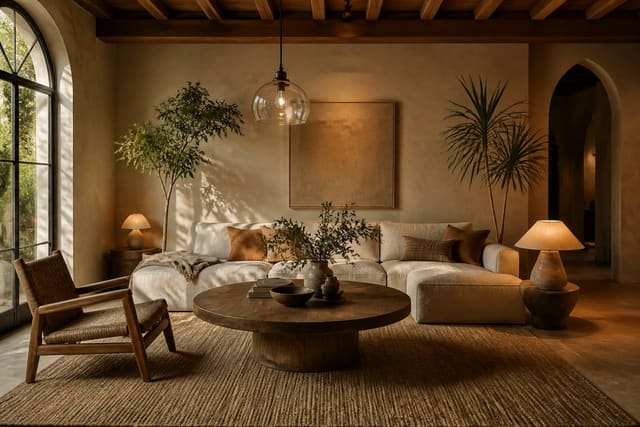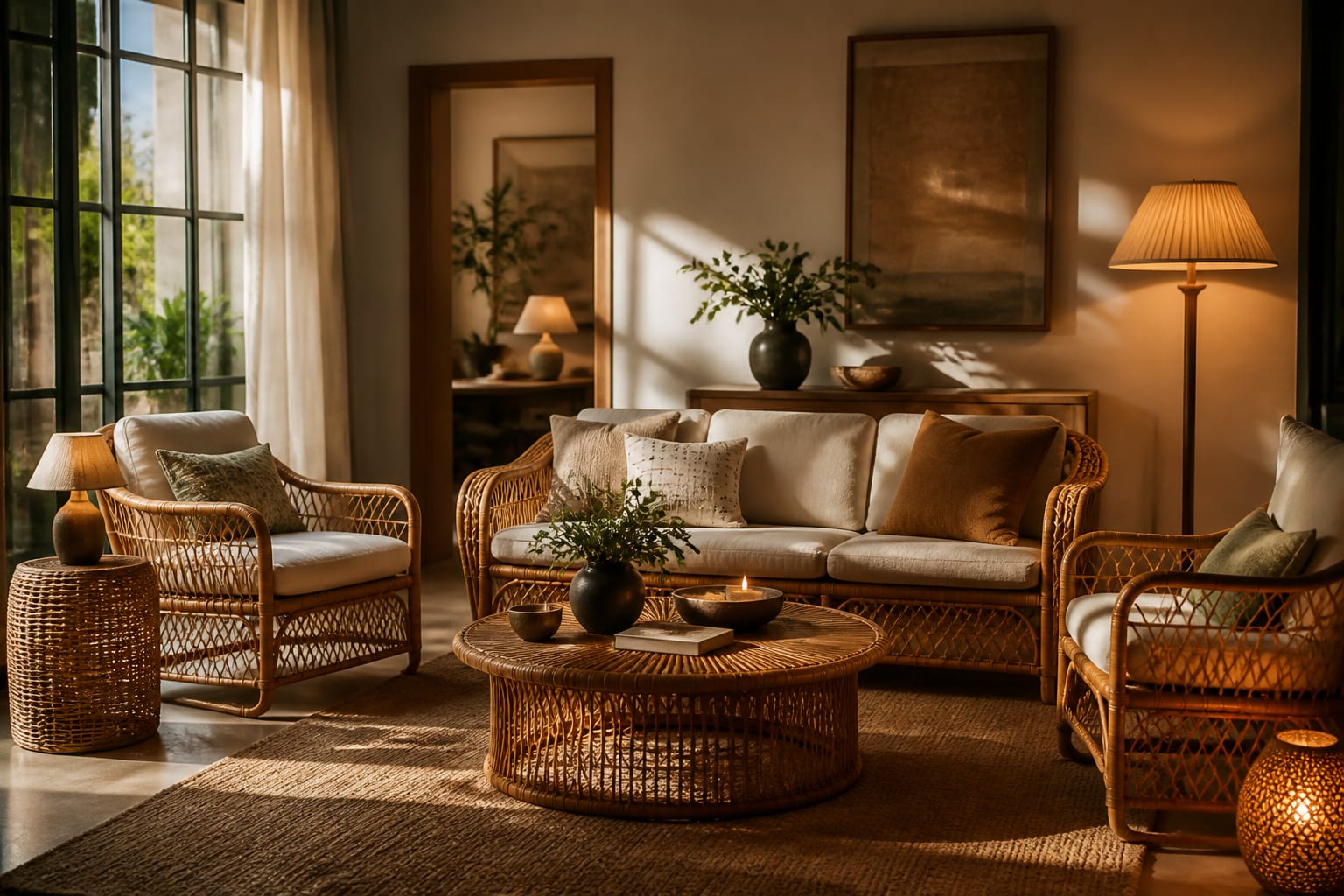
Rattan has shaken off its dated, sunroom-only reputation and become one of the most flexible textures in modern interiors. The error people make is assuming rattan only fits a beachy or tropical scheme. In practice, the warm honey tone and open weave of woven cane work just as hard in a minimalist loft or a layered bohemian bedroom. The trick is choosing the right rattan form for the room and pairing it with materials that keep it from drifting into tiki-bar territory. A single rattan headboard or a cane-front sideboard adds handmade warmth that flat factory furniture cannot fake.
Rattan, cane, and wicker: knowing the difference
These words get used interchangeably and they should not be. Rattan is the raw material, a fast-growing solid palm vine that bends when steamed and holds its shape when cooled, which is why you see those signature curved arms and loops. Cane is the thin outer skin of the rattan stalk, peeled and woven into the open webbing on chair backs and cabinet fronts. Wicker is not a material at all; it is the weaving technique, which can use rattan, cane, seagrass, or synthetic resin.
The distinction matters when you buy. Genuine rattan and natural cane are gorgeous indoors but swell, mildew, and unravel in moisture, so they belong in living rooms, bedrooms, and dining areas. For a screened porch, a poolside set, or a steamy bathroom, all-weather resin wicker mimics the look and shrugs off rain and humidity. Confusing the two is how people end up with a sagging, blackened chair after one wet season.
There is also a meaningful gap between solid rattan-pole furniture and pieces that only use a cane panel as an accent. A solid rattan frame, built from the steam-bent palm itself, carries real weight and lasts decades; a flat-packed cabinet with a thin pressed-cane front is mostly engineered wood wearing a woven mask. Both have a place. The cane-front sideboard or nightstand is an affordable way to add texture in a rental, while a solid rattan lounge chair is an heirloom-grade purchase. Knowing which you are buying keeps your expectations and your budget honest, because the two can look similar in a photo and feel completely different in the room.
Where rattan belongs in a modern home
A rattan headboard is the single best entry point. At 60 inches wide for a queen or 78 inches for a king, a woven headboard brings instant texture to a bedroom without the bulk of upholstery, and it suits the layered, plant-filled look covered in our modern boho style ideas. In a dining room, cane-back chairs around a solid wood table keep the setting from feeling heavy, since the open weave lets light pass through and visually lightens four to six seats.
Living rooms take rattan well in accent form. A peacock chair or a low cane-and-teak lounge chair gives a corner personality, while a rattan-front sideboard hides clutter behind a handsome woven facade. Rattan pendant lights cast a warm, dappled shadow that softens a whole room. If you are building a relaxed, textured scheme, rattan also pairs naturally with the carved wood and tile detailing in moroccan interior design ideas, where handmade texture is the whole point.
Styling rattan so it reads modern, not dated
Rattan tips into kitschy territory when it is surrounded by other tropical cues. Keep the rest of the room disciplined and the rattan looks current. Here are concrete ways to use it:
- Hang a 20-inch woven rattan pendant over a dining table for warm, dappled light without a tropical print in sight.
- Set a single cane-back bench, around 48 inches long, at the foot of a bed dressed in crisp white linen.
- Use a rattan-front sideboard against a moody, dark accent wall so the honey weave glows against the contrast.
- Float a curved cane lounge chair beside a black metal floor lamp to balance soft texture with hard line.
- Stack rattan storage baskets in 12-, 16-, and 20-inch sizes on open shelving for tidy, tonal storage.
- Frame a rattan mirror, roughly 30 inches across, above a console to bounce light and repeat the weave.
Color discipline helps most. Surround rattan with a tight palette of white, oatmeal, black, and one green from real plants, and the woven pieces feel collected rather than themed. Add too many bright tropical patterns and the whole room slides back to 1978.
Texture mixing is the other half of the equation. Rattan reads richest next to materials that contrast with its open, airy weave. Set it against the cool smoothness of a plaster wall, the hard reflection of a glass or marble tabletop, or the matte depth of a black metal frame, and the honey weave looks deliberate and modern. Pile on more soft, natural textures of the same temperature, jute, seagrass, raw wood, and woven baskets all at once, and the room flattens into a single beige note with no focal point. The fix is one or two crisp, hard surfaces in the mix so the eye has somewhere to rest and the rattan reads as the warm hero rather than more of the same.
Buying quality rattan and making it last
Price tracks construction. A well-made rattan chair with a steam-bent frame and tight hand-wrapped joints runs $300 to $900, while flimsy versions under $150 tend to loosen and creak within a year. Press on the weave in the store: quality cane springs back, cheap cane stays dented. Check that the binding at the joints is tight and not already fraying, since that wrapping is the first thing to fail.
Longevity comes down to environment. Keep natural rattan out of direct, all-day sun, which dries the fibers brittle and bleaches the honey tone to gray. Wipe it with a barely damp cloth and let it dry fully; never soak it. In very dry winter homes, a light mist or a nearby humidifier keeps the fibers from cracking. Treated this way, a good rattan piece easily lasts twenty to thirty years and only gains character.
Finish is the last decision, and it changes the whole mood. Natural, unsealed rattan keeps that pale, raw honey color and a slightly matte surface, which suits a bright, airy scheme. A clear lacquer locks in the tone and adds a faint sheen while protecting the weave from grime, useful on a dining chair that gets handled daily. Stained or blackened rattan, darkened to espresso or charcoal, reads far more graphic and modern and disappears into a moody room rather than warming it. If you want the woven texture without the beachy association, a dark-stained rattan piece is the quiet move, since the shape still shows but the color stops shouting tropical.
See your room in rattan before you commit
Woven texture is genuinely hard to picture from a product photo on a white studio background, because you cannot tell how the honey tone will land against your own walls and floors. Re-Design lets you test it first. Upload a photo of your bedroom or living room, then re-design it with a cane headboard, a rattan sideboard, or a pair of woven lounge chairs and see how the weave reads against your existing palette. You can compare natural rattan against a darker stained version, or check whether that peacock chair overpowers the corner, all before a single piece arrives at your door.
Frequently Asked Questions
Can rattan furniture be used outdoors?
Natural rattan and cane cannot handle real weather; they swell, mildew, and unravel once they get wet. For a covered porch, patio, or poolside, choose all-weather resin wicker, which copies the woven look but resists rain, humidity, and UV. Save genuine rattan for dry indoor rooms like living rooms, bedrooms, and dining spaces.
Is rattan furniture durable enough for daily use?
Quality rattan is surprisingly tough. A steam-bent frame with tightly wrapped joints handles daily sitting for decades. The weak points are loose bindings and direct sun, so buy well-made pieces with springy, tight weave and keep them out of all-day sunlight. Avoid the cheapest versions, which loosen and creak within the first year.
How do I keep rattan from drying out and cracking?
Wipe it with a barely damp cloth, never soak it, and let it dry completely. Keep it away from heat vents and constant direct sun, which make the fibers brittle. In dry winter air, an occasional light mist or a nearby humidifier restores moisture and prevents cracking. Treated gently, rattan stays supple and only improves with age.