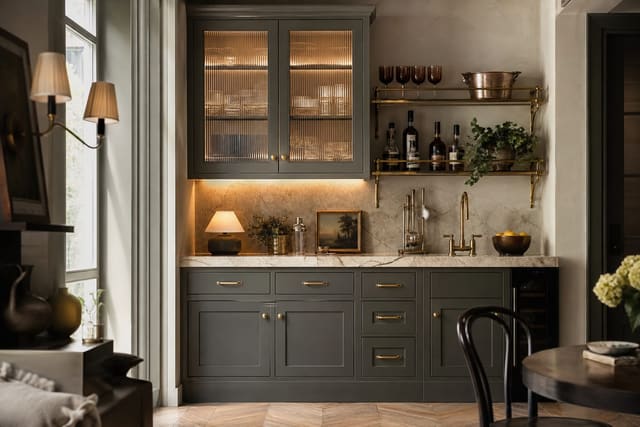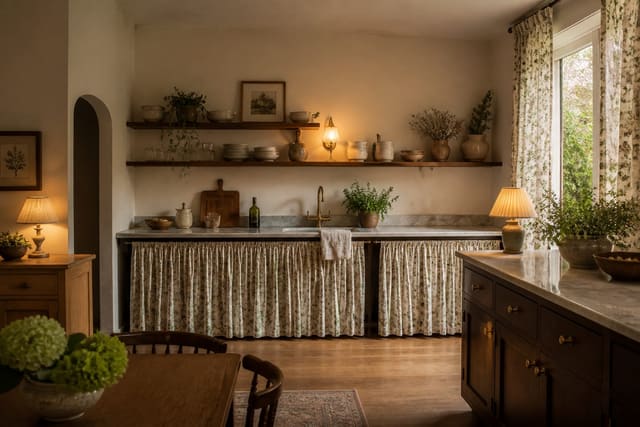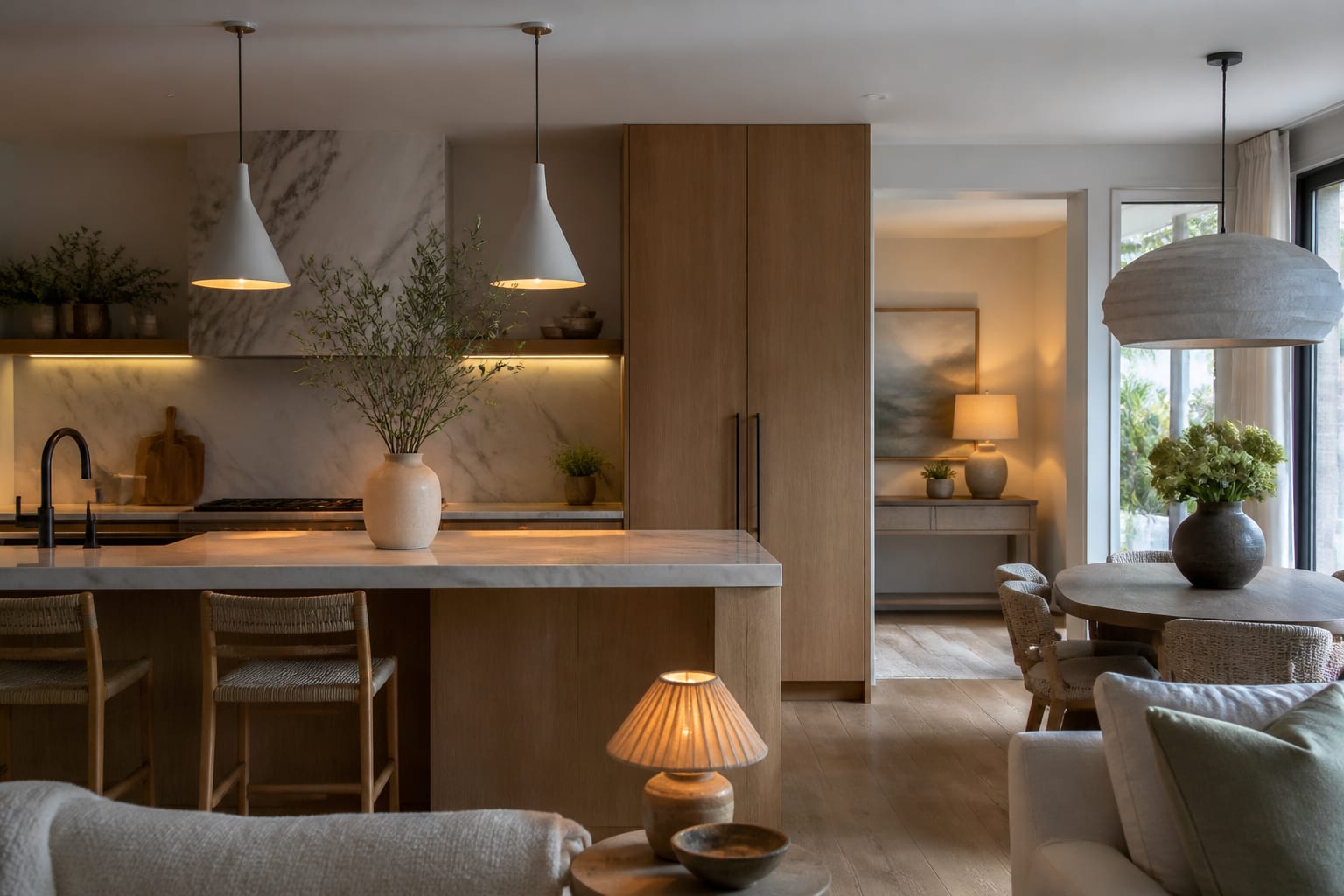
The biggest mistake people make with modern coastal kitchen ideas is treating coastal as a costume, all anchors and rope and faux-distressed signs. Restraint is what actually reads as refined and high end. Real coastal kitchens borrow the light and palette of the shore without quoting a gift shop. Think warm white cabinetry, a whisper of pale blue, honest oak, and texture you can feel. Done well, the room looks expensive and calm year-round, not like a themed rental you tolerate for one summer week.
Start With a Bright, Layered Neutral Base
Every convincing coastal kitchen begins with light. Before you pick a single accent, commit to a base of warm white walls and sandy, greige-leaning cabinetry that bounces daylight around the room. Cool, stark whites can feel clinical and fight the soft, sun-washed quality you want, so lean slightly creamy and let morning light do the rest. The base sets a mood that every later decision either supports or undermines, which is why it deserves the most deliberation.
Layering is what separates a flat white kitchen from a relaxed coastal one. Pair painted lower cabinets with upper shelving in natural oak, or set a pale quartz counter against a backsplash with subtle handmade variation. These small shifts in tone and finish keep the eye moving and stop an all-neutral room from reading as bland or builder-grade. A room built entirely from one flat shade feels lifeless, while gentle gradations feel sunlit and considered.
Flooring anchors the whole scheme. Wide white-oak planks with a matte, almost driftwood finish feel underfoot like a beach house should, and they forgive sand, salt, and bare feet. If you prefer tile, choose large-format porcelain in a soft limestone tone rather than glossy white squares. Keep grout lines close to the tile color so the floor reads as a continuous, calm surface. The goal throughout is a quiet, sun-bleached envelope that makes every other material and texture look intentional and serene.
See also our guide to Kitchen Home Bar Design for more on modern coastal kitchen ideas.
Bring In Soft Blue Without Going Nautical
Blue is the coastal cliché trap, and also its greatest tool when handled with discipline. The trick is treating it as a seasoning, not the main dish. A single island painted in a muted, grayed-out sky blue can carry the entire palette while perimeter cabinets stay creamy white, giving you that ocean reference without a literal seascape. The shade should feel slightly faded, as if sunlight has softened it over many summers rather than fresh from a bright sample chip.
Where you place the color matters as much as the shade. Reserve blue for surfaces you can repaint later, like an island, a banquette, or open shelf backing, and keep large appliances and counters neutral. This keeps the look flexible and stops the kitchen from feeling locked into one mood. Tile is another low-commitment route: a zellige backsplash in seafoam or pale aqua adds shimmer and depth that flat paint cannot, and its uneven glaze catches changing daylight in a way no single color could.
Avoid pairing blue with rope, anchors, or fish motifs, which instantly drags the room toward theme-park territory. Instead, let blue converse with natural materials. Against oak, linen, and brushed brass, even a saturated coastal blue reads as sophisticated rather than cute. Repeat the accent in two or three small spots so it feels intentional. The restraint reads as confidence, and confidence is what makes a beach-inspired kitchen feel genuinely high end.
For a related angle on modern coastal kitchen ideas, read Cottagecore Kitchen Ideas.
Layer Natural Textures for Warmth
Texture is the secret ingredient that makes a pale kitchen feel inviting rather than sterile. Coastal style lives in tactile contrast: smooth stone next to nubby linen, woven rattan against painted wood, raw oak beside cool ceramic. When the palette is quiet, these material differences become the visual interest the room needs, doing the work that bold color does in other styles.
Start with the elements you touch daily. Rattan or cane pendant shades over an island cast soft, dappled light and add an organic curve to all the straight cabinetry lines. Linen roman shades or unlined café curtains filter sun gently and move with the breeze when windows are open. Even small choices count, like swapping plastic bar stool seats for woven seagrass or pale oak. Each natural fiber adds a little warmth and irregularity that machine-perfect surfaces lack.
Hardware and metals deserve the same natural logic. Unlacquered brass develops a soft patina over time that suits a relaxed shoreline home far better than shiny chrome. Aged nickel and matte black both work too, as long as you commit to one metal family rather than mixing three. Finish the layering with a few real objects, a wooden cutting board, a stoneware bowl, a trailing plant, and skip the decorative driftwood arranged just so. Lived-in honesty beats staged props every single time in a coastal room, because real wear and natural materials tell a story that styling alone cannot fake.
Plan Light, Flow, and Open Sightlines
A modern coastal kitchen should feel like it breathes. That sense of openness comes from planning circulation and sightlines as carefully as you plan cabinetry. Wherever possible, orient the main work zone toward your best window so you wash dishes or chop vegetables in natural light instead of under harsh downlights. A sink set beneath a window turns daily chores into a calmer ritual with a view.
Lighting layers carry the room from morning to night. Keep ceiling fixtures simple and warm, then add under-cabinet strips and a pendant or two for evening softness. Warm-toned bulbs preserve the sun-washed feeling after dark, while overly cool light can make pale cabinets look gray and lifeless. Dimmers are worth the small upfront cost because they let one kitchen shift from bright breakfast to mellow dinner without rewiring anything.
Open sightlines tie the kitchen to the rest of the home and to the view beyond. If you have an island, leave generous clearance so people can gather without crowding the cook. Glass-front uppers, open oak shelving, or a pass-through to a dining area all keep the space from feeling boxed in. Reflective surfaces such as a mirror or polished counter push borrowed light deeper into the room. A glass door or wide opening to a porch or garden blurs the line between inside and out, which is the essence of seaside living. The more the room connects to light and movement, the more it captures the easy, unhurried spirit of coastal living.
- Paint a kitchen island in muted grayed-blue while keeping perimeter cabinets warm creamy white
- Hang woven rattan or cane pendant lights above the island for soft, organic, dappled overhead glow
- Install wide white-oak plank flooring with a matte driftwood finish that forgives sand and salt
- Add a zellige or handmade tile backsplash in seafoam to bring subtle shimmer and depth
- Choose unlacquered brass hardware that develops a gentle patina suited to a relaxed shoreline home
- Swap plastic bar stools for woven seagrass or pale oak seats that introduce natural tactile contrast
- Use sheer linen roman shades that filter sunlight and sway gently when the windows stay open
- Style counters with a wooden board, stoneware bowl, and a trailing plant instead of nautical props
Bring the look home with Re-Design
Before you repaint cabinets or order tile, test the look on your actual space. With Re-Design you upload a photo of your kitchen and preview a modern coastal scheme right there, swapping cabinet colors, oak flooring, and rattan lighting in seconds. Seeing soft blue against your own counters and light shows whether the palette truly works before you spend on a single sample pot or order.
Frequently Asked Questions
What colors define a modern coastal kitchen?
Warm whites and sandy neutrals form the base, with soft, grayed blues as accents. Natural oak tones add warmth. The palette stays muted and sun-washed rather than bright primary blue, which keeps the room feeling refined instead of themed.
How do I make a coastal kitchen feel modern, not dated?
Skip literal nautical motifs like anchors and rope. Focus on clean cabinetry lines, natural textures, and abundant light. Let materials such as oak, linen, and brass carry the coastal feeling so the room reads sophisticated rather than kitschy.
Is white oak a good choice for coastal kitchens?
Yes, white oak is ideal. Its pale, warm grain echoes driftwood and sand, complements soft blues beautifully, and hides everyday wear. Used on floors, shelving, or stools, it grounds the bright palette and adds the organic warmth coastal style needs.