A modern kitchen earns its look through restraint, not gadgets. The best ones hide the busywork: handles tuck away, appliances disappear behind matching panels, and the eye glides across unbroken planes. That discipline only works if you add warmth back somewhere, usually through wood grain, stone veining, or a single saturated color. Below are the moves I keep returning to when a homeowner wants the room to feel current in five years, not dated in two. Treat them as a menu. Pick three or four that suit your light and your habits, and skip the rest.
Why flat-front cabinets define the modern look
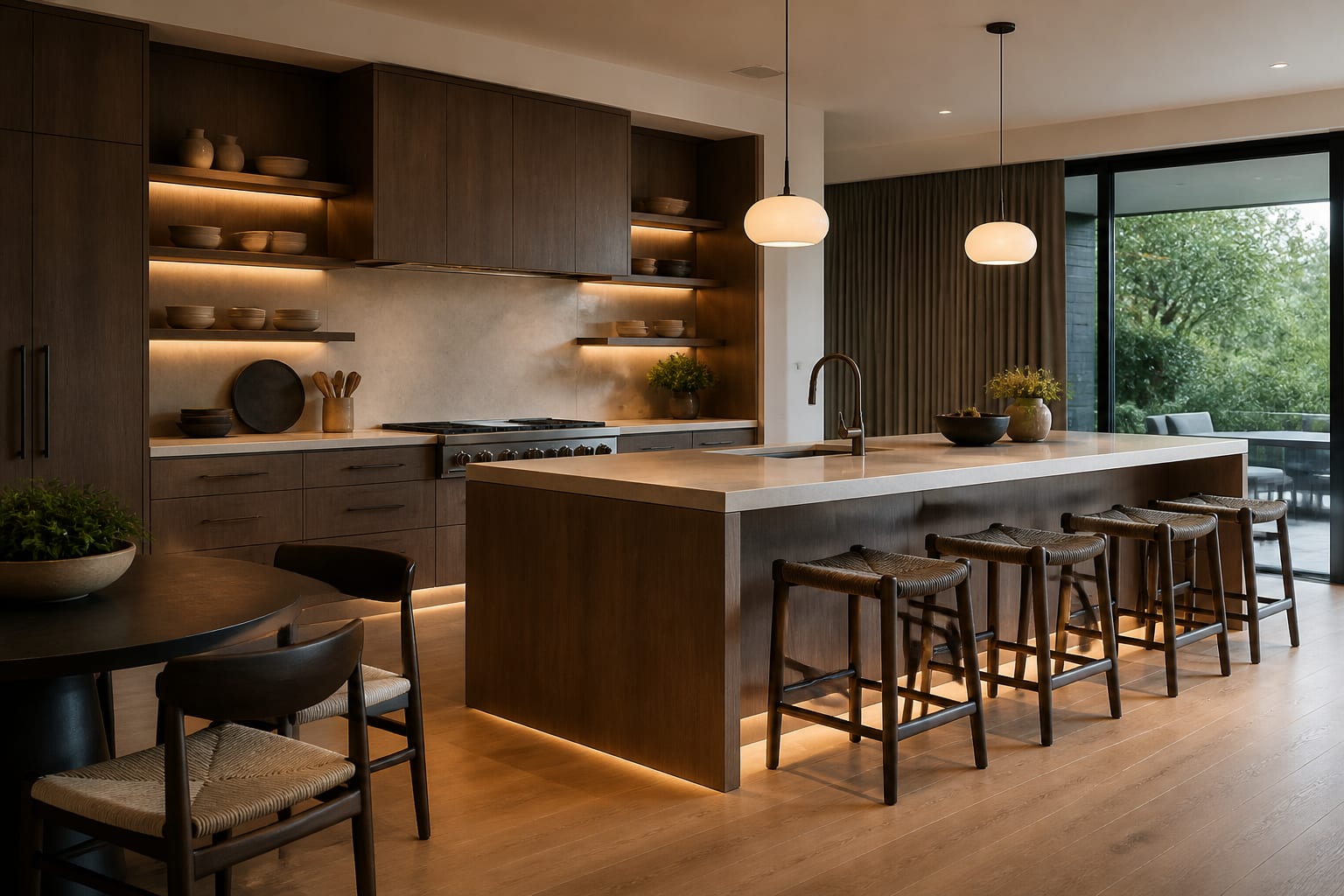
Flat-front slab doors are the backbone of a modern kitchen because they reduce everything to plane and line. With no raised panels, beading, or applied molding, light travels uninterrupted across the run, which is exactly the effect you want. The trade-off is that every flaw shows. A slab door telegraphs warped substrate, uneven reveals, and sloppy alignment in a way a Shaker door forgives, so this is where your budget should land. Choose a stable core like MDF for painted finishes or a quality veneer for wood, and insist on consistent gaps, ideally a tight 3 millimeters, between doors. Horizontal grain-matched veneer reads more architectural than vertical, and running the grain continuously across adjacent doors makes a bank of cabinets look like one carved block. For color, deep matte tones in clay, olive, or charcoal feel current, while high-gloss white still works in tight, low-light kitchens because it bounces light. Avoid mixing too many door styles; the power of the slab front is repetition. If you want visual relief, get it from a different material on the island rather than a different door profile on the perimeter. Keep the count of cabinet runs low and the runs long. A modern kitchen with three uninterrupted twelve-foot stretches will always look calmer than one chopped into a dozen small units with filler strips between them, which is the detail most renovations get wrong.
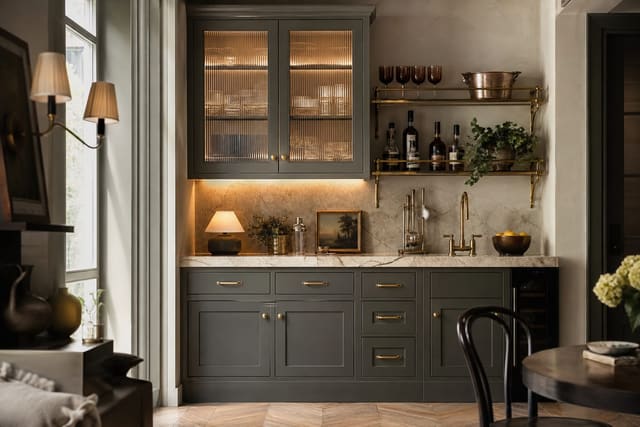
See also our guide to Kitchen Home Bar Design for more on modern kitchen ideas.
Handleless fronts and integrated appliances
Going handleless is what separates a merely tidy kitchen from a genuinely modern one, but the method matters. Push-to-open latches give you a perfectly smooth face with zero hardware, though they can feel temperamental near heavy drawers loaded with pots, so reserve them for upper cabinets and lighter doors. For base cabinets and big drawers, a routed J-channel or a continuous aluminum rail recessed into the top edge gives you a finger pull that never interrupts the front. The channel approach is more reliable day to day and still reads as handleless from across the room. Integrated appliances complete the effect. Panel-ready dishwashers and refrigerators wear a cabinet front so they vanish into the run, and a fully integrated range hood hidden inside an upper cabinet keeps the wall clean. Where you cannot integrate, choose appliances in a single finish family, ideally fingerprint-resistant stainless or matte black, rather than a mismatched mix. The induction cooktop deserves special mention here: a flush-mounted unit sitting level with the counter is the cleanest cooking surface you can specify and wipes down in one pass. The goal throughout is to remove visual interruptions, so plan the layout so that the most-used small appliances live behind an appliance garage or inside a deep drawer, off the counter entirely, keeping those long surfaces clear. One caution with full integration: a single concealed dishwasher or oven hidden mid-run can be hard to locate at a glance, so use consistent door logic and rely on the channel pulls to mark which fronts open, keeping the kitchen as usable as it is clean.
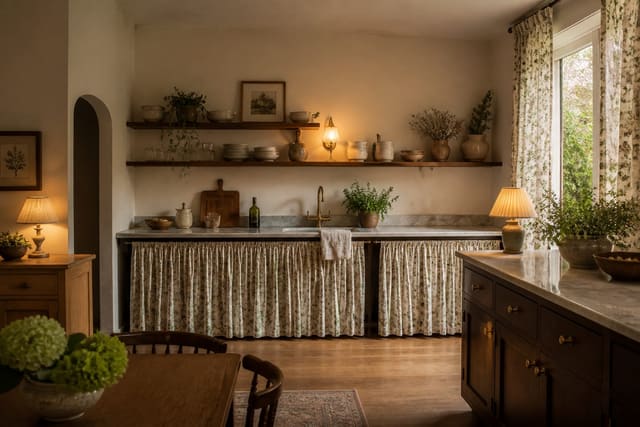
For a related angle on modern kitchen ideas, read Cottagecore Kitchen Ideas.
Materials and palette that keep it warm
A strictly minimal palette risks feeling like a hospital corridor, and the fix is texture and a single hit of warmth rather than more color. Start with one natural material doing real work: a white oak island, a walnut shelf, or a full-height stone slab behind the cooktop. Veining is your friend because it adds movement to an otherwise flat scheme without introducing a competing color. Quartz with a subtle gray vein, honed marble where you can baby it, or a quartzite with dramatic movement all give the eye somewhere to rest. Pair matte cabinet fronts with one reflective element, perhaps a polished stone counter or a glossy backsplash, so the room has contrast in finish even when the colors are quiet. Limit your palette to two cabinet colors maximum plus the natural wood tone. A common winning combination is warm white perimeter cabinets, a charcoal or deep green island, and oak open shelving tying them together. Keep metals consistent: brushed brass warms a cool scheme, while blackened steel sharpens a warm one, but do not use both. Floors anchor everything, so a wide-plank wood or a large-format porcelain in a warm gray keeps the base grounded. The throughline is that modern does not mean colorless; it means deliberate. Every surface should feel chosen, and the warmth should come from genuine materials rather than decorative add-ons.
Lighting layers that finish the room
Lighting is where modern kitchens are made or lost, because flat surfaces need light to articulate them. Build three layers. Recessed downlights on a dimmer provide the ambient wash, and in a modern room you want small-aperture trims, around two inches, set in a tidy grid rather than scattered, so the ceiling stays calm. Task lighting comes next: continuous under-cabinet strips, ideally warm at 2700K to 3000K, eliminate the shadows you cast when working at the counter and double as a soft glow at night. The third layer is the statement, usually pendants over the island. Here is your chance to break the minimalism with a sculptural fixture, but keep it singular and intentional, two or three matching pendants rather than a crowd. Hang them so the bottom edge sits roughly 30 to 36 inches above the island surface, high enough to see across but low enough to feel grounded. Avoid cool, bluish bulbs anywhere in the kitchen; they flatten wood tones and make stone look gray and lifeless. Toe-kick lighting under the base cabinets is an inexpensive detail that makes the whole run appear to float at night and adds depth to a low-contrast scheme. Put every layer on its own dimmer so the room flexes from bright morning prep to a low evening glow. That control is what makes the minimal scheme feel livable rather than stark.
- Specify flat-front slab doors with continuous grain-matched veneer so a cabinet run reads as one carved surface.
- Use push-latch uppers and recessed channel pulls on base drawers to go fully handleless without sacrificing function.
- Hide the dishwasher and refrigerator behind matching panels so the cabinetry reads as one unbroken plane.
- Add one warm natural material, like white oak or veined stone, to keep the minimal palette from feeling clinical.
- Flush-mount an induction cooktop level with the counter for the cleanest possible cooking surface.
- Limit the scheme to two cabinet colors plus a wood tone, and commit to a single metal finish throughout.
- Layer recessed downlights, warm under-cabinet strips, and a single sculptural pendant set over the island.
- Tuck small appliances into a deep drawer or appliance garage so the long counters stay completely clear.
Bring the look home with Re-Design
Before you commit to handleless fronts or a charcoal island, upload a photo of your current kitchen to Re-Design and preview the modern scheme on your actual walls and light. You can test flat-front cabinets against your floor, swap a glossy backsplash for matte stone, and see whether warm white or deep green suits the room before you spend on samples or order a single door.
Frequently Asked Questions
Are handleless cabinets practical for everyday use?
Yes, with the right mix. Use recessed channel or rail pulls on heavy base drawers, which work reliably and feel natural, and reserve push-to-open latches for lighter upper doors. Avoid push latches on big pot drawers, where the weight can make them stick or pop open unexpectedly over time.
Will a modern kitchen feel cold and uninviting?
Only if you stop at the cabinets. The fix is one genuine warm material doing real work, such as an oak island or a walnut shelf, plus warm 2700K lighting and a textured stone with visible veining. Those moves add depth and softness while keeping the clean, uncluttered lines that define the style.
Is high-gloss or matte better for modern cabinets?
Both work, but for different rooms. High-gloss white bounces light and suits small, dim kitchens that need brightening. Matte fronts in clay, olive, or charcoal feel more current and hide fingerprints far better. Many of the best kitchens combine them: matte perimeter cabinets with one polished or glossy surface for contrast in finish.