A Murphy bed succeeds when bedtime does not require a furniture reset.
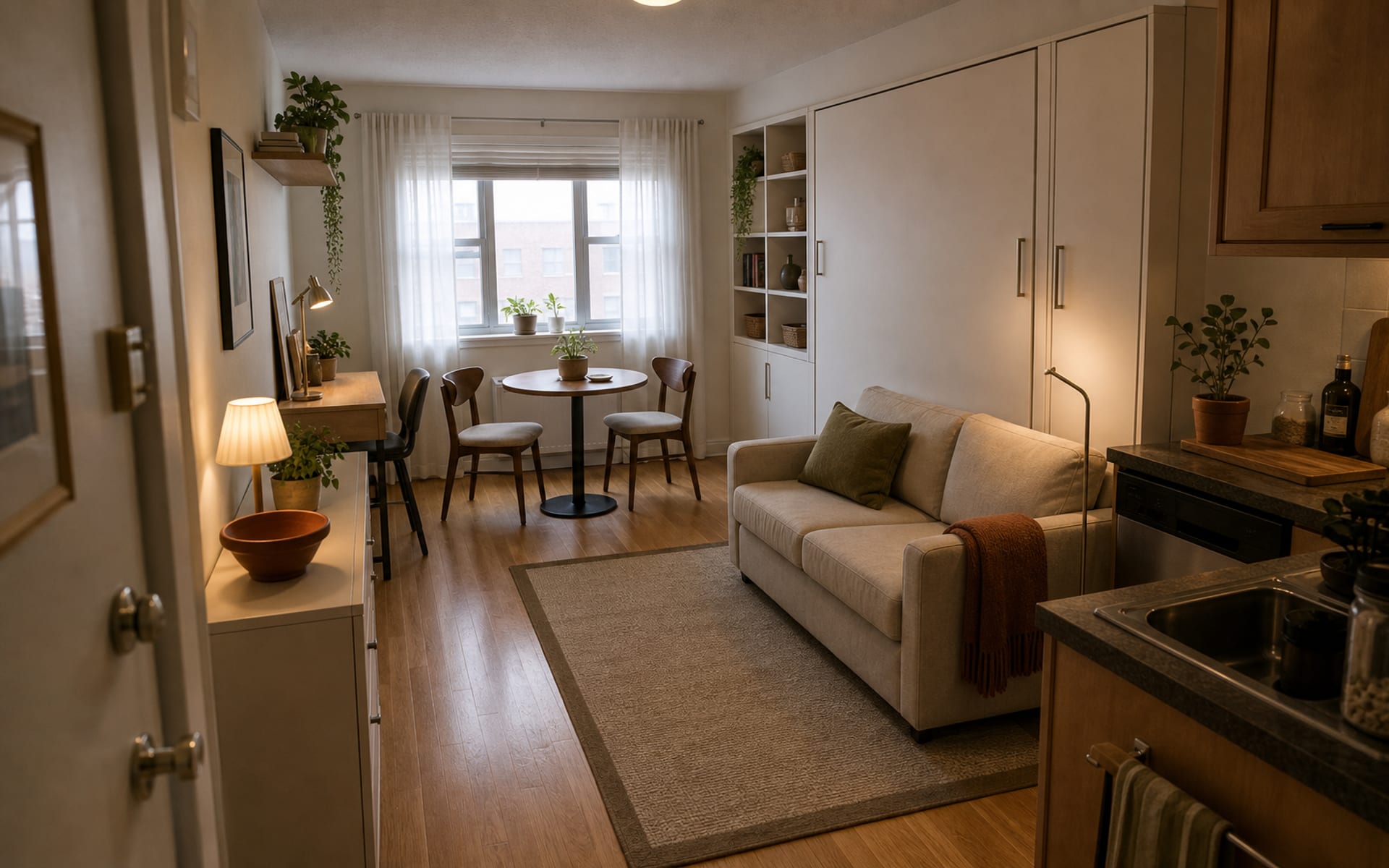
Murphy bed studio ideas work when the layout accounts for both day and night modes: clear bed swing, shallow or movable seating, closed storage for bedding, and separate lighting for sleep and living. Test the plan with an AI preview before buying custom cabinetry, since swing path and storage needs are non-negotiable, not decorative details.
What Does a Murphy Bed Actually Change?
A Murphy bed frees floor space during the day, not the total amount of stuff the studio holds. You still need storage for bedding, clothing, work gear, and shoes, plus seating that works both day and night. Treat the bed wall as a built-in system rather than a lone vertical mattress. The broader planning approach in AI Interior Design Small Spaces applies directly, since any Murphy bed idea has to survive the room you already have.
Start by photographing the room straight on, listing nonnegotiables, and changing one thing at a time. Keep clearances honest: 30 to 36 inches for the main walking path, 16 to 18 inches between seating and a table, and enough door or drawer swing to avoid daily friction. These numbers decide whether the layout survives Monday morning, not just how it photographs.
How Much Clearance Does a Murphy Bed Need?
Check the bed hardware before anything else. Many queen Murphy beds need over 84 inches of wall width and a clear swing path near 90 inches from the wall. A sofa placed in front must be shallow or easy to move so lowering the bed isn't a nightly chore. If the layout choice starts drifting into style decisions, compare it against Walk In Closet To Home Office to keep the direction practical.
- Narrow studio: Place the sofa perpendicular to the bed wall so the swing stays clear.
- Square studio: Use a Murphy bed with side cabinets and a round table that can shift out of the way.
- Rental studio: Choose freestanding storage and only mount a wall bed if the lease allows it.
- Work-from-home studio: Separate desk lighting from bedside lighting so both modes feel intentional.
Use this list as a quick audit before buying anything custom. If a piece blocks a door, steals the only bright wall, or depends on a fixture you can't install, the idea isn't ready yet. Fewer, more precise changes beat a full custom wall that fights the room.
How Should the Idea Change Room by Room?
Closed wardrobes, shallow cabinets, under-sofa drawers, and a small landing shelf matter more than decorative shelving; a studio already has enough visual noise. For a wider photographing and prompting workflow, see AI Room Design for Rental Apartments. Constraints shift by room: a bedroom-focused layout needs quieter light, a kitchenette needs task light for cleanup, and a bathroom punishes extra depth faster than a living area.
Pick the one viewpoint that matters most, usually the doorway view or the seat you use daily, and test whether a change improves that view without creating a worse problem outside the frame. The strongest layout is the one that's easiest to live in, not the most dramatic.
What Mistakes Make Murphy Bed Layouts Fail?
- Buying the bed before measuring the swing path creates a permanent daily obstacle.
- Open shelving around the bed wall makes the closed bed look cluttered instead of calm.
- Skipping bedding storage means pillows end up on the sofa every morning.
- Trusting a single inspiration photo that hides outlets, radiators, or awkward window heights.
The room's existing evidence, floors, window placement, ceiling height, door swings, and natural light, already tells you what the layout can become. Translate any inspiration into measurements and materials before it becomes a shopping cart.
How Can AI Preview a Layout Before You Buy?
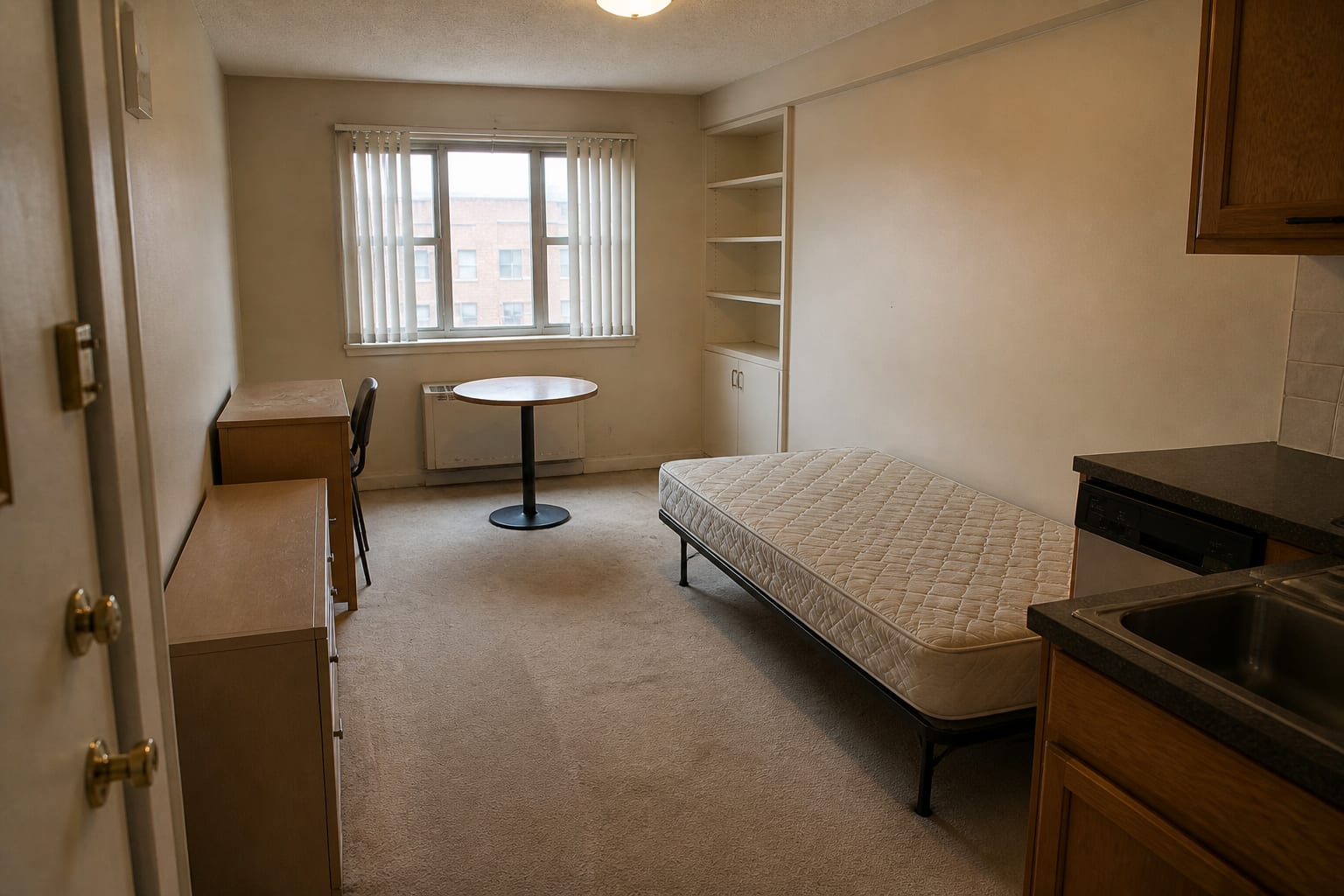
Re-Design starts from your actual photo instead of a mood board. Upload a straight, well-lit image showing the floor, ceiling line, windows, doors, and the piece you're worried about, then ask for a version that keeps the room's architecture and daily path intact.
Try three focused prompts instead of one fantasy renovation:
- Preview a Murphy bed studio in day mode
- Test bed-down clearance in a studio apartment
- Compare a wall bed with closed side storage
Judge results by usefulness, not drama. Confirm the preview kept the same window, floor, and doorway, respected the 30 to 36 inch walking path, and preserved the storage or clearance that matters most. Rerun with stricter instructions if the output invents architecture or hides the hard part.
Frequently Asked Questions
How much space does a Murphy bed save?
It frees the bed footprint during the day, often around 30 to 35 square feet for a full or queen area, but the room still needs swing clearance and space to walk around the lowered bed.
Can a Murphy bed go behind a sofa?
Sometimes, if the sofa is shallow, low enough, or easy to move. Many setups work better with seating perpendicular to the bed wall so the swing path stays clear.
Is a Murphy bed good for renters?
Only when mounting is allowed and the wall can support the system. Freestanding cabinet beds or daybeds are often safer choices in strict rentals that prohibit wall anchoring.
What size table works in a Murphy bed studio?
Small round tables, drop-leaf tables, or wall-mounted desks are easier to move out of the bed's swing path than heavy rectangular tables.
What should go beside a Murphy bed?
Use closed storage, a small shelf, plug-in lighting, and a landing surface so bedtime does not feel temporary and pillows have a designated home.