Natural fiber rugs get lumped together as one earthy category, and that is exactly why people buy the wrong one. My read is that jute, sisal, seagrass, and wool behave so differently that treating them as interchangeable is the single most common buying mistake. A jute rug that looks perfect in a bedroom photo can shred under a kitchen chair, and a sisal that anchors a hallway can feel like sandpaper under bare feet.
So the honest answer is that the "best" natural fiber depends almost entirely on the room, the traffic, and how the rug will be touched. Below I break down the four most common materials by the things that actually decide whether you keep a rug or return it.
What is the difference between jute and sisal rugs?
This is the question I get most, because the two look like cousins on a screen. Jute comes from the inner stem of the jute plant and is spun into a soft, slightly hairy yarn with a warm tan color. Sisal comes from the spiky leaves of the agave plant, and its fibers are stiffer, more uniform, and woven into tight flat patterns.
The practical split is feel versus toughness. Jute is gentle underfoot and works beautifully in a bedroom or a low-traffic living room layered over a larger flatweave. Sisal is the workhorse: it shrugs off foot traffic, holds up on a staircase, and resists crushing far better. The trade-off is that sisal feels scratchy on bare feet and drinks up liquid spills, so a red-wine accident is close to permanent. If you want the warm look of natural fiber and softness matters more than abuse resistance, jute wins. If the rug lives where shoes go, sisal earns its keep.
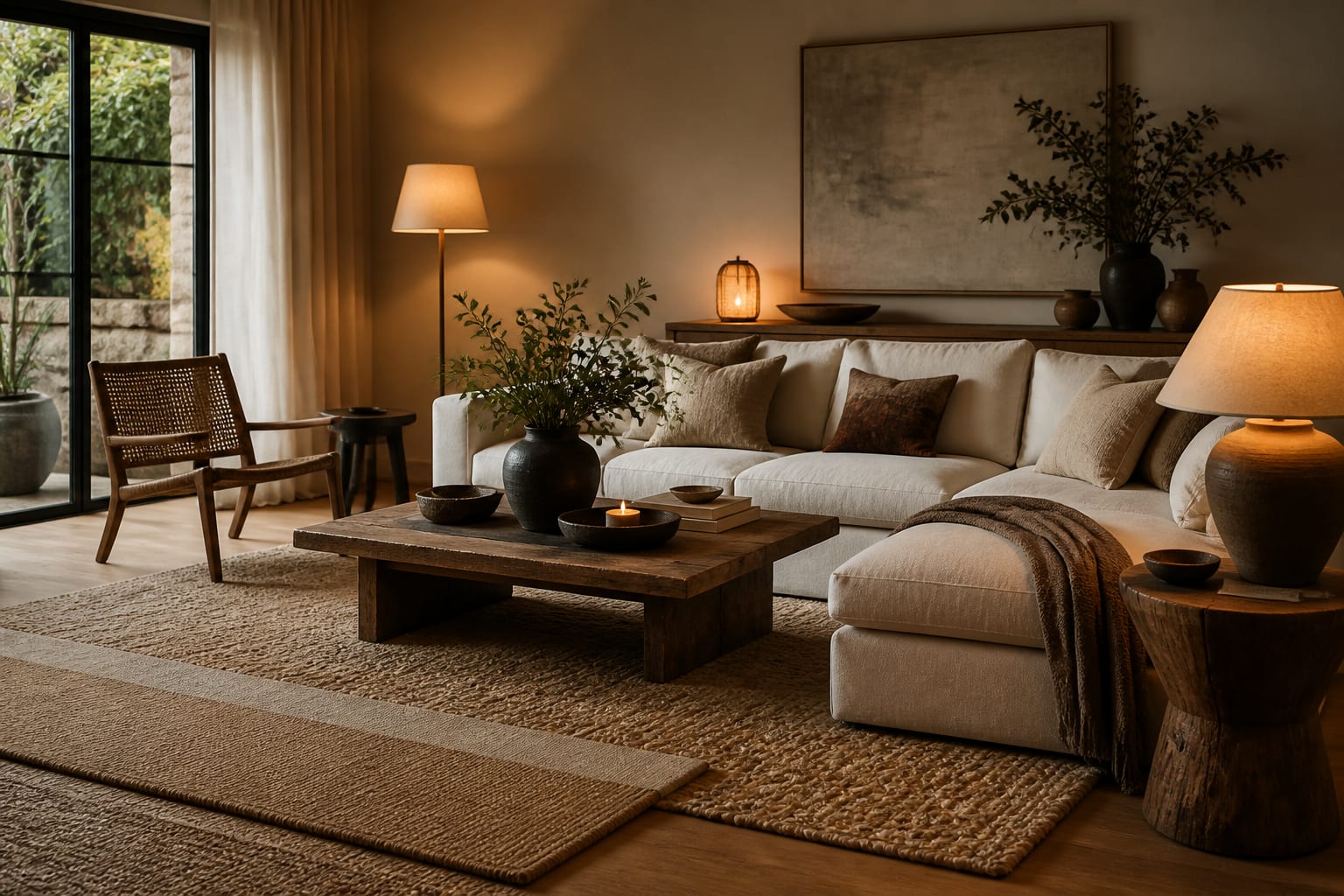
There is also a color difference that trips people up online. Jute photographs in a warm, golden tan that reads cozy, while sisal tends toward a paler, cooler oatmeal that can look almost gray in some light. So two rugs labeled "natural" can land very differently against your floor and walls. The weave gives it away too: jute is usually braided or chunky, sisal is typically a tight herringbone or boucle pattern that holds its shape under traffic. For pairing rugs with hard surfaces, the same logic I use for wood floor finishes applies here: match the material to how the surface gets used, not to how it photographs.
How the four materials compare
Here is the side-by-side I keep coming back to when a client cannot decide. The price ranges reflect typical retail for a mid-quality rug, not designer pieces.
| Factor | Jute | Sisal | Seagrass | Wool | | --- | --- | --- | --- | --- | | Softness | Soft | Coarse | Smooth, slick | Very soft | | Durability | Low to medium | High | High | High | | Stain resistance | Poor | Poor | Excellent | Good with treatment | | Best rooms | Bedrooms, layering | Stairs, halls | Dining, kitchens | Living rooms, anywhere | | Price per sq ft | $3 to $8 | $4 to $10 | $4 to $9 | $8 to $25 |
Wool is the outlier because it is an animal fiber, not a plant fiber, which is why it is both the most expensive and the most comfortable. It naturally resists soiling, holds dye well so you get real color options, and bounces back from compression. If budget were no object and softness mattered, I would pick wool nearly every time. The plant fibers earn their place on price, texture, and that raw organic look that a polished wool rug cannot quite fake.
Seagrass deserves a special mention because it is the most misunderstood of the four. Its fibers are naturally coated and almost non-porous, which makes it the only plant fiber I trust near food and kids, since most spills bead up and wipe away. The trade-off is that the same slick surface feels cool and a touch slippery underfoot and resists being dyed, so you are mostly stuck with its natural green-tan tone that mellows to khaki over a year or two. For a dining room under chairs that scrape back and forth, that durability is worth the limited color range. I think of seagrass as the practical choice and jute as the pretty one.
What to check before you buy
When you are standing in a showroom or scrolling a product page, a handful of details predict whether a natural fiber rug will work in your space:
- Backing material, since a stiff latex backing can crack and shed onto floors over a few years.
- Weave tightness, because a loose weave snags pet claws and traps grit that grinds the fibers.
- Whether the rug is reversible, which roughly doubles its useful life through rotation.
- Edge binding quality, since cotton or canvas borders fray faster than serged or leather edges.
- Stated pile height, because anything under 1/4 inch reads as a flatweave and slides more on bare floors.
Pair any plant fiber rug with a good felt-and-rubber pad. It adds cushion, stops slipping, and keeps the rough backing from scratching wood or tile. I treat the pad as non-optional, not an upsell. Sizing matters as much as material here, because a natural fiber rug that is too small makes a room feel choppy. As a rule I leave at least 8 inches of bare floor between the rug edge and the wall, and I size living-room rugs large enough to slip the front legs of every seat onto the pile.
Think about cleaning before you buy, too. Plant fibers cannot be wet-shampooed the way wool can, so blot spills, never soak them, and keep a handheld vacuum nearby for the grit they shed in the first few weeks. If you are shopping a tight budget, the buying logic in this affordable rug brands guide helps you spot where to spend and where to save. And when a natural fiber rug sits against stone or tile flooring, the contrast advice in this natural stone design guide keeps the textures from fighting each other.
Use AI design to preview natural fiber rugs before you commit
A rug swatch tells you the fiber, but not how a jute or sisal will read across your whole floor under your actual light. This is where I lean on AI design. With Re-Design you upload a photo of the room, and the tool re-renders it with different rug materials, weaves, and tones in place, so you can see whether a coarse sisal grounds the space or a softer jute disappears against your floor color.
It is the fastest way I know to test the texture-versus-room question without ordering three rugs and shipping two back. Upload a single shot of your living room or hallway, compare a tight sisal flatweave against a chunky jute braid in the same frame, and you stop buying on a hunch. Seeing the contrast at room scale is what turns a maybe into a decision.