The best natural stone for interior design is the one that matches how hard the surface gets used, not the one with the prettiest veining. Marble belongs on a powder-room vanity; it has no business taking knife marks and lemon juice on a working island. Picking by looks alone is how people end up resealing and crying over etch marks two months after install.
Three stones cover the vast majority of residential projects — marble, travertine, and quartzite — and they sit at very different points on the durability-versus-drama scale. Choose the wrong one for a surface and no amount of sealer saves you.
How the three stones compare
Here is the honest head-to-head on the specs that actually decide a project, not the ones that look good in a showroom.
| Stone | Mohs hardness | Typical cost (installed) | Porosity / stain risk | Best use | |---|---|---|---|---| | Marble | 3–4 | $75–$250/sq ft | High — etches with acid | Vanities, fireplaces, accent walls | | Travertine | 3–4 | $15–$30/sq ft | Very high — needs filling | Honed flooring, feature walls | | Quartzite | 7 | $60–$200/sq ft | Low when sealed | Kitchen counters, high-traffic floors |
The number that matters most is hardness. Quartzite at a Mohs 7 resists scratches that would mar marble at a 3 or 4, which is why it survives a real kitchen where knives, pots, and grit move across it daily. Travertine's porosity is its signature look but also its liability — those natural voids need filling and sealing or they trap grime and darken unevenly over time.
One more distinction confuses buyers: real quartzite is a metamorphic stone and far harder than quartz, the engineered material made of crushed stone and resin. They share a name and almost nothing else, so confirm exactly what a supplier is selling before you sign.
Match the stone to the room
Reading the chart is easy; the discipline is matching it to how each surface actually gets used.
- Kitchen island or perimeter counter: quartzite. It shrugs off knives, heat, and the occasional spilled glass of red wine.
- Powder room or primary vanity: marble. Low contact, low acid exposure, maximum drama from the veining.
- Entryway or bathroom floor: honed travertine, sealed. Its matte, slightly textured surface hides wear and adds grip underfoot.
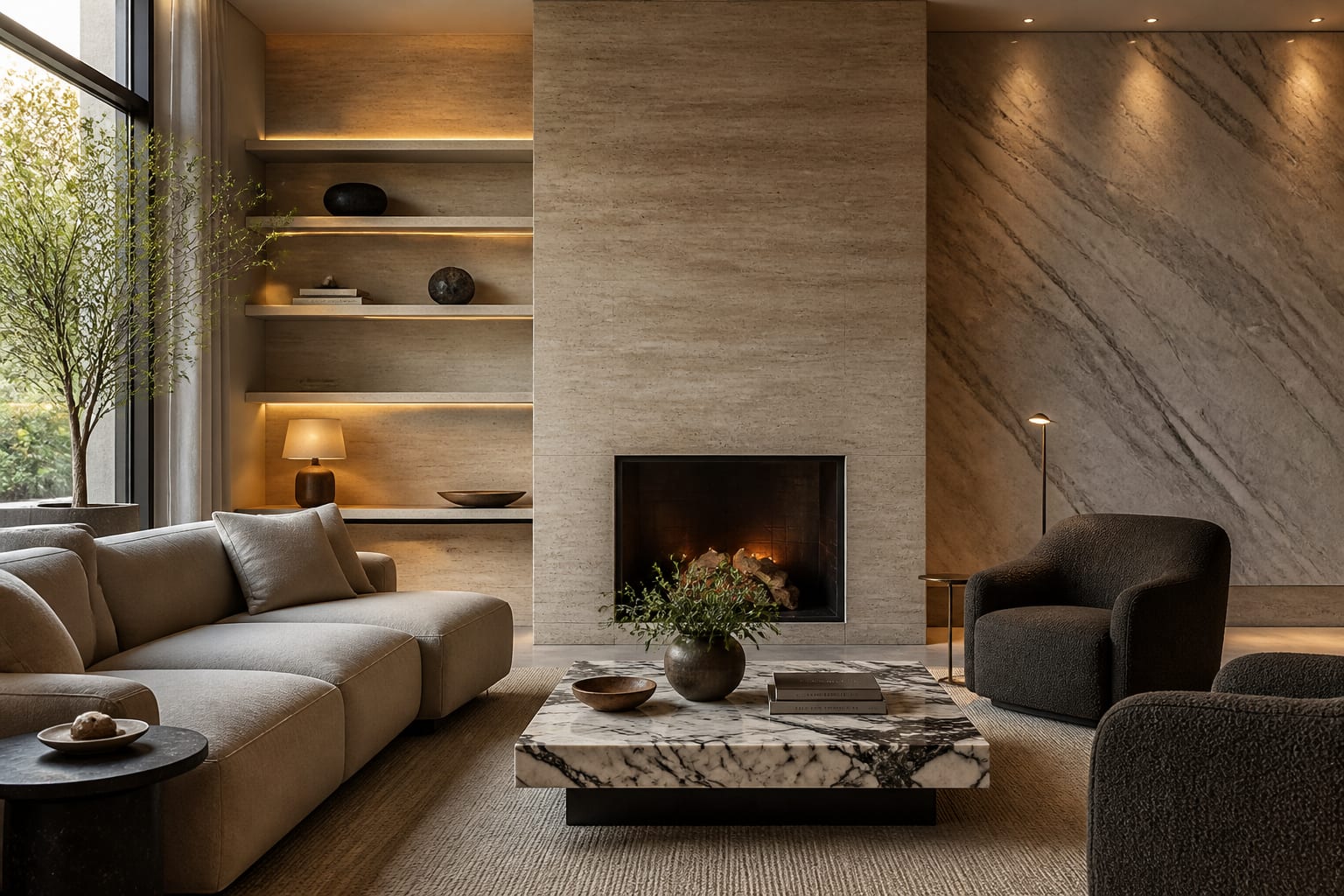
- Fireplace surround or accent wall: marble or travertine, where the stone is purely decorative and never touches food.
Stone is heavy and permanent, so it should anchor a room rather than fight it. Pair a cool marble vanity with warmer wood tones to keep a bathroom from reading clinical — the wood-pairing logic in my wood interior design guide keeps hard stone from feeling cold. On floors, soften the acoustics and the visual weight with a textured layer underfoot; a low-pile natural fiber rug over honed travertine balances the hardness without competing for attention.
Finish matters as much as stone choice. A polished surface amplifies veining and reflects light but shows every etch; a honed (matte) finish hides wear and reads softer; a leathered finish adds subtle texture and grip. For anything that takes daily abuse, honed or leathered ages far more gracefully than high-gloss polish.
Cost, sealing, and the real ownership math
Sticker price is only half the story. Travertine looks like the obvious bargain at $15 to $30 per square foot installed, but it drinks sealer and needs its voids filled, so the lifetime upkeep quietly narrows the gap with pricier stones.
Plan on a penetrating sealer every 6 to 12 months for marble and travertine, and roughly every 1 to 2 years for quartzite. A quart of quality impregnating stone sealer runs about $35 and covers 200 to 400 square feet, so the material cost is trivial — it is the recurring labor and attention that add up. Run the simple water test to know when you are due: drop a teaspoon of water on the stone, and if it soaks in and darkens within a few minutes, it needs resealing.
Budget the fabrication, too. Professional cutting, edging, and install typically adds $40 to $80 per square foot on top of the raw slab cost, and a complex layout with seams, sink cutouts, and a waterfall edge pushes that higher. If you are also choosing soft furnishings to live alongside the stone, the price-tiering approach in this affordable rug brands guide is a useful model for deciding where to splurge and where to save.
Two habits keep the stone alive once it is in, and both cost nothing. Wipe spills immediately, especially acidic ones like wine, citrus, and tomato, because the longer they sit the deeper the etch or stain. And clean only with a pH-neutral stone soap — the vinegar and citrus cleaners marketed as natural are exactly the acids that eat into calcite-based marble and travertine.
Buy the slab, not the sample
A 4-inch sample is a lie of omission. Natural stone is geological, so every slab varies in vein density, background color, and the spread of inclusions, and the chip in the showroom may not represent the block your counter gets cut from.
Always view and tag the actual slabs before fabrication. Walk the warehouse, look at the full sheet under daylight if you can, and mark which slab and which section you want, because a dramatic vein landing dead-center on an island looks deliberate while the same vein running off one corner looks like an accident. For a multi-slab job, confirm the pieces come from the same block so the color and movement match across seams, and ask the fabricator to dry-lay them first so you approve the seam placement before any cut is final. This one step — buying the slab you saw rather than the sample you held — prevents the most expensive regret in stone work.
Use AI design to preview the stone before you commit
A 4-inch slab sample tells you almost nothing about how a stone reads across a full island or an entire floor. Veining that looks dramatic in your hand can overwhelm a small room or disappear entirely in a large one. Seeing the pattern repeat across a full run is the only honest way to judge whether a busy slab will calm down or fight the cabinetry.
Upload a photo of your kitchen or bathroom to Re-Design and let the AI design tool drop in a marble, travertine, or quartzite finish at full scale. You can compare bold Calacatta veining against a quiet honed travertine in your own light and against your own cabinetry before you commit thousands of dollars to a slab that only looks right under showroom spotlights. Seeing all three stones in your actual room turns an abstract spec sheet into a side-by-side choice you can trust.