Renters hang real curtains without drilling by combining a tension rod inside the window frame for privacy, a Command-hook-mounted rod 4 to 6 inches above the casing for the decorative panel, and floor-length fabric weighted to hang straight — no drywall, no spackle, no deposit dispute. The right method depends on window depth, fabric weight, and how much light control you need, not one universal gadget.
How do you hang curtains without drilling into walls?
Use a tension rod inside the frame, a no-drill bracket that clamps to trim or existing blind hardware, or an adhesive or compression-mounted track rated for the curtain's weight. Your choice depends on whether the window has an inside recess, exposed trim, existing mini-blind brackets, or a ceiling plane that can take pressure without damage.
A tension rod is fastest for light fabric. It needs a recess at least 1 inch deep with rubber ends pressing flat side returns, not bumpy plaster. Use it for sheers, cafe curtains, or lightweight cotton — never lined velvet. For a 30- to 48-inch window, pick a 3/4- to 1-inch diameter rod; thinner rods bow and look temporary fast.
No-drill brackets work better for panels hung outside the frame. Some clamp trim, some hook into existing blind brackets, and some compress floor to ceiling. This is the best option for living rooms and bedrooms where curtains need to look like a design decision, not a privacy fix.
Adhesive tracks suit very light sheers on smooth, clean, painted surfaces only — not heavy blackout panels. If the room is dark and curtains are part of a bigger light plan, pair the decision with this guide to fake natural light in any room before choosing fabric that blocks your only brightness.
Which no-drill method fits your window?
Measure the inside width at top, middle, and bottom, then use the narrowest number for a tension rod — older apartments can vary by 1/4 inch between header and sill.
- Tension rod: best for a recessed, light-fabric window needing privacy or softness. Keep the hem just touching the sill or 1/2 inch above it; puddled fabric on an inside mount collects dust.
- Clamp brackets: best when trim is substantial enough to grip without crushing. Project the rod far enough to clear handles, blinds, and crank hardware. Skip clamps on narrow, rounded, or freshly painted trim.
- Blind-bracket adapters: best when you hate the existing mini blinds but can't remove them. Slide a no-drill kit into the original brackets and hang a decorative rod in front, keeping blinds functional if the lease requires it.
- Ceiling-to-floor compression poles: best for crumbly walls, tile, brick, or built-ins. Needs a flat floor and ceiling; extend the rod 4 to 8 inches wider than the window per side.
If the window sits near a passage, check the layout logic in this guide to rooms with too many doorways before adding fabric that could interrupt flow.
Test this on your own room photo with ReDesign — keep the doorway, windows, main furniture, lighting, and any awkward fixed features visible so the preview solves the room you actually have.
How do you make renter-safe curtains look intentional?
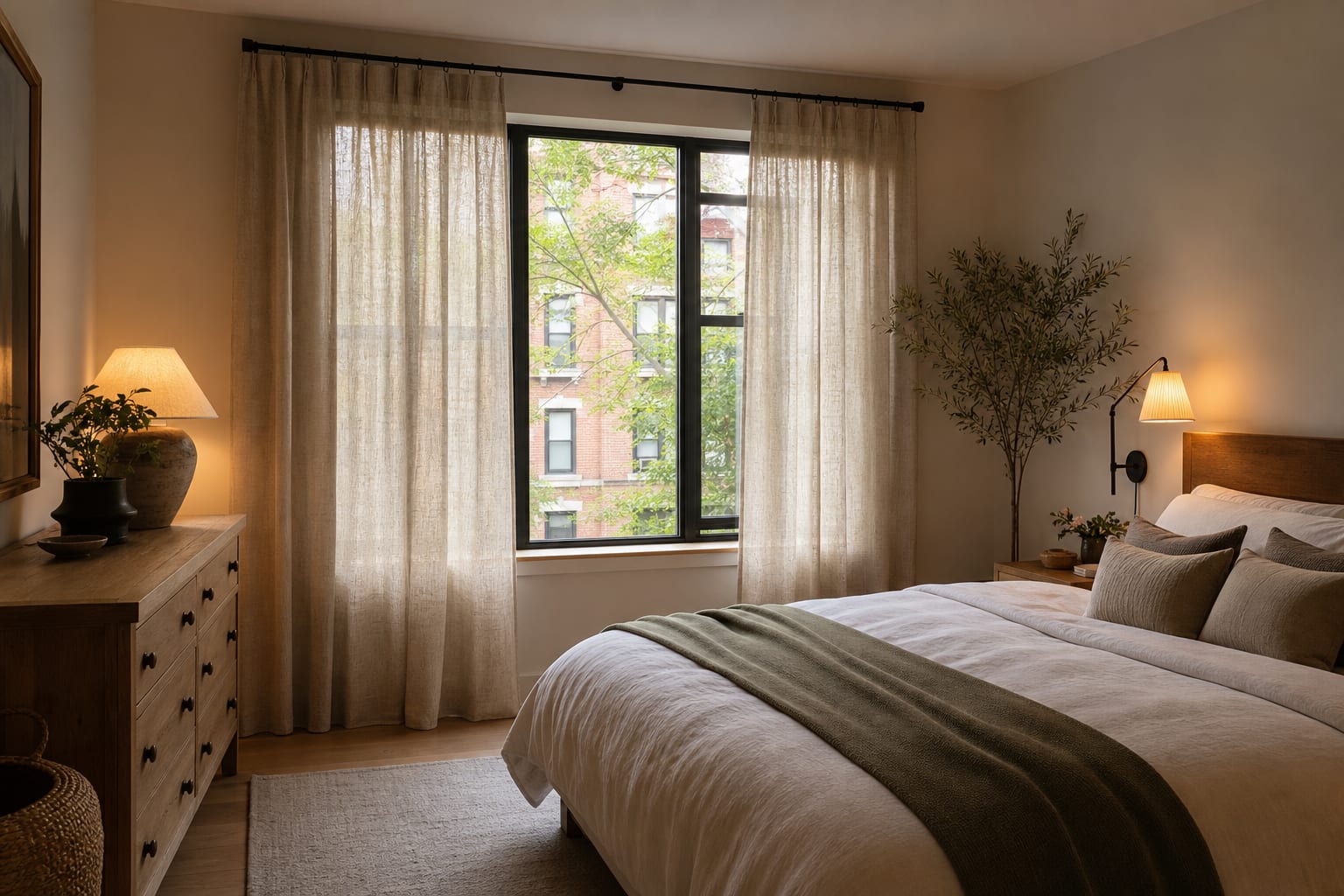
Height, width, and fabric weight separate temporary-looking curtains from polished ones. For outside mounts, place the rod 6 to 10 inches above the casing and extend it 8 to 12 inches beyond the window per side, so panels stack beside the glass instead of covering it.
Length matters more than pattern. Standard 84-inch panels work in many rentals, but 8-foot ceilings often look better with 95- or 96-inch panels hung higher. Let the hem kiss the floor or stop within 1/2 inch; floating 3 inches above the floor makes even good fabric look shrunken.
Choose fabric by mount strength: sheers and unlined cotton suit tension rods, light-filtering linen blends need stronger brackets, and heavy blackout usually needs more support points than tiny cafe rods or adhesive hardware can give. If darkness matters, keep a blackout liner inside the frame and add decorative panels outside.
Color should relate to walls and floor, not just bedding. Ivory, oatmeal, flax, warm gray, olive, and muted stripes soften white walls and beige flooring without forcing a full redesign. If the room feels dim, balance dense fabric with lamps or mirrors — see using mirrors to amplify light. Repeat an existing hardware finish: black rods with black lamp bases, brass near warm metals, white rods to disappear in small rooms.
Common no-drill curtain mistakes to avoid
- Asking a thin rod to hold real drapery. A 7/16-inch cafe rod suits a sheer, not a bedroom curtain; a bowed rod sags in the center and slips at the ends.
- Trusting adhesive on the wrong surface. Dusty plaster, texture, glossy paint, and sun-baked returns cause failure. Clean, dry fully, press for the full manufacturer time, and test one light panel first.
- Mounting too low just because the bracket allows it. Compensate with a disappearing rod color and panels long enough to meet the sill or floor precisely.
- Ignoring how curtains move. Leave 1 to 2 inches of clearance around cranks and hardware, keep fabric away from baseboard heat, and don't let panels drag on wet bathroom floors.
- Buying panels too narrow. Total width should run 1.5 to 2 times the window width for light fabric, or 1.25 to 1.5 times for heavier panels — one skinny 40-inch panel on a 36-inch window looks like a sheet.
Save every original blind part, bracket, and screw in a labeled bag, photograph the window before installing anything, and at move-out remove pressure hardware slowly and clean rubber marks gently.
Use AI design to preview curtains before you commit
AI design helps here because the expensive mistake is usually proportion, not the rod. Upload a straight-on photo showing the floor, ceiling line, trim, nearby furniture, and any radiator or door swing — don't crop out the awkward parts.
Preview inside-mount tension rods, outside-mount no-drill brackets, and ceiling-to-floor compression separately, using the same fabric color each time so you're judging height and width, not pattern. Then test sheer ivory, light-filtering flax, and pale blackout variants, and compare 84-inch versus 96-inch lengths if the ceiling nears 8 feet. Check the image with lamps on, since airy daylight fabric can feel heavy at night.
The useful output is a buying brief: rod type, mount location, fabric weight, panel length and width, and hardware finish. If the design only works after the tool invents perfect trim or resizes the window, treat it as a mood image, not an installation plan.
Frequently Asked Questions
Can renters hang curtains without drilling at all?
Yes — tension rods inside the window frame, adhesive hooks rated for 5 to 7.5 pounds above the casing, and lightweight curtain panels handle most rental windows with zero drywall damage.
What weight of curtain works with Command hooks?
Light to mid-weight panels (cotton, linen blend, sheer) under 7.5 pounds per rod work on two large Command hooks; blackout or velvet panels exceed the rating and need a different mount.
How high should renters mount curtain rods?
Mount 4 to 6 inches above the casing, or higher toward the ceiling for drama, and extend the rod 6 to 12 inches past the casing per side. Mounting too low and too short is the most common rental mistake.
What length should rental curtains be?
Aim for floor-touch (kissing the floor) or floor-puddle (1 to 2 inches longer). Curtains that hover above the floor read as short and cheap even on an expensive panel.
Can blackout curtains work without drilling?
Yes — combine a tension rod with a clipped blackout liner inside the frame and Command-hooked decorative panels outside. The liner blocks light while the outer panel hides the tension rod.
> Try this: Ready to see this on your own room? Open ReDesign and run the preview.
Three transformations to try
1. Command-hook rod with floor-length cotton panels 2. Tension rod liner plus outer decorative panel 3. Ceiling-mounted Command hook rod for drama