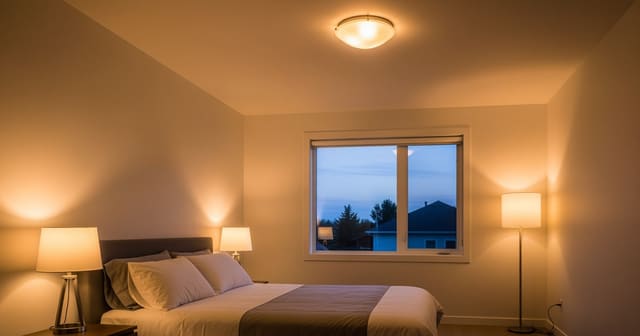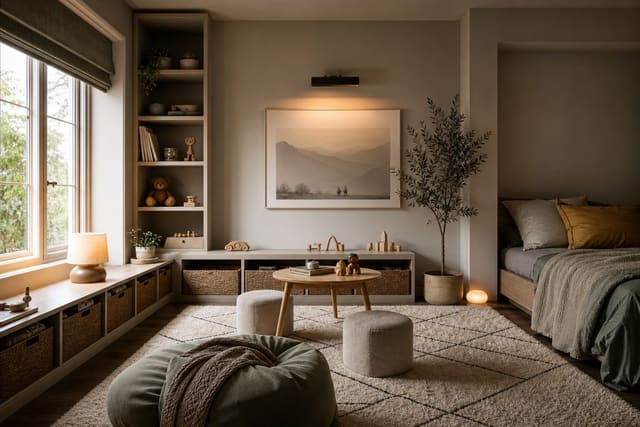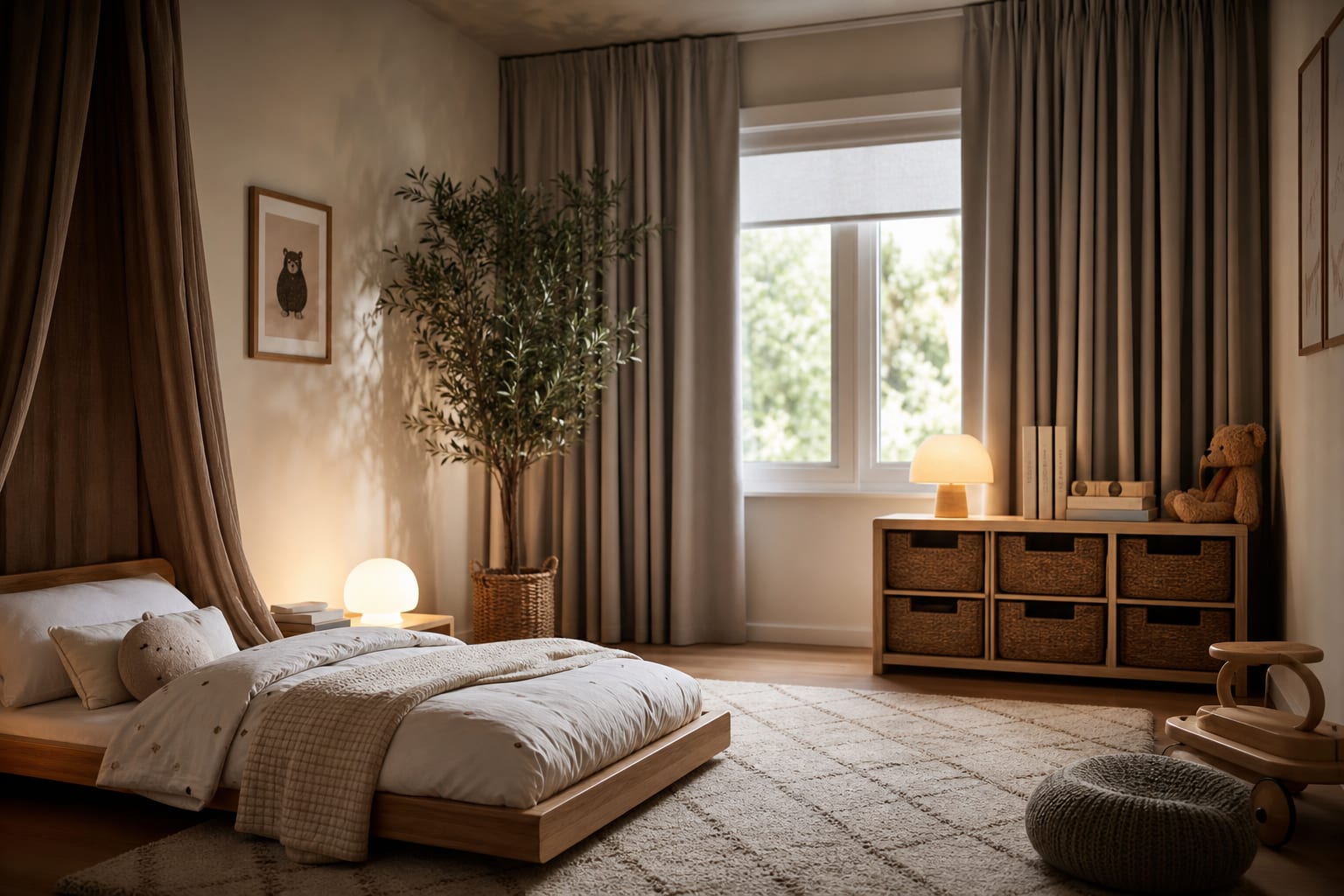
A nursery to toddler room transition means keeping the safe layout, blackout window treatment, anchored storage, warm lighting, and calm palette, then swapping baby-only furniture — crib, changing topper, glider — for toddler-scale sleep, play, and dressing pieces in stages. Keep the bones. Edit ruthlessly.
What should stay during the transition?
Start with what already supports sleep. If the crib wall has no draft, no cords, no shelf above the mattress, and a clear path from door to bed, it's still the best sleep wall. Keep blackout curtains that extend 6 inches past the casing on each side and hang near the floor. Keep the warm lamp if the bulb is around 2700K and the shade blocks glare from pillow height.
Keep the dresser once diapering is gone — just remove the topper. It must stay anchored to the wall and easy to open one-handed; drawers that held onesies now hold pajamas, socks, and bedding. If it's deeper than 20 inches and blocks the future play path, move it to another room instead of keeping it out of loyalty.
The palette is worth saving if it's quiet enough to absorb new interests: warm white, clay, sage, oatmeal, pale blue, mushroom, muted rose. If the nursery had a baby mural, keep one framed piece or one color from it rather than freezing the whole room in infant mode.
The bed and safety decision that controls the timeline
Safety and circulation decide the timing, not sentiment. A crib-to-toddler conversion rail buys time if mattress height and hardware still feel safe. A low toddler bed suits a small room; a twin bed may be smarter if you want the furniture to last through early school years.
Leave at least 24 inches of clear floor on the open side of the bed — 30 inches if bedtime involves sitting or kneeling there. A twin mattress is 38 by 75 inches; a toddler mattress is usually about 28 by 52 inches, the same footprint as a crib mattress. That 10-inch width jump is why rooms that felt fine with a crib suddenly feel tight with a twin.
Keep the new bed away from blind cords, low shelves, frames, outlet strips, and window locks. A low upholstered headboard or washable bumper rail contains the bed without trapping heat like a canopy tent. In a single-window room, protect daylight for play as carefully as sleep — the same logic behind lighting a single-window bedroom applies, since one opening carries both morning routines and evening calm.
Keep nightstands modest: a 12- to 16-inch table or wall shelf is enough for a cup, lamp, and two books. Route cords along the wall and keep chargers away from the bed zone.
Test this on your own room photo with ReDesign before finalizing the layout — keep the room structure, daylight, and main path visible so the preview solves the space you actually have.
How should storage, light, and textiles grow with the child?
Storage should move from parent-only to shared access. Keep high shelves for keepsakes and out-of-rotation toys, but add a few bins or drawers between 12 and 30 inches off the floor so the toddler can participate without climbing.
Closed storage matters more now. Toddlers empty every visible bin; babies don't. Use opaque bins or cabinet doors for blocks, dress-up, and puzzle pieces, and keep only current bedtime books and one comfort object visible near the bed. In a tight room, borrow the long-range thinking from a playroom that converts to a teen room: fixed storage should be adult enough to survive changing ages, while labels and baskets stay temporary.
Lighting needs layers now that the room hosts sleep, dressing, play, and tantrum recovery. Keep the blackout treatment but add a softer wake-up option, plus a shaded lamp or sconce near the bed and a dimmer on the overhead fixture. Mount any reading light 18 to 24 inches above the mattress line so it hits the book, not the child's eyes.
Textiles should get tougher, not harsher. A low-pile washable rug beats a fluffy nursery rug that hides crumbs. An 8 by 10 rug covers the bed and play zone in a 10 by 12 room; a 5 by 8 works beside the bed in smaller spaces. Choose cotton percale, jersey, or washed linen bedding, and skip a pile of decorative pillows that must come off nightly.
If you're moving from crib to twin, the room doesn't need a big-room layout to match. The same proportion logic that fits a king-size bed into a small bedroom applies here: protect the main path first, then choose slimmer side furniture.
Common nursery transition mistakes to avoid
- Keeping the changing table as a shrine. Once diapering ends, that surface usually collects wipes and outgrown clothes — remove the topper and repurpose the drawers.
- Buying a themed toddler bed. A car or princess frame solves six months and creates three years of visual noise; put the theme on bedding or a removable decal instead.
- Skipping wall anchors. Toddlers climb dressers and pull drawers; anchor every dresser, bookcase, and wardrobe, and keep heavy or tempting items low.
- Leaving a nursing chair that blocks the path. If it sits within 18 inches of the bed, closet, or dresser route, swap it for a slim reading chair or floor cushion.
- Making the room too bright. Loud walls, exposed shelves, and high-contrast bedding can fight bedtime — pick one playful focal point and keep the rest quiet.
Should you preview the toddler room with AI design before moving furniture?
Yes — a toddler room has more nightly motion than a nursery, and a room that looks fine in your head can turn crowded once the bed, dresser, rug, chair, and toy storage share the floor. Photograph the room from the doorway and the opposite corner so the crib wall, window, closet, dresser, and outlets are all visible, and leave the hamper, books, and diaper pail in frame.
Test three versions: keep the crib wall with a toddler rail; place a low toddler bed on that wall with closed storage opposite; or preview a twin bed with a small nightstand to see if it's worth future-proofing now. Ask for specific constraints — 24-inch minimum walkway, anchored dresser, warm bedside light, blackout curtains, low-pile washable rug, no cords near the bed, and reachable storage.
The best preview isn't the cutest one. It's the one where the child can get into bed safely, reach a book, grab a few toys, and still have open floor to play.
For the broader upload workflow, use the AI design complete guide as the parent checklist, then return here for room-specific scale and layout choices.
Frequently Asked Questions
When should a nursery convert to a toddler room?
Most kids transition between 18 and 36 months, triggered by climbing out of the crib, potty training, or a sibling needing the nursery. The room can shift earlier if the new bed is floor-height and the room is gated.
Is a convertible crib worth it for the toddler stage?
Yes. A 4-in-1 convertible crib that drops to a 14-inch floor-height toddler bed saves $200-$500 over buying a separate toddler bed, and the conversion takes one toolkit and an afternoon.
Do I keep the changing table in a toddler room?
Pull the pad off the dresser and keep the dresser itself — it converts to long-term clothes and toy storage, with the top becoming a books-and-lamp landing zone instead of a wipes station. Check walkway width, door swing, glare, and storage reach against how the room actually moves at bedtime.
How do I childproof a toddler room versus a nursery?
Anchor every dresser and bookcase to studs, swap full curtains for cordless cellular shades, install outlet covers, and add a door alarm if climb-outs are a risk. Nursery-era cordless and zip-tie safety standards aren't enough once a toddler is mobile and curious.
What lighting works in a toddler room?
Use a dimmable 2700K overhead fixture, a tap-on bedside lamp for stories, and an amber nightlight around 1700K. Avoid blue or white nightlights — they delay melatonin and can push bedtime 15 to 30 minutes later.
> Try this: Ready to see this on your own room? Open ReDesign and run the preview before you buy, paint, drill, or move furniture.
Three transformations to try
1. Crib lowered to toddler-bed conversion with floor cushions 2. Dresser-as-storage and low bookshelf with reading nook 3. Twin-size 'big kid' bed with toddler rail and floor canopy