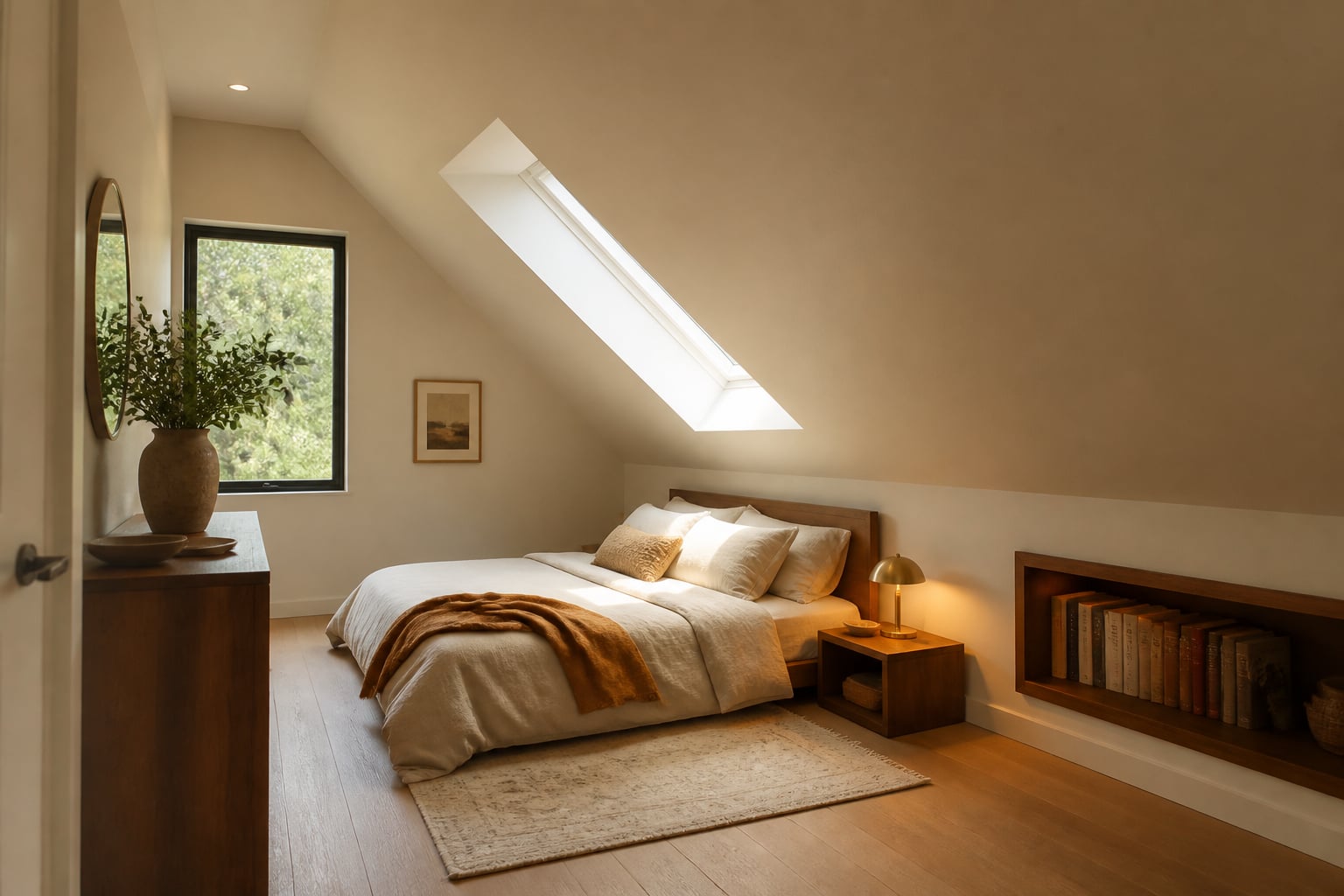
An odd-shaped bedroom reads intentional when the bed lands under the highest ceiling point or steepest knee wall, alcoves become reading nooks or built-in storage instead of empty corners, and wall color extends onto the slope so the geometry reads as one room, not three. Let the ceiling angle, dormer, or alcove decide the layout before the paint color does, and every awkward feature becomes an instruction rather than an obstacle.
"A slanted ceiling feels intentional when the furniture gets lower and the wall color stops chopping the room."
What makes an odd-shaped bedroom feel intentional?
Put the bed where head clearance is predictable, turn low walls into storage or seating, and use lighting to make the odd geometry look chosen. A standing zone needs about 78 inches of clearance to feel normal; a sleeping zone can tolerate far less since you sit or lie down. That's why the bed often belongs under the slope while the dresser, mirror, and closet path need the taller portion of the room.
Do not center the bed automatically. Symmetry calms a rectangular room, but in a crooked one it can make the odd wall look stranger. Align the bed with the most stable visual element instead: the tallest wall, a dormer window, or the alcove opening.
Keep the main walking path simple: 30 inches where you walk daily (door to bed or dresser), 24 inches only on the quiet side of the bed. A sloped ceiling over a daily walkway feels hostile even if the floor technically fits.
Where should the bed go under a slanted ceiling?
The bed is the test piece for any slanted-ceiling layout because it decides where your head, knees, lamps, and nightstands can exist. A queen mattress is 60 by 80 inches; a king is 76 by 80 inches before the frame adds thickness, so frame style matters in a tight or angled room.
Place the headboard on the low wall only if you can sit up without ducking. A low upholstered headboard around 36 to 42 inches works well under a slope; a tall wingback headboard can collide with both ceiling and shoulders. If the ceiling drops sharply, skip the dramatic headboard and use a long lumbar pillow, wall-mounted fabric panel, or painted headboard shape instead.
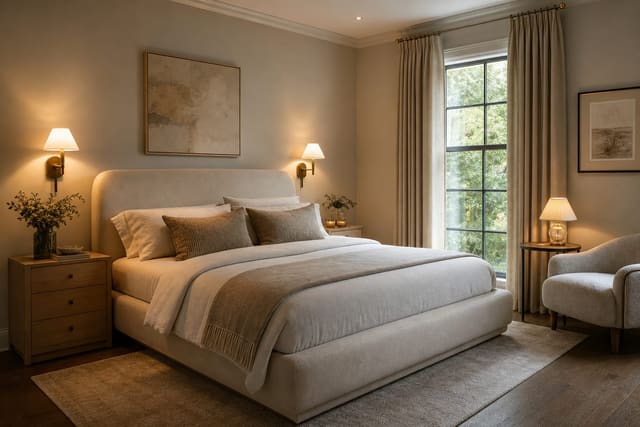
Nightstands should be narrow and deliberate. In an alcove layout, 14 to 18 inch bedside tables are often enough, especially paired with wall sconces mounted so the shade center sits 54 to 60 inches from the floor. Choose warm 2700K to 3000K bulbs so the angled ceiling feels soft rather than attic-like.
Before choosing between mattress sizes, weigh the tradeoffs in small bedroom with a king size bed — a king under a slope can look luxurious with a slim frame, but it can also block the only adult-height path to the dresser.
Test this on your own room photo with ReDesign before committing; keep the doorway, walls, windows, main furniture, and fixed features visible so the preview solves the room you actually have.
How should alcoves earn their footprint?
An alcove should do one job: sleeping, storage, reading, dressing, or display. Trying to do all five turns it into a junk drawer with drywall around it.
- Deep alcove for the bed: leave at least 3 inches on each side of the frame so it feels framed, not trapped. If it's narrower than the bed, use it as a headboard wall with art, sconces, or shallow shelves instead.
- Shallow alcove for storage: shelves 10 to 12 inches deep hold books and folded clothes; hanging clothes need closer to 24 inches, so don't force a shallow niche into a closet.
- Low alcove for a bench: keep it 16 to 18 inches high and 15 to 18 inches deep. Add drawers below only if fronts can open without hitting the rug, bed, or radiator.
Lighting separates charming from forgotten — add a plug-in sconce, picture light, or LED strip so the niche doesn't disappear into shadow. Pair these moves with single-window bedroom lighting if the room has only one window, so the alcove doesn't go dark after lunch.
Common odd shaped bedroom mistakes to avoid
- Dresser under the lowest ceiling. Dressers need standing and bending clearance. Put low storage there instead: drawers, bins, a bench, or a short bookcase.
- Tall mirror where nobody can step back. Mount a smaller mirror above a dresser on the taller wall, or use a door-mounted mirror where the swing gives a clear line.
- A different treatment on every odd plane. One architectural emphasis (paint, wallpaper, or trim) reads as intentional; four different treatments read as patched together.
- Standard-depth furniture in a shallow room. A 20-inch dresser can block the only route to the closet; 12 to 15-inch pieces preserve the floor. Depth is more dangerous than width in angled rooms.
- Ignoring the ceiling line for curtains and art. Drapery should start 4 to 8 inches above the casing where the slope allows; leave 6 to 10 inches above a headboard for art, or use two smaller pieces beside the bed if the slope cuts that space.
For more on the same roofline problem, compare the planning rules in bedroom with a sloped ceiling before committing to built-ins or a new frame.
Use AI design to preview your angled bedroom before you commit
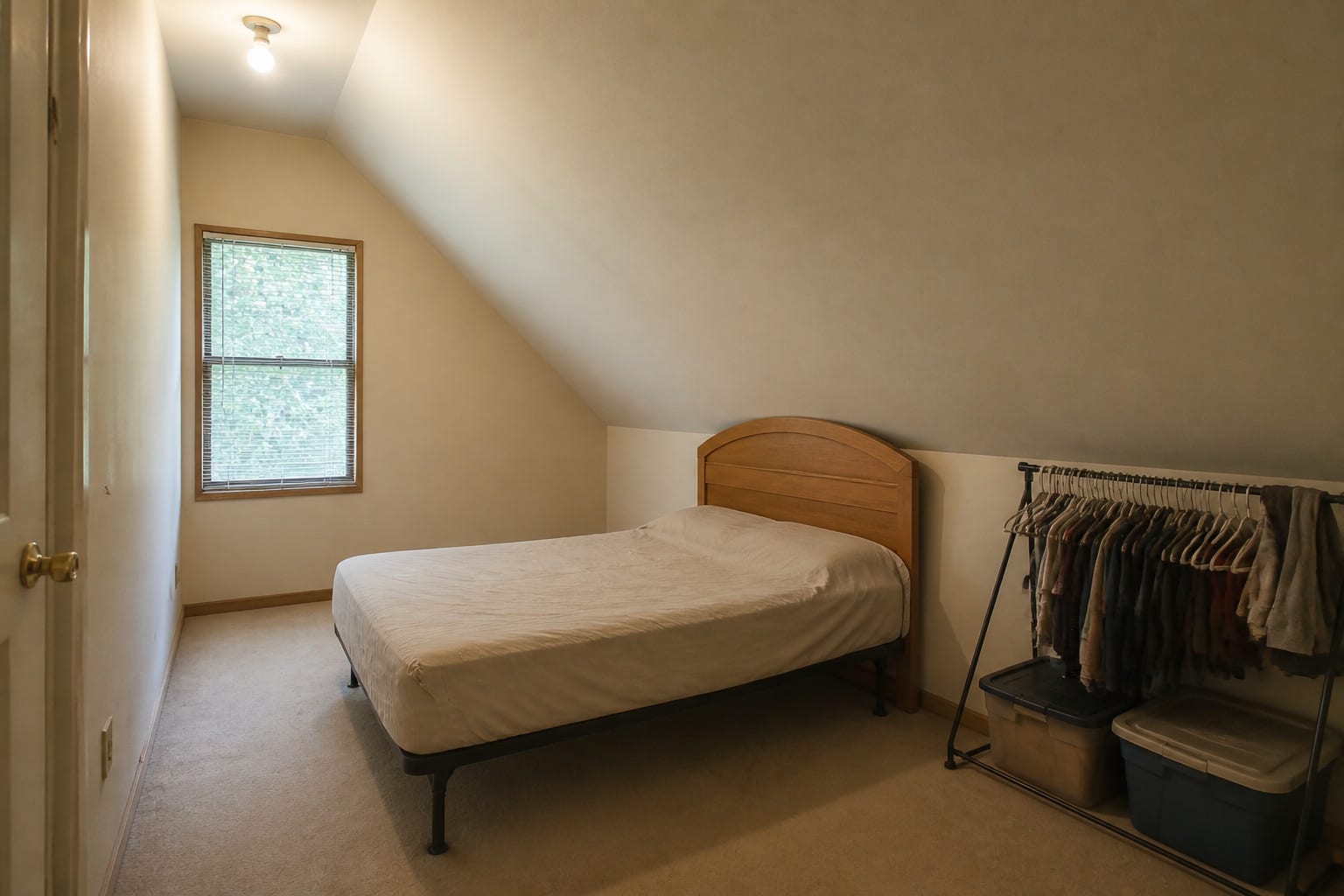
Upload a straight photo from the doorway, one from the tallest wall, and one showing the sloped ceiling or alcove head-on, including any dormer, chimney bump-out, or knee wall. Name the problem in your prompt: try "low platform queen under slanted ceiling, built-in drawers along knee wall, warm sconces, clear 30-inch walkway," then compare it against "bed on tallest wall, reading bench in alcove, shallow dresser, layered 3000K lighting." Keep window, door, and closet positions consistent so the comparison tests layout, not fantasy.
Look at head clearance first: does the bed feel tucked in or trapped? Does the alcove gain a job, or stay styled emptiness? AI can't verify joists, outlets, or exact cabinet depth, but it can show whether the bed wants the slope, storage wants the knee wall, or the alcove wants a bench before you pay for carpentry.
After choosing a direction, tape the bed frame, dresser depth, and bench edge on the floor, mark sconce and shelf positions on the wall, and walk the room at night with real lighting.
Frequently Asked Questions
Where should the bed go in a bedroom with a slanted ceiling?
Place the bed against the steepest knee wall with the head under the slope, so the body lives in the full-height zone. Placing the bed under the lowest point makes sitting up impossible.
How do I use the slope with wall paint?
Carry the wall color up onto the slope, or paint the whole ceiling-to-floor surface one tone, so the geometry reads as a single envelope. A contrast color on the slope chops the room into pieces.
What do I do with an awkward alcove or nook?
Convert it to a built-in: a reading bench with storage drawers, a small desk, a built-in closet, or a sleeping nook. Left empty, every alcove reads as a furniture failure.
How tall should bedroom furniture be under a slope?
Limit furniture under the slope to 40 to 48 inches — low dressers, benches, daybeds. Tall wardrobes belong only on the full-height wall opposite the slope.
How do I light a slanted-ceiling bedroom?
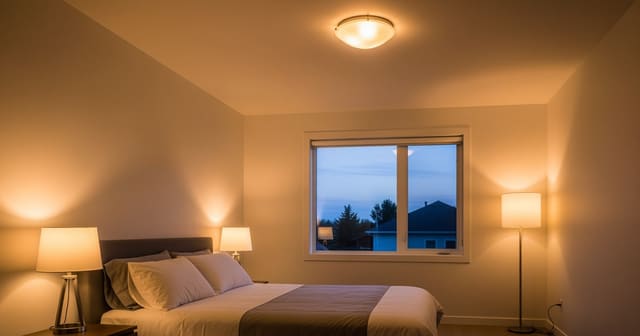
Use wall-mounted sconces flanking the bed and one floor lamp in the alcove. Ceiling fixtures often can't be installed in the slope, and overhead mid-room lighting creates harsh shadows on the angled surface.
> Try this: Ready to see this on your own room? Open ReDesign and run the preview.
Three transformations to try
1. Bed under steepest slope with sconce flanking 2. Alcove built-in bench with drawer storage 3. Wall color carried onto ceiling slope