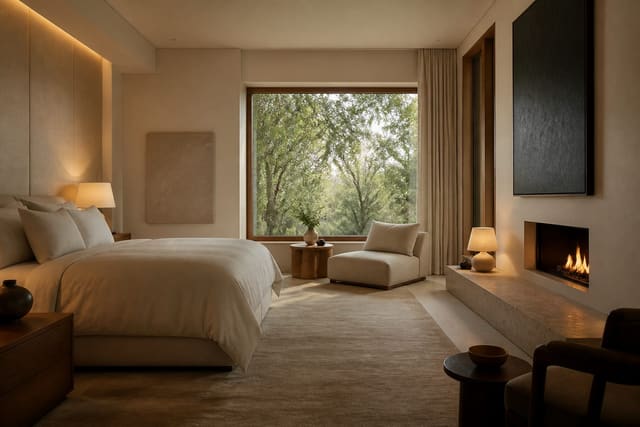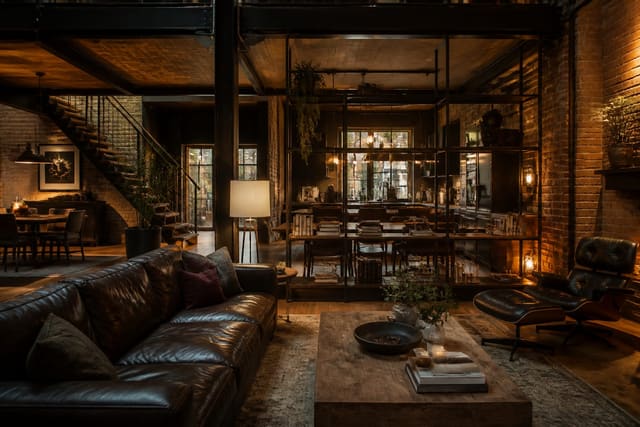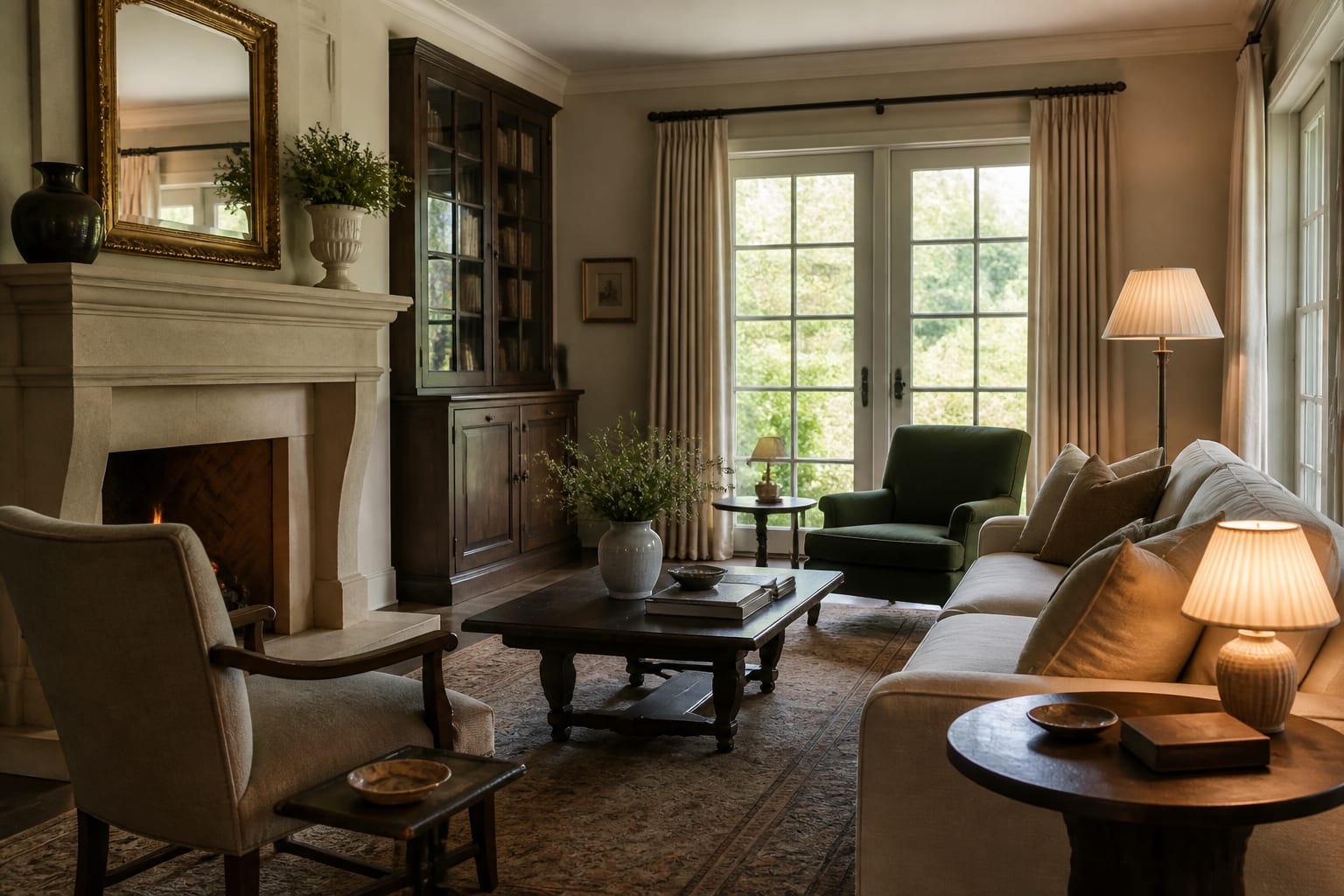
Old money aesthetic home decor is not about spending more — it is about spending once, choosing deliberately, and resisting replacement. The rooms this aesthetic references were assembled over generations: a Persian rug worn to softness, a sideboard that predates its owners, curtains heavy enough to block both light and noise. Nothing coordinates perfectly because nothing was purchased in a single trip. Replicating that quality on a contemporary timeline is absolutely achievable, but it requires abandoning the impulse to match and committing instead to accumulation with a consistent point of view.
Proportion, Scale, and the 60/30/10 Structure
Old money rooms are built on proportion. The walls, floors, and large upholstered pieces share a dominant tone — approximately 60 percent of the visual field — with a secondary material or color occupying roughly 30 percent, and an accent tone appearing in the remaining 10 percent. This 60/30/10 structure is not a strict formula; it is a way of ensuring one voice leads while others support. Rooms that ignore this principle tend to feel busy or undefined, which is the opposite of what old money communicates.
Scale errors are the fastest way to expose a newly assembled room. In a room with 10-foot ceilings, curtains hemmed at 96 inches rather than at the floor read as a cost-cutting decision. Furniture that is 2 to 4 inches too small in every dimension reads as suburban rather than ancestral. Old money rooms lean slightly over-scale — a sofa 90 to 96 inches wide in a room that could technically accommodate 84 inches, bookshelves built floor-to-ceiling rather than stopping at the 7-foot mark.
Apply the same logic to art. A single painting at 48 inches wide in a space that would accommodate 60 inches reads as cautious. Old money art fills the wall it inhabits and is hung close to the furniture beneath it — no more than 8 inches above the sofa top — which grounds the arrangement rather than leaving it floating.
See also our guide to Quiet Luxury Interior Design for more on old money aesthetic home decor.
Materials That Age Well Versus Materials That Age Poorly
The old money aesthetic is built on natural materials because natural materials develop character over time while synthetics simply wear out. A wool rug thins and softens at traffic points in ways that read as lived-in and valued. A polypropylene rug in the same pattern thins at the same points and reads as worn-out. The difference is not subtle — it is the entire distinction between a room that looks inherited and one that looks bought.
For upholstery, choose full-grain leather, heavy linen, or wool bouclé. Full-grain leather develops a patina over years of use; bonded or corrected-grain leather peels. Linen fades evenly in natural light, which makes sun-bleached linen look intentional. Velvet is acceptable on occasional chairs where it won't take daily wear, but avoid it on the primary sofa if the room is used regularly.
Wood furniture should be solid, not veneered. Solid walnut, mahogany, or oak at 1.5 to 2 inches thick for tabletops has a mass and weight that veneer-over-MDF cannot replicate. Antique pieces — even those requiring minor repairs — are preferable to new reproductions because the proportions of older furniture were drawn for rooms with higher ceilings and longer sight lines, which tends to produce better scale.
For a related angle on old money aesthetic home decor, read What Is Industrial Design.
Lighting: The Detail That Separates Rooms
Old money rooms are lit by lamps, not by fixtures. A chandelier or ceiling fixture operating without supplemental table and floor lamps produces flat, overhead light that makes even well-furnished rooms look staged rather than inhabited. The goal is to have every source of light at seated eye level or below — table lamps, floor lamps, sconces at approximately 60 to 66 inches from the floor — and to keep the overhead on a dimmer at 20 to 30 percent when in use.
Bulb temperature is a non-negotiable specification. Use 2700K to 2800K across every socket in the room. This temperature renders warm neutrals as rich and amber-toned in the evening — the quality that makes rooms in old photographs look so inviting. Cooler bulbs at 3000K or 4000K make the same palette look institutional.
Shade shape matters more than most decorating guides acknowledge. A hardback drum shade in off-white linen bounces light upward and downward with even warmth. A translucent white shade glows on all sides, which looks bright and inexpensive. Opt for lined shades in natural or ivory fabric — the inner lining determines the color temperature of the cast light and a warm gold lining will shift even a standard 2700K bulb toward a more amber quality.
Four Common Mistakes That Undermine the Aesthetic
Matching sets are the clearest signal that a room was assembled rather than accumulated. A dining table sold with eight matching chairs, a sofa paired with its matching loveseat, a bedroom suite in which every piece shares the same finish — these all read as retailer confidence rather than personal history. Mix a lacquered console with an aged brass mirror; pair a contemporary sofa with an antique side chair. The slight mismatch is the authenticity.
Over-purchasing artwork is a related mistake. Fifteen small frames grouped on a wall look like a project; one large painting hung at 57 to 60 inches to center looks like a choice. The same applies to decorative objects: a shelf with 12 items signals that every surface has been styled; a shelf with 4 items and 40 percent of space left empty signals that someone has stopped adding things because they're satisfied.
The third mistake is ignoring ceiling height when selecting lighting fixtures. A pendant hung at 84 inches in a room with 9-foot ceilings will graze the heads of tall guests; it should hang so the bottom of the shade sits at 90 to 96 inches from the floor in a non-dining room. The fourth mistake is using hardware finishes inconsistently — mixing polished nickel, matte black, and antique brass across one room fractures the visual register. Choose one warm metal finish and hold to it throughout.
Here are the common mistakes to avoid: - Never buy a furniture set — acquire pieces individually so the room looks assembled over time, not in a single afternoon. - Resist refinishing antiques to a perfect uniform finish; the original patina is the proof of age that the aesthetic depends on. - Avoid matching throw pillows and cushion covers that came with the sofa — replace them with pieces in different but tonal fabrics. - Do not hang art too high; center the piece at 57 to 60 inches from the floor regardless of wall or ceiling height.
Bring the look home with Re-Design
Before committing to an antique sideboard or a new linen upholstery choice, upload a photo of your room to Re-Design and preview how the old money aesthetic reads in your actual space. The AI applies the palette, furniture scale, and material cues directly to your room's real dimensions and light conditions, so you can verify the look is working before you spend anything.
Frequently Asked Questions
What is the difference between old money aesthetic and quiet luxury in home decor?
Quiet luxury is defined primarily by material restraint and a pared-back palette — it is a contemporary minimalist sensibility. Old money aesthetic carries an additional layer of provenance and accumulation: mixed-period furniture, worn textiles, and objects that appear to have been inherited rather than purchased. Quiet luxury rooms can look new; old money rooms should not look new even when they are.
How do I achieve the old money look in a rental apartment?
Focus on what you own rather than what's fixed. A quality rug, heavy curtains hung from removable tension rods, lamps instead of overhead lighting, and antique or vintage furniture pieces achieve the essential quality without touching the walls or floors. The aesthetic travels with you because it lives in the furnishings, not the architecture.
Which antique furniture styles best support old money aesthetic home decor?
English and American Georgian and Federal pieces from the late 18th and early 19th centuries have the scale and material weight the aesthetic requires. French provincial and Swedish Gustavian pieces work in lighter-toned rooms. The important factor is solid-wood construction and original hardware — avoid pieces that have been over-restored, as the refinishing removes the patina that makes them useful to this aesthetic.