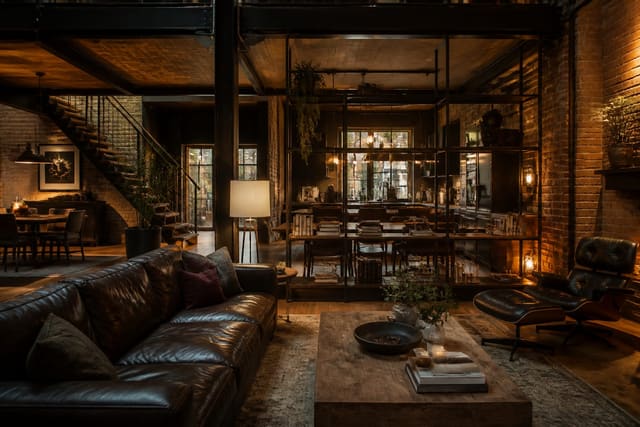
The dark academia aesthetic is a moody, book-obsessed style that romanticizes old universities, classical learning, and candlelit study. I think it endures because it gives a room intellectual weight and warmth at the same time, which few trends manage. At its core it blends deep colors, aged wood, leather, and dense personal collections into spaces that feel scholarly and lived-in. This guide explains where the look comes from, the materials and colors that define it, how to translate it into real interiors, and the missteps that flatten the mood when people try it themselves.
Where the Dark Academia Aesthetic Comes From
The dark academia aesthetic grew from a love of classical education, old European universities, and literature that treats learning as romantic and slightly mysterious. Its visual language borrows from centuries-old institutions: Gothic stone halls, oak-paneled libraries, candlelit reading rooms, and the tweed-and-leather wardrobe of a stereotypical literature professor. Stories set in cloistered colleges helped crystallize the mood, where ancient buildings, forbidden knowledge, and long autumn evenings set the emotional tone the interiors now chase. Online, the look spread as a tightly defined mood board of moody libraries, stacked Latin texts, fountain pens, and rainy quad photographs, which is why so many rooms styled this way share the same palette and props. Understanding these roots matters because it tells you what the style is really about: not just dark paint, but the feeling of a curious mind surrounded by accumulated knowledge. When you design with that idea in mind, you naturally reach for real books rather than three decorative ones, for aged oak rather than glossy laminate, and for warm light rather than bright overheads. A typical dark academia room leans on furniture that looks at least 40 to 50 years old in style, ceilings of roughly 8 feet or higher to suggest grandeur, and shelving climbing to within about 12 inches of that ceiling. The aesthetic rewards anyone who treats their space as a personal study built over time, exactly the scholarly, nostalgic atmosphere those old universities and the books about them have always evoked. The mood also leans autumnal, favoring muted golds and browns over summer brightness. Knowing the origins helps you avoid surface clichés and instead capture the underlying feeling of quiet, accumulated study that gives the dark academia aesthetic its lasting appeal across very different homes.
See also our guide to Dark Academia Color Palette for more on what is dark academia aesthetic.
Signature Colors, Materials, and Textures
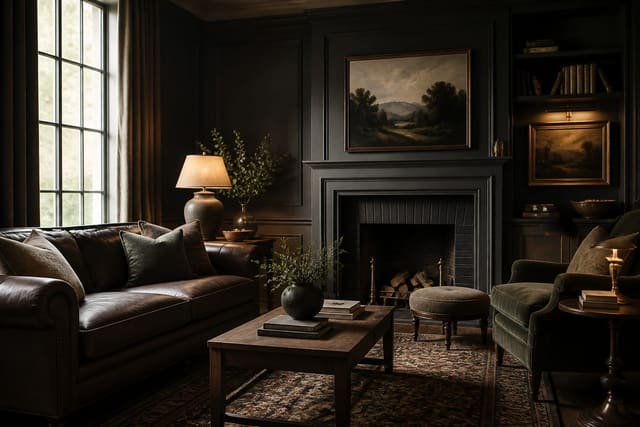
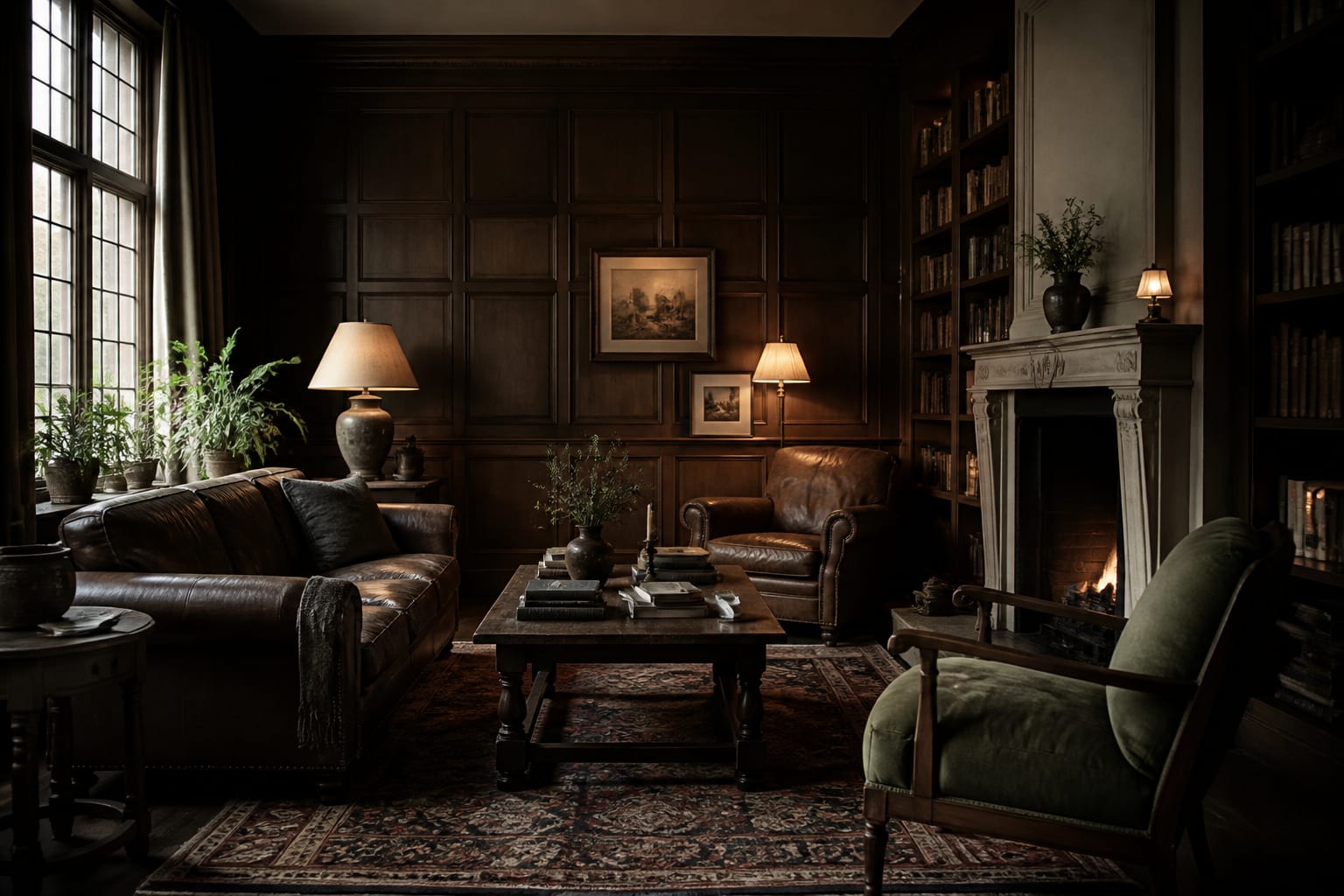
The dark academia aesthetic relies on a tight, recognizable kit of colors and materials, and learning it lets you judge any piece quickly. The palette centers on deep, saturated tones: forest green, oxblood, bottle navy, warm charcoal, and rich brown, usually applied across at least 60 percent of a room's surfaces so the space feels enveloped. Pure black is best kept under about 10 percent of the palette, because too much of it flattens texture and kills the candlelit warmth the look depends on. Materials carry the rest of the mood: aged oak and walnut, cognac leather, brass hardware, heavy linen, deep velvet, and worn wool. Patina is prized, so a leather chair with cracks reads as more authentic than a flawless new piece. Texture should be layered and faded, which is why Persian rugs, tapestry cushions, and stacks of cloth-bound books appear so often. For finishes, choose matte or eggshell paint rather than gloss, since the lower sheen absorbs light and deepens the velvety quality central to the style. Lighting should sit warm, around 2700 Kelvin, to keep the candlelit glow these palettes rely on. Metals should skew warm: brass, bronze, and antique gold rather than chrome or brushed nickel. When you understand this kit, shopping becomes simple, because you can ask whether each item adds a deep color, a warm metal, an aged material, or soft texture. Anything that fails all four tests, such as a glossy white plastic lamp, works against the mood. Pattern plays a supporting role too, with tartan, herringbone, damask, and faded florals all reading as period-appropriate when used sparingly. Keep the strongest patterns to one or two accent pieces per room so they punctuate rather than overwhelm the deep base. Build the kit gradually and consistency, not expense, makes it cohere.
For a related angle on what is dark academia aesthetic, read What Is Industrial Design.
Translating the Style Into Real Rooms
Bringing the dark academia aesthetic into a real home is mostly about layering in the right order so the room feels designed rather than thrown together. Start with the envelope: paint the walls, and ideally the ceiling, in one deep color, since this single move does more than any furniture purchase to set the mood. Next, address lighting, because the style fails without it; install dimmers and fit bulbs in the 2200 to 2700 Kelvin range to throw the warm, candlelit glow the look depends on, and plan for at least three separate light sources per room rather than one ceiling fixture. Then bring in the anchor furniture: a leather sofa or a paneled bed in aged wood, plus tall shelving that climbs to within about 12 inches of the ceiling so it reads as built-in grandeur. Layer a faded Persian rug to soften the floor and add muted color. Finally, style with density: real books shelved spine-out, oil-painting reproductions hung salon-style in gilt frames, and curios like globes, busts, and brass instruments in composed clusters. A few trailing plants in aged brass cachepots stop the dark academia palette from reading as gloomy. Work in this sequence and each layer supports the next, so even budget pieces look intentional against the committed color and warm light. Rush straight to props before fixing the walls and lighting, and the room reads as a costume rather than a scholarly study. Hang curtains close to the ceiling and let them extend about 4 inches beyond each side of the window, so the openings feel taller. Add a rug large enough that the front legs of the main seating sit on it, keeping the grouping connected. Worked patiently, the room earns its atmosphere honestly.
Adapting Dark Academia to Your Space
The dark academia aesthetic is flexible enough to suit small apartments, bright modern flats, and rented rooms if you adapt rather than copy a mood board wholesale. In a small space, lean into the darkness instead of fighting it; wrapping a compact room in one deep color hides boxy proportions and creates a cozy cocoon, and a single tall bookcase can stand in for a full library wall. In a bright, modern room, use the generous daylight to justify a fully saturated wall color, which looks deliberate rather than gloomy in good light, then warm the cool architecture with aged wood, leather, and amber bulbs. Renters who cannot paint can build the mood with removable wallpaper, dark fabric panels, heavy curtains, and freestanding shelving packed with books. Budget is rarely a barrier, because the style favors secondhand and inherited pieces; estate sales and thrift shops supply the aged wood, leather, and brass that new stores charge a premium to imitate, and a room of three characterful antiques beats a suite of glossy reproductions. Keep proportion in mind: in rooms with ceilings under about 8 feet, draw the eye upward with tall shelving and vertically hung art rather than chasing grandeur the height cannot support. Hang that art so its center sits around 57 inches from the floor, the standard gallery line, so a mixed cluster still feels deliberate. Adapted thoughtfully, the dark academia aesthetic works almost anywhere, because its real subject is a curious, book-loving mind, not a particular square footage. In open-plan homes, define a study zone with a rug roughly 5 by 8 feet, a tall bookcase, and a deep accent wall, so the mood concentrates in one corner. Treat every constraint as a prompt rather than a barrier, and the style bends to your space.
Here are the common mistakes to avoid: - Skipping warm lighting and leaving a single bright overhead fixture. - Painting everything pure black, which flattens texture and kills warmth. - Styling sparse shelves with three vases instead of real books. - Buying glossy new reproductions instead of aged, characterful secondhand pieces. - Adding props before committing to a deep wall color first.
Bring the look home with Re-Design
Still unsure whether the dark academia aesthetic suits your home? Open Re-Design and upload a photo of any room, then preview deep walls, aged wood, leather seating, packed bookshelves, and warm 2700 Kelvin lamplight in seconds. You can test a fully wrapped color against your real window light, compare a moody scheme with your current furniture, and decide whether the look reads scholarly or simply dark in your space. Trying it virtually first saves you from costly paint and furniture mistakes before you commit.
Frequently Asked Questions
What is the dark academia aesthetic in simple terms?
It is a moody, scholarly style that romanticizes old universities, classical learning, and candlelit reading. In interiors it means deep colors, aged wood, leather, brass, and walls of real books, all lit warmly. The goal is a room that feels like a curious person's personal study built over time.
Is dark academia expensive to achieve at home?
Not necessarily. The style genuinely favors secondhand and inherited pieces, so estate sales and thrift shops supply aged wood, leather, and brass cheaply. Paint and books deliver most of the mood for little money, and three characterful antiques outperform a full set of glossy new reproductions almost every time.
What is the difference between dark academia and light academia?
Both romanticize classical learning, but the palettes diverge. Dark academia uses deep greens, browns, and oxblood with moody, candlelit lighting for a brooding study feel. Light academia keeps the books and scholarly mood but swaps in creams, soft beiges, and bright airy light for a warmer, gentler, sunlit atmosphere.