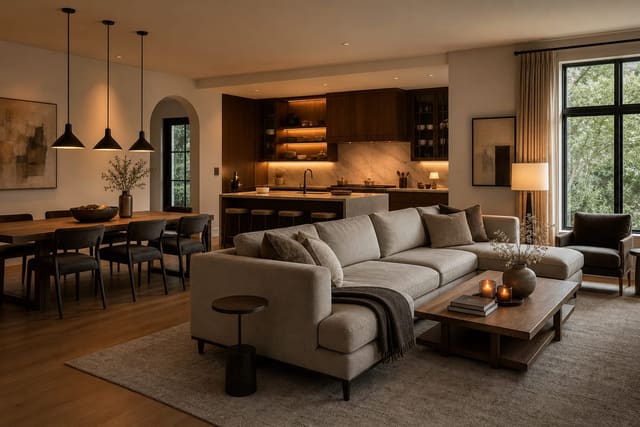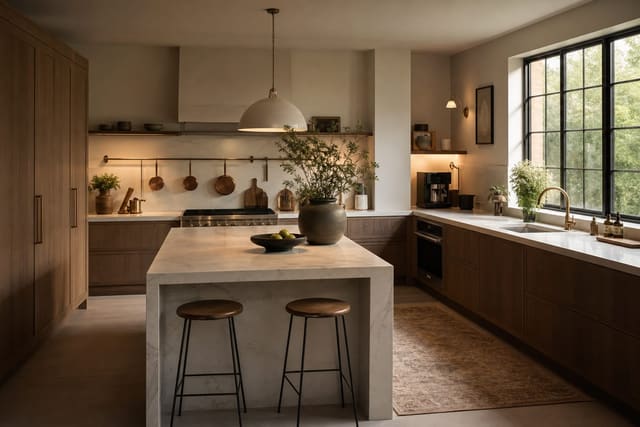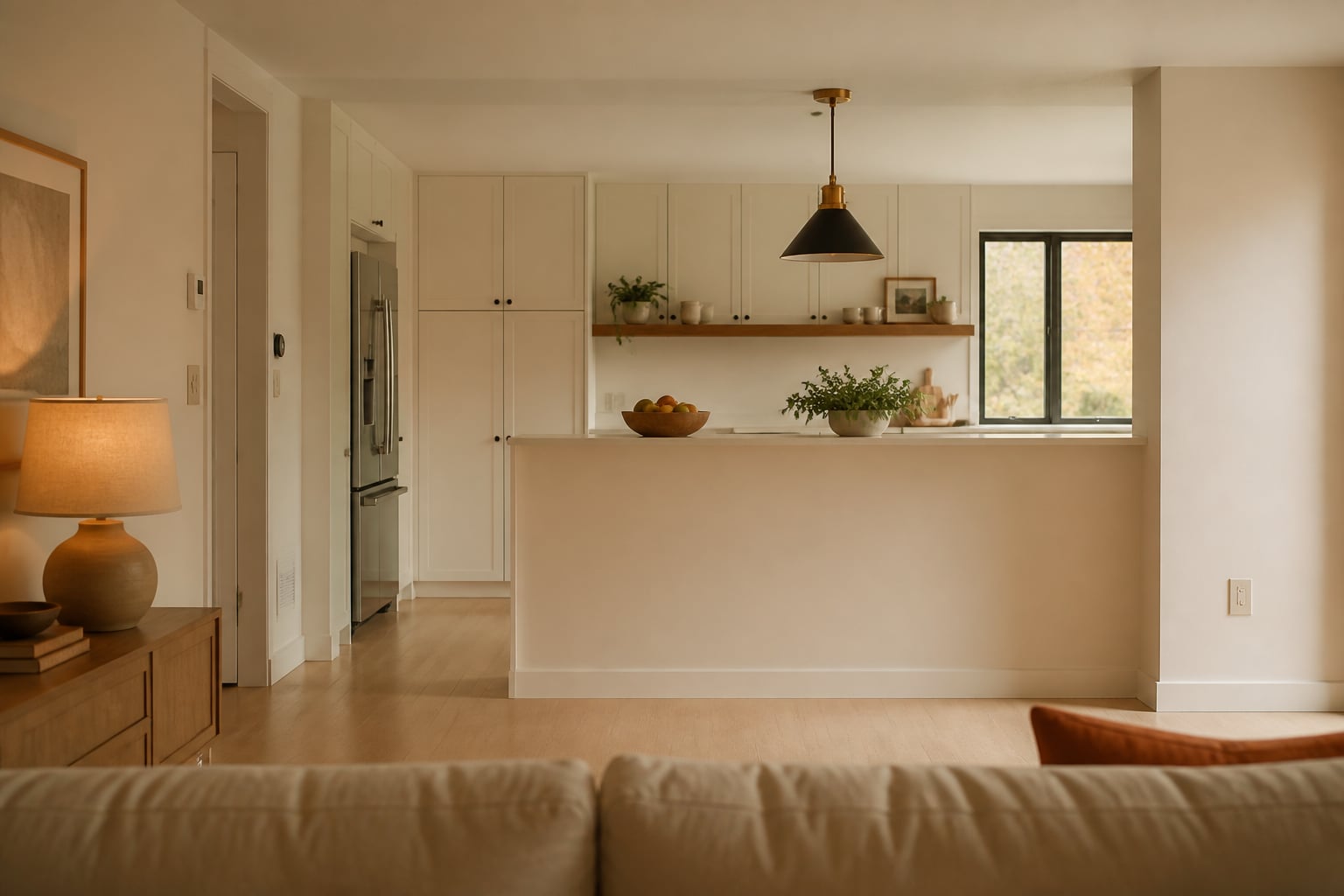
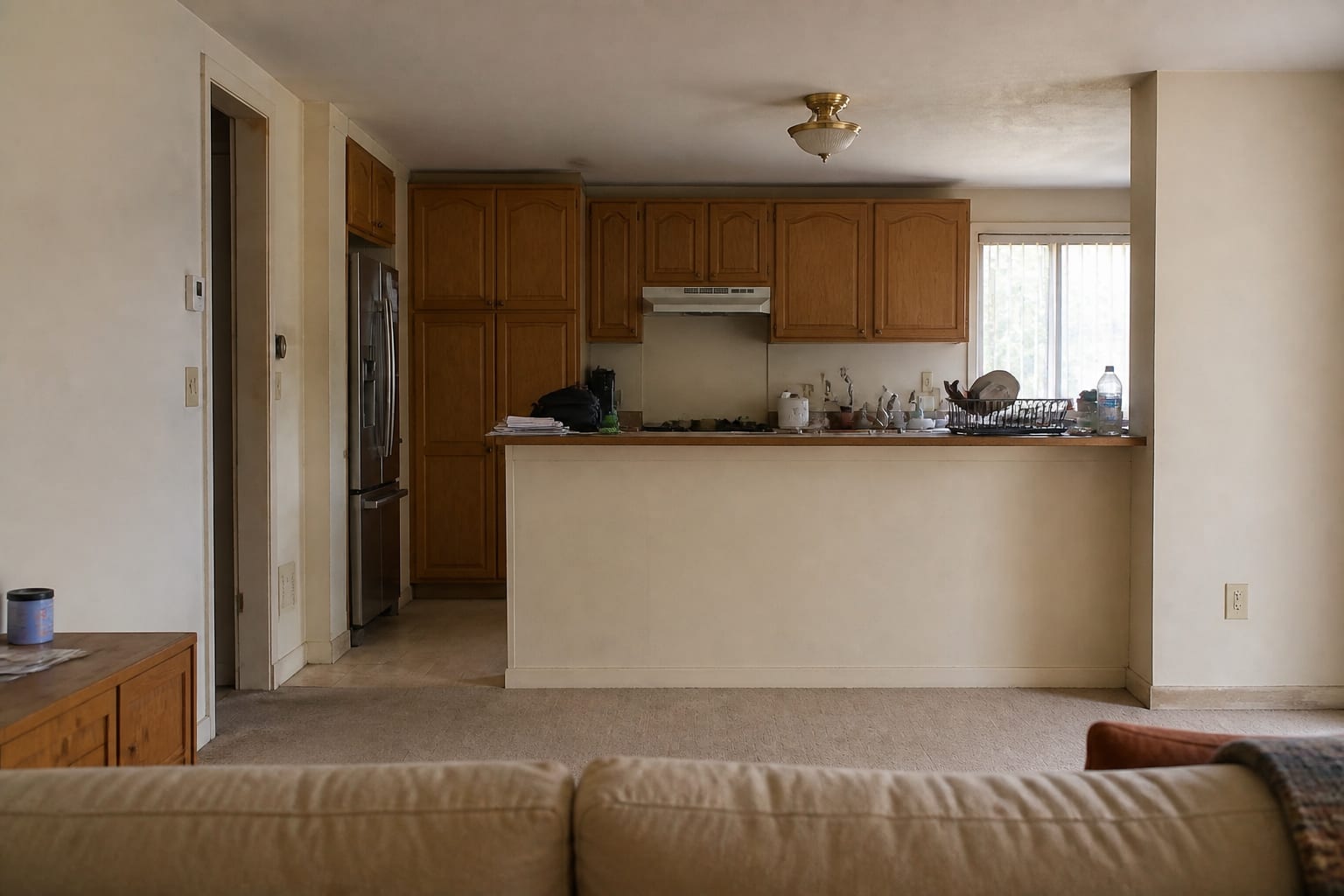
An open-plan kitchen hides its mess when the sink wall sits opposite the seating zone, the island carries a counter overhang that screens prep from the dining view, and dirty dishes stage in a closed cabinet or hidden second sink instead of on the open island. The goal isn't closing the kitchen off again — it's editing what the living area can see, hear, and where mess naturally lands.
"Open-plan kitchens feel calmer when the mess has a visual back instead of performing for the sofa."
How do you hide kitchen mess in an open-plan space?
Block the lowest, busiest sightlines with an island, half wall, pantry zone, appliance garage, or scullery, while keeping the upper view open for light and conversation. The fix is usually about height, depth, and location, not a full wall.
Start with the sink, since dirty dishes are louder than any finish choice. If it faces the living room, add a raised ledge, deeper island, or side return that hides the bottom 8-12 inches of counter from seated eye level. A ledge at 42-48 inches high screens plates, glasses, and a sponge without boxing in the cook.
The island should do more than hold stools. A flat 36-inch counter-height island exposes everything on top. A two-level island with a 6-8 inch raised bar lip works well when the living room sits close by. If you prefer one flat worktop, go deeper: 36 inches minimum, 42-48 inches gives you a prep side and a buffer side.
Keep cooking mess away from the social edge where the layout allows. A range on the back wall with the island as prep space reads calmer from the sofa than a cooktop surrounded by oil and open pans. If the kitchen already feels dim, fix the light before blaming the layout — shadows make clutter look heavier, as covered in making a dark kitchen feel bright.
Which sightlines matter more than the island?
Stand where the mess gets judged: the main sofa seat, the dining chair facing the kitchen, the entry, and the stairs if visible. Hide the sink basin, drying rack, trash zone, and cords from those spots while leaving faces and upper cabinets visible.
Use island end panels aggressively. A waterfall side, bookshelf end, 12-15 inch display niche, or closed cabinet return blocks the view into a cleanup corner — especially useful when the dishwasher sits on the living-room side of the sink run.
A half wall works if it's low enough to preserve the room. Keep it 42-48 inches high, align it with the island or cabinet run, and cap it with counter material or a wood ledge. Aligned with cabinetry, it reads as part of the plan rather than a compromise.
Lighting controls attention too. Brighter task light over prep and cleanup, softer living-room light, keeps the eye from locking onto the sink at night. Under-cabinet strips at 2700-3000K, pendants hung 30-36 inches above the island, and a dimmable dining fixture help — see kitchen task lighting placement before choosing fixtures for looks alone.
Test this on your own room photo with ReDesign before committing; keep the doorway, walls, windows, furniture, and fixed features visible so the preview solves your actual room.
When is a scullery pantry or appliance garage worth it?
A scullery pantry earns its space when the open kitchen looks good but the daily routine doesn't. Frequent hosting, bulky appliances, or kids leaving clutter everywhere are signs a secondary mess zone will save the main room from constant exposure.
Even a 5' x 7' room or a 30-36 inch deep pantry wall holds the coffee maker, toaster, microwave, recycling, and backup dishes. Add a counter at least 18 inches deep, outlets where appliances sit, and closed doors. If a sink fits, leave counter space on one side for stacking dishes, not just rinsing one cup.
Door strategy matters: pocket doors when the wall allows, a single hinged door opening away from the prep path, or a wide cased opening only if the back wall stays tidy — otherwise the mess just moved five feet.
Appliance garages are the smaller version. A 15-18 inch deep cabinet with a lift-up, pocket, or tambour door hides a toaster, blender, and cords. Place it near the outlets and daily mugs, not across the kitchen for symmetry's sake. Small open kitchens can borrow the restraint from micro kitchen design for small spaces: fewer exposed objects, stronger zones, no decorative storage pretending to be capacity.
What open kitchen mistakes expose every pan?
- Treating openness as a win by default. Removing walls isn't better if the new plan shows the trash can and cooking splatter from every seat. Keep the conversation path open; give cleanup a visual shield.
- Putting the sink in the island without an aftermath plan. It works only with a deep basin, dishwasher within one step, and a landing zone at least 24 inches wide.
- Choosing open shelving as the living-room view. Shelves are fine above a quiet prep wall but brutal near a messy sink — use doors for cups, containers, and mismatched mugs.
- Skipping the trash and recycling plan. A freestanding bin at the island end ruins the room; use a 15-18 inch pullout near the sink or prep zone instead.
- Making the island too narrow. A 24-inch deep island can't hide much and blocks circulation. Keep at least 42 inches between island and cabinet run for two cooks.
How does AI design help test the hide-mess strategy?
Upload one photo from the living room toward the kitchen, one from the dining table, and one from the main work position. Leave the sink accessories, coffee machine, dish rack, trash area, and small appliances in frame if they're part of daily life.
Preview fixes separately: a raised island ledge, then a deeper single-level island, then a half wall, then a scullery-style opening, then an appliance garage wall. Keep cabinet color, flooring, windows, and sofa position consistent so you're testing the screen, not a fantasy remodel.
Check the boring details in each preview: Is the sink basin still visible from the sofa? Does the half wall block light? Does the island leave a 42-inch aisle? Is the pantry opening wide enough to use without displaying the toaster?
The best preview becomes a construction brief: island depth, ledge height, half-wall length, garage depth, opening width, pendant height, and exactly which objects need to disappear. You're not erasing cooking from an open home — you're designing so cooking doesn't turn the living area into the cleanup station.
Frequently Asked Questions
How do I block the view of the kitchen sink from the living room?
Orient the sink wall opposite the living-room view and let the cook's body screen the prep zone, or run a 6 to 10-inch raised bar at the island edge to block the line of sight to the counter behind it.
Should I add a full wall to hide an open-plan kitchen?
No. A half-wall or pantry column near the kitchen entry, combined with sightline planning, hides about 80 percent of the mess at 20 percent of the cost. Full walls erase the value of the open plan.
What island shape hides the most mess in an open kitchen?
A double-stack island with a raised 42-inch bar at the dining side and a 36-inch prep counter on the cook side hides cutting boards, dirty pans, and small appliances behind the raise.
Where do dirty dishes go between meals in an open-plan kitchen?
Inside an under-counter drawer dishwasher or a closed dirty-dish cabinet column with a pull-out tray. Staging dirty dishes on the island sink is the single biggest tell of an unfinished open-plan kitchen.
What single design move quiets an open-plan kitchen the most?
A walk-in pantry or closed appliance garage on the cook wall. Every small appliance, paper bag, and cereal box goes behind a door, and the rest of the kitchen reads designed.
> Try this: Ready to see this on your own room? Open ReDesign and run the preview.
Three transformations to try
1. Double-stack island with 42-inch bar screening prep 2. Walk-in pantry behind kitchen entry wall 3. Closed appliance garage replacing open counter