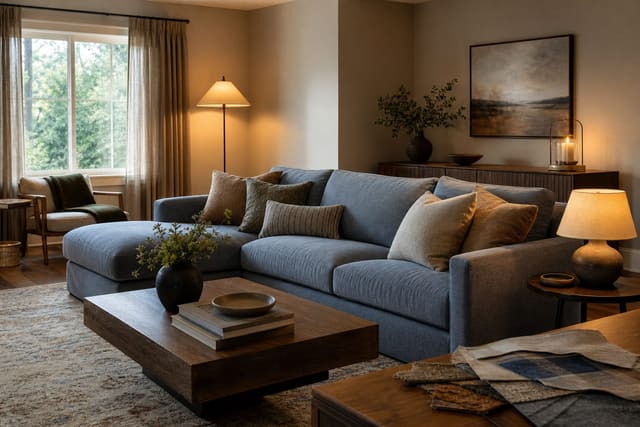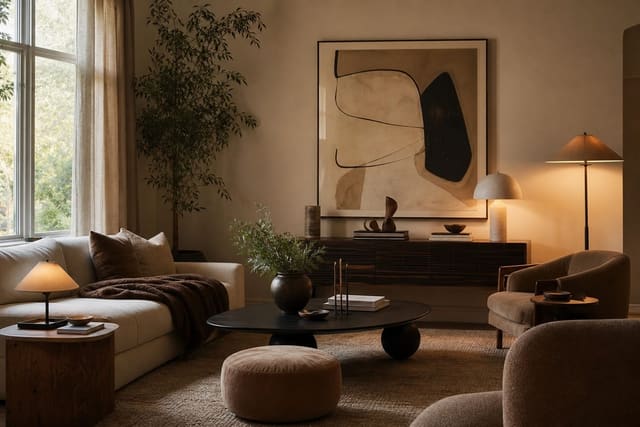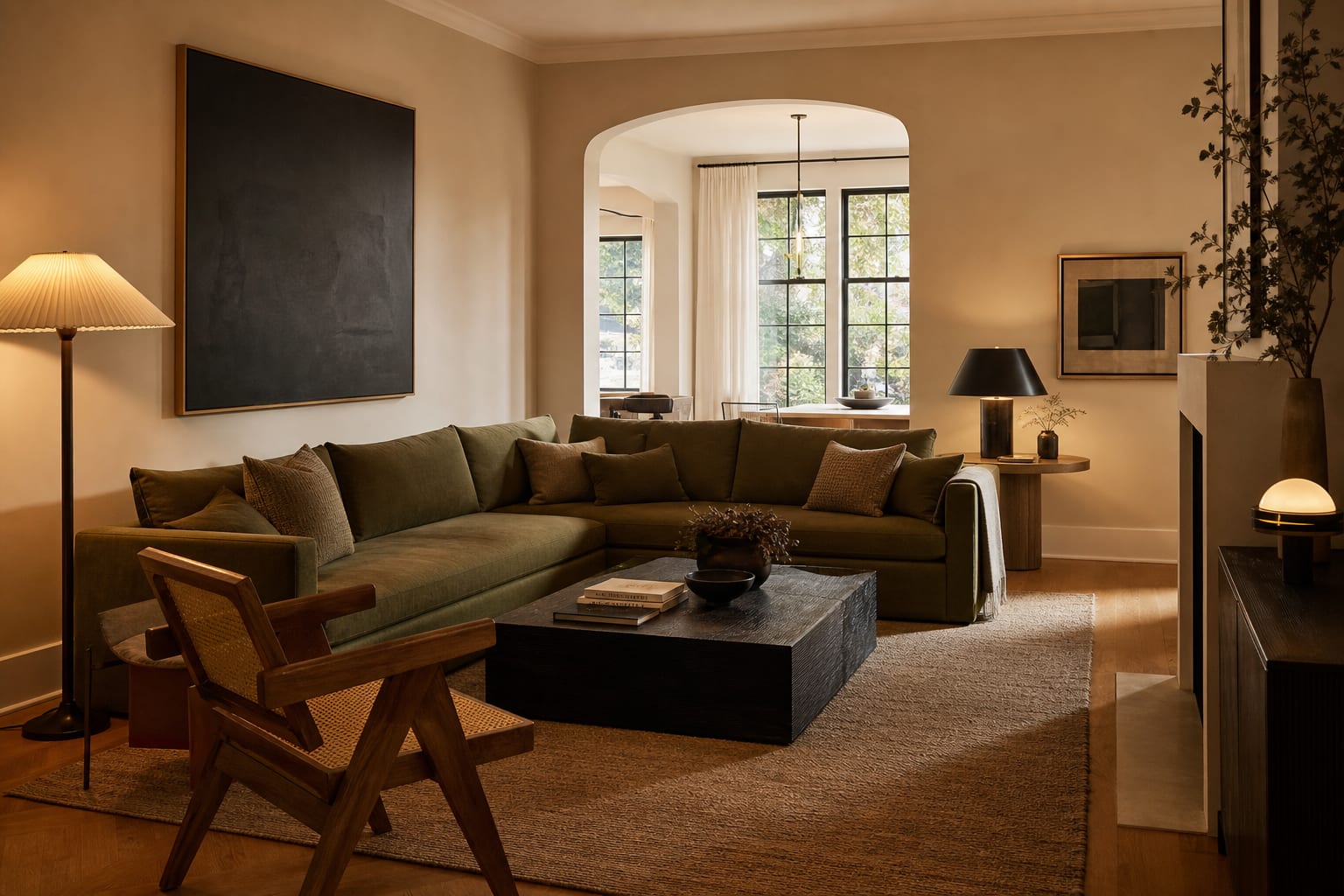
Orange wood floors pair best with cool-leaning warm whites (Sherwin Williams Alabaster, Benjamin Moore White Dove), deep greens (Hunter, Sage, Forest), or warm greiges that neutralize the orange. The wrong choice — pure cool gray, pink-beige, or yellow — doubles down on the orange instead of calming it. Cold gray is usually the worst partner for honey oak, amber pine, and orange maple because it makes the wood look even more orange by contrast.
Which paint colors actually work with orange wood floors?
Warm white, cream, muted sage, olive, dusty blue, mushroom taupe, warm greige, and soft charcoal (used carefully) all work with orange or honey wood. They succeed because they acknowledge the floor's yellow-orange undertone instead of trying to cancel it with an unrelated blue-gray wall.
If the room is small, shaded, or full of dark furniture, choose a warm white or cream with a light reflectance value above 70 so the floor isn't the only bright surface. If the room is already sunny, a muted green or taupe gives the wood a calmer backdrop without washing out the architecture.
Avoid pure white unless the room has excellent light and crisp trim — it can make amber flooring look yellower, especially at night. Better options: ivory, plaster, chalk, or linen. For bulbs, stay around 2700K–3000K and 90+ CRI; orange floors turn harsh under cheap cool light. If daylight is scarce, try creating fake natural light in any room before blaming the paint.
The most forgiving families are green-gray, blue-with-gray, mushroom, clay, oatmeal, and creamy off-white. The riskiest are icy gray, lavender gray, bright lemon beige, and peach — they either fight the floor or repeat the orange too closely.
Warm, cool-muted, or contrast: how do you choose?
Choose warm paint when the floor is honey, golden oak, or pine and the room needs softness. Cream, oatmeal, flax, and light camel make orange wood feel cozy. Keep trim slightly cleaner than the wall — a warm white trim beside a cream wall adds edge without looking dirty.
Choose cool-but-muted paint when the floor feels too yellow and you want restraint. Sage, eucalyptus, dusty blue, slate, and green-gray sit opposite orange without shouting — the key word is muted. A clear turquoise wall can look like a sports uniform; a gray-green wall makes the same floor look collected.
Choose contrast when you like the floor but the room lacks definition. Soft charcoal, deep olive, ink blue, or warm black work well on an accent wall, built-ins, doors, or a fireplace surround. Keep dark color off every wall in a low-ceiling room unless a cave effect is the goal.
Test paint on 12x18 inch sample boards with two coats, then move them beside the floor, trim, sofa, and window in morning light, afternoon light, and lamplight. The color that looks perfect at noon may turn peach after sunset.
Test this on your own room photo with ReDesign — keep the doorway, walls, windows, main furniture, and fixed features visible so the preview solves the room you actually have.
Common orange wood floor paint mistakes
- Choosing gray because it feels safe. Cool gray often makes honey floors look more orange by comparison. Use mushroom, warm greige, stone, or oatmeal instead.
- Matching the wall too closely to the floor. Tan walls beside orange wood flatten the room into one beige-orange field. Aim for a visible shift in value or undertone.
- Ignoring adjoining rooms. Orange floors often run through entries, halls, and living rooms at once. If the room has many openings, use the logic from a room with too many doorways: keep sightline colors related, then let one main room carry the strongest choice.
- Adding only warm accessories. Honey floor, cream wall, tan sofa, brass lamp, and yellow art can feel sticky. Add one cooling note — olive, black, smoky blue, or charcoal — repeated at least three times so it reads as a decision.
- Forgetting sheen. Glossy wall paint beside amber polyurethane floors feels shiny and dated. Use matte or eggshell on walls, satin or semi-gloss on trim.
How can AI design help preview the wall color?
AI preview is useful because the problem is relational — the same paint can look calm beside one rug and wrong beside another. Upload a straight photo of the room, keep the floor fixed, and test versions where only wall color, rug, curtains, and accents change.
Shoot from a doorway or corner so the floor, two walls, ceiling line, windows, and largest furniture are visible. Open curtains, turn on lamps if you use the room at night, and clear small clutter. Ask for one version with warm cream walls, one with muted green, one with dusty blue, and one with mushroom taupe rather than a total makeover.
Judge which version makes the floor look least orange while still respecting the furniture you own — not which looks most dramatic. If every successful preview swaps your sofa and rug too, the paint isn't doing the work. Mirrors help when they reflect a pale wall or window, but distort the read if they reflect the orange floor itself; the same principle behind using mirrors to amplify light applies here.
What should you paint first if you're nervous?
Start with the smallest high-impact surface: a powder room, entry wall, fireplace surround, interior door, or built-in niche. Renters can test the same direction with removable wallpaper, large art, or a painted canvas leaned behind a console.
For low risk, paint walls cream and add stronger color through textiles. Hang curtains 6–10 inches above the casing, extend the rod 8–12 inches beyond the trim, and let panels finish about 1/2 inch above the floor — short curtains against orange wood chop up the room.
An 8x10 foot rug is often the minimum to seat sofa and chair front legs on it. Choose a ground color of cream, oatmeal, olive, blue-gray, or charcoal rather than another orange-brown. For trim, skip bright gallery white — warm white, soft white, mushroom, or the wall color in a higher sheen usually works better, especially in low-ceiling rooms.
Stand at the doorway and squint: if floor, wall, and furniture read as three related layers, the color works. If the floor screams first, go softer, greener, deeper, or creamier.
Frequently Asked Questions
Why does my room look bad with orange wood floors?
Most cool grays, pink beiges, and pure whites clash with the warm orange undertone of red-oak floors. The clash reads as dated even though every individual finish is fine on its own.
What paint colors neutralize orange floors?
Cool-leaning warm whites and warm greiges with a green undertone work best — they pull the eye toward neutral rather than emphasizing the orange, unlike pink-beige or pure cool gray.
Can I use a bold color with orange floors?
Yes. Deep greens, navy, and warm forest tones pair well with orange-oak floors; the contrast neutralizes the orange and turns the floor into a deliberate feature rather than a flaw.
Should I avoid gray paint with orange floors?
Pure cool grays clash, but warm greiges with a red-brown undertone work fine. Test a sample board before committing — the same room can look terrible in cool gray and great in warm greige.
Does AI preview wall colors against my orange floor?
Yes. Upload a room photo and AI generates previews with warm white, deep green, and greige walls against your existing orange floor before you buy any paint.
> Try this: Ready to see this on your own room? Open ReDesign and run the preview.
Three transformations to try
1. Warm white walls + orange oak floor 2. Deep green walls neutralizing orange floor 3. Warm greige walls + orange floor