Organic modern living rooms win because they soften minimalism without surrendering its discipline. The best ones lean on natural oak, curved silhouettes, and a tight palette of warm neutrals, never on clutter or trend props. If your living room feels cold or sterile, the fix is rarely more furniture. It is rougher textures, rounder shapes, and a few living elements. These organic modern living room ideas show where to add weight, where to subtract, and how to keep the whole space feeling unforced and quiet.
Anchor the Room With a Low, Curved Sofa
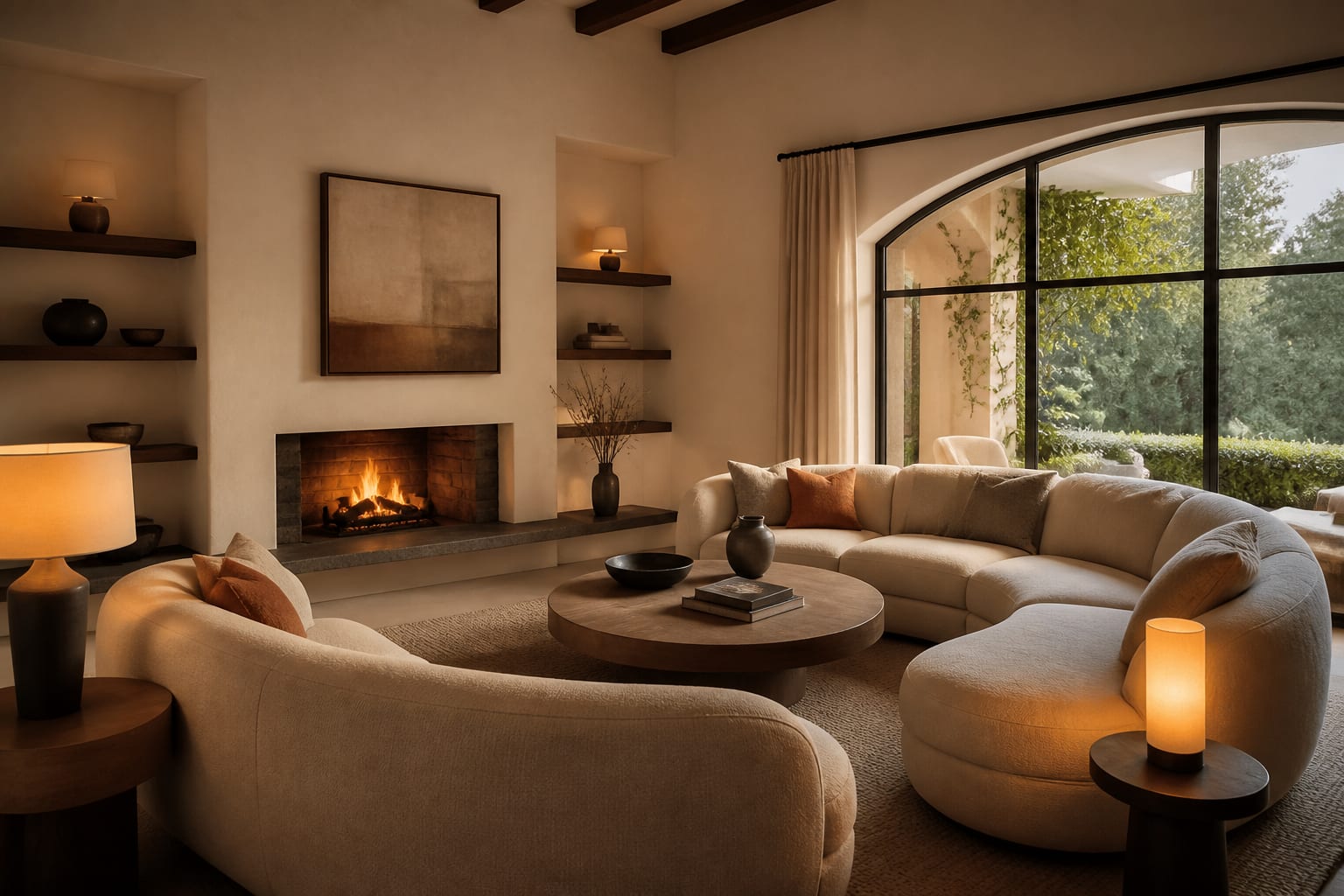
The single biggest organic modern move in a living room is swapping a boxy sofa for a low, curved one. Sharp ninety-degree corners read as cold and corporate, while a gentle sweeping back invites people to gather and softens the whole floor plan. Choose an upholstery with visible texture, like a nubby boucle in oatmeal or a brushed cotton in warm sand, so the piece feels handmade rather than mass produced. Keep the frame low to the ground, which is a defining trait of the organic modern look, because lower seating makes ceilings feel taller and the room feel calmer. Pair the curved sofa with a single rounded accent chair in a complementary tone rather than a matching set, since the organic modern style avoids the matchy, showroom feeling. Skip black legs and chrome bases; opt for warm wood feet or a fully upholstered base that seems to grow from the floor. Layer two or three pillows in undyed linen and a chunky knit throw, but resist piling on more, because the style depends on restraint. Scale matters too, so let the sofa stretch generously along its wall rather than choosing a tight loveseat that fights the relaxed mood. A modular or sectional version works beautifully here, since its low continuous form mirrors the soft horizontal lines the style loves. The goal is a seating area that looks effortless and lived in, where every curve invites you to sink down. When the sofa is right, the rest of the organic modern living room falls into place around it, and you need far fewer decorative objects to make the space feel complete and intentional.
See also our guide to Cottagecore Living Room Ideas for more on organic modern living room ideas.
Build a Warm Neutral Palette With Earthy Depth
Color discipline separates a polished organic modern living room from a beige blur. Start with a soft white or warm greige on the walls, then layer in three or four earthy tones that share an undertone, such as clay, terracotta, mushroom, and faded olive. These hues mimic stone, soil, and dried grass, which is exactly the natural reference the organic modern style draws from. Avoid cool grays and stark true whites, because they fight the warmth that makes this look feel inviting rather than clinical. Carry the palette across materials rather than just paint: an oat rug, a clay ceramic lamp, a sand linen curtain, and an oak coffee table all reinforce the same quiet story. Use color in large, calm fields instead of small busy accents, so the eye relaxes. A single deeper note, like a charcoal cushion or a smoke glass vase, adds grounding contrast without breaking the harmony. Natural fiber elements such as jute, wool, and undyed cotton bring tonal variation that no painted accent wall can match. Keep saturated brights and high-gloss finishes out entirely, since they read as modern in the wrong way. Pay attention to undertones above all, because a clay that leans pink and an olive that leans yellow can quietly clash even when each looks right alone. Test paint and fabric samples together in your own light before committing, since organic modern depends on that warm cohesion to feel intentional. When your organic modern palette stays warm, tonal, and material-driven, the living room feels enveloping at every hour, glowing under morning light and softening into something cozy after dark, with no single element shouting for attention.
For a related angle on organic modern living room ideas, read Maximalist Living Room Ideas.
Layer Natural Textures and Living Greenery
Texture is the engine of an organic modern living room, doing the work that bright color or busy pattern does in other styles. Combine smooth and rough surfaces deliberately: a polished travertine side table beside a chunky wool rug, a sleek plaster wall against a knotty oak shelf. This tactile contrast keeps a neutral room from feeling flat, which is the most common failure point of minimalist spaces. Reach for honest, raw materials such as solid wood, unglazed ceramic, rattan, linen, and natural stone, and let their imperfections show rather than hiding them behind lacquer. Add genuine greenery, because living plants are central to the organic modern philosophy of bringing the outdoors in. A large fiddle-leaf fig or an olive tree in a clay pot adds height and life, while a low bowl of trailing pothos softens a shelf. Choose a few statement plants over many small ones, matching the style's preference for restraint. Drape a raw-edge linen throw over the sofa arm and set a hand-thrown ceramic bowl on the coffee table to reinforce the handmade feeling. Even the picture frames should lean toward warm wood rather than metal. A woven jute or wool rug underfoot is one of the most effective texture moves you can make, since it grounds the seating zone and adds warmth that smooth flooring lacks. Layer a smaller sheepskin or flatweave on top if the room needs more depth near the sofa. When you build the organic modern living room around layered natural texture and real plant life, the space gains a sensory richness that photographs beautifully and, more importantly, feels grounding and restful to actually live in day after day.
Light It Warmly and Edit Ruthlessly
Lighting and editing finish the organic modern living room, and both reward restraint. Trade cool, bright overhead fixtures for warm, layered light from table lamps, floor lamps, and a sculptural pendant in rattan, plaster, or paper. Aim for soft pools of light at different heights rather than one flat ceiling wash, which flattens the curves and textures you worked to create. Warm bulbs are essential, since cool white light makes earthy neutrals look gray and lifeless. A single oversized organic-shaped pendant over the seating area can double as a quiet sculpture during the day. Then edit, because organic modern lives or dies on negative space. Clear the coffee table down to one stack of books, a ceramic vessel, and maybe a single tray, leaving real breathing room around each object. Built-in shelves should show air between groupings, not a wall-to-wall lineup of trinkets. Every item that stays should earn its place through material honesty or genuine use, never as filler. Hide cords, route cables, and choose storage that conceals clutter so surfaces stay calm. A closed-front media console or a low oak credenza keeps the inevitable electronics out of sight while reinforcing the natural material story. The discipline here is what makes the natural materials sing, because a curved oak chair only reads as intentional when it is not crowded. Treat negative space as a design element in its own right, leaving generous gaps around art and accessories so the eye has somewhere to rest. When the organic modern living room is warmly lit and ruthlessly edited, it achieves the quiet confidence that defines the style and makes every visitor exhale on entry.
- Float a low curved boucle sofa to anchor the seating zone.
- Add an olive tree in a clay pot for living height.
- Layer a chunky wool rug over warm oak flooring.
- Swap metal lamp bases for plaster or hand-thrown ceramic.
- Hang one oversized rattan pendant as a quiet sculpture.
- Style the coffee table with three objects, nothing more.
- Mix travertine, unglazed ceramic, and raw linen for tactile depth.
Bring the look home with Re-Design
Seeing organic modern in your own room beats guessing from catalog photos. With Re-Design, upload a photo of your living room and preview the style applied to your real walls, windows, and layout. You can compare a curved oat sofa against your existing one, test warm clay walls before buying paint, and check how an olive tree and oak coffee table sit in your actual floor plan. Trying several organic modern variations on your room takes minutes, so you commit to materials and shapes with confidence instead of regret.
Frequently Asked Questions
What makes a living room organic modern?
An organic modern living room marries minimalist clean lines with raw natural materials, curved furniture, and a warm neutral palette. Think oak, linen, stone, and living plants arranged with restraint, so the space feels calm and grounded rather than cold, cluttered, or overly styled.
What colors work best for organic modern living rooms?
Stick to warm, earthy neutrals that share an undertone: oat, clay, terracotta, mushroom, and faded olive paired with a soft white or greige wall. Add one deeper grounding note like charcoal or smoke glass, and avoid cool grays, stark whites, and saturated brights.
How do I keep organic modern from feeling cold?
Warmth comes from texture and light, not more stuff. Layer wool, boucle, and raw oak, add real greenery, and use warm-toned bulbs in lamps at varied heights. Curved shapes and tonal earthy colors soften the minimalism so the room feels inviting and lived in.