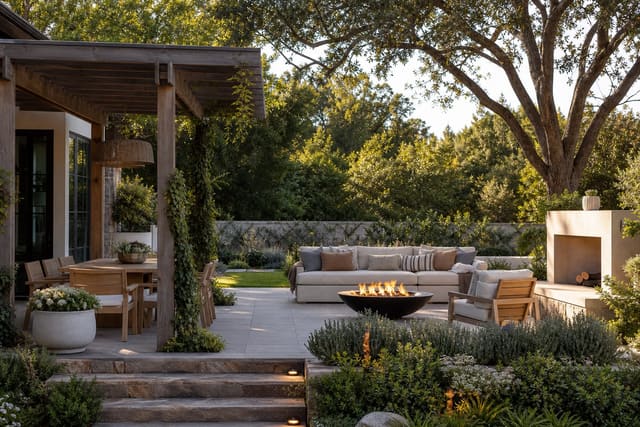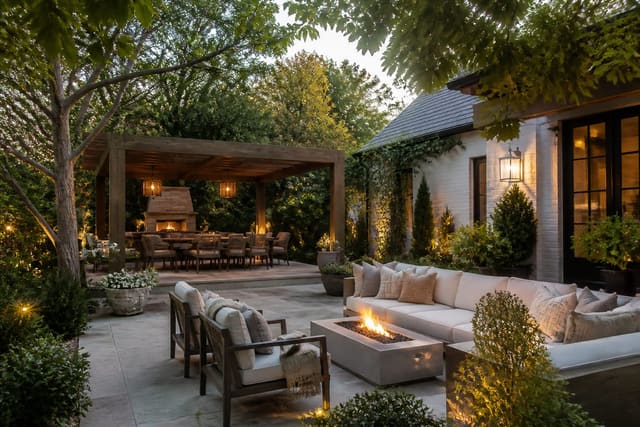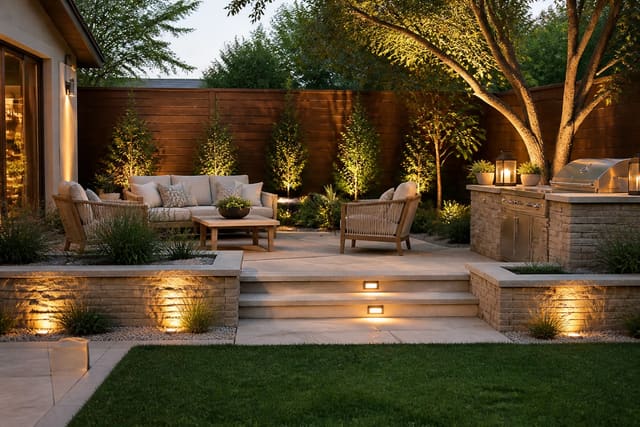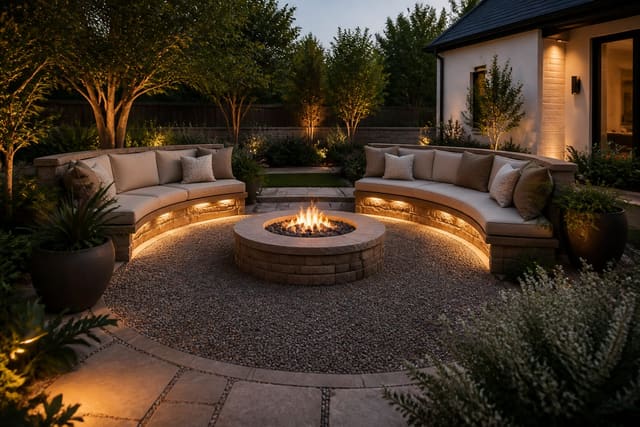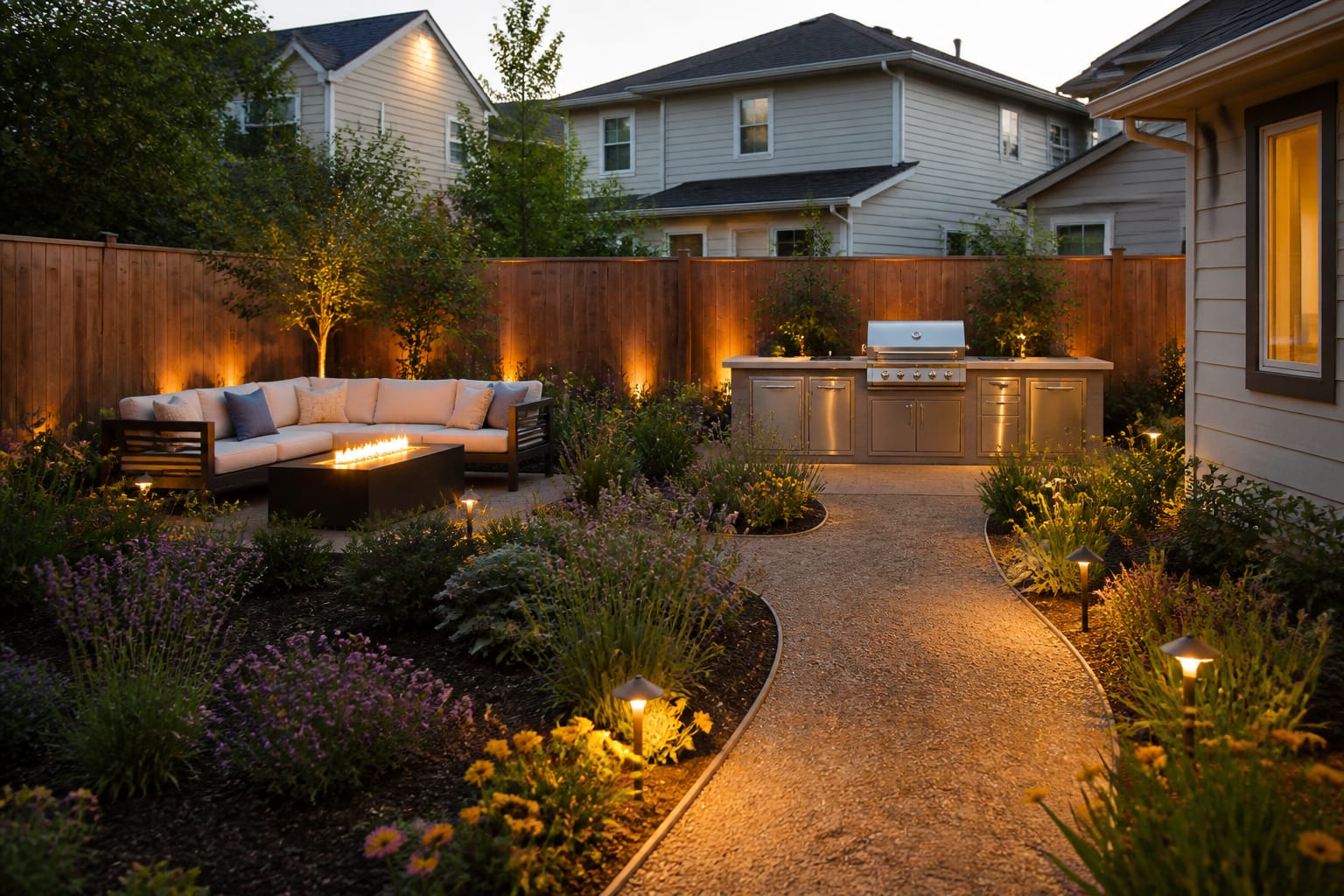
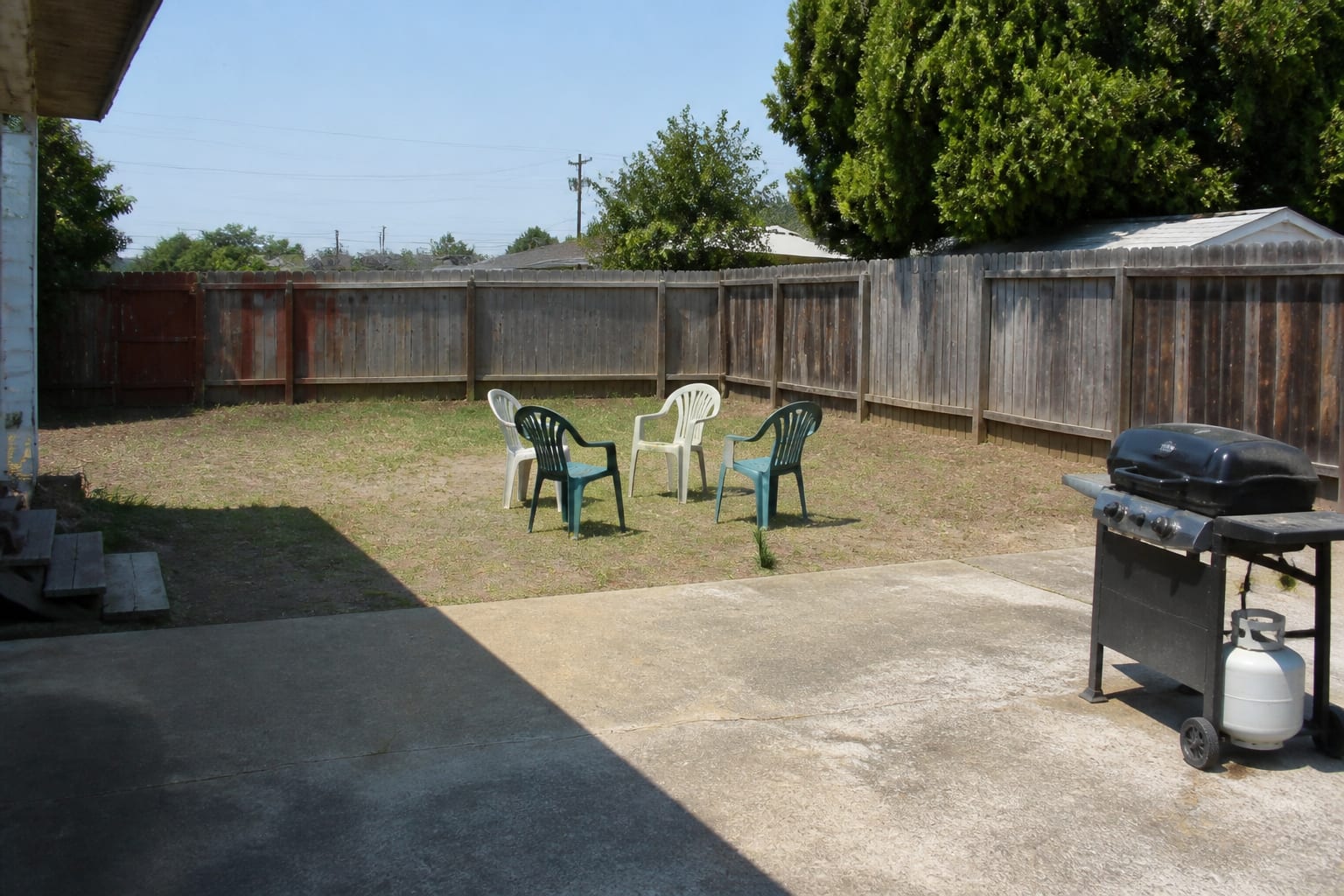
The backyard is being treated like a real room now, not a leftover patch of lawn behind the house. The biggest shift for 2026 is permanence: built-in kitchens, plumbed sinks, and weatherproof sofas that stay outside year-round instead of folding away each October. My read is that the throwaway plastic-furniture era is ending, and the yards that feel current spend on a few anchored elements rather than a dozen disposable ones.
If you only chase one direction this year, chase the blurred line between indoors and out. That single idea drives almost every other trend below, from the plumbed sink in the cook station to the sofa that no longer needs a winter hideaway. Once the backyard is built to be lived in rather than looked at, every other choice gets easier.
Outdoor kitchens grow up
The grill-on-wheels look is being replaced by a built-in cooking zone that behaves like a real kitchen. The current spec is a 36-inch stainless island with a side burner, a small under-counter fridge, and a sink plumbed to the house line so you stop carrying water from inside. That plumbed sink is the detail that quietly changes everything, because it is what lets you prep, rinse, and clean without trekking back through the patio door every few minutes.
What makes these stations feel finished is the counter material. Honed granite and porcelain slabs at 1.2 inches thick resist sun and stains far better than tile grout lines, which crack and discolor within a few seasons. Budget roughly $4,000 to $12,000 for a built-in run depending on appliances, and plan a 42-inch aisle behind the cook so two people can pass without bumping. Skimping on the aisle is the most common regret I hear, because a cramped cook zone gets abandoned by midsummer.
A few features separate a 2026 station from a 2019 one: - A dedicated prep zone of at least 24 inches beside the burner. - Cabinetry in marine-grade polymer instead of painted wood. - Task lighting under the hood so the cook is not working in shadow. - A drawer for fuel or a gas line plumbed straight to the island. - An overhead pergola or louvered roof so the run works in light rain. - A bar overhang of 12 inches so guests can sit without crowding the cook.
I think this is the trend with the best payback, because cooking is what actually pulls people outside on a weeknight rather than just on a holiday. A pergola or louvered roof over the run extends the season further, turning a fair-weather gadget into a space you use through light rain and into the shoulder months. The pizza oven and the kamado grill have become the two anchor appliances buyers ask for most, and both reward a permanent home with a proper heat shield rather than a spot on the lawn.
Biophilic yards and the lawn retreat
Lawns are shrinking on purpose. The strongest 2026 yards swap a third to half of irrigated turf for native beds, gravel courtyards, and pollinator planting that needs almost no water once established. The look is loose and layered, not the clipped monoculture of the last two decades, and the payoff is a yard that hums with bees and birds instead of demanding a Saturday of mowing.
A practical starting mix is three structural shrubs, five grasses, and a drift of perennials repeated across the bed so it reads intentional rather than random. Crushed granite paths at 3 inches deep keep circulation clean between the planting, and a 3-inch mulch layer locks in moisture so the beds need watering maybe once a week in summer rather than daily. The native angle is not just aesthetic; established natives can cut a yard's irrigation demand by 40% or more once their roots go deep.
If you want a focal element that ties the planting together, a water or fire feature works, and you can sketch the layout fast with AI fire pit design before you pour a base. For a sense of where the dollars land across a full yard, the backyard landscaping cost breakdown is worth a read before you commit to a scope. The smartest sequence is to define hardscape and a focal feature first, then let the planting grow in around it over two or three seasons.
Comfort that lives outside year-round
The furniture story for 2026 is durability you do not have to think about. Modular sectionals with powder-coated aluminum frames and 4-inch quick-dry foam now stay outside in rain and light snow, so the seasonal drag-it-to-the-garage ritual is fading. The frames shrug off corrosion, and the open-cell foam drains in minutes instead of staying soggy for days after a storm.
Look for solution-dyed acrylic fabric rated for 1,000-plus hours of UV exposure, because it holds color where cheaper polyester fades to chalk in two summers. The difference shows up fastest on deep navy and charcoal cushions, which are exactly the colors people regret buying in a cheap fabric. Pair the seating with an outdoor rug in recycled PET and a low table at 16 inches, and the slab starts reading like a living room rather than a staging area for the grill.
This is the same trend logic behind the broader outdoor design trends 2026 coverage: spend once on weatherproof anchors, then layer soft goods on top. A modest set of three anchored pieces almost always beats a sprawling collection of flimsy ones, because the anchored pieces are the ones still standing and still good-looking three summers from now.
Lighting is the layer that ties the whole evening together, and warm is the rule. Run string lights or low path fixtures at 2700K, keep them dimmable, and the yard stops feeling like a stage lit by a single floodlight. The current direction leans on layered, low-glare sources at seat height rather than one bright pole, so the space reads like a room after dark instead of a parking lot.
Use AI design to preview outdoor living trends before you commit
A built-in kitchen or a lawn-to-meadow conversion is expensive to undo, so seeing it first matters. Upload a photo of your existing backyard to Re-Design and the AI renders the same space with a built-in cook island, native planting beds, or an all-weather sectional dropped in place. You can test a gravel courtyard against a deck, or a fire bowl against a fireplace, in minutes rather than guessing from a showroom. Trying three directions on your real slab beats committing to one from a catalog photo.
The biggest value is judging scale, which is the thing renderings on a contractor's tablet always get wrong. A 36-inch island that looks modest in a showroom can crowd a narrow patio, and a meadow planting that sounds romantic can swallow a small yard, so seeing both against your actual fence lines tells you the truth fast. Run the preview before you call a single contractor, and you walk into that conversation knowing exactly which trend fits the space you already own and which one you can skip.