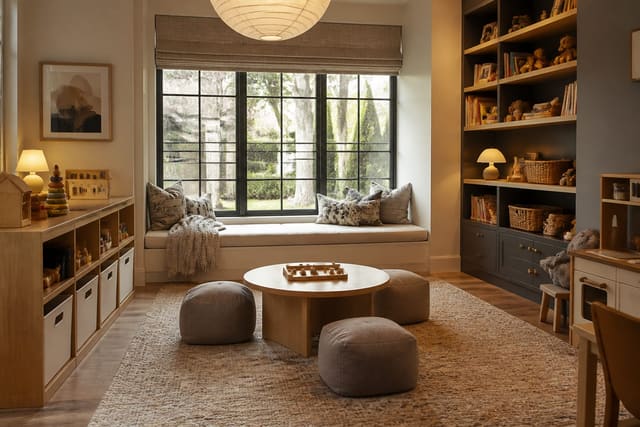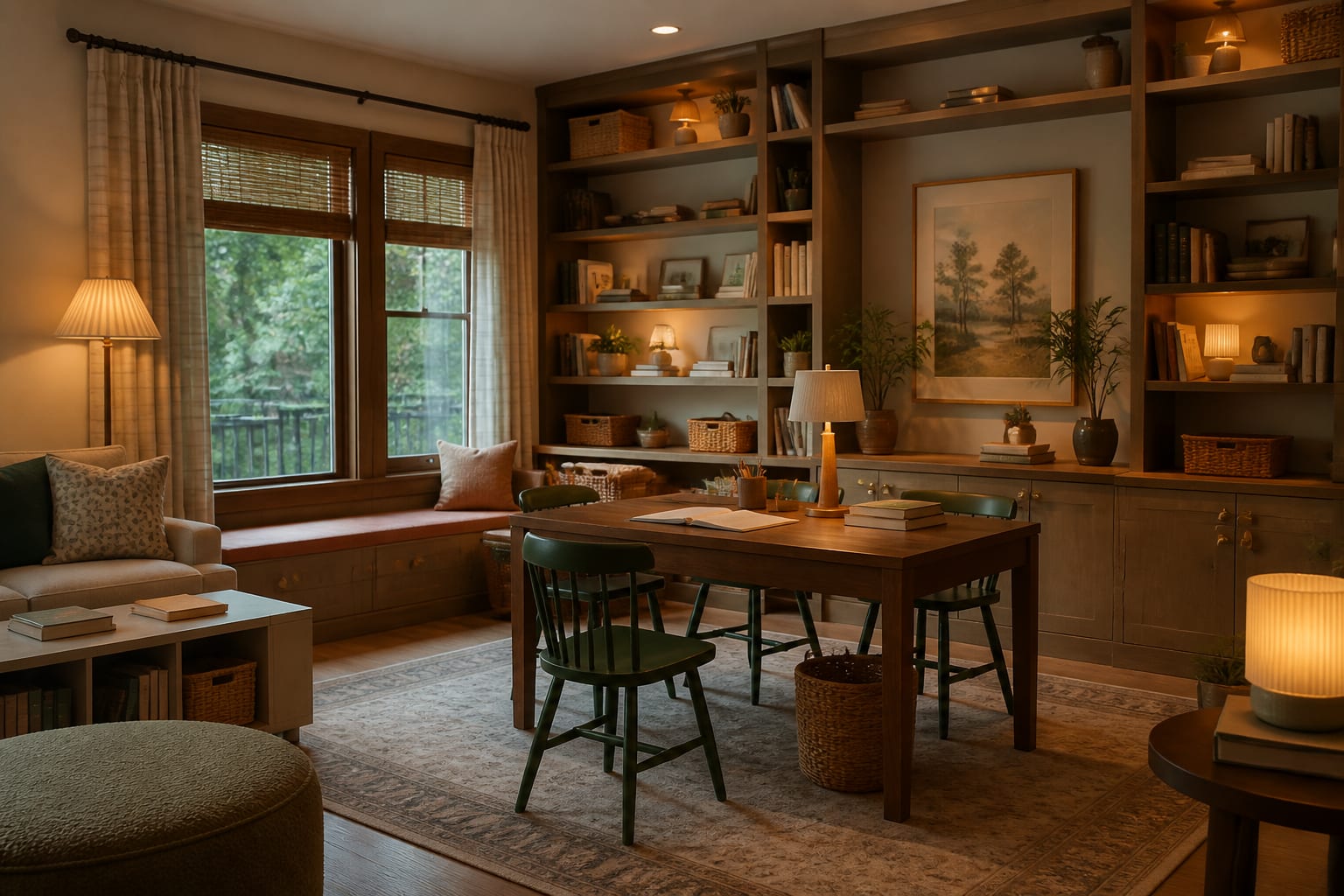
The instinct most parents have is to design for the child standing in front of them today. That is exactly why playrooms get torn out and rebuilt three years later. A four-year-old needs floor space and bins; an eleven-year-old needs a desk, good light, and somewhere to charge a laptop. The smarter plan treats the room as a long-term frame that flexes, not a themed set that expires. Buy adjustable pieces, zone the room loosely, and resist the cartoon mural. Do it well and the same square footage carries a kid from building blocks to algebra without a single weekend remodel.
Plan zones, not a theme
A room that lasts is organized by activity, not decoration. Split the floor loosely into a soft play zone with a rug and low storage, an open table zone for projects and games, and eventually a focused study zone with a desk against a wall. When the child is small, the play zone takes 60 percent of the room. As school ramps up, you slide that ratio toward study without buying new furniture, just rearranging what you own. A 10 by 12 foot room handles this comfortably; even an 8 by 10 works if the desk doubles as the craft table.
The key is that nothing is nailed to a single age. A bookcase that holds picture books at four holds binders and a printer at twelve. A reading nook with a 36 by 48 inch rug becomes a beanbag corner for a teen reading on their phone. If you are blending this room into an existing space or open layout, our playroom ideas guide covers how to define a kid zone without walling it off. Loose zoning is what lets one room serve a moving target for a decade.
Furniture that grows with the child
Adjustability is the whole game. An adjustable-height desk that travels from 22 inches up to 30 inches fits a kindergartner doing puzzles and a middle-schooler typing essays, and it costs little more than a fixed desk. Pair it with an ergonomic chair offering a 14 to 18 inch seat-height range and a footrest, because a child whose feet dangle will not sit still for homework. For the desk surface, aim for at least 40 inches wide and 24 inches deep so a laptop, a textbook, and a notebook coexist.
Storage should be modular and reach-appropriate. Cube shelving in a 30-inch-high run lets a five-year-old reach their own bins; add a second tier later to bring it to 60 inches as the child grows. Choose furniture you can reconfigure rather than themed sets you will outgrow. A few pieces earn their place across all the years:
- An adjustable-height desk, 22 to 30 inches, that converts from craft table to study station.
- A height-adjustable chair with a 14 to 18 inch seat range and a footrest.
- Modular cube storage you can stack from 30 inches now to 60 inches later.
- A 36 by 48 inch washable rug that defines a soft zone and can move anywhere.
- A rolling cart, around 18 inches wide, for art supplies now and tech accessories later.
Lighting and color that last
Lighting is the most overlooked difference between a playroom and a homework room. Play needs general ambient light around 150 to 300 lux; focused homework needs roughly 500 lux at the desk surface to keep eyes from straining. The fix is a dedicated task lamp at the desk, ideally 4000K neutral white, which keeps a tired kid alert better than the warm 2700K you would use in a bedroom. Position the lamp on the side opposite the writing hand so it does not cast a shadow across the page.
Color should age up gracefully. Skip the cartoon mural and the licensed-character wallpaper; both date within a few years and removing a mural means repainting an entire wall. Instead paint the room a calm, mid-tone neutral or a soft sage, then layer personality through art, removable decals, and textiles you can swap for under $50 when tastes change. A room that mixes a few styles tends to age better than a single rigid theme, and our guide to mixing design styles shows how to combine playful and grown-up elements without clashing. Keep 15 percent of the palette as a flexible accent and the room never feels stuck at one age.
Common mistakes to avoid
The expensive errors in a kids' room are almost always the permanent ones. Steer clear of these:
- Installing a painted mural or themed built-in that costs $300 to $800 to remove or repaint in three years.
- Buying a fixed-height desk and chair sized for a six-year-old that a ten-year-old hunches over.
- Lighting the whole room at a dim 150 lux and expecting homework to happen without eye strain.
- Mounting all the storage at adult height, so a young child cannot reach or return their own toys.
- Carpeting the craft zone, which turns one spilled paint cup into a permanent stain.
- Over-furnishing a 10 by 12 room so there is no open floor left for the play a young child still needs.
The lighting mistake is the sneakiest, because a room can look bright to an adult and still fall short of the 500 lux a homework desk needs. A dim corner where a child is dropping toys is fine; a study zone that ignores light is covered in our dark room solutions guide, which applies directly when the study desk lands on the windowless side of the room.
See it first in Re-Design
It is hard to picture how the same room reads as a play space now and a study space in five years. Upload a photo of the room to Re-Design and preview both arrangements on your actual walls and windows, sliding the desk to the bright side and testing how a calm neutral wall handles toy bins today versus a tidy bookshelf later. You can compare a soft sage against a warm white, see whether the desk fits under the window, and confirm the zones flow before you buy a single adjustable desk or pick up a paint roller.
Frequently Asked Questions
How do I turn a playroom into a homework space as kids grow?
Design in zones from the start and use adjustable furniture. Keep a soft play zone, an open table zone, and a study zone, then shift the floor ratio toward study over time. An adjustable desk that rises from 22 to 30 inches and modular storage you can restack mean you rearrange rather than rebuild as the child ages.
What is the right desk height for a child's homework station?
There is no single height, which is why an adjustable desk spanning 22 to 30 inches works best across ages. Pair it with a chair offering a 14 to 18 inch seat range and a footrest so the child's feet rest flat. A surface at least 40 inches wide and 24 inches deep fits a laptop and a textbook together.
How bright should a homework area be?
Aim for about 500 lux at the desk surface, far brighter than the 150 to 300 lux that suits play. Add a dedicated task lamp at 4000K neutral white and place it opposite the writing hand to avoid shadows. General overhead light alone rarely hits the level focused reading and writing actually need.
Should I use a themed mural in a kids' room?
It is usually a mistake for a room meant to last. Murals and licensed wallpaper date within a few years, and removing or repainting one can cost $300 to $800. A calm neutral or soft sage base with swappable decals, art, and textiles gives the same personality and updates for under $50 when tastes change.