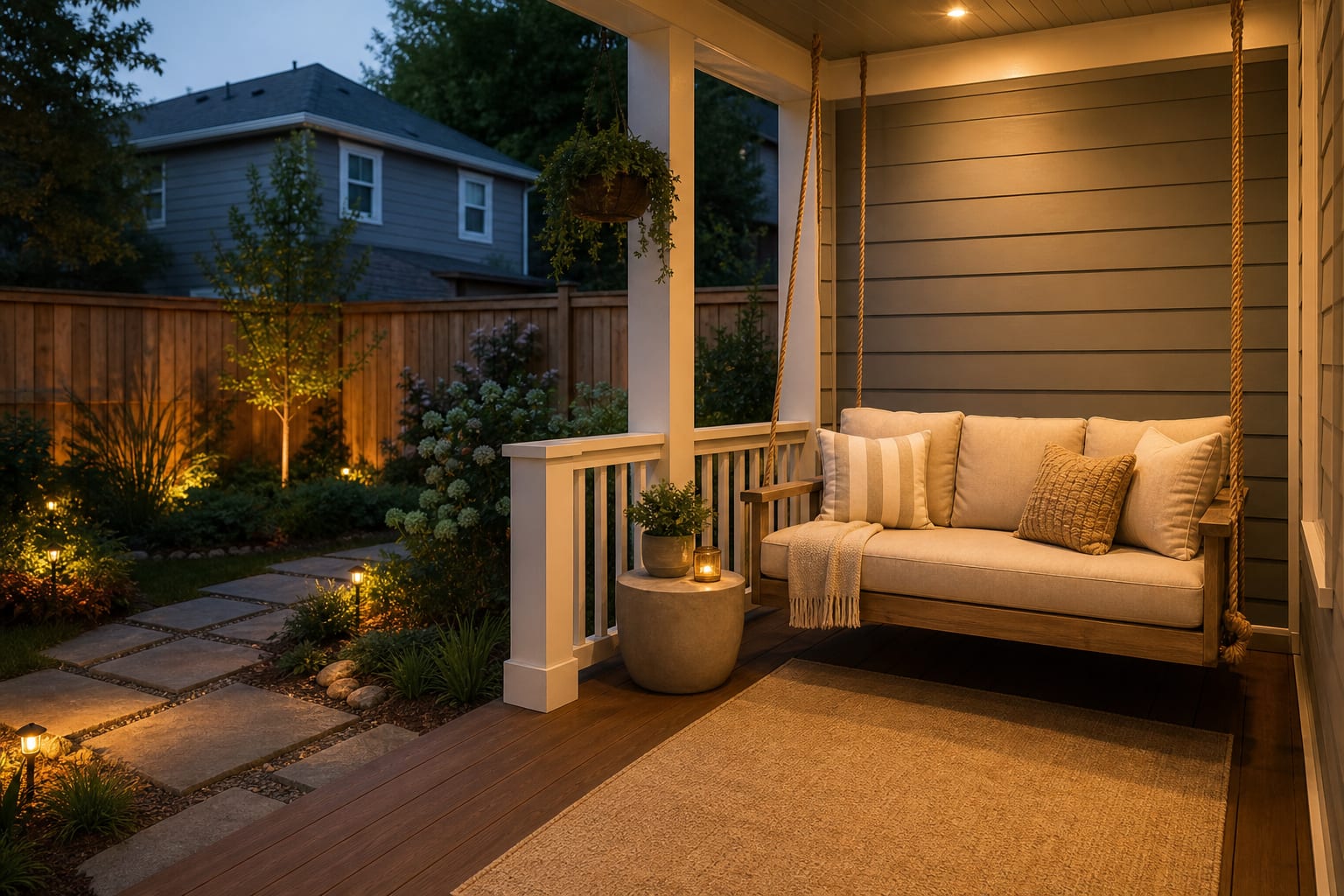
A porch swing works when it hangs from a structural joist with 1,000+ lb-rated eye bolts, sits 17-19in off the floor, clears 30in behind the seat, and is scaled to the porch so it reads centered, not crammed against the railing. Get those porch swing ideas right and the seat becomes the one everyone wants.
How do I choose the right porch swing for my porch?
Match the swing to porch depth, confirm the ceiling structure can carry the load, leave 30-36in of front-and-back swing clearance, and use rated hardware set into joists or a reinforced beam.
A standard hanging swing needs at least 6ft of usable porch depth from the house wall to the rail or steps. Seats run 20-24in deep, so narrow porches do better with a 48in swing and slim arms rather than forcing a 60in model into the walkway; leave 14-18in on each side.
Aim for a finished seat height of 17-19in, close to a dining chair. Angle chains or ropes 4-6in wider at the ceiling than at the swing arms to steady the motion, and use exterior-rated, corrosion-resistant hardware sized for the swing's full loaded weight, meaning the swing plus adults, kids, cushions, and whoever drops into a seat too hard.
Which swing style fits the porch you actually have?
Style depends on porch depth, house architecture, and how much visual weight the front elevation can handle.
- Slatted wood suits Craftsman, farmhouse, and traditional porches; paint it the trim color to blend in, or stain it medium brown for warmth against white siding.
- Rope-hung swings feel relaxed but need exterior-rated fiber, proper knots or thimbles, and regular inspection for fraying in humid climates.
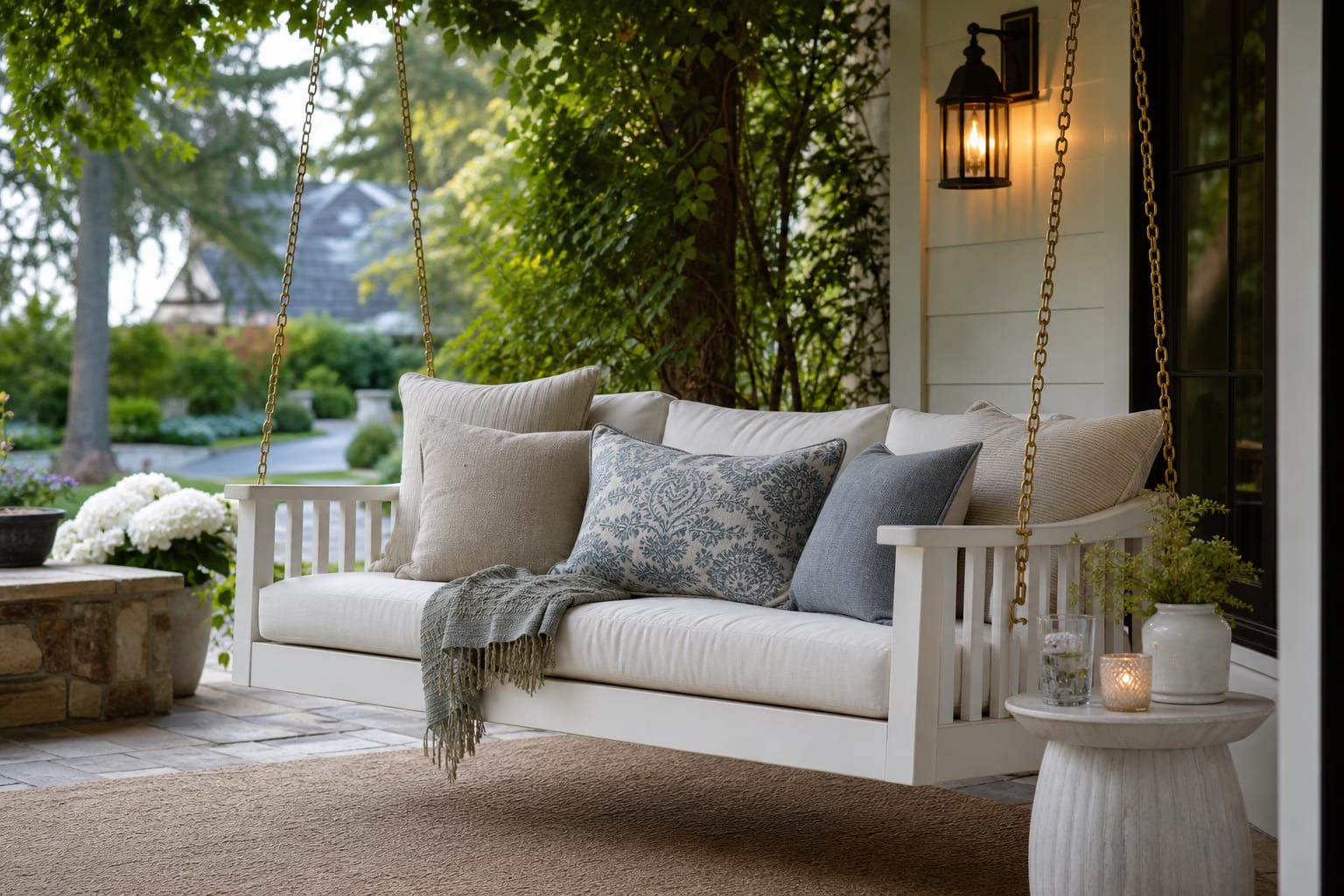
- Chain-hung swings are more durable; choose black, bronze, or galvanized finishes that echo lanterns, door hardware, or rail details.
- Bed swings (a twin mattress runs about 38x75in) need a deep porch and strong overhead structure. They suit side or screened porches, rarely narrow front entries.
Match cushions to seat depth: a 22in-deep seat wants a 20-22in cushion, not an indoor throw pillow stuffed into the corner. Covered porches can use softer outdoor linens; wind-driven rain calls for tougher performance fabric and removable covers. Compare options in these outdoor cushion ideas for covered porches.
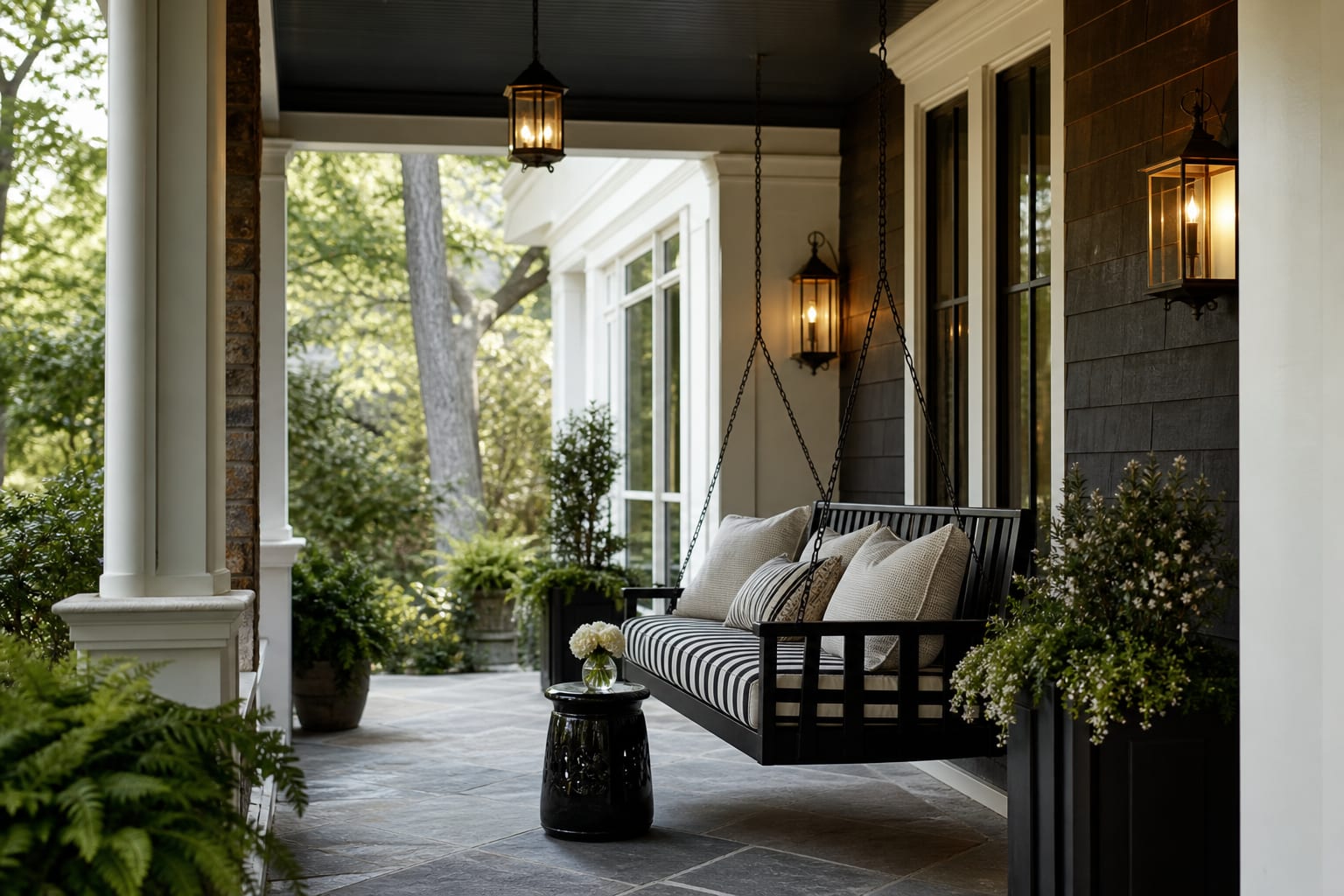
Keep supporting furniture light: one 16-20in table for a drink or book is enough, and a pair of slim rockers or a garden stool can balance the composition without competing with the swing. See front porch furniture layout ideas for how the swing's motion path changes everything else nearby.
Test this on your own photo with ReDesign, keeping the house edge, horizon line, hardscape, planting beds, and main path visible so the preview matches your actual space.
Common porch swing mistakes
- Hanging from the ceiling finish, not the structure. Beadboard and soffit panels hide the real framing; locate joists or a beam and use swing hangers or eye bolts rated for outdoor suspended seating.
- Choosing the widest swing that fits on paper. If the door swing, steps, or a walking path crosses the motion zone, downsize the seat or shift it to another bay.
- Ignoring the view from inside. Align the swing with a column bay or railing rhythm instead of centering it on a random ceiling board.
- Using indoor pillows outside. They need UV-resistant fabric and drainable inserts, or they turn damp within a season.
- Skipping a landing surface. Add a side table, shelf, or garden stool within 12-18in of one arm so the swing can hold a drink or book.
How should the porch swing area be finished?
Touch up scuffed floor boards before installation, since a new swing draws attention to whatever is below it. Choose a finish that closely matches the deck color or contrasts clearly; near-matching browns tend to look accidental.
Keep layering restrained: one seat cushion, one or two back pillows, and a small accent pillow only on swings 54in or wider. Over-pillow a 48in swing and the extras end up on the floor.
Add warm lighting, a ceiling fixture or wall lantern around 2700K, so the swing stays usable after dinner without the blue-white glare of a parking lot. Check that a nearby sconce won't cast constant moving shadows from the chain. Keep planters near the porch posts, not the swing arms, and skip thorny plants inside the movement zone; 18-24in planters frame the bay without boxing the swing in. For the table itself, see outdoor side table ideas for small porches and pick something heavy enough that wind won't tip it into the railing.
Use AI design to preview your porch before you commit
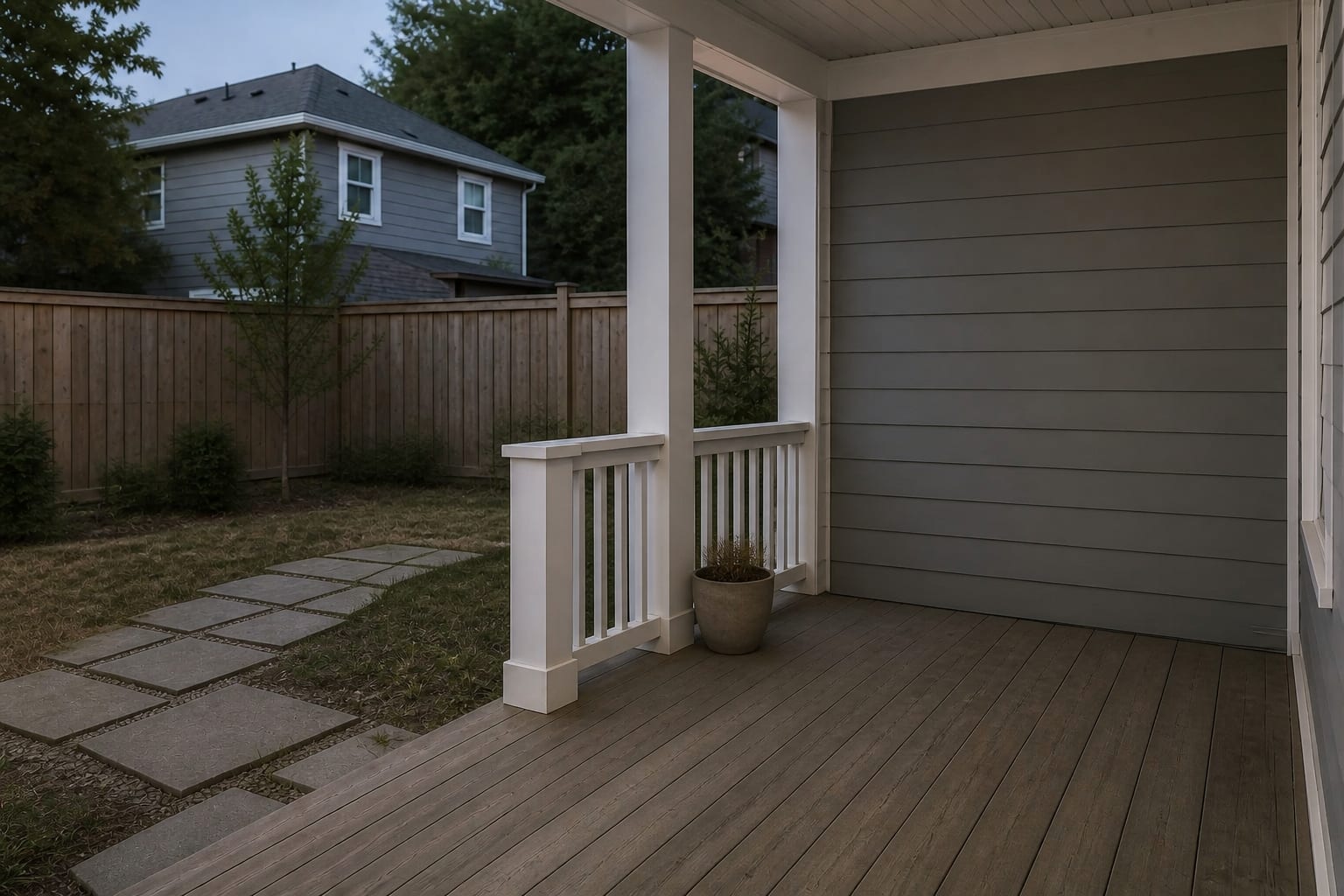
The biggest porch swing mistakes are visual before they're expensive. Upload a straight-on photo of the porch and test a white slatted swing, a stained wood swing, a black metal chain set, and a deeper bed swing from the same angle. AI can't approve the structure, a contractor still needs to verify the framing, but it can show scale, finish, cushion color, and furniture spacing before you order a 70-pound object and start drilling overhead.
Photograph the porch at chest height from the sidewalk, with the door, columns, railing, and ceiling line visible; add a second shot from the door looking out if the swing will affect the interior view. Compare versions centered in the column bay versus shifted to one side, and in different cushion colors. If a version looks crowded in the photo, it will feel more crowded in motion.
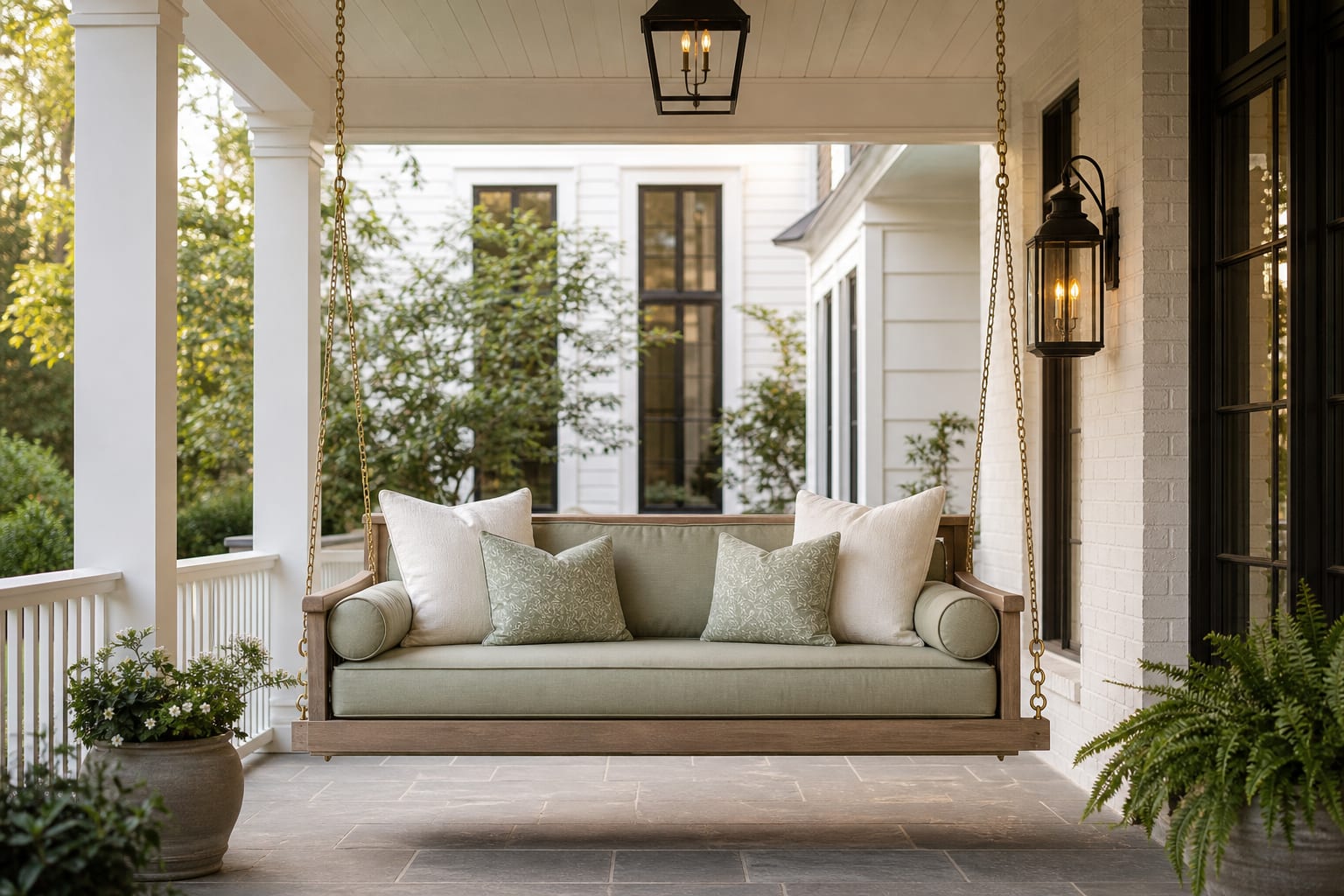
If the best-looking version still blocks the path, choose the smaller swing. If the porch can carry a deeper seat and the view improves, that's the moment to invest in better hardware, cushions, and a finish that belongs to the house.
Frequently Asked Questions
How much clearance does a porch swing need?
A porch swing needs at least 30in behind the seat back, a 4-6ft total front-to-back swing arc, and 24in of clear space on each side for getting in and out safely.
How high should a porch swing hang?
Aim for a finished seat height of 17-19in off the floor, the same range as an indoor sofa. Lower swings are hard to stand from; higher swings leave legs dangling.
Can any porch ceiling carry a swing?
No. The swing must hang from a structural joist or beam rated for 600-1,000 lb of dynamic load. Finished ceiling drywall over an unblocked stud bay will eventually fail.
What hardware does a porch swing need?
Use two 1,000+ lb-rated eye bolts through-bolted into the ceiling joist, chains rated to match, and rust-resistant zinc or stainless quick-links. Never use plant hooks or unrated eye screws.
Should a porch swing be wood, metal, or fabric?
Wood (cedar, white oak, teak) looks classic and lasts 15+ years when sealed. Powder-coated metal lasts longer but weighs more. Fabric or wicker bed swings suit covered porches only and need off-season storage.
> Try this: Ready to see this on your own outdoor space? Open ReDesign and run the preview before you buy materials, plant, drill, or move furniture.
Three transformations to try
1. Cedar porch swing with cushions