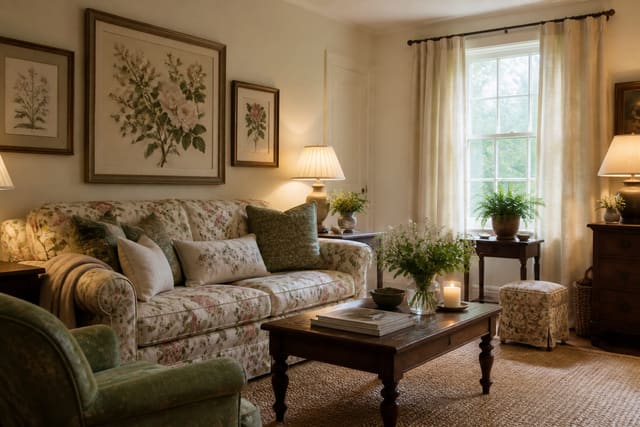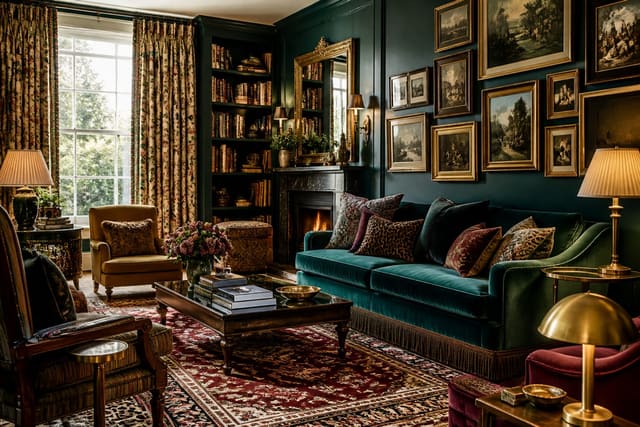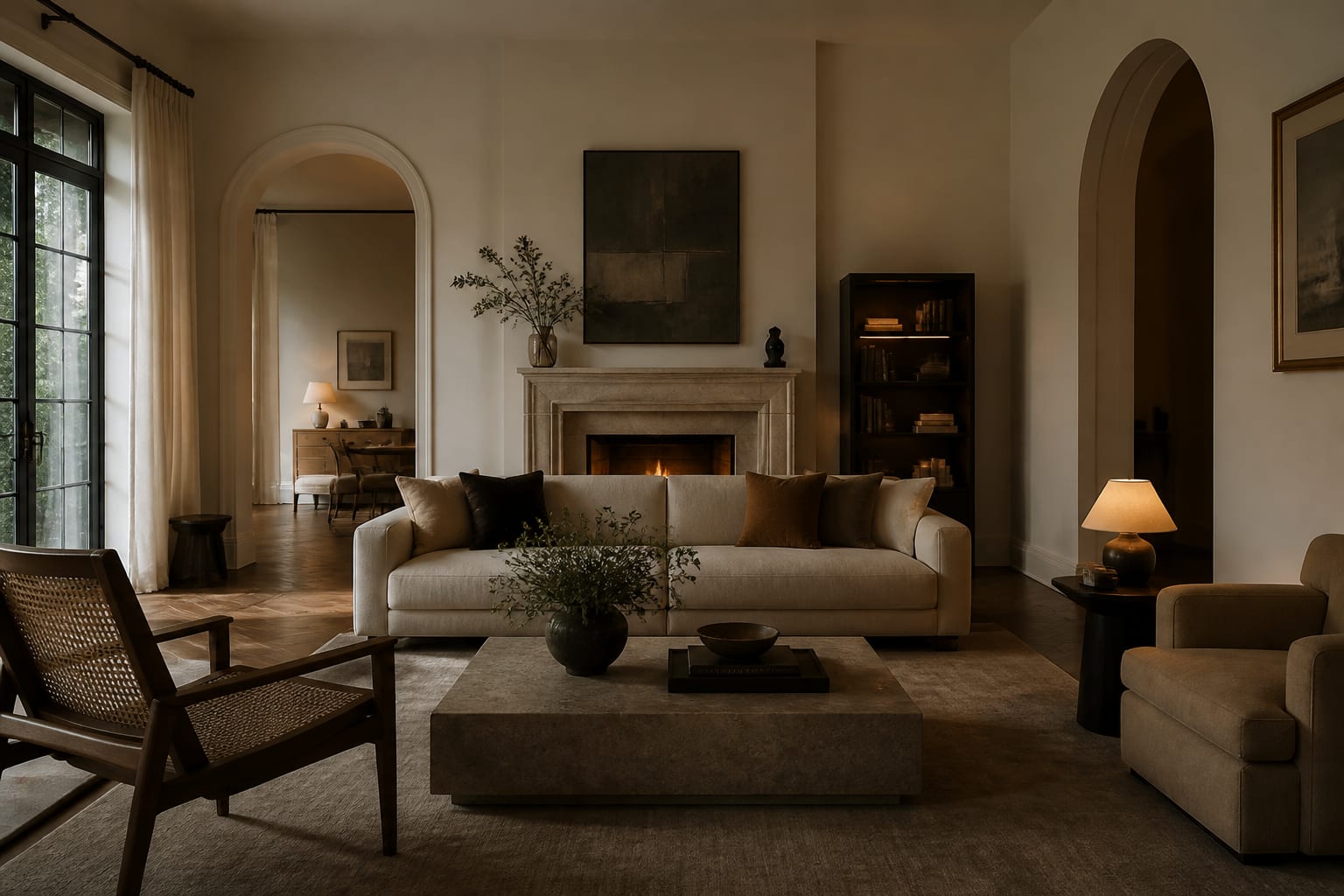
A quiet luxury living room earns its reputation through what it leaves out. There are no logo pillows, no trendy statement walls, and no furniture arranged to impress on a first pass — the impression comes from proportion, material honesty, and a palette that commits fully to calm. This aesthetic is more demanding than maximalism because every choice is visible. A sofa slightly wrong in scale or a rug two feet too small will undermine a room that otherwise does everything right. Get the structure right and the rest follows naturally.
Anchor the Room With the Right Rug
In a quiet luxury living room, the rug is structural rather than decorative. It defines the seating zone and, when sized correctly, makes the entire arrangement feel intentional. The minimum size for a living room rug is one where all four front legs of every sofa and chair rest on the surface — typically an 8-by-10-foot or 9-by-12-foot rug depending on the room. A smaller rug floats in the center of the space and makes the furniture look random.
Material determines feel as much as size. Flat-weave wool, hand-knotted Moroccan wool, and undyed natural jute all read as considered and age in ways that improve rather than degrade the room. Synthetic shag rugs in neutral colors are a trap — they look appropriate in photos but feel and wear poorly in person, which undermines the quiet confidence the aesthetic requires.
Pattern, if you use it, should be tonal. A soft geometric or a faded vintage pattern in the same color family as the rest of the room adds visual interest without competing with the furniture. A rug with strong contrast or a busy motif divides the room's attention and fights against the calm you're working to create.
See also our guide to Cottagecore Living Room Ideas for more on quiet luxury living room ideas.
Furniture Placement as the Foundation of Calm
The most common mistake in living rooms is furniture pushed to the walls. Pulling pieces 12 to 18 inches away from the wall tightens the conversation area and gives the room a grounded, intentional quality that wall-hugging arrangements never achieve. A pair of chairs angled toward the sofa at roughly 30 degrees creates a more dynamic and welcoming layout than a rigid parallel arrangement.
Sofa depth matters as much as length. A seat depth of 36 to 38 inches suits most adults who want to relax properly; anything shallower feels perched rather than settled. The coffee table should sit 14 to 18 inches from the sofa edge — close enough to reach a drink without stretching, far enough to move through comfortably.
Leave the room one piece of furniture light. If you're choosing between adding a second accent chair and keeping a clear path to the window, keep the path. Breathing room in a living room reads as confidence in the pieces you've already chosen, which is the underlying signal quiet luxury sends.
For a related angle on quiet luxury living room ideas, read Maximalist Living Room Ideas.
Surfaces, Objects, and the Power of Curation
Every surface in a quiet luxury living room is an editorial decision. A coffee table with three well-chosen objects — a low stack of art books, a single sculptural vessel, and a candle — reads as curated. Those same objects plus six more read as collected without conviction. The restraint is the point.
Shelf styling follows the same logic. Group objects by material family rather than color, leave 30 to 40 percent of shelf space empty, and give taller pieces room to breathe rather than packing the shelf end to end. Books are fine but should be organized — either by spine color in a tonal range or faced out with covers that complement the room's palette.
Art should be hung at eye level, which for a standing adult means the center of the piece at approximately 57 to 60 inches from the floor. A single large canvas above the sofa reads more quietly than a cluster of small frames at varying heights. The single piece signals decisiveness; the cluster, however well executed, signals decoration rather than intention.
Lighting and the Palette That Holds It All Together
A quiet luxury living room needs at minimum three light sources operating at the same time: ambient, task, and accent. A floor lamp beside the reading chair, table lamps flanking the sofa, and a lower-wattage overhead on a dimmer give you control over mood at any hour. All bulbs should be in the 2700K to 2900K range — the warmth makes neutrals read as rich rather than flat.
The palette for a quiet luxury living room is warm and tonal. Greige walls, ivory upholstery, and warm wood tones create a base that reads refined without effort. Introduce depth through texture rather than contrasting color: a chunky boucle sofa against a smooth plaster wall against a flat-weave wool rug creates visual variation within a single tone family.
Metalwork should be consistent. Brass, unlacquered bronze, and warm gold all live in the same family; mixing them with chrome or nickel breaks the tonal consistency. Choose one metal finish and apply it to the lamp bases, hardware, and any decorative objects that have a metallic component. The discipline of that single decision unifies the room more than almost any other choice.
- Swap mismatched throw pillows for two pairs in the same linen or boucle fabric in tonal shades.
- Add a single large-format piece of art — at least 40 inches wide — above the sofa to anchor the main wall.
- Replace a glass-top coffee table with a solid stone or thick mango wood version for immediate material credibility.
- Introduce a sculptural floor lamp in unlacquered brass or matte black beside the reading chair for layered lighting.
- Layer a natural jute or flat-weave wool rug under a seating group sized so all front legs rest on the surface.
- Edit the coffee table down to three objects maximum — a stack of books, one vessel, and one candle.
- Hang curtains at ceiling height in a heavy linen or interlined fabric to add architectural softness and perceived room height.
Bring the look home with Re-Design
Wondering how a warm plaster palette and boucle sofa will actually read in your living room before you repaint or reupholster? Upload a photo of your space to Re-Design and the AI renders your chosen aesthetic directly onto your actual room. You can test rug scale, compare curtain lengths, and preview furniture arrangements in your real dimensions — not a generic showroom.
Frequently Asked Questions
What makes a living room look quietly luxurious without being sterile?
Texture is the answer. A room in warm neutrals can feel cold and empty or genuinely inviting depending entirely on the variety of materials present. Boucle, matte wood, woven jute, and aged brass all read as warm and considered. Add plants with an interesting silhouette — a fiddle-leaf fig or a sculptural olive tree — to bring organic irregularity into an otherwise restrained space.
How do I choose between linen and boucle for quiet luxury upholstery?
Both work; the choice depends on use. Linen drapes beautifully, ages with character, and reads as more relaxed — ideal for a family room that gets daily use. Boucle has a more formal, sculptural quality and works best in lower-traffic spaces or with a slipcover strategy for households with kids or pets. Both outperform velvet or leather for the specific understated quality the aesthetic requires.
Is quiet luxury living room design too minimal for a family with children?
Not necessarily, but it requires honesty about upholstery and storage. Performance linen and boucle fabrics with stain-resistant treatments hold up far better than untreated natural fibers. The real investment is in concealed storage: closed cabinets, ottomans with lift-top storage, and built-in shelving with doors keep the pared-back surfaces intact even with toys and school bags in circulation.