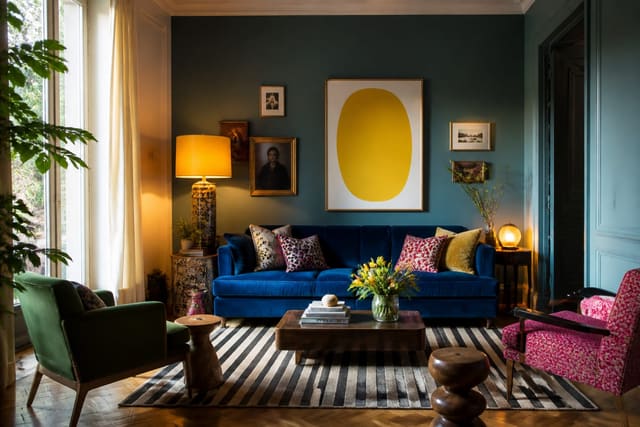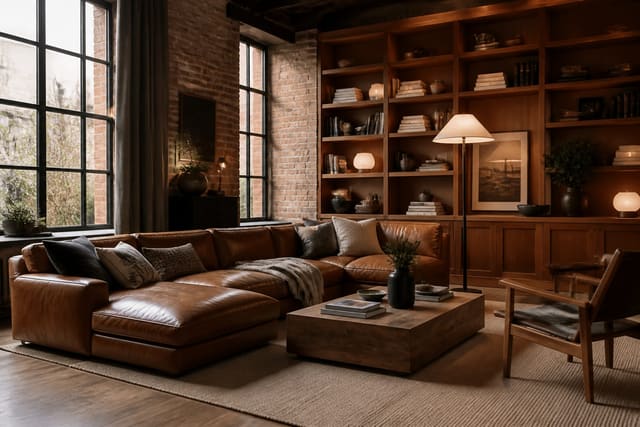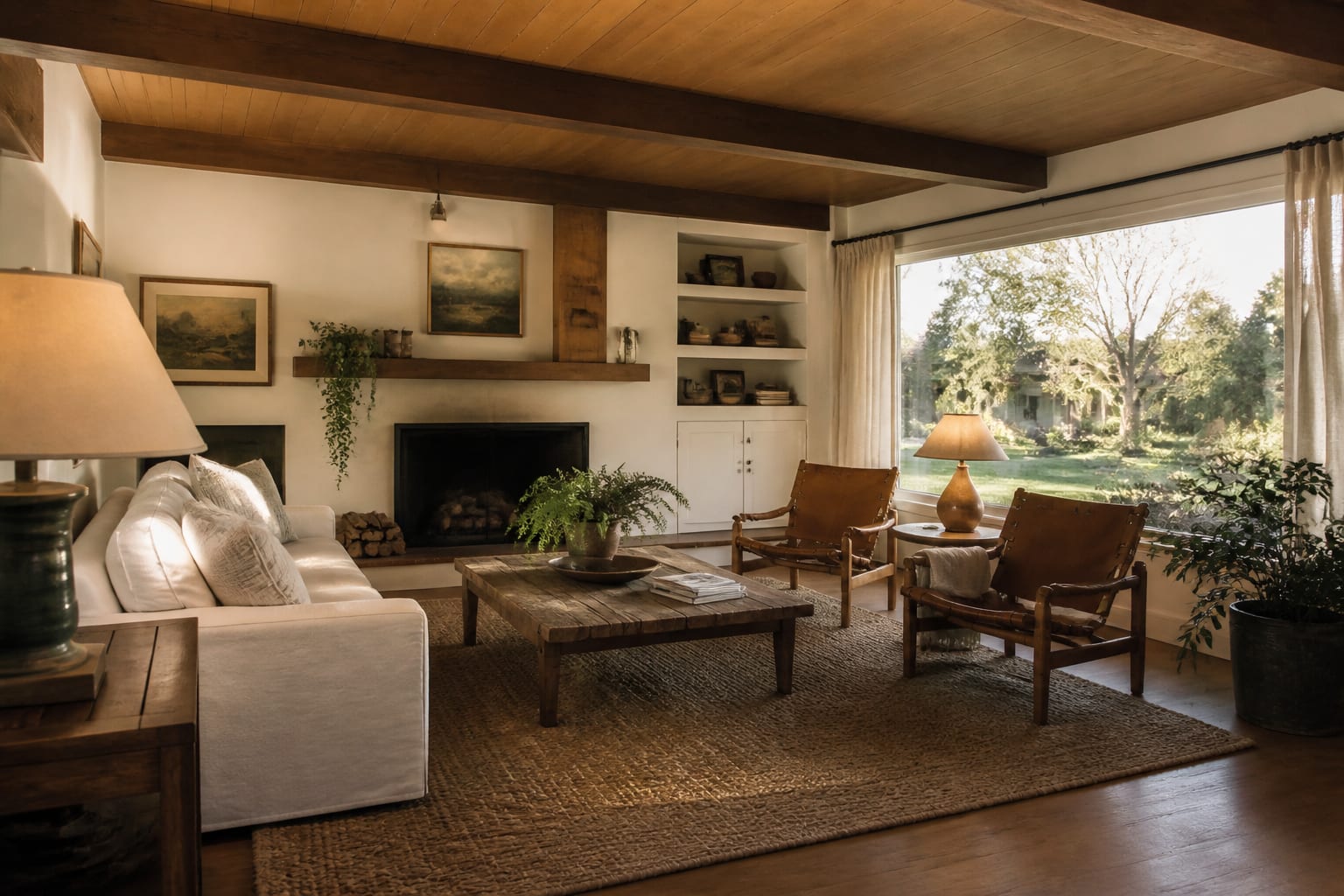
A ranch home wants to feel low, wide, and casual, because that is exactly what it was designed to be. Popularized across American suburbs from the late 1940s through the 1960s, the single-story ranch sold a new kind of relaxed living: open flow, low-pitched rooflines, and a long horizontal connection between the inside and the backyard. My take is that the best ranch interiors stop fighting the horizontal and start celebrating it.
These houses run wide rather than tall, often with 8-foot ceilings and sliding glass doors instead of formal entryways. That low, spread-out geometry is the design brief. Pick furniture, lighting, and color that move the eye sideways across the room, and a plain ranch suddenly reads as intentional mid-century instead of dated.
Lean into the horizontal geometry
The defining trait of a ranch is that it stretches sideways, and your furnishings should echo that. A long, low-backed sofa, a wide walnut credenza, and a horizontal run of low shelving all reinforce the lines the architect drew. Tall, top-heavy pieces, a towering armoire or a narrow vertical bookcase, fight the room and make the 8-foot ceiling feel lower than it is.
Floor-to-ceiling clutter is the enemy here. Keep sightlines long and unbroken so the eye can travel from the front of the house clear through to the sliding door and into the yard. That uninterrupted run is the whole charm of an open single-story plan. Where you need storage, choose built-ins that sit low and wide, around 30 to 36 inches tall, so they read as a horizontal band rather than a wall.
Color reinforces the geometry too. A warm white or soft greige on the long walls keeps them quiet and lets the furniture lines lead. If you want personality, the saturated, mood-lifting accent strategy in my dopamine decor ideas guide drops neatly into a mid-century shell through a mustard chair, an olive rug, or a burnt-orange throw.
Protect the open plan and the glass
The ranch pioneered casual open-concept living before the term existed, with kitchens that flowed into dining and living zones. The worst thing you can do to one is chop that flow back up into small formal rooms. If you have an existing open plan, define zones with rugs and furniture placement rather than new walls. An 8-by-10 foot rug under the seating group and a credenza acting as a low divider does the job without killing the flow.
The sliding glass wall is the ranch's signature, the literal indoor-outdoor connection these homes were marketed on. Treat it as the focal point. Keep window dressing minimal, a simple panel or a clean roller shade that disappears when open, so the backyard reads as an extension of the room. Heavy drapery on a ranch glass wall hides the best feature in the house.
A few moves that keep a ranch feeling open and connected:
- Use furniture and rugs, not walls, to separate the living and dining zones.
- Keep the kitchen sightline to the living area clear with a low peninsula rather than upper cabinets that block the view.
- Choose a low-profile sofa, around 30 to 33 inches tall at the back, so it never blocks the glass wall.
- Repeat one exterior material, like a brick or stone fireplace face, in a planter or hearth detail to tie inside to out.
Get the mid-century palette and materials right
A ranch reads best in the materials of its era. Walnut and teak for furniture, terrazzo or warm wood floors underfoot, and a palette that pulls from the mid-century range: mustard yellow, avocado and olive greens, burnt orange, and plenty of warm white to keep it from feeling like a costume. The point is warmth and ease, not a museum recreation.
Lighting matters more than people expect under an 8-foot ceiling. Skip the dramatic chandelier and reach for low, horizontal fixtures: a linear pendant over the dining table hung at 30 to 34 inches above the surface, recessed cans, and table lamps that spread a warm pool of light. The same discipline of warming a hard, flat shell with texture that I lay out in my soft industrial style ideas guide applies directly to a plain ranch box.
Floors should run continuous where possible. One material flowing through the open plan, rather than a patchwork of changes at every doorway, keeps the long sightlines intact and makes a modest ranch feel larger and more deliberate. A plank width around 5 to 7 inches suits the era better than narrow strip flooring, and running the boards along the long axis of the house stretches the horizontal read even further. If you have a brick or terrazzo floor original to the build, restore it rather than covering it; those materials are part of why a postwar ranch feels grounded and honest.
Common mistakes to avoid
The most common mistake is decorating a ranch like a two-story colonial, with tall vertical furniture and formal symmetry that fights the low horizontal geometry. Buy low and wide instead.
A second frequent mistake is walling off the open plan to create more rooms, which destroys the casual flow the ranch was invented for; zone with rugs and furniture instead. A third is hiding the sliding glass wall behind heavy drapery, which buries the indoor-outdoor connection that defines the style. People also overload the 8-foot ceiling with oversized fixtures and tall cabinetry that make the room feel cramped, when low-profile choices would open it up. The last common mistake is treating mid-century color as a costume and going so loud that it tips into parody; anchor the warm tones with plenty of warm white and let one or two accents lead.
Use AI design to test a ranch update before you commit
The hard call in any ranch is whether opening up a sightline or warming the palette will actually read as mid-century or just look bare. Re-Design lets you check before you commit. Upload a photo of your real ranch living room, sliding door, low ceiling, and existing floor included, and the AI design re-renders it with a long low sofa, walnut credenza, and a mid-century palette so you can see the horizontal look land in your own space.
Because you upload your actual room, the preview keeps your true ceiling height, the line your glass wall draws to the yard, and the floor you already have. Test a warm walnut-and-mustard scheme, then try a calmer greige-and-olive version, and see which one honors the original ranch intent before you order a single piece.