Most new wood looks the same because it is the same: kiln-dried, uniform, and stripped of any history. I think that is exactly why reclaimed wood interior design keeps winning, because every board carries nail holes, saw marks, and a patina that no factory finish can reproduce. The honest answer to why people fall for it is emotional as much as visual: you are putting a hundred-year-old barn beam in your living room, and the room feels older and calmer for it.
Reclaimed wood also happens to be one of the genuinely sustainable choices in a renovation, since the tree was felled decades ago and the carbon cost of harvesting is already spent. You are reusing, not consuming. Below are the ways I actually use it without the result looking like a rustic theme restaurant.
There is a practical bonus that designers love: old-growth reclaimed wood is often denser and more stable than new lumber, because the trees grew slowly over a century and packed in tighter growth rings. That stability means fewer warps and twists once the wood is properly dried and acclimated to your home. So beyond the look and the conscience, you are frequently getting a structurally better board than what the lumber yard sells today.
How do I use reclaimed wood in interior design?
The short version is that you use it as an accent, not as everything. Reclaimed wood is loud, textured, and full of color variation, so a whole room of it overwhelms fast. The trick is to let one surface carry the character and keep the rest of the room quiet around it.
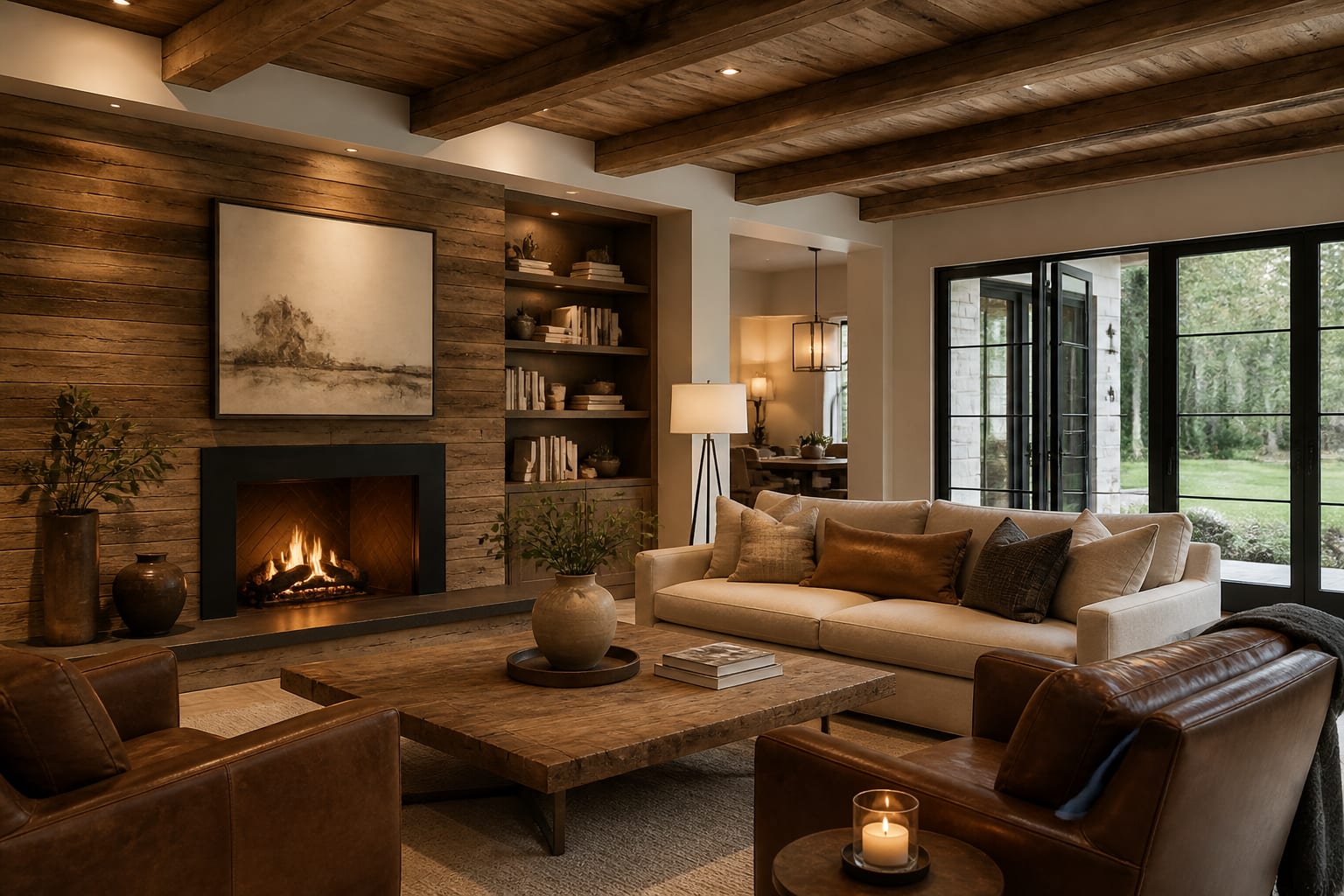
My favorite entry points are a single accent wall, a run of open shelving, a fireplace surround, or a kitchen island face. Each gives you the patina and the story without committing the entire space to a cabin aesthetic. If you have never worked with salvaged material, start with something removable or small in scale, learn how the wood reads under your light, then go bigger. The character is the whole point, so resist the urge to sand it smooth and stain it uniform.
Provenance is half the appeal, and it changes the look. Barnwood gives you wide, gray-brown boards with cracks and knots. Old factory and warehouse timber tends to be denser, darker, and dotted with bolt holes. Reclaimed flooring and joists deliver tighter grain and a more refined feel. Knowing which story you want helps you shop, because a salvage yard will have all three and they read completely differently on a wall. I always ask where a lot came from before I buy it.
Reclaimed wood ideas for every room
Here is the running list I pull from when a space needs warmth and a story. Each one works on its own, and most can be layered:
- A floor-to-ceiling accent wall behind a bed or sofa, mixing board widths for movement.
- Exposed ceiling beams, real or box-built over the structure, to add age to a flat room.
- A live-edge or planked dining table that becomes the anchor of the room.
- Floating shelves cut from thick salvaged joists, which pair naturally with the spacing logic in these built-in shelving ideas.
- A barnwood-faced kitchen island or peninsula that grounds an otherwise modern kitchen.
- A reclaimed-plank feature wall behind a home bar, where the texture reads as intentional and lived-in.
- A sliding barn door on salvaged track, the most recognizable reclaimed move there is.
- Picture-frame paneling or wainscoting on a lower wall for subtler texture.
The move I steer people away from is doing several of these in one room at once. Pick one hero and let it lead. A reclaimed accent wall plus reclaimed shelves plus a barn door plus a plank ceiling is four competing focal points, and the eye has nowhere to rest.
Scale also decides whether a reclaimed feature reads as designed or accidental. For an accent wall I want the wood to cover a meaningful plane, roughly 30 to 60 square feet, so it registers as a deliberate gesture rather than a stray panel. For beams I prefer them to span the full room and align with the architecture, not float over part of the ceiling. Small doses of reclaimed wood scattered around tend to look like leftovers, while one committed, well-proportioned surface looks like a choice.
Mixing reclaimed wood with the rest of the room
Reclaimed wood looks best when it has something clean to push against. Pair rough, weathered boards with smooth plaster, matte black metal, or crisp white trim, and the contrast makes the texture sing. Set it next to equally busy materials and the room turns muddy. I lean on cool, simple backgrounds so the wood stays the star.
Color temperature matters too. Salvaged oak and chestnut skew warm and brown, so cool gray paint and black hardware balance them, while a softer scheme can use the wood as the warmest note against pale walls. If you want pattern elsewhere, keep it on a single surface, the way these wallpaper ideas treat a feature wall, rather than spreading competing textures around the whole room. The goal is one rich, tactile gesture, not a collage.
Lighting brings reclaimed wood to life, since the whole point is texture, and texture needs raked light to show. I aim a wall washer or a row of picture lights across a reclaimed accent wall so the grain, the nail holes, and the saw marks throw tiny shadows. Flat, head-on light flattens all of that and the wall just reads brown. The same trick works on beams and a barnwood island: light it from the side and the character carries the room.
One sourcing note that matters for the conscience as much as the look. Genuinely reclaimed wood should come with some chain of custody, and FSC-certified reclaimed sources confirm the material was recovered responsibly rather than stripped from a structure that should have stayed standing. Reputable dealers also kiln-treat salvaged boards to kill any pests before the wood ever reaches your home, which is non-negotiable for anything going on an interior wall.
Use AI design to preview reclaimed wood before you commit
Reclaimed wood is hard to imagine in place because every batch looks different, and a sample board never shows how it reads across a whole wall. That is the gap AI design closes. Upload a photo of your room to Re-Design and it re-renders the space with a reclaimed accent wall, exposed beams, or a barnwood island so you can judge the texture and color at full scale before any boards arrive.
What I like about previewing this way is that you can test placement, not just material. Try the salvaged wood behind the sofa, then on the ceiling, then as shelving, and see which version actually anchors the room. Upload one photo, compare three reclaimed treatments side by side, and you commit to the one that earns its place instead of guessing from a single plank.