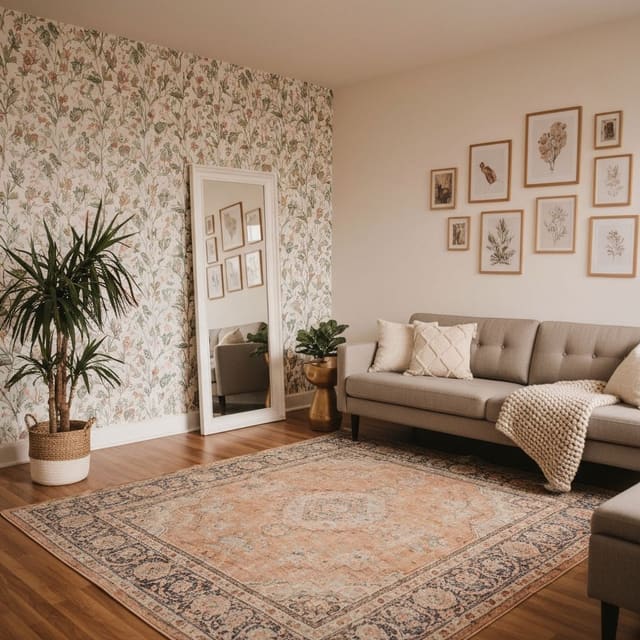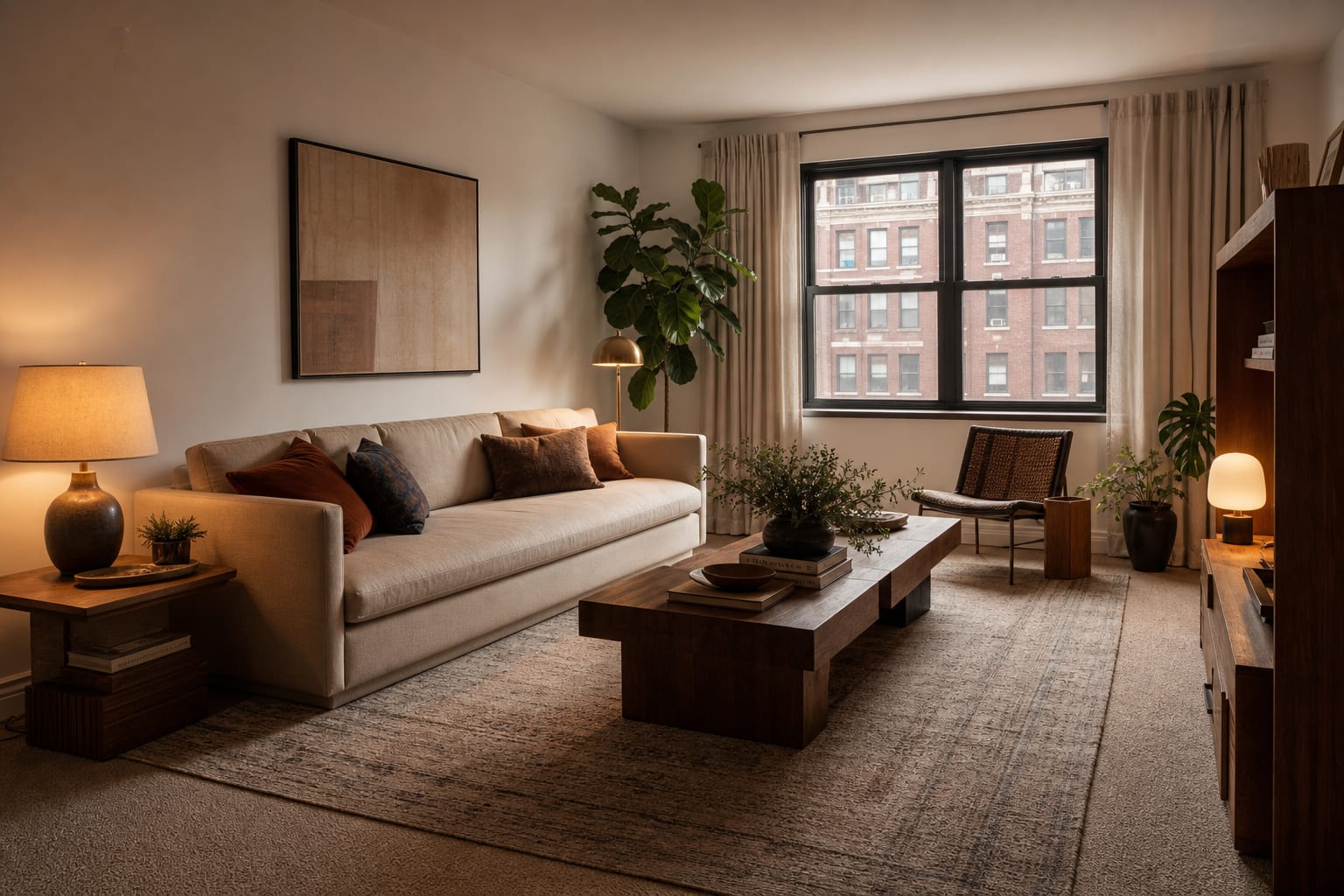
Rental flooring over carpet works when you layer removable pieces instead of gluing anything down: a 9x12 or 10x14 natural-fiber rug under the main seating, peel-and-stick LVP on a thick underlayment for a kitchen or work zone, and a runner in the hallway. Every layer floats and lifts clean at move-out. The trick is knowing which products behave like a temporary floor and which ones buckle, trap moisture, or make doors scrape.
Can you put flooring over carpet in a rental?
Yes, but only when the new layer floats, stays low enough at doors, and removes without residue. Safer choices: large area rugs, carpet tiles made for temporary use, interlocking foam or felt-backed tiles, and some floating floor systems over very low pile. Riskier choices: adhesive vinyl, peel-and-stick planks, and rigid laminate over thick cushiony carpet.
Identify what you're covering first. Low commercial pile under about 1/4" behaves differently from plush carpet that sinks 1/2" or more underfoot. A floating layer needs a firm base; if the pile compresses too much, seams flex and furniture legs create dips, rubbing the carpet below and leaving wear a landlord will notice.
Door clearance is the next hard limit. Open every door and measure the smallest gap to the carpet. Under 1/4" of clearance means most rigid products will scrape daily — a flat-weave rug or carpet tile is the smarter call.
Don't seal a questionable carpet under plastic in a basement, poorly ventilated office, or anywhere pets have had accidents. Temporary flooring should stay breathable or removable enough to inspect underneath. If a room already smells musty, fix the source before covering it.
Which temporary flooring options work best?
A large area rug is the simplest fix, but size matters. An 8x10 or 9x12 rug reads as "new floor"; a 6x9 under a small seating group still looks like a dropped mat. Keep at least the front legs of every seat on the rug so it reads as architecture.
Choose flat-weave, low-pile wool, cotton, polyester, or indoor-outdoor rugs over thick shag — pile on pile feels unstable and catches chair legs. A 1/8" felt rug pad helps grip without adding height; skip rubber pads if the carpet manufacturer warns against trapped heat or staining.
Carpet tiles are the most forgiving option over ugly-but-sound carpet. Look for peel-free, tackifier-free tiles that rely on weight, friction, or removable dots instead of glue. Standard 19.7" or 24" squares are easy to rotate and replace — use them in a bedroom, office corner, or under a dining table.
Interlocking foam or soft vinyl tiles suit nurseries, workout corners, and kids' rooms, but rarely look finished across a full living room. Pick a matte solid or quiet woven texture rather than faux wood grain, which almost always looks worse than honest foam.
Floating hard flooring over carpet deserves the most suspicion. Some click-together vinyl or laminate can sit over very low, dense carpet with a manufacturer-approved underlayment, but plush, padded, or uneven carpet will make seams fail before the room looks finished.
Test this on your own room photo with ReDesign — keep the doorway, walls, windows, and main furniture visible so the preview solves the room you actually have.
How do you make it look intentional, not patched?
Repeat the room's shape instead of fighting it. In a rectangular room, run the rug or tile layout parallel to the longest wall; avoid a small island rug floating mid-room in apartments with too many openings — see this guide to rooms with too many doorways.
Leave a deliberate border: 6"–18" of visible original carpet around a rug reads as intentional, while a rug that almost reaches the walls and misses by 2" reads as a mistake. In a bedroom, extend the rug 18"–24" past each side of the bed, or use runners on both sides instead of one undersized rug.
Color should calm the carpet, not fight it. Beige apartment carpet usually improves with oatmeal, warm gray, camel, olive, rust, or charcoal. Bright white can make old carpet look dingier; blue-gray can turn warm beige pink. If the room feels dim too, pair the floor fix with lighting tricks from faking natural light in any room.
Let furniture weight pin the new layer in a few spots without stretching it. Skip soft interlocking tiles under dining chairs unless the legs have wide glides — narrow legs dent foam and catch seams. Under a rolling office chair, use a flat woven rug plus a carpet-rated chair mat, or replaceable carpet tiles.
A mirror can offset the visual weight of a deeper rug by bouncing window light back across the room — place it to reflect daylight or a lamp, not the darkest patch of floor, per this guide to using mirrors to amplify light.
What mistakes cause covered floors to fail?
- Adhesive flooring directly on carpet. Peel-and-stick vinyl and glue-backed planks are made for hard surfaces; on fibers, adhesive grabs unevenly and collects lint without creating a stable plane.
- Ignoring door and vent height. A tile that blocks a closet door by 1/8" is a daily irritation, not a design win — anything over about 3/8" thick needs a clearance test first.
- Covering damp or dirty carpet. Vacuum, spot clean, and let carpet dry fully before layering; covering pet odor or mildew concentrates the smell instead of hiding it.
- Patterns too small for the room. Tiny high-contrast checks and skinny stripes vibrate over a large floor broken up by furniture legs — a low-contrast plaid or broad stripe is more forgiving.
- No exit plan. Save labels, keep spare tiles, photograph the carpet before installing, and test removal in one corner after a week so move-out inspection goes smoothly.
How can AI design help before you buy?
Flooring changes the largest color plane in a room, and samples are too small to tell the truth. Upload a photo from the doorway or main seating position with carpet, baseboards, doors, and the biggest furniture visible — don't crop out the ugly edge by the closet.
Preview one strategy at a time: a large flat-weave rug, then modular carpet tiles, then a darker woven texture, then a lighter natural-fiber look. If the room only works when the preview also swaps the sofa, wall color, and lighting, the floor choice is carrying too much fantasy.
Check scale directly in the preview — an 8x10 rug versus a 9x12, or carpet tiles with a 12" border of original carpet left visible. Compare whether doorways feel cleaner and whether the old carpet border reads as intentional or accidental. Then translate the winning direction into buying specs: rug size, pad thickness, tile dimension, and door clearance.
Frequently Asked Questions
Can I put hard flooring over rental carpet?
Yes — peel-and-stick LVP planks float over a 1/4-inch foam underlayment laid on top of the carpet and lift cleanly at move-out. Never glue, staple, or screw into the carpet underneath.
What size rug covers ugly rental carpet?
Use a 9x12 or 10x14 rug in the living room so all four seats land on it. An 8x10 floats in the middle and lets the bad carpet show at the edges.
What fiber works best for a rental layering rug?
Wool, jute, or sisal hides the texture beneath it well. Thin flatweave cotton wrinkles over carpet and starts looking like a moving blanket within a month.
Are peel-and-stick floor planks safe on rental carpet?
On low-pile commercial-grade carpet, yes. On plush residential carpet, planks shift over time and adhesive transfers to fibers — use a thick floating underlayment or skip planks entirely.
How do I deal with bad carpet in a bedroom rental?
A 9x12 rug under the bed, extending 24 inches past the sides and footboard, reads like a wall-to-wall replacement and is the safest move for your deposit.
> Try this: Ready to see this on your own room? Open ReDesign and run the preview.
Three transformations to try
1. Wool 10x14 rug under living-room seating 2. Peel-stick LVP over carpet with foam underlayment 3. Bedroom 9x12 rug under bed and footboard zone