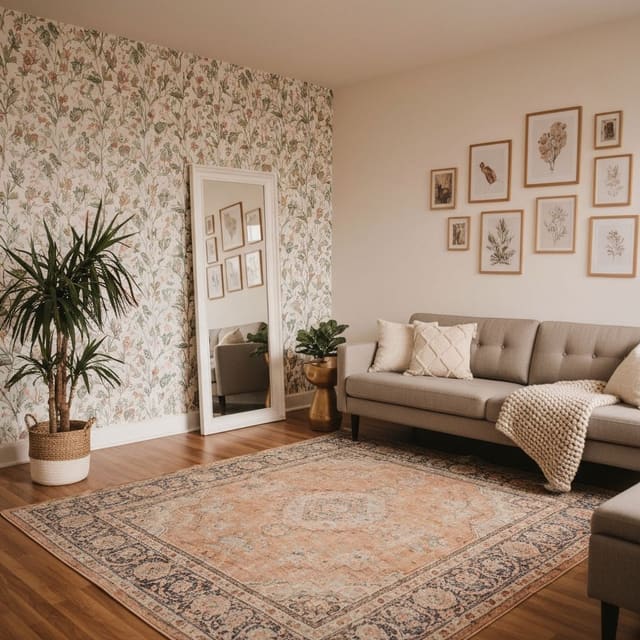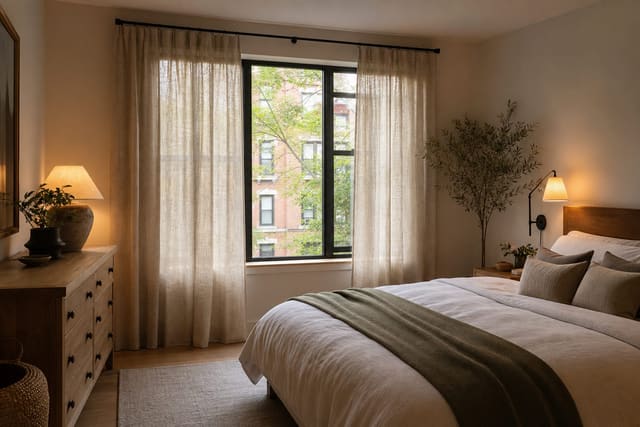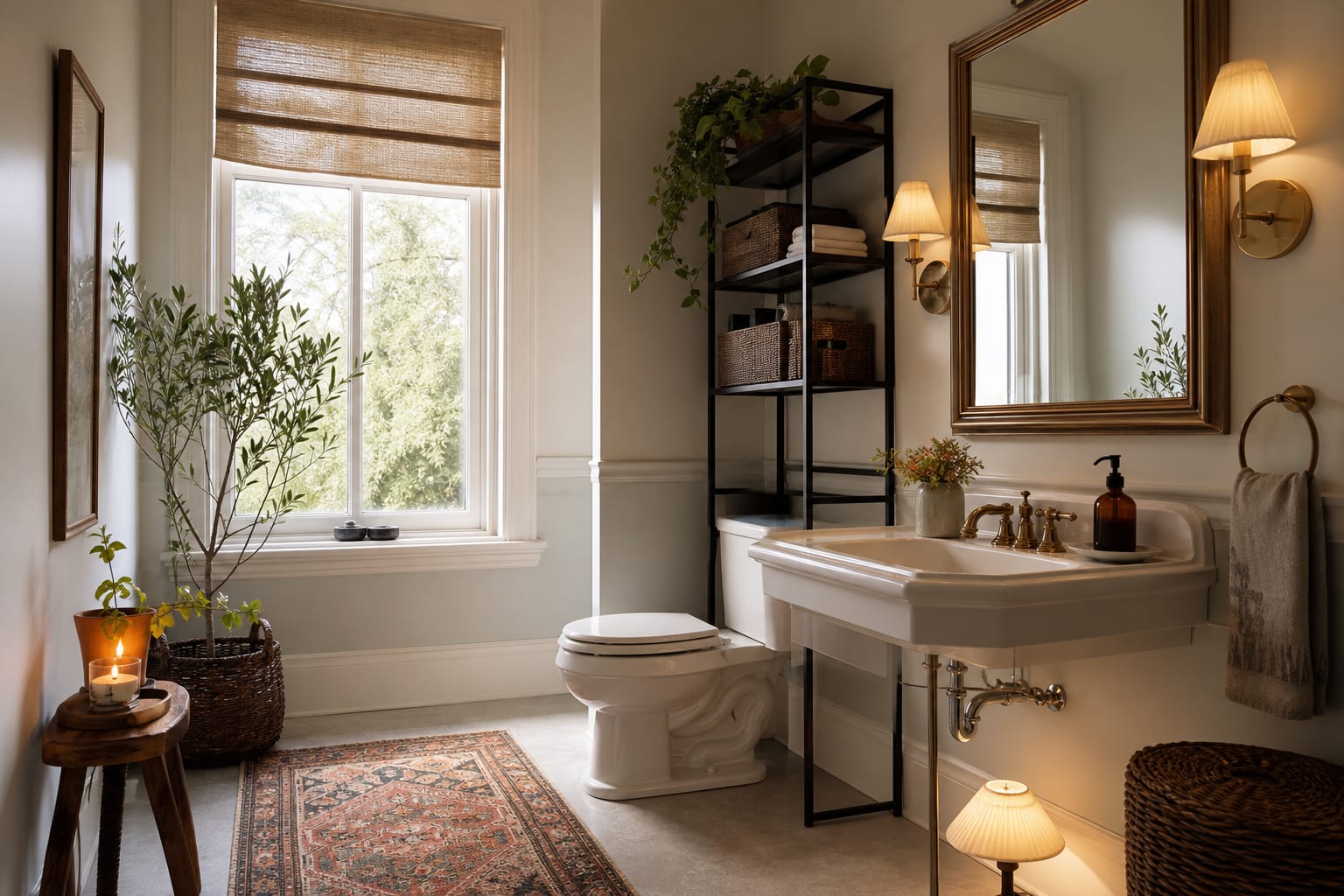
A rental bathroom upgrades under $200 by swapping the showerhead (keep the original in a bag), replacing the toilet seat, hanging a new curtain on a tension rod, adding a 30" x 36" leaning mirror, upgrading the bath mat, and swapping the overhead bulb to a 2700K dimmable LED — every move reversible at move-out. Do not spend the budget pretending you remodeled; spend it making the parts you touch every morning feel cleaner and brighter.
What improves a rental bathroom without renovating?
Change the surfaces, lighting, storage, and textiles that remove cleanly at move-out, in the right order. Start with light if the room feels gray or cave-like: swap bulbs to 2700K–3000K at a 60W–75W equivalent per shaded fixture, and skip cool blue bulbs that make white tile look clinical. In a windowless bath, the logic from brightening a windowless bathroom still applies — layer reflected light, keep the curtain pale, and never block the mirror.
Fix the mirror zone next, since it's the wall you actually judge the room by. A peel-and-stick frame kit, slim medicine cabinet, or better vanity light changes that daily view. Keep the mirror within 2"–4" of the vanity width so it reads as chosen, not leftover.
Address the floor last with textiles. Use a 20" x 32" mat for a single sink or a 24" x 60" runner for a narrow double vanity, and leave 2" of visible floor at the baseboards so it looks intentional.
Which under-$200 upgrades should you buy first?
Buy what changes daily use, not what photographs well for five minutes. If the vanity is the problem, put $40–$80 toward lighting and the mirror before trays or candles.
- Mirror: a removable frame, narrow picture ledge in existing holes, or adhesive metal trim. Test adhesive on a hidden 2" square for 24 hours first — bathroom steam exposes weak glue fast.
- Storage: one closed piece plus one open piece. A 24"–30" over-toilet cabinet holds backup supplies; a 12"–16" vanity tray corrals daily items. Too many open baskets add visual noise on top of faucets, caps, and grout lines already competing for attention.
- Shower: a fabric-look curtain on a tension rod near ceiling height. A standard 72" curtain works for most tubs; an 84" curtain on a raised rod makes a short tub wall feel taller. Choose white, oatmeal, stripe, or small check before a bold print.
Test this on your own room photo with ReDesign before committing — keep the doorway, walls, windows, and fixed features visible so the preview solves the room you actually have.
How do you make temporary finishes look real?
Temporary upgrades fail when they fake luxury too loudly. Use removable finishes in small, believable spots: the back of an open shelf, the side of a vanity, or the floor only if the existing tile is genuinely dragging the room down.
Dry-lay peel-and-stick floor tile before peeling backing so the pattern doesn't leave skinny slivers at the tub or doorway; shift the layout if a cut piece would land under 2". Removable wallpaper needs breathing room too — stop at a clean vertical edge, stay a few inches from the shower spray zone, and avoid dark paper in a small room with weak light. For calming a busy tile pattern first, see make small bathroom tile look bigger.
Grout refresh pens are often more convincing than peel-and-stick drama. Clean and fully dry the grout, then apply a white or warm-gray pen only where lines are stained. A cleaner grid makes a dated bathroom feel maintained, which usually beats looking fake-new.
Common mistakes that make a rental bathroom look cheaper
- Mixing every finish. Black hooks, brass shelves, chrome faucets, and bamboo trays together read like a sample bin — repeat one metal near the sink and one warm texture for softness.
- Ignoring the vanity light. A nice mirror under a harsh overhead bulb still casts shadows. Place plug-in sconces near face height (60"–66" from the floor); see this bathroom mirror lighting guide.
- Spa styling with no closed storage. Rolled towels and clear jars only look calm when ugly supplies have somewhere else to live — buy a closed cabinet before a eucalyptus bundle.
- Treating removable as risk-free. Adhesive hooks can pull weak paint, vinyl can trap moisture, and suction shelves can drop shampoo at 2 a.m. Photograph the room before each change and remove test pieces with a hair dryer and plastic scraper, not a metal blade.
Use AI design to preview your bathroom before you spend $200
Upload a straight-on photo of the vanity wall, then a doorway shot showing the curtain, floor, and storage together. Keep daily items like the toilet brush and trash can in frame if they need to stay in real life.
Preview one change at a time: warm vanity lighting first, then a framed mirror, then a pale curtain, then a floor treatment. If the bathroom only looks good when tile, vanity, mirror, faucet, and wall color all change at once, the concept isn't renter-friendly.
Use the winning preview as a shopping filter — match curtain length, bulb warmth, storage height, rug size, and metal finish rather than chasing an exact product that may not fit your lease.
Frequently Asked Questions
What is the highest-impact under-$50 bathroom rental upgrade?
A 2700K LED bulb swap in the overhead vanity fixture changes how every surface, towel, and face reads in the room, and it reverses in 60 seconds at move-out.
Can renters change the showerhead?
Yes. Unscrew the original (no tools needed in most installs), store it in a labeled bag, and install a new fixed or handheld showerhead. Reversing it at move-out takes under five minutes.
What single textile upgrade transforms a rental bathroom?
Swap a cheap polyester shower curtain for an 8-foot waterproof cotton or linen curtain on a wider tension rod. This single move pulls the eye up and makes the bathroom read as designed.
Should renters replace the toilet seat?
Yes. A $30–$60 slow-close white toilet seat installs in five minutes and reverses at move-out just as fast. Original rental seats are often the worst-looking, worst-functioning piece in the room.
How do I add storage without drilling?
Use a tension-pole corner shelf in the shower, a Command-hook organizer behind the door, a freestanding over-toilet shelving rack, and a slim rolling cart in any open corner. None of these require drywall damage.
> Try this: Ready to see this on your own room? Open ReDesign and run the preview.
Three transformations to try
1. Linen shower curtain on wide tension rod with 2700K bulb 2. Handheld showerhead and white slow-close seat 3. Over-toilet stand and tension corner shower shelf