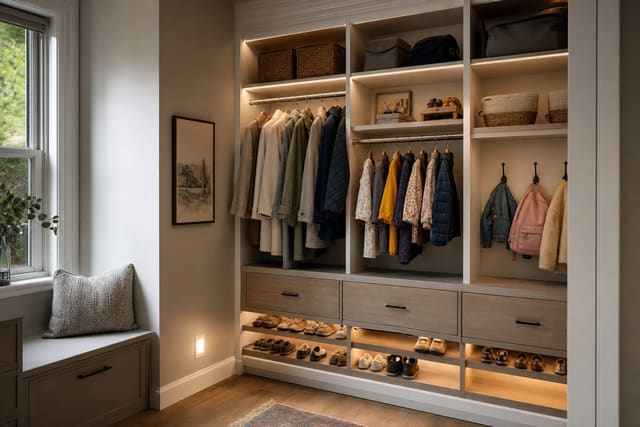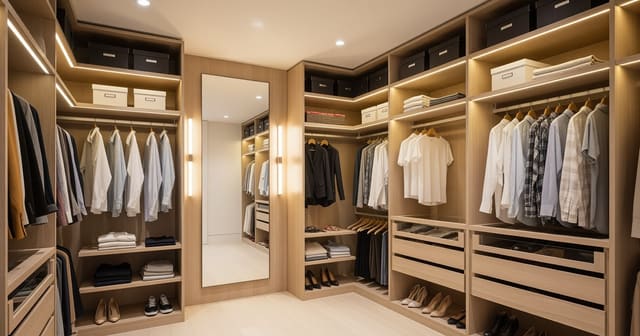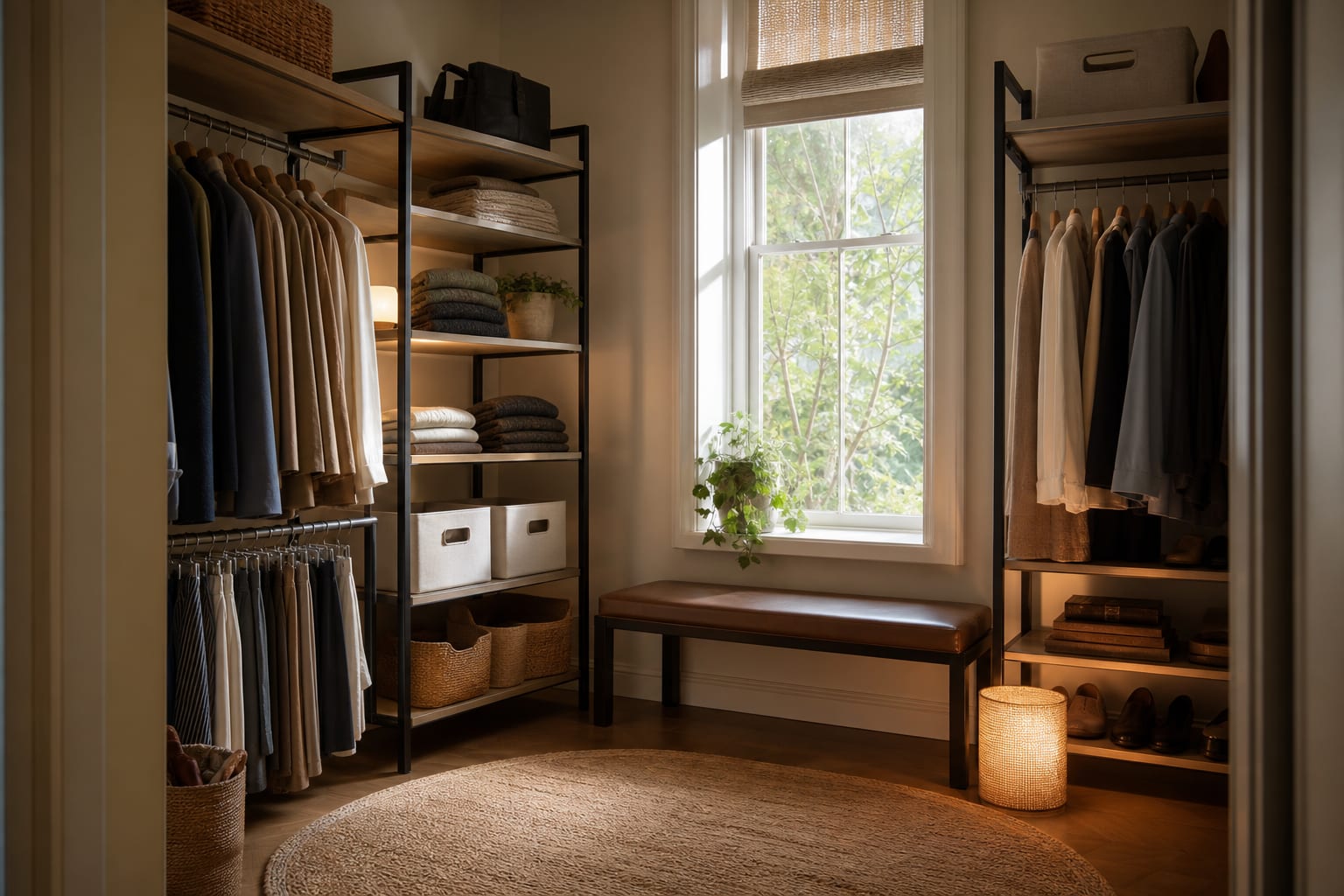
A renter-friendly closet system installs without drilling when a freestanding garment tower carries the hanging load, modular cube shelving handles folded items and shoes, tension rods double hanging capacity, and labeled bins handle seasonal overflow. Every piece moves with you at lease end, adding storage without turning the project into wall repair.
What closet systems can you install in a rental?
You can use freestanding racks, tension-mounted rods, over-door organizers, modular cubbies, and rail systems that reuse existing holes. Reach-in closets usually need a double-hang rod and shallow shelves; a walk-in can handle a freestanding tower or a rolling garment rack that stabilizes without new anchors.
Start with the least invasive fix. If folded clothes collapse, add a 12"–14" deep shelf tower before adding more rods. Set a lower rod 38"–42" above the floor and keep the upper rod 78"–84" so short garments double up. For shoes, a 10"–12" deep rack is usually enough; deeper units steal walking room.
A temporary closet organizer should feel boringly stable: level feet, anti-tip straps into existing holes when possible, and enough base weight to resist wobble. Tension poles need a flat, solid floor and ceiling, not popcorn texture or crumbly plaster. For tight closets, apply the sizing logic from small closet ideas that actually create space: protect the center opening and keep the door swing clear.
Which system fits your closet, your lease, and your clothes?
Measure first: full width, inside depth, ceiling height, door opening, baseboard depth, and any existing shelf or rod height. A 24" deep reach-in handles hangers; a closet closer to 20" deep needs hooks, shelves, or slim hangers instead of a full front-to-back rod.
Door style matters. Sliding doors hide half the closet at once, so a wide center tower becomes an annoyance. Bifold doors need side clearance. Swing doors accept over-door hooks only if the top gap is at least 1/8" and the hook clears the trim. Keep heavy items off fragile hollow-core doors.
| Item | Typical height/depth needed |
|---|---|
| Shirts, folded trousers | 36"–42" hanging height |
| Dresses, coats, jumpsuits | 60"–66" hanging height |
| Sweater shelf stacks | 10"–12" per stack |
| Accessory drawers/bins | 10"–16" tall |
| Folded-basics bins | 18"–24" wide |
Choose a freestanding unit when walls are already poorly patched, plaster is old, or a move is coming soon. Pick metal or wood-look units with adjustable shelves over flimsy fabric cubes, and leave at least 2" between the unit and the door path so sleeves and bags don't catch.
Test this on your own room photo with ReDesign — keep the doorway, walls, and fixed features visible so the preview solves the closet you actually have.
Which pieces are worth buying first?
Buy pieces that change behavior before pieces that look pretty. A closet fails when dropping things on the floor is the easiest action, so each piece should make the right action effortless.
- A double-hang rod fixes crowded short clothing. Add a removable lower rod at 38"–42" for shirts, folded trousers, and kids' clothes; keep long garments in one uninterrupted section.
- A shelf tower beats a deep bin pile. Look for shelves 12"–14" deep and 24"–30" wide, with heavier items on the lowest shelf.
- Matching bins work only for specific categories. One bin for hats, one for swimsuits, one for linens — not five identical mystery boxes. Label at eye level or below.
- Lighting isn't decoration in a closet. A rechargeable motion light around 2700K–3000K makes dark clothing distinguishable; place it near the front third of the ceiling so your body doesn't shadow the clothes. See closet lighting ideas for dark storage.
If building slowly, spend first on hangers, one rod, one shelf tower, and a light. Matching boxes can come later, once you know which categories actually need one.
Common mistakes to avoid
- Treating removable as weightless. A tension rod packed with coats can dent drywall or collapse. Keep heavy coats on the original rod and reserve temporary rods for lighter garments unless the load rating is confirmed.
- Blocking the best reach zone. Keep the waist-to-eye-level zone for daily items, not the prettiest baskets. Put luggage and off-season bedding higher or lower.
- Ignoring baseboards and floor slope. A 1/2"–3/4" baseboard can make a freestanding tower sit proud and feel unstable. Use adjustable feet or stable furniture shims, never folded cardboard.
- Over-customizing a closet you don't own. Avoid cutting shelves, drilling new supports, or permanent anchors. Reuse sound existing holes, save original hardware in a labeled bag, and photograph the closet before changes.
- Forgetting the future room. If a walk-in could later become a desk nook, keep the organizer modular. The planning ideas in turning a walk-in closet into a home office apply even if you only need storage now.
Use AI design to preview your closet before you buy
The expensive mistake in a rental closet is usually scale, not style. Take one doorway photo with the doors open, floor visible, and current rod, shelf, and ceiling line in frame. Then preview a freestanding tower on the left, a center double-hang layout, a shoe-focused lower zone, and a lighter bins-only version — keeping the real wall color and depth in the prompt.
Use the preview to measure: should the tower be 24" or 30" wide, does the lower rod clear shoes, does the light land in front of your shoulders? If the best-looking version requires removing the original shelf or replacing doors, it isn't the right renter plan. The winning design should look calm even with real clothes, boots, and overflow visible, and it should come apart cleanly when the lease ends.
Frequently Asked Questions
Can I install a closet system in a rental without drilling?
Yes. Freestanding garment-rack towers, modular cube units, tension rods, and over-the-door organizers replicate 70–80 percent of a built-in closet without a single screw into the wall.
What is the best freestanding closet rack for a rental?
A two-tier garment rack tower, 60–70 inches tall and 40–60 inches wide, with adjustable shelves and a stable footprint base. Cheap two-bar racks under $50 tend to lean and tip within months.
How do I double the hanging space in a small rental closet?
Add a tension rod 38–42 inches below the existing rod. The lower rod holds shirts, the upper holds longer items, and the install reverses in under five minutes.
Where do shoes go in a renter closet system?
Use a 24–30 inch wide stacked shoe shelf (5–6 tiers) on the closet floor, or an over-the-door pocket organizer rated for shoes. Floor-stacked shoes look messy and waste vertical space.
How do I light a rental closet without hardwiring?
Use battery-powered motion-activated puck lights or a USB-rechargeable LED strip with adhesive backing. The install reverses cleanly and adds most of the function of recessed closet lighting.
> Try this: Ready to see this on your own room? Open ReDesign and run the preview.
Three transformations to try
1. Two-tier garment rack tower with adjustable shelves 2. Tension rod added below existing rod for doubled hanging 3. Battery puck lights and stacked shoe shelf