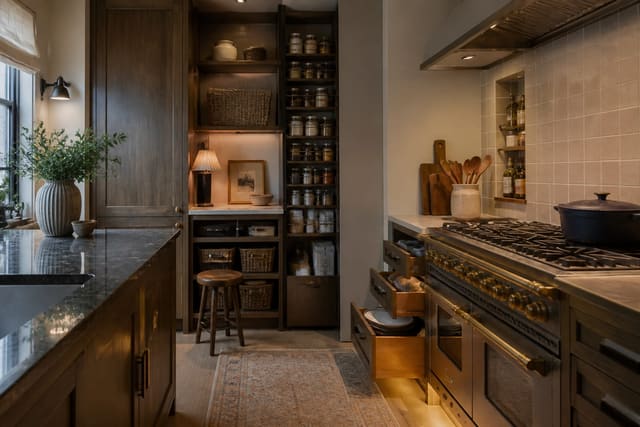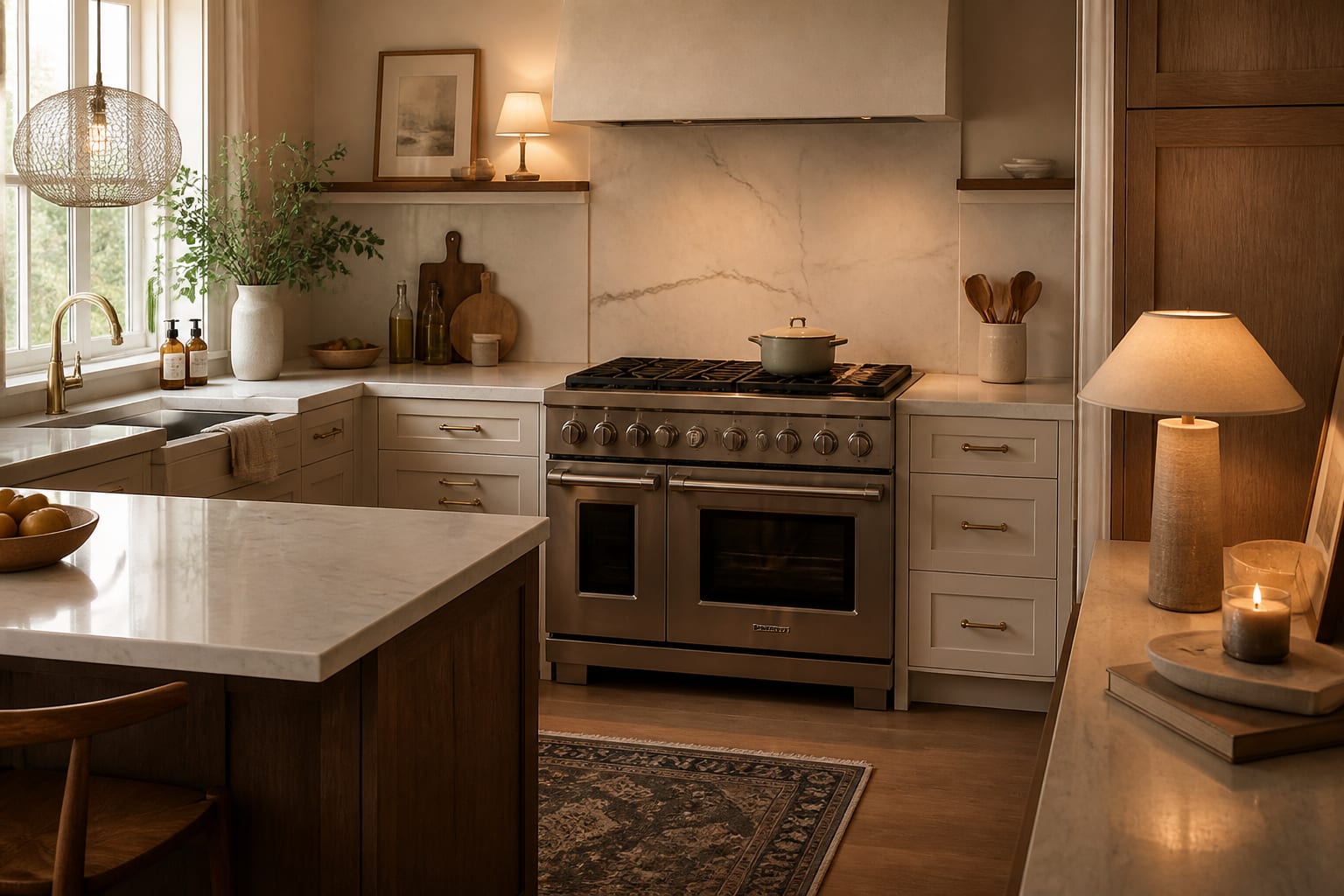
The fastest way to blow a kitchen budget is to assume that saving money means buying cheaper versions of everything, when the real savings come from changing fewer things and changing them well. A full gut remodel averages $30,000 to $80,000 in 2026, but I have watched homeowners get a kitchen they love for half that by keeping the layout and spending only where their hands and eyes land every day. My position: protect the plumbing locations and splurge on counters and hardware, and cut almost everywhere else.
Where the money actually goes in a kitchen remodel
Cabinets and installation eat 30% to 40% of a typical kitchen budget, appliances another 15%, and countertops 10% to 15%. Knowing those proportions tells you exactly where a dollar saved matters and where a dollar saved just buys regret.
The single biggest lever is the layout. The moment you move the sink, range, or refrigerator, you trigger new plumbing, gas, and electrical runs that add $5,000 to $15,000 and weeks of schedule. Keeping all three appliances within their current footprint is the most powerful cost decision in the entire project, and it costs nothing to choose.
The second lever is cabinets. If your boxes are sound, refacing at $4,000 to $10,000 versus $12,000 to $35,000 for replacement frees a huge chunk of budget. Pair sound storage with smart organization, and a modest kitchen functions like a far larger one; this is where reading up on small kitchen storage solutions pays for itself many times over.
The third lever, and the one people most often get backward, is sequencing. Doing the demolition yourself before the contractor arrives can shave $1,000 to $3,000 off the labor line, but only if you stop short of anything tied to plumbing, gas, or load-bearing structure. Buying your own fixtures and finishes and having the pro install them is another reliable saver, since contractor markup on materials often runs 15% to 35%. The trap is buying the wrong size or finish and paying twice, so confirm dimensions against your actual cabinet openings before a single box leaves the store.
It also pays to think in tiers rather than treating the whole kitchen as one decision. A $2,000 refresh of paint, hardware, and lighting buys most of the visual payoff of a full remodel for a tiny fraction of the cost, and for many kitchens that is genuinely enough. A $15,000 to $25,000 mid-tier project that keeps the layout but refaces cabinets and replaces counters is the sweet spot for resale. Only a full gut past $40,000 makes sense when the layout itself is broken, and even then the savings come from disciplined choices, not from buying flimsy versions of everything.
Material substitutions are where a careful eye saves the most without anyone noticing. A quartz remnant or a lower-movement granite gives you a stone counter at a fraction of a premium slab, and the difference is invisible on an island under normal kitchen lighting. Luxury vinyl plank that convincingly mimics wood costs $3 to $7 per square foot installed versus $8 and up for the real thing, and it shrugs off the spills a kitchen guarantees. A tile backsplash done in a simple subway pattern with a standard white grout looks crisp and intentional, while an intricate mosaic triples the labor for a detail few guests will study. The skill is spending the saved money on the one or two finishes that genuinely read as quality.
Timing the purchases adds another layer of savings. Major appliance prices drop during holiday sale windows and again when new models land in early fall, so a buyer who can wait often catches 20% to 35% off a fridge or range that was full price a month earlier. Floor models and open-box units at appliance retailers carry the same discount with a full warranty intact. Stacking a seasonal appliance deal, a counter remnant, and your own fixture sourcing routinely trims four figures off a mid-tier kitchen without changing the finished look at all.
A checklist for cutting cost without cutting quality
These are the moves that save real money while keeping the result looking intentional rather than cheap. Work through them in order.
- Keep the existing plumbing and appliance locations to avoid $5,000 to $15,000 in rough-in costs.
- Reface or repaint solid cabinet boxes instead of replacing them, saving 40% to 60% of the cabinet line.
- Choose a 10 to 12 sq ft quartz remnant for an island top at 40% to 70% off slab price.
- Buy last year's appliance models or floor units for 20% to 35% off retail.
- Upgrade hardware, faucet, and lighting yourself for $300 to $900 instead of $1,500 in labor.
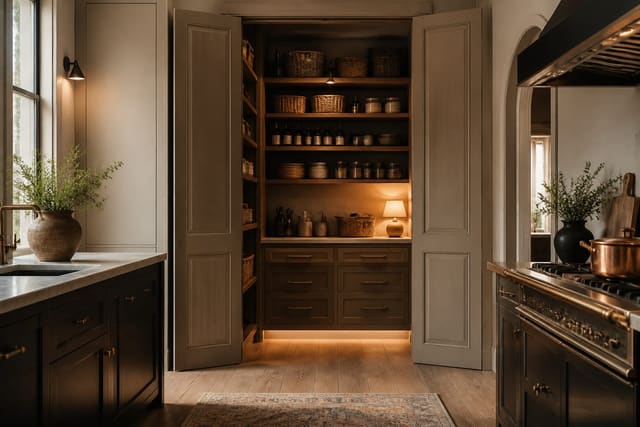
Each of those is a real dollar figure, not a vague tip, and together they routinely cut $10,000 or more from a quote. Better internal storage also lets you skip adding cabinets entirely, which is why a solid pantry organization plan often replaces a $3,000 cabinet run with a $400 fit-out.
Common mistakes to avoid
The most expensive false economy is buying bargain cabinets to save up front. Cheap boxes with stapled joints fail within a few years, and replacing them twice costs far more than buying decent ones once, so save by keeping good boxes, not by buying bad ones.
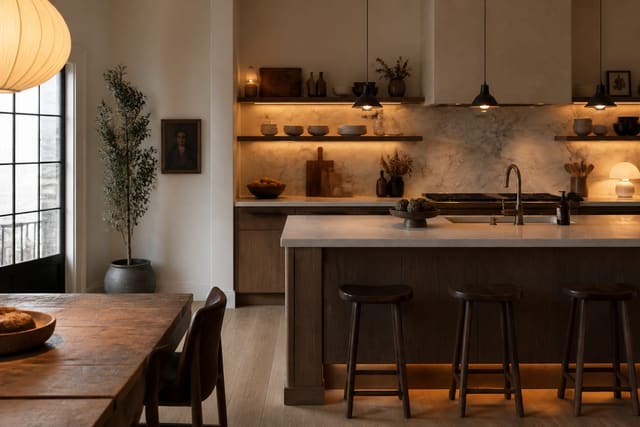
Homeowners also chase appliance deals that do not fit the space, then pay for cabinet modifications that erase the discount. Another trap is moving the sink to a window for the view, a single decision that can add $4,000 in plumbing for a purely cosmetic gain. People skimp on the surfaces they touch most, then resent the flimsy faucet and dim lighting every single day. If you are tempted to add cabinets for storage, first explore whether open shelving in the kitchen gets you the same capacity for a tenth of the cost, because added storage is often the most overspent line in the whole project.
Preview your budget kitchen in Re-Design
Frequently Asked Questions
What is the cheapest way to update a kitchen? Paint and new hardware are the cheapest meaningful update, often under $2,000 if you keep the layout. Refinishing or refacing cabinets and swapping the faucet and lighting are the next steps up that still avoid demolition.
Should I remodel my kitchen myself to save money? Doing the demolition, painting, hardware, and assembly yourself can save 20% to 35% of total cost. Leave gas, major electrical, and plumbing to licensed pros, because a permit failure or leak erases every dollar you saved.
How much should I budget for a midrange kitchen remodel? A midrange remodel that keeps the layout typically runs $20,000 to $40,000 in 2026. Reserve at least 10% to 15% of that as a contingency for the surprises that nearly every older kitchen hides behind the walls.