A Scandinavian kitchen wins by pairing genuine function with calm, light-filled simplicity. The best versions skip ornament entirely and let pale wood, white surfaces, and clean cabinet lines carry the room. Start by maximizing natural light and clearing the counters, because clutter is the enemy of this style. Choose materials that age gracefully, like light oak and honed stone, and keep hardware minimal or hidden. Everything should earn its place and work hard. When you balance brightness with warm wood, the kitchen feels both effortless to use and quietly beautiful every single day.
Balance White Cabinets With Warm Wood
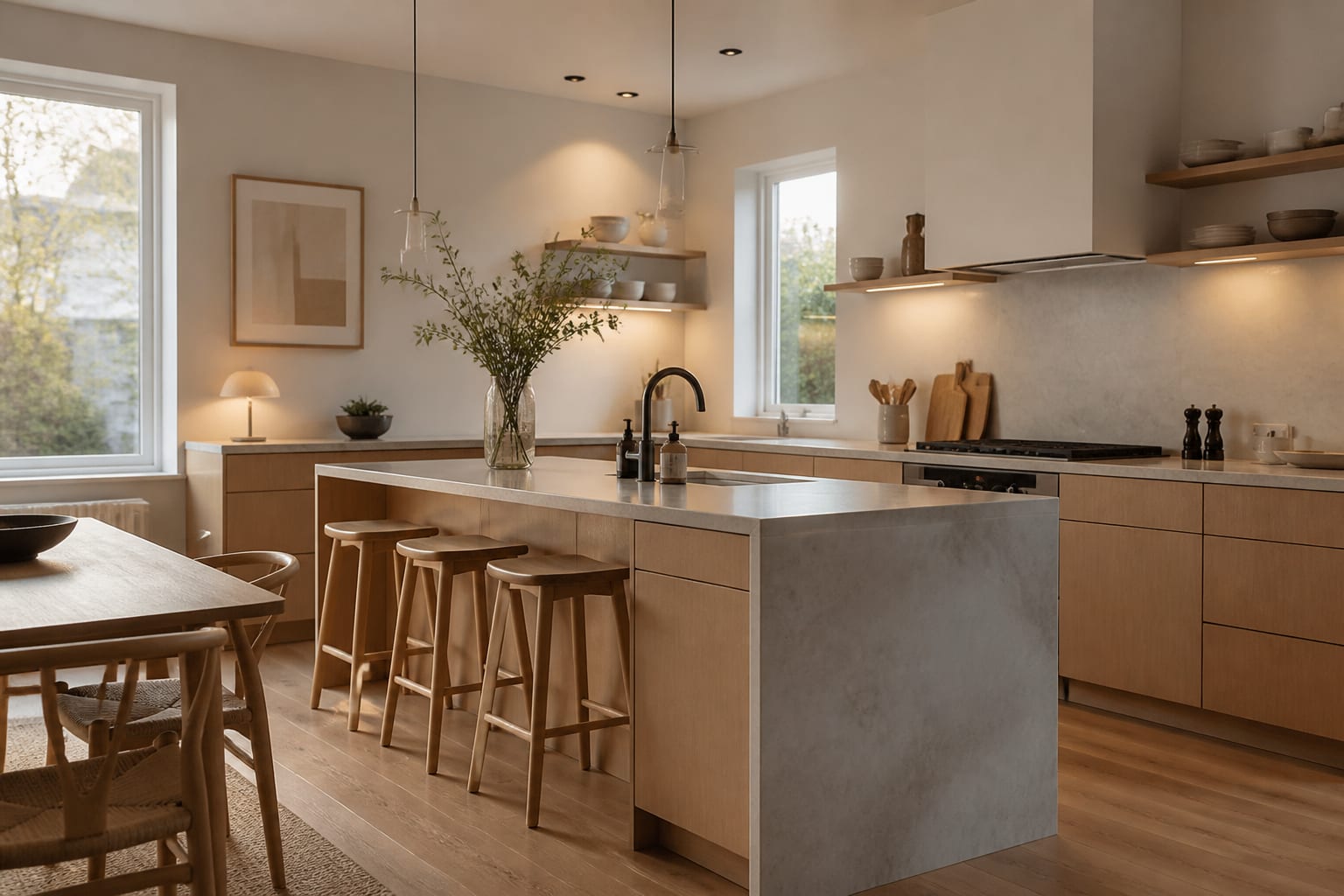
The signature Scandinavian kitchen idea is the marriage of crisp white cabinetry with warm, pale wood, and getting that balance right makes the whole room. All-white can feel sterile while all-wood can feel heavy, so the smart approach blends the two. A common and reliable formula puts white or off-white cabinets on the upper run for lightness and lets wood appear on the lower cabinets, the island, or the shelving. This keeps the room bright at eye level while grounding it with natural warmth below. Choose your wood tone carefully, since it sets the entire mood. Light oak, ash, and birch suit the style best, with their soft grain and pale honey color, while dark walnut or espresso reads too formal for a true Scandinavian kitchen. A light oak island or a run of oak open shelves introduces just enough warmth to soften the white without overwhelming it. Matte cabinet finishes feel more authentic than high gloss, which can look slick and undercut the relaxed mood. For walls and counters, keep things quiet: white subway tile or a simple plaster backsplash, paired with honed white or pale grey stone, completes the palette. The restraint is deliberate, since color and contrast are not the point here. When white and wood share the room in roughly equal measure, the kitchen reads as fresh and airy yet genuinely welcoming. If your kitchen runs short on natural light, lean the balance slightly toward white and reserve wood for an island or a single shelf run. In a brighter room you can afford more wood without losing the airy feel. That combination is the reason Scandinavian kitchens feel timeless rather than trend-bound, and it adapts easily whether your space is a compact galley or a wide open-plan room.
See also our guide to Kitchen Home Bar Design for more on scandinavian kitchen ideas.
Keep Lines Clean and Hardware Minimal
Clean, uninterrupted lines define the Scandinavian kitchen, so the cabinetry should read as smooth and calm rather than busy. Flat-front slab doors are the natural choice, since their simple faces suit the style far better than raised panels or ornate profiles. Where you do want some texture, a subtle shaker door with a shallow frame works, but keep the detailing restrained. The aim is cabinetry that recedes quietly into the room instead of demanding attention. Hardware is where many kitchens lose the thread, so favor minimal or hidden solutions. Handleless cabinets with push-to-open mechanisms or integrated finger grooves give you the cleanest possible look, letting unbroken cabinet runs stretch across the wall. If you prefer pulls, choose slim, simple bars or small leather tabs in a matte finish rather than chunky ornate handles. Keep every handle consistent throughout the room so nothing competes for the eye. The discipline extends to how you treat appliances. Integrating the refrigerator and dishwasher behind cabinet panels keeps the lines continuous and the room serene, hiding bulky machines that would otherwise interrupt the calm. A concealed range hood or a slim minimalist model preserves the same uncluttered feel above the cooktop. Even small choices matter, so a single-line faucet in brushed steel or matte black reads cleaner than an elaborate fixture. Keep the backsplash simple too, since a busy tile pattern fights the calm that clean cabinetry works to create. A continuous countertop that wraps without seams or fussy edges reinforces the same uninterrupted feeling. When lines stay simple and hardware stays quiet, the kitchen feels orderly and spacious even when it is compact. That sense of calm order is exactly what makes a Scandinavian kitchen so pleasant to cook in and so easy to keep looking tidy through the busiest weeks.
For a related angle on scandinavian kitchen ideas, read Cottagecore Kitchen Ideas.
Maximize Light and Open Display
Light is the lifeblood of a Scandinavian kitchen, a response to the long, dim winters the style was born from, so treat brightness as a top priority. Keep window treatments minimal or skip them entirely where privacy allows, letting daylight flood the counters. If the room is naturally dark, paint walls and ceilings in the same warm white to bounce what light there is, and add under-cabinet LED strips to keep work surfaces evenly lit. Layer in a simple pendant or two over the island in matte black or pale metal to mark the room without cluttering the sightlines. Open shelving suits the style beautifully and reinforces the airy feeling, replacing bulky upper cabinets with a lighter, more open look. A run of oak or painted shelves displays everyday ceramics, simple glassware, and a few wooden bowls, turning ordinary items into quiet decoration. The trick is restraint, since open shelves only look good when they stay curated. Group pieces by material and color, leave breathing room between them, and resist the urge to fill every inch. Pale stoneware, clear glass, and natural wood read calmly together and suit the muted palette. Keep the countertops below almost entirely clear, storing small appliances inside cabinets and out of sight. A single wooden cutting board leaned against the backsplash and a small potted herb add life without clutter. A wide window above the sink, left mostly bare, becomes the brightest focal point in the room. When light pours in and the few displayed objects feel intentional, the kitchen reads as fresh, spacious, and inviting. That combination of brightness and edited display is what gives a Scandinavian kitchen its signature sense of calm openness.
Add Natural Materials and Subtle Texture
Once the bright, clean foundation is set, natural materials and subtle texture keep a Scandinavian kitchen from feeling cold or flat. The palette is intentionally quiet, so warmth has to come from what things are made of rather than from color. Bring in honest, tactile materials wherever you can: a thick oak butcher-block section of counter, woven rattan stool seats at the island, a linen runner, or a stoneware utensil crock. Each adds a different surface for the eye and hand, breaking up the smoothness of painted cabinets and stone. Texture works best when it stays within the natural, muted family. A handmade ceramic backsplash with faint variation in its glaze catches light far more interestingly than a flat machine-made tile, yet still reads as calm. A jute or wool runner softens a hard floor underfoot and warms the room without introducing loud pattern. Leather drawer pulls develop a lovely patina over years of use, quietly improving as the kitchen ages. These small material choices are what give the style its lived-in warmth. Plants and natural greenery complete the picture, since a few herbs on the windowsill or a single trailing pothos add life against the pale backdrop. Keep them simple and few, in plain terracotta or ceramic pots that suit the muted scheme. Wooden serving boards, a turned wood fruit bowl, and woven baskets for storage all reinforce the connection to nature that defines Scandinavian design. When natural materials and gentle texture layer through the room, the kitchen feels warm and human rather than clinical. That warmth is what makes the bright, minimal space somewhere you actually want to gather and cook every day.
- Pair white upper cabinets with a light oak island for balance.
- Choose handleless cabinets with push-to-open doors for unbroken runs.
- Install under-cabinet LED strips to keep work surfaces evenly lit.
- Replace bulky uppers with oak shelves holding pale stoneware and glass.
- Add a thick butcher-block oak section to a stone countertop.
- Hang two matte black pendants over the island for simple light.
- Place fresh herbs in plain terracotta pots on the windowsill.
Bring the look home with Re-Design
Curious how Scandinavian kitchen ideas would suit your actual layout before you commit to cabinets? Upload a photo of your kitchen to Re-Design and preview white-and-oak combinations, handleless cabinet fronts, and open shelving generated for your real walls and windows. Compare a light oak island against painted lowers, test a plaster backsplash, or see how open shelving opens up a cramped corner. Viewing the bright, clean result on your own space helps you choose materials and finishes with real confidence.
Frequently Asked Questions
What wood works best in a Scandinavian kitchen?
Light, pale woods suit the style best: oak, ash, and birch all bring soft grain and a honey tone that keeps the room bright. Avoid dark walnut or espresso finishes, which read too heavy and formal for the relaxed, airy Scandinavian look you want.
Are open shelves practical in a Scandinavian kitchen?
Yes, when kept curated. Open shelves reinforce the airy feeling and display everyday ceramics and glassware as quiet decoration. Group pieces by material, leave breathing room, and store anything cluttered in closed cabinets. Keep one or two shelves open rather than removing all uppers if storage is tight.
How do I keep a Scandinavian kitchen from feeling cold?
Warmth comes from natural materials rather than color. Add an oak butcher-block counter section, rattan stool seats, a wool runner, and stoneware accents. A few herbs in terracotta pots bring life. These tactile, muted elements soften the bright white palette and make the room genuinely inviting.