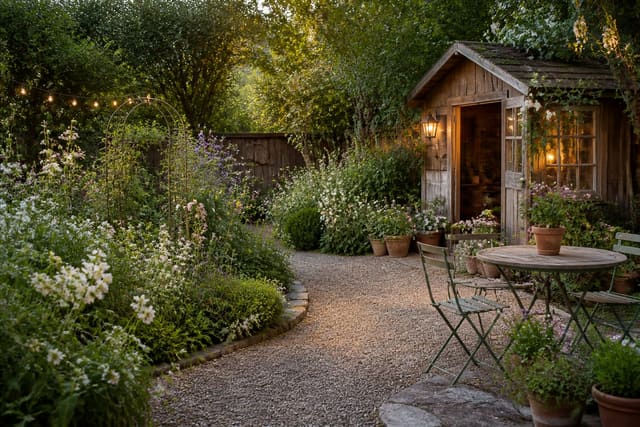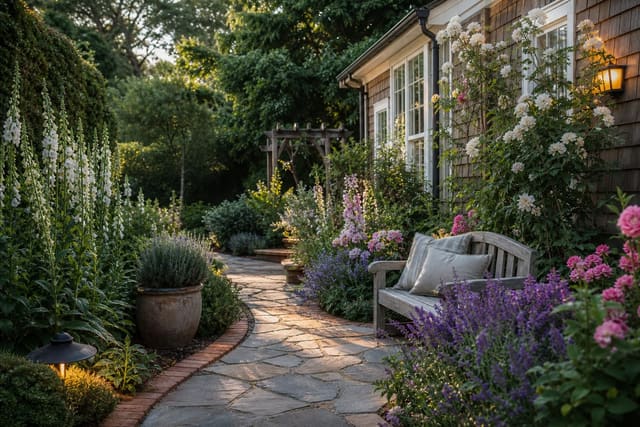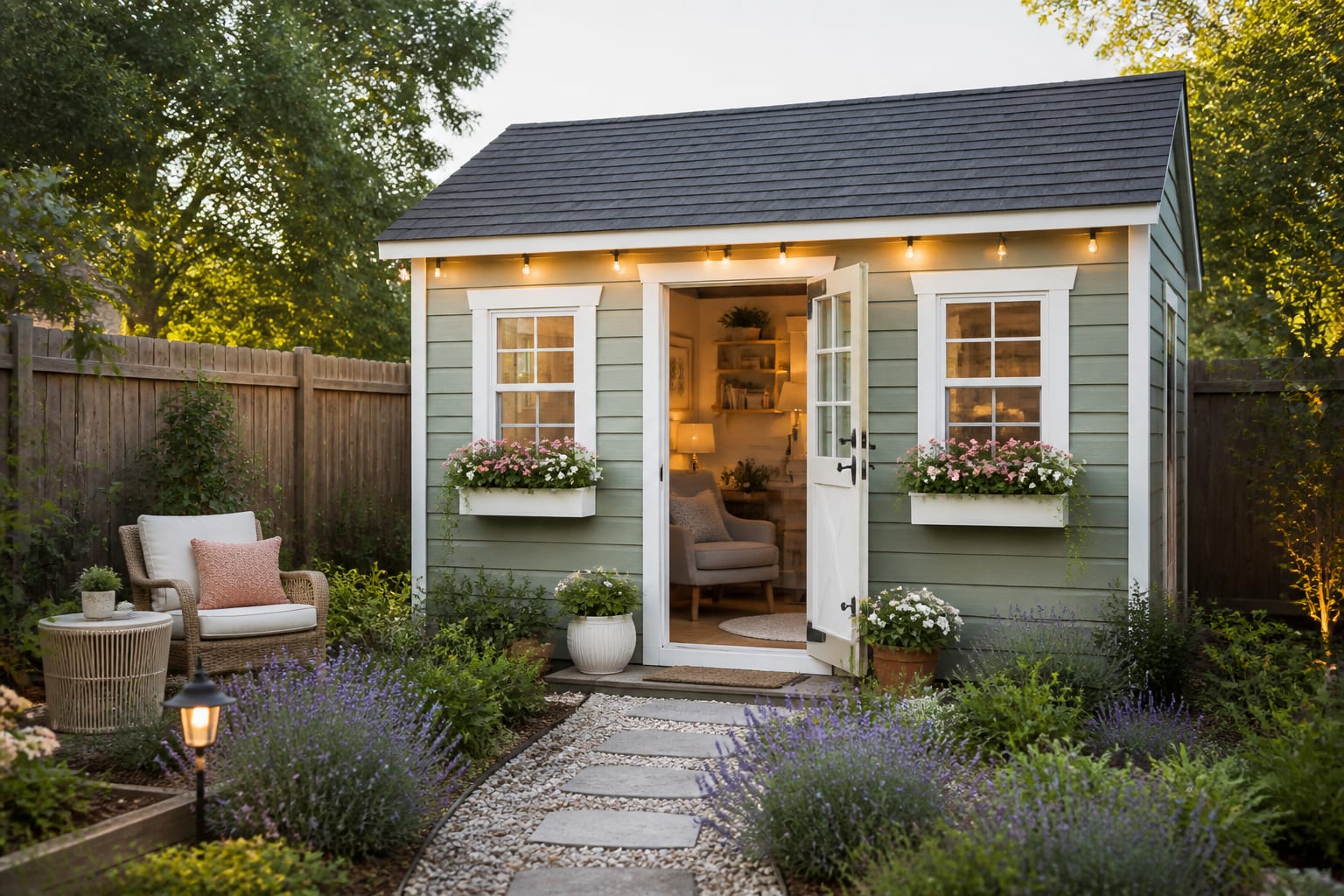
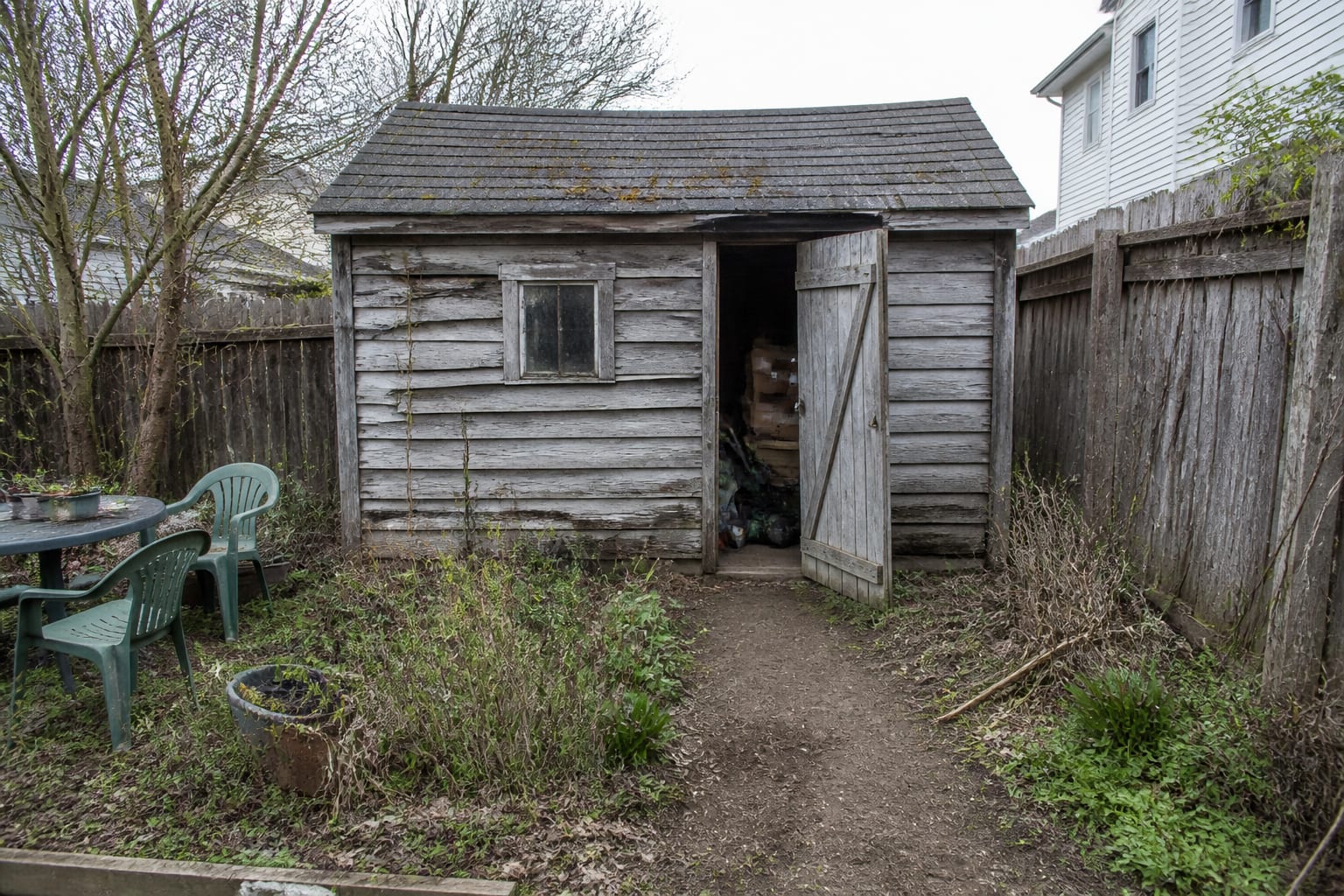
A she shed should feel like a separate little house, not a decorated storage box with a chair in it. The structures that fail are the ones treated as a quick decor project: string lights, a rug, done. The ones that succeed get the boring fundamentals right first, insulation, power, light, and a floor, then layer on personality. A 10 by 12 foot shed has enough room for a reading chair, a small desk, and a daybed if you plan it like a tiny home. Get the bones right and the backyard structure becomes the place you escape to daily.
Get the bones right before the decor
The difference between a charming retreat and a glorified toolshed is everything you cannot see in a photo. Most prefab sheds ship as bare studs, a thin floor, and zero insulation, which means they are unbearable above 80 degrees and freezing below 50. Before a single throw pillow goes in, insulate the walls and roof with batts or rigid foam and add a layer under the floor, because a cold floor ruins the room no matter how cute it looks. Finish the interior walls with painted plywood, beadboard, or drywall so you are not staring at framing. The floor deserves real attention too: luxury vinyl plank or sealed plywood with a rug beats a bare deck, and it seals out drafts and bugs. Address the windows and door early, since builder sheds come with tiny dark openings. Swapping in larger windows or a half-glass door floods the small space with daylight and makes a 10 by 12 foot room feel twice its size. Confirm the structure is dry: check for roof leaks, seal gaps, and add weatherstripping around the door. None of this is glamorous, and it is the part people skip because it does not show up on a mood board, but it is exactly what separates a shed you visit twice a year from a retreat you use every morning with coffee. Spend the budget on the envelope first, then decorate what is left, and the room will feel solid and intentional rather than flimsy and seasonal.
See also our guide to Cottagecore Garden Ideas for more on she shed ideas.
Power, light, and climate
A she shed without electricity is a fair-weather afternoon spot at best. To use it morning and evening, year-round, you need power, and that is the upgrade that pays off most. The cleanest solution is a licensed electrician running a buried dedicated circuit from the main panel, giving you outlets, lighting, and capacity for a small heater or air conditioner. If a full circuit is out of reach, a heavy outdoor-rated extension run can power lights and a laptop short-term, and solar with a battery is a real option for off-grid sheds. Plan at least four outlets so you are not chaining cords, and put one near where a desk or kettle will live. For lighting, layer it like any good room: a warm overhead fixture around 2700K for ambient glow, plus a task lamp at the desk and reading nook. Avoid a single harsh ceiling bulb, which makes the space feel like a utility shed. Climate is the other half of year-round use. A small ductless mini-split heats and cools beautifully if you have power, while a compact electric heater or radiant panel handles winter and a window or portable unit covers summer. A ceiling fan or a quiet floor fan keeps air moving on hot days. With insulation already in place, even a modest 1500-watt heater holds a 10 by 12 foot shed comfortable in cold weather. Power and climate are what convert a seasonal hideaway into a genuine second room you reach for on a rainy Tuesday night, not just a sunny Saturday.
For a related angle on she shed ideas, read Cottage Garden Ideas.
Choosing a purpose and laying it out
A she shed works best with one clear identity, because the footprint is too small to be everything. Decide whether it is an art studio, a writing and reading retreat, a yoga and meditation space, a craft room, a garden potting room, or a quiet home office, and let that choice drive the layout. An art studio wants a large work table, good north light, and washable surfaces. A reading retreat wants a single deep armchair, a footstool, a small table, and shelves. A yoga space wants open floor, a mirror, and minimal furniture. Trying to cram a desk, a daybed, and a craft station into 120 square feet leaves no room to move. Once the purpose is set, plan the layout around a single focal point, often the best window or the door view, and arrange the main seat or work surface to face it. Keep furniture scaled to the room: an apartment-size loveseat or a single chair, a narrow desk, and wall-mounted shelves instead of bulky bookcases. Build storage upward with floating shelves and wall hooks so the limited floor stays clear. Leave a clear path from the door so the room does not feel blocked the moment you enter. A small bistro table by a window doubles as a desk and a coffee spot. The discipline of one purpose is what makes a tiny structure feel generous and calm rather than crowded, and it keeps the shed from drifting into backyard storage the way an undefined room always does.
Finishing touches that make it feel like a room
Once the structure and systems are handled, the finishing layer is where the personality lives, and a she shed is the rare space where you can fully commit to a single mood without compromise. Start with the floor: a soft, generously sized rug warms the space, defines the seating, and quiets the hard surfaces. Real curtains on a rod, not stapled fabric, frame the windows and signal that this is a room, not a shed; choose a fabric that suits the light and adds softness. Bring in textiles freely, because layered throws, cushions, and a sheepskin make a small space feel cocooned and intentional. Plants thrive in a window-rich shed and connect it to the garden outside, so cluster a few at different heights. Personal touches that might feel cluttered in a main house belong here: framed prints, a gallery wall, collected objects, and a color palette you would never use elsewhere. Paint is the cheapest big move, and a bold or moody wall color makes the small space feel deliberate and enveloping. Add ambient warmth with a string of soft lights, a battery candle cluster, or a small electric stove-style heater that doubles as a focal glow. Keep a basket for blankets and a small shelf for a kettle and mugs so the comforts of a real room are within reach. The goal is a space that wraps around you the moment you step in, where every object was chosen by you for you, turning a plain backyard structure into the most personal room on the property.
- Insulate walls, roof, and floor so the shed stays comfortable from winter through summer.
- Run a dedicated buried circuit for four outlets, lighting, and a small heater or mini-split.
- Swap tiny builder windows for a half-glass door and larger panes to flood the room with daylight.
- Finish interior walls with painted beadboard or plywood instead of staring at bare framing.
- Layer a soft oversized rug over luxury vinyl plank to warm the floor and quiet the room.
- Hang real curtains on a rod to frame windows and make the structure read as a room.
- Choose one clear use, like art studio or reading nook, to size furniture correctly.
- Paint one bold or moody wall color to make the small space feel deliberate and enveloping.
Bring the look home with Re-Design
Picturing a backyard shed as a finished retreat is genuinely hard from a photo of bare studs. With Re-Design you upload a shot of your shed, inside or out, and preview it transformed: finished walls, a soft rug, larger windows, warm lighting, and furniture sized to the footprint. You can compare it as an art studio against a reading nook, test a bold paint color, and see how a glass door changes the light before Re-Design helps you commit to the build.
Frequently Asked Questions
Do I need to insulate a she shed?
Yes, if you want to use it beyond mild spring and fall days. Uninsulated sheds bake in summer and freeze in winter. Add batt or rigid foam insulation to the walls and roof, insulate under the floor, and weatherstrip the door. With insulation in place, even a small 1500-watt heater keeps a 10 by 12 foot shed comfortable.
How do I get electricity to a she shed?
The best option is a licensed electrician running a buried dedicated circuit from your main panel, giving you outlets, lighting, and capacity for a heater or mini-split. For lighter needs, a heavy outdoor-rated extension run powers lights and a laptop short-term, and a solar panel with a battery suits off-grid sheds far from the house.
What can I use a she shed for?
Pick one purpose so the small footprint works hard: an art studio, a reading and writing retreat, a yoga or meditation space, a craft room, a garden potting room, or a quiet home office. Committing to a single use lets you size furniture correctly, since a 10 by 12 foot shed cannot comfortably do everything at once.