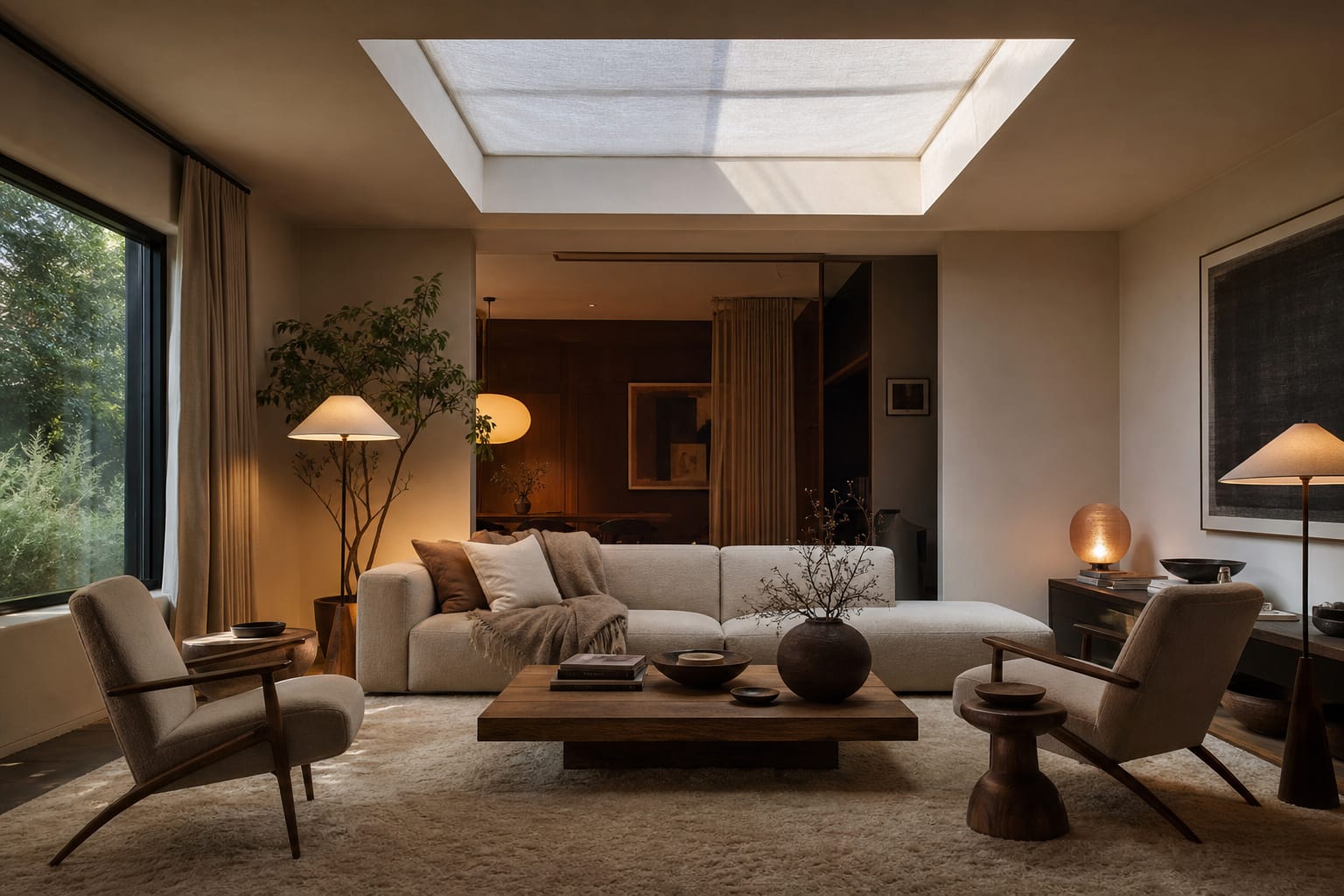
Skylights work best when furniture sits outside direct summer beam paths, fabrics are fade-resistant, a motorized or fitted shade manages heat and glare, and one warm light source covers the room after the skylight goes dark. Treat overhead glass like a spotlight, not a normal window, and build the furniture and shade plan around the sun path instead of decorating first and reacting later.
How do you furnish and shade a room with a skylight?
Place seats and work surfaces outside the strongest overhead sun path, choose heat-tolerant materials, and add a controllable shade at the glass. Tape the edge of the strongest light on the floor at 10 a.m., noon, and 3 p.m. If the hot spot crosses a sitting area, shift the main seat 18–30 inches away from that line before buying a larger shade. A skylight over a circulation path is easier to live with than one over a face, pillow, screen, or dining chair.
Keep tall pieces out of the vertical light cone. A bookcase, canopy bed, or tall plant directly under the skylight throws odd shadows and chops up the room. Favor low furniture: sofa backs around 30–34 inches, benches 16–20 inches, and coffee tables that don't bounce a hard rectangle of light into your eyes.
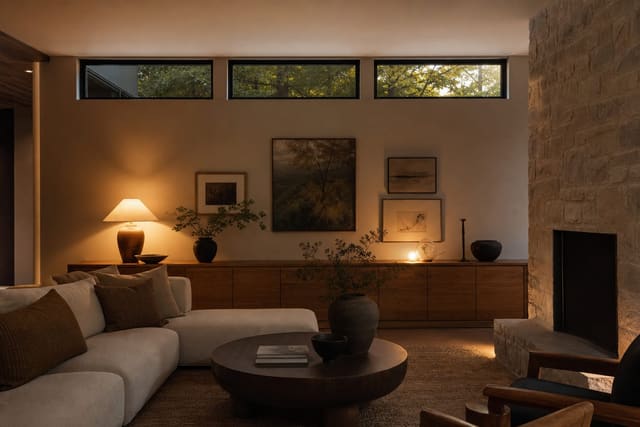
If the room also has high wall glass, apply the same lower-wall logic used for decorating around clerestory windows: let the upper opening handle daylight while the human-height zone carries comfort, storage, and lamps.
Where should furniture sit as the sun moves overhead?
Placement depends on what the room is used for while the skylight is active. Reading, sleeping, eating, and screen work all tolerate overhead light differently — a skylight over a hallway feels cinematic, while one over a pillow feels hostile at 6 a.m. in summer.
Living room: Keep the sofa just outside the brightest patch and aim chairs across the light, not into it. Leave 30–36 inches for the main walking route. Near the sun, use medium-toned cotton, wool blend, or performance fabric — dark upholstery absorbs heat and pale fabric shows fading faster.
Bedroom: Don't center the bed under the skylight unless you want to wake with light on your face. Move the pillow end outside the beam and let the skylight fall over the foot of the bed or open floor. Use 20–28 inch nightstands and shaded 2700K lamps for evening warmth once the overhead light fades.
Kitchen or office: Set desks perpendicular to the skylight so monitors face away from glare. Use matte counters instead of glossy stone if midday light hits the surface directly. For sloped-ceiling rooms, the proportions in vaulted ceiling room decorating matter since the skylight is usually part of a larger roof shape.
Test this on your own room photo with ReDesign before committing — keep the doorway, windows, main furniture, and fixed features visible so the preview solves the room you actually have.
Which shade, glass, and fabric choices control glare and heat?
Plan the shade before decorating; it changes the color, temperature, and contrast of everything below it. A fitted skylight shade works best: cellular for insulation and softness, roller for a minimal look, light-filtering fabric for glow without a hard beam. Motorized shades earn their cost above 9 feet or over a stair, tub, or tall island where a manual pole becomes a chore.
Match opacity to use:
| Room | Recommended shade |
|---|---|
| Bedroom (especially east-facing) | Blackout or room-darkening |
| Living room | Light-filtering |
| Home office | Tight-weave solar shade |
Match the shade cassette to the frame or ceiling color so it doesn't read as a patch or a heavy square, then let rugs and upholstery carry the decorative weight.
Use boring-in-the-best-way materials below the skylight: wool, cotton, linen blends, matte wood, stone, ceramic, or performance fabric instead of silk, shiny vinyl, or bonded leather. Keep plants just outside the intense beam unless they're true high-light varieties, and pots at least 6 inches from upholstery.
Common skylight room design mistakes
- Prettiest seat under the prettiest light. It photographs well once, then punishes whoever sits there — move the chair to the beam's edge.
- Adding the shade last. By the time the rug is fading and the TV is unwatchable, the bed may already be in the wrong spot. Measure the opening, frame depth, and control reach before ordering furniture.
- Using shiny surfaces to bounce more light. Glossy tables, mirrored cabinets, and glass desks turn one skylight into several glare sources. If the rest of the room feels dim, use the gentler tactics in faking natural light in any room instead.
- Ignoring seasonal swing. Winter sun may feel great on a rug; summer sun on the same spot may be unusable. Plan at least two shade modes: filtered for hot midday, blackout or privacy for sleep and screens.
- Decorating the ceiling and forgetting the floor plan. People live at chair height — if the sofa, bed, or desk is uncomfortable, the skylight has failed the room no matter how dramatic it looks from the doorway.
How can you preview the skylight plan before committing?
Skylight rooms are hard to judge from memory because the light changes by hour — calm at night, brutal at noon. An AI preview lets you test the relationship between skylight, furniture, rug, and shade before moving heavy pieces.
Photograph the room entry and the main sitting or sleeping position. Describe the skylight clearly: "living room with a rectangular skylight, light-filtering cellular shade, low linen sofa placed outside the direct sun patch, 9' x 12' wool rug, matte wood coffee table, warm lamps." Then run a second version with the sofa rotated, the shade darkened, or the rug shifted.
For a bedroom, compare the bed centered under the skylight versus shifted 24 inches away. For an office, compare a desk facing the window wall against one turned 90 degrees. Use the preview as a proportion check: if every version looks hot, washed out, or top-heavy, the fix is a better shade and calmer layout, not another decorative object.
What final checks keep the room bright without baking it?
Stand where the room is used most and look up, across, and down. Squinting across the room means more filtering is needed; warm skin after 10 minutes in the main seat means move the seat or add a shade before blaming the upholstery.
Check clearances with the shade in mind — motorized shades need power or charging, manual shades need an accessible wand or pole. Above a tub, stair, or double-height room, prioritize a remote or wall switch from the start.
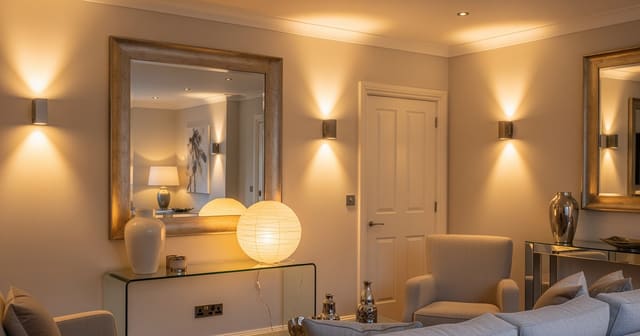
Add at least three lower light sources for evening: a table lamp, a floor lamp, and a sconce or picture light. Use 2700K for bedrooms and living rooms, 3000K for kitchens and workrooms, with dimmers wherever possible. The best skylight room isn't the brightest one — it's the one where sun, shade, and furniture stop arguing.
Frequently Asked Questions
Where should I place furniture under a skylight?
Outside the direct beam path during midday summer hours. Track the sun angle for two days and keep fade-prone pieces — velvet, linen, dark wood — out of the brightest column that crosses the floor.
Do skylights need shades?
Yes, for most rooms. Motorized cellular shades handle summer heat gain and winter glare; bare skylights can overheat south-facing rooms by 8–15 degrees without any covering.
What fabrics survive skylight UV?
Sunbrella, Crypton, and other outdoor-rated upholstery hold color under skylights. Standard cotton, velvet, and dark linen typically fade within 12–24 months of direct beam exposure.
Should I add a pendant under a skylight?
Yes. At night the skylight becomes a dark patch and the room loses its main light source, so a warm 2700–3000K pendant or surface fixture is needed to replace that daylight after dark.
Does AI preview skylight room layouts?
Yes. Upload a room photo and an AI tool can preview furniture placement, shade options, and evening light layering against the existing skylight before you buy anything.
> Try this: Ready to see this on your own room? Open ReDesign and run the preview.
Three transformations to try
1. Furniture out of beam path under skylight 2. Motorized shades under skylight glare 3. Pendant under skylight for evening