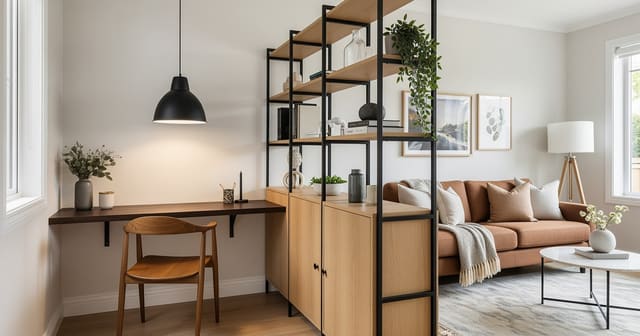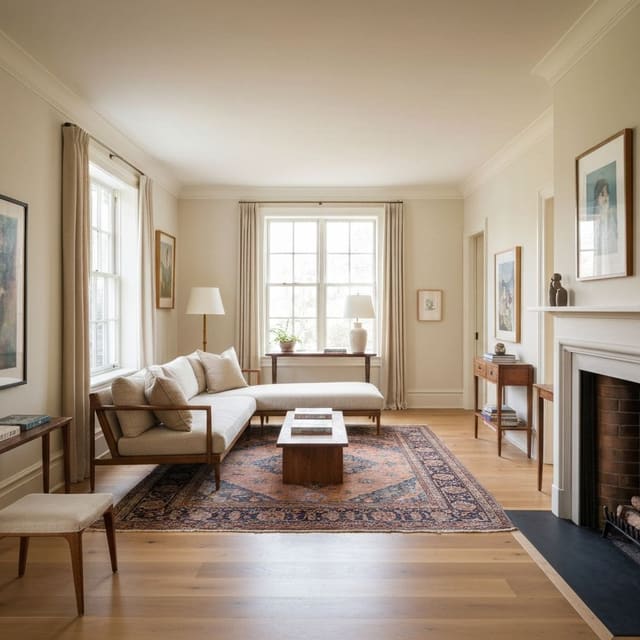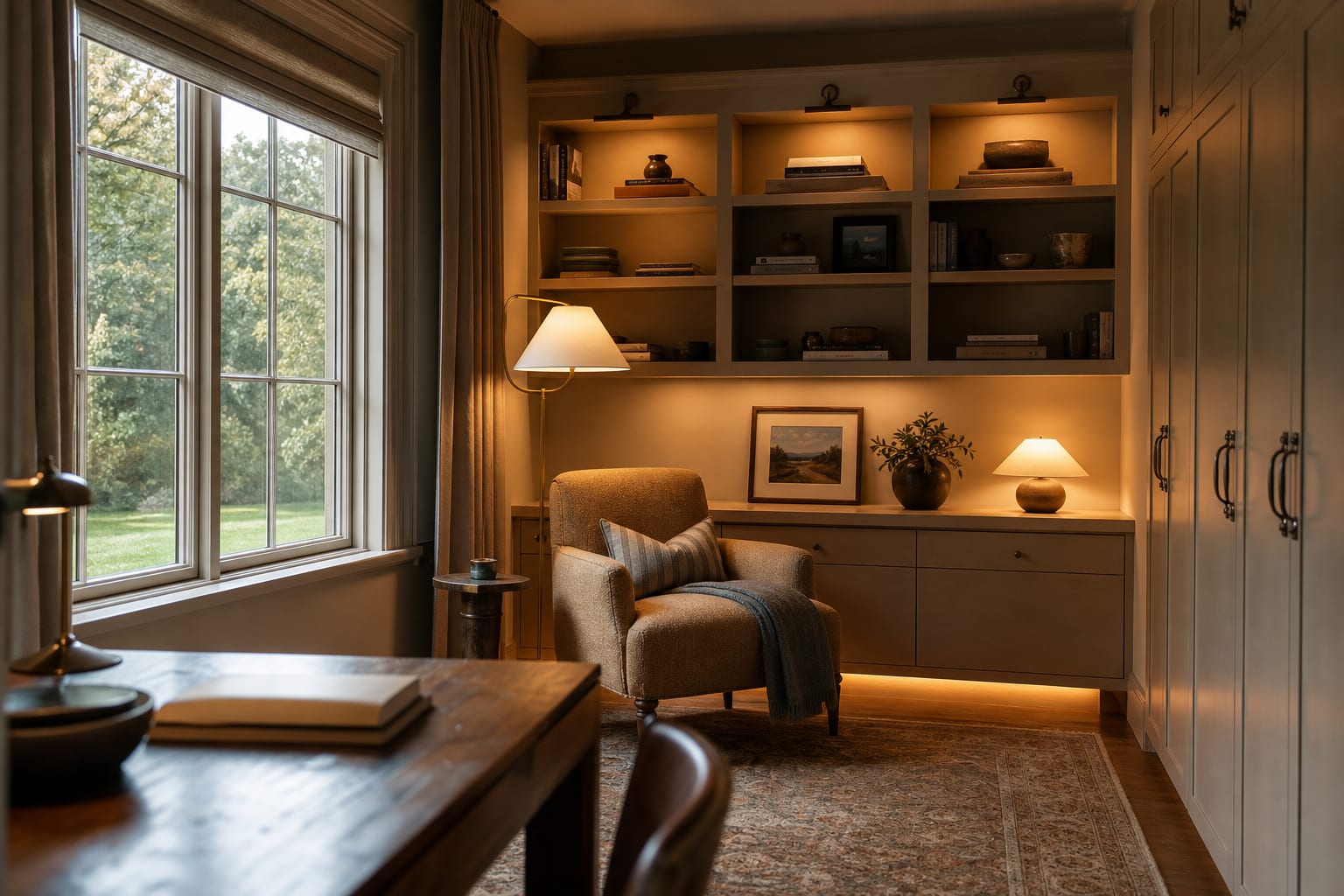
The best bonus room ideas for a small den commit to one weekly job — reading lounge, compact office, guest nook, hobby zone, playroom, or media corner — instead of trying to do all six. Design around that primary use, add a daybed or sleeper only for occasional second use, and close storage behind doors so the room reads as a room, not a closet. A bonus room becomes a junk room the moment it lacks a job.
What can a small bonus room become besides storage?
A small den works as a reading lounge, home office, guest nook, hobby room, kids' play space, media corner, or flexible hybrid once one main function controls the layout. The mistake is treating the room as "extra," because extra square footage is where homeless objects go to retire.
Name the activity that happens most often, not the one that happens twice a year. A room used for 20 minutes of reading nightly deserves a better chair and lamp before it deserves a hidden guest bed. A room used one remote-work day a week needs a 48-inch desk and a door that closes more than it needs a sofa.
Keep furniture around the perimeter and the center open. Protect roughly 30 inches of walkway from the door to the main seat, desk, or storage wall, and keep tall pieces out of the first 36 inches beside the hinge.
What decision keeps the room from becoming a second closet?
The saving decision is choosing whether the room should be quiet, productive, social, or playful — a small den can't serve all four moods without turning into storage with better lighting. Pick the mood first, then let furniture explain it.
- Quiet: soft seating, warm lamps, closed storage, few open shelves.
- Productive: a real work surface, task lighting, outlets, a camera-friendly background.
- Social: flexible seating and a landing surface for drinks.
- Playful: low storage, washable surfaces, open floor.
If the room needs two roles, make one dominant and one subordinate. A home office with occasional guest setup works well; a guest room that reluctantly holds a desk usually feels compromised. For a deeper dual-use plan, see flex room spare bedroom ideas before buying the largest sleeper sofa that fits through the door.
Run a brutal test: remove everything that doesn't support the chosen mood. If the treadmill, printer, luggage, and holiday bins all remain, the room hasn't been designed — it's been renamed.
Test this on your own room photo with ReDesign, keeping the doorway, walls, windows, and fixed features visible so the preview solves the room you actually have.
Which bonus room ideas actually earn the square footage?
Specific ideas dictate furniture size, lighting, and storage. Vague labels like "hangout room" are where clutter sneaks back in.
- Reading den with one serious chair. Use a chair at least 30 inches wide, a side table within 6 inches of the arm, and a lamp shade near seated eye level. One excellent chair gets used; two decorative accent chairs become laundry parking.
- Compact office that closes down at night. A 42- to 60-inch desk plus a cabinet or drawer unit for paper, chargers, and headphones. Closed storage matters more than another floating shelf when the desk is visible from a hallway.
- Guest nook without surrendering the room. A sleeper chair, daybed, or twin trundle handles occasional guests while leaving room for a desk or bookcase. Compare tradeoffs in a guest room home office combo before the guest mattress ruins the weekday function.
- Hobby room built around the messiest step. Sewing, painting, gaming, or music each need different storage, but all need one active surface. A 24-inch-deep table beats a shallow console when supplies stay out between sessions.
- Kids' reset room, not a toy warehouse. Keep storage low (12 to 18 inches deep) and limit open bins to categories kids can name, leaving floor space for building and calming down.
- Small media room that respects scale. A 55-inch TV may be too big at 6 feet away; a projector can fail with daytime glare. Use blackout drapery, one sofa or loveseat, and dimmable 2700K to 3000K lamps.
Which small den ideas quietly fail?
Buying storage before deciding what the room stores is the first failure — cabinets hide indecision, they don't create discipline. Assign one wall to storage and cap depth around 12 to 15 inches unless the room can fit a real wardrobe or media cabinet.
Using a full-size sofa just because the room is called a bonus room is the second. A 72-inch apartment sofa, chaise-free loveseat, or pair of swivel chairs often fits better than a 90-inch sofa blocking the only path. Measure door swing, heat registers, and closet access before assuming the longest wall takes the largest piece.
Overhead light only is the third failure. A den used for reading, work, hobbies, or movies needs at least two light sources — one ambient fixture and one task or accent lamp, kept warm around 2700K to 3000K.
Making every wall useful is the fourth. Hooks, shelves, pegboards, and cabinets on every surface can make a 9-by-10-foot den feel like a supply closet — leave one wall quiet.
How can AI preview the room before you commit?
The wrong choice often looks reasonable in your head: a sleeper sofa, desk, bookcase, and craft table all seem possible until they appear together in one small den. Upload a straight photo from the doorway, a second from the main wall, and a third showing windows or sloped ceilings.
Ask for room-specific tests rather than a vague makeover. Try one preview with a reading den, a 32-inch lounge chair, a floor lamp, and closed lower cabinets. Run another with a 48-inch desk, sleeper chair, wall shelves, and a warm neutral paint. Compare results against a broader set of bonus room ideas so the room isn't judged against only one fantasy layout.
Check the uncomfortable details: Does the chair block the closet? Does the desk face a blank wall? Does the daybed leave room to stand when the trundle opens? AI can't confirm outlet capacity, sleeper mechanisms, or exact product dimensions — but it can show whether the room wants to be a lounge, office, guest nook, hobby studio, playroom, or media den before money turns the guess into furniture.
How do you make the final choice feel deliberate?
A small bonus room feels deliberate when the first view tells you what happens there. A door opening to a reading chair, lamp, and book wall reads as a den; one opening to a desk and pinboard reads as a workroom; one opening to a daybed and shaded lamp reads as a guest-ready nook.
Use one anchor, one storage answer, and one lighting plan. The anchor might be a rug, desk wall, daybed, media console, or bookcase. The storage answer should be honest about the room's old habits — add closed cabinets for what truly belongs and move the rest elsewhere. The lighting plan needs a switchable overhead fixture plus a lamp exactly where the main activity happens.
Paint comes last. A deep green den, plaster-pink hobby room, warm white office, or navy media corner all work once the room's job is already clear.
Frequently Asked Questions
What is the best use for a small bonus room?
Pick the weekly use, not the rare one. A TV lounge, reading nook, second office, or craft zone you use daily beats a guest room that sits empty 360 days a year.
Can a small den double as a guest room?
Yes. A 60- to 84-inch daybed or queen sleeper sofa handles 2 to 6 guest nights a year while the room still earns its keep as a daily TV lounge or office; just commit the primary use to daily, not occasional.
How do I keep a small den from turning into storage?
Use closed cabinets along one wall (24 to 30 inches deep), one labeled bin system on a closet shelf, and a strict no-pile rule. Anything without a named storage home leaves the room within a week.
What lighting works in a small den or bonus room?
Layer 2700K lamps on a side table, one floor lamp at the reading chair, and an overhead fixture on a dimmer. It's the same layered approach as a bedroom, since the room is short-stay seated.
What furniture scale works in a small den?
A 68- to 78-inch sofa or daybed, a 36- to 48-inch coffee table, one accent chair, and one closed storage cabinet. Oversized furniture pulled from a larger room reads stuffed and reduces function.
> Try this: Ready to see this on your own room? Open ReDesign and run the preview.
Three transformations to try
1. TV lounge with 72-inch sofa and one accent chair 2. Reading nook with daybed and floor lamp 3. Second office with desk and closed storage