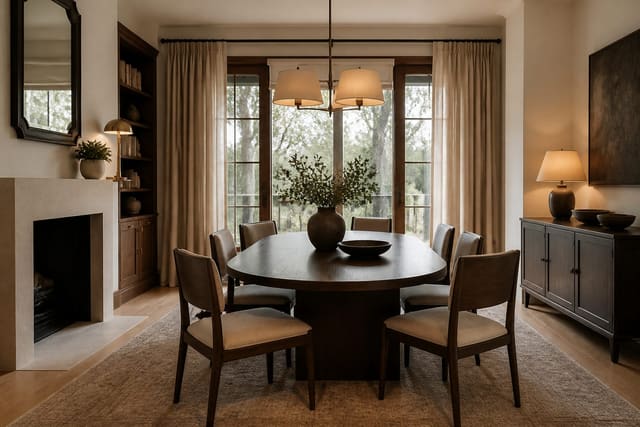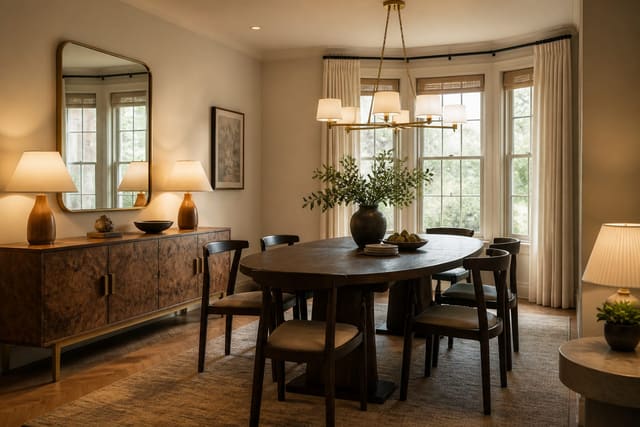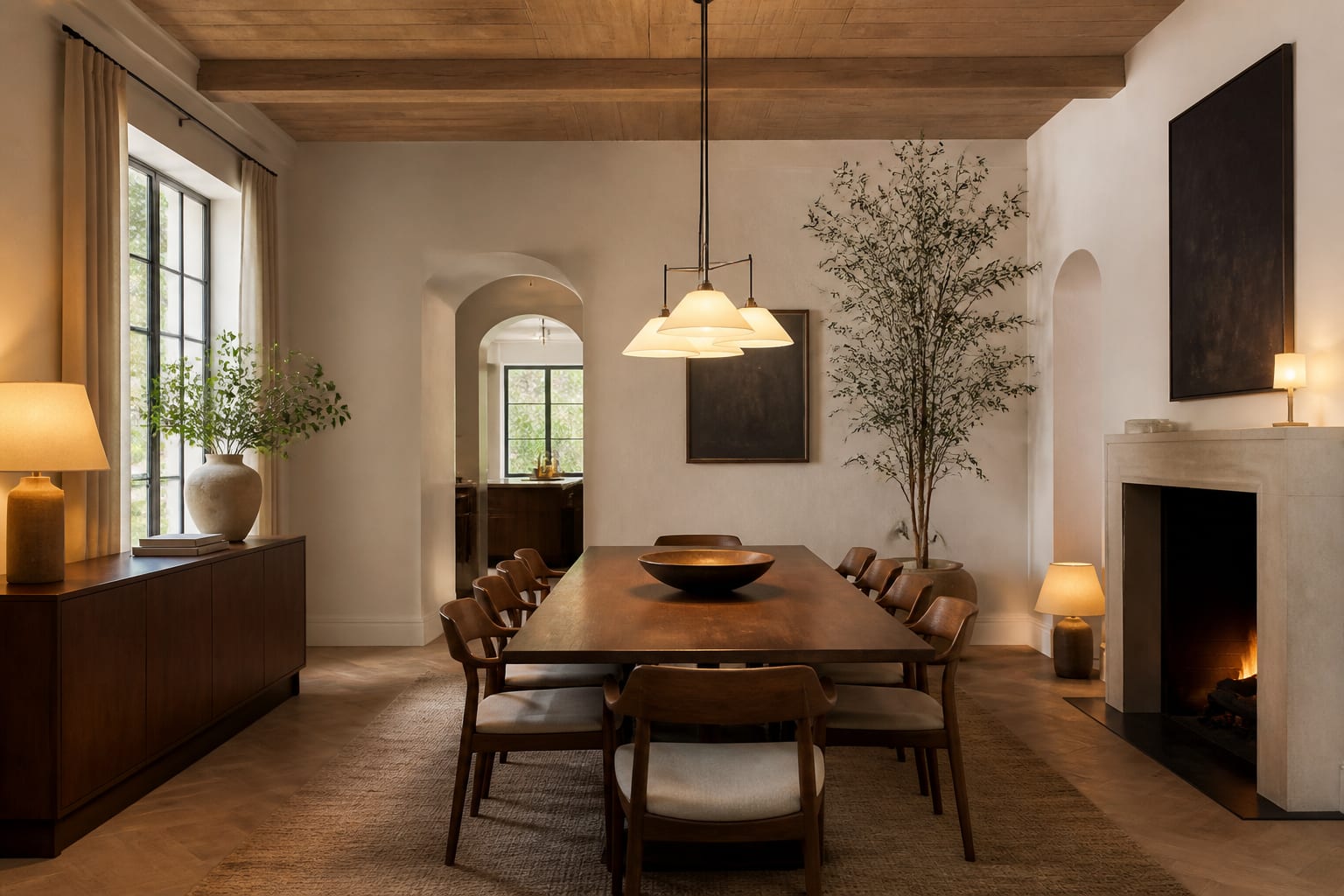
A small dining room doesn't have to mean a cramped one, and the fix is almost never a smaller table. The real moves are smarter shapes, built-in seating, and a few visual tricks that make the square footage read larger than it measures. Round and drop-leaf tables seat more people in less space than a rectangle, a banquette tucks seating into a wall you weren't using, and a mirror borrows depth for free. Get the clearances right, pick furniture that earns its footprint twice, and a tight dining room hosts six without anyone feeling boxed in.
What table shape works best in a small dining room?
Shape matters more than size when space is tight, and the round table is the small dining room's secret weapon. A round table has no corners to bump into, so it needs less clearance to feel comfortable, and it seats people more sociably; a 48-inch round comfortably fits four and a 54-inch round can squeeze six. Round and oval tables also let traffic flow around them smoothly, which a sharp-cornered rectangle never does in a tight room. If your space is narrow rather than square, an oval gives you the corner-free benefit while fitting the proportions better. The other hero is the drop-leaf or extension table: it lives small for everyday meals, taking up a fraction of the floor, then opens up when guests arrive. A drop-leaf pushed against the wall can work as a console most days and a full table on demand. Whatever the shape, hold onto clearance: aim for 36 inches between the table and the walls so chairs pull out, and accept 30 inches only if you must. Pedestal bases beat four-leg tables in small rooms because there are no legs to straddle, so people can slide chairs anywhere around the edge. Glass or light-colored tabletops also help, since a see-through or pale surface reads lighter and takes up less visual space than a heavy dark slab. Pick the right shape and base, and a small footprint suddenly seats the crowd you thought you didn't have room for.
See also our guide to Dining Room Ideas for more on small dining room ideas.
How does banquette seating save space?
A built-in bench, or banquette, is the single most space-efficient move you can make in a small dining room. Because a bench sits flush against the wall, it reclaims the clearance that chairs would otherwise need behind them, which can save a foot or more of floor along that wall. Tuck a banquette into a corner and you seat two full sides of the table in the space one row of chairs would have used. People can also slide along a bench, so you can fit more bodies than you'd get with individual chairs of fixed width. The seating works hardest in a window nook or a corner you weren't otherwise using, turning dead space into the most-used seats in the room. Build storage into the base while you're at it: a hinged lift-up seat or drawers underneath swallow linens, serving pieces, or games, which matters since small dining rooms rarely have room for a full sideboard. Pair the banquette with a table that has a pedestal or trestle base rather than four corner legs, so diners on the bench can sit anywhere without straddling a leg. Add chairs on the open sides for flexibility, since all-bench seating makes it hard for the people in the middle to get out. Keep the cushions firm enough to sit at properly, around 18 inches of seat height, because too-soft or too-low benches turn dinner uncomfortable. A banquette is the rare upgrade that adds seats, adds storage, and makes the room feel built-in and intentional all at once.
For a related angle on small dining room ideas, read Dining Room Lighting Ideas.
How do you make a small dining room feel bigger?
Most of what makes a small dining room feel cramped is visual, not physical, so a handful of light and color tricks buy you perceived space for very little money. Start with a mirror, the oldest trick that still works best: a large mirror on one wall bounces light around the room and reflects the space back, making a tight dining room feel close to twice as deep. Hang it to catch a window or the chandelier and it does double duty. Keep the walls light, since pale colors recede and make the boundaries feel farther away, while a single darker accent wall can add depth without closing the room in. Choose furniture with visual lightness: a glass or acrylic table, open-back or cane chairs, and a slim pedestal base all let the eye travel through them rather than hitting a solid mass, so the room breathes. Skip the heavy, bulky pieces that eat both floor and sightlines. Keep the floor as clear as possible, because visible floor reads as space; a leggy table and chairs you can see under will always feel airier than skirted, solid furniture. Use a single statement light rather than several competing fixtures so the ceiling stays calm. Window treatments hung high and wide make the windows, and the whole room, feel larger. None of these tricks add a square inch, but stacked together they make a small dining room read open and calm instead of stuffed, which is the whole battle in a tight space.
How do you fit storage into a tight dining room?
Small dining rooms usually can't spare the floor for a full-size buffet, so storage has to get clever and slim. The narrow console is your best friend: a shallow piece around 12 to 15 inches deep against one wall holds dishes and linens while barely intruding on the floor, and its top still works as a serving surface or a spot for a lamp. Go vertical where the floor is tight, since a tall, narrow cabinet or a set of wall-mounted shelves stores plenty without spreading out; a hutch that's narrow but reaches toward the ceiling earns its small footprint. Banquette seating, as covered already, doubles as storage when you build drawers or a lift-up seat into its base, which is often the most space you'll find in a small room. Floating shelves on an empty wall display nicer glassware and free up the floor entirely. Look for furniture that works twice: a console that's also a bar, a bench that's also a chest, a drop-leaf table that's also a sideboard against the wall. Edit ruthlessly, too, because a small dining room can't absorb clutter the way a big one can, so store only what the room actually needs and keep the rest elsewhere. Keep the storage finishes and colors consistent with the room so a slim cabinet reads as part of the design rather than an add-on. Handled this way, even a tiny dining room holds everything a meal requires without sacrificing the open floor that keeps it feeling comfortable.
- Pick a round or oval table on a pedestal base to lose corners and let chairs slide anywhere.
- Build a corner banquette to seat two table sides in the space one row of chairs would need.
- Use a drop-leaf or extension table that stays compact daily and opens up only for guests.
- Hang a large mirror to reflect light and make the room feel close to twice as deep.
- Choose glass, acrylic, or cane furniture so the eye travels through it and the room breathes.
- Add a slim 12 to 15-inch-deep console for dish storage and a serving surface in one.
- Keep walls and floor light, leaving visible floor under leggy furniture to read as space.
- Build drawers or a lift-up seat into the banquette base to claim storage a sideboard can't fit.
Bring the look home with Re-Design
In a tight room, the difference between a table that fits and one that traps you is a few inches you can't eyeball. Upload a photo of your small dining room to Re-Design and preview a 48-inch round table, a corner banquette, or a large mirror on the long wall before you buy. Seeing the pieces placed in your actual space shows whether chairs still pull out and whether the room reads open or crowded.
Frequently Asked Questions
What is the best table shape for a small dining room?
Round and oval tables work best in small rooms because they have no corners to bump, need less clearance, and seat people more sociably. A 48-inch round fits four and a 54-inch round can manage six. Pair it with a pedestal base so chairs slide anywhere without straddling legs. In a narrow room, an oval keeps the corner-free benefit while fitting the proportions.
How many people can a small dining room seat?
More than you'd expect with the right setup. A 54-inch round table seats six, and adding a corner banquette can push that higher by fitting more bodies along a bench than individual chairs allow. The limit is usually clearance, not the table; keep at least 30 to 36 inches around it so chairs pull out, and use a drop-leaf table to expand only when you host.
How do you store dishes in a small dining room?
Go slim and vertical. A shallow console around 12 to 15 inches deep, a narrow tall cabinet, or floating wall shelves hold dishes and linens without eating floor space. Building drawers or a lift-up seat into a banquette adds hidden storage a full sideboard couldn't fit. Edit what you keep in the room to only the essentials, since small rooms can't absorb clutter.