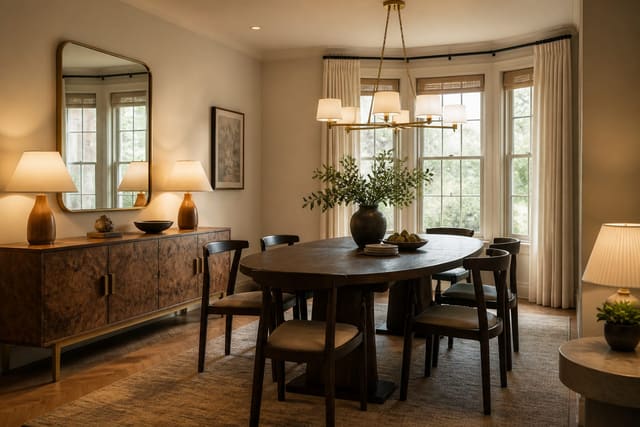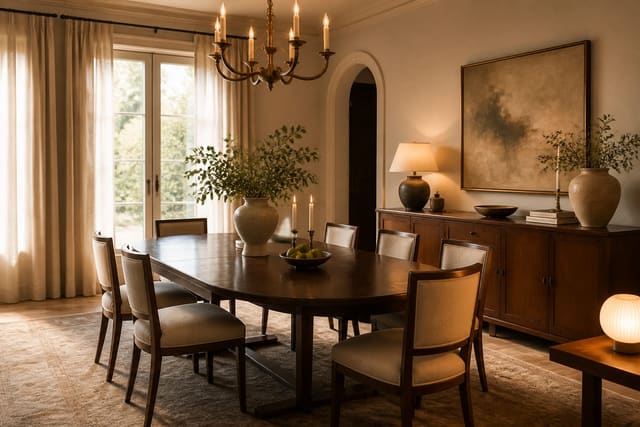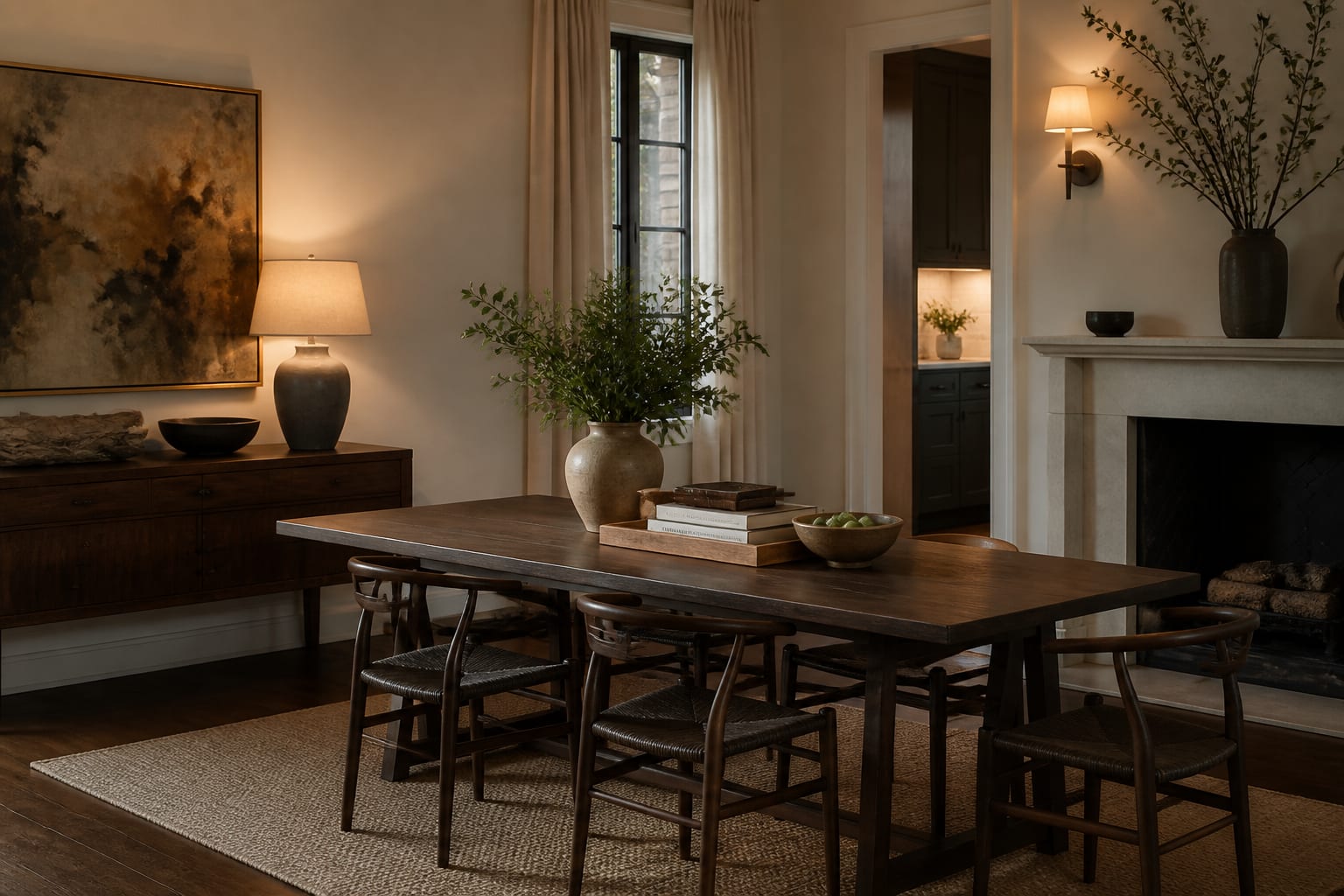
How do you style a dining table for everyday display? Keep a low, simple centerpiece, no taller than about 12 inches, that one person can lift away in a few seconds when it is time to eat. My read is that everyday table styling fails the moment it tries to become a holiday tablescape; the real goal is a quiet, finished look that clears instantly, not a centerpiece you have to dismantle before dinner.
A dining table is usually the largest flat surface in the room, so it sets the tone for the whole space whether you style it or not. Left bare it reads unfinished; over-styled it becomes a daily chore nobody keeps up. The sweet spot is a small, intentional grouping that earns its place and then gets out of the way the instant you need to eat. Here is the formula, with the numbers that keep it proportional.
Start with a low, clearable centerpiece
The anchor of everyday table styling is one low centerpiece. A wide, shallow bowl, a stout vase of greenery, or a footed compote all work nicely, as long as the total height stays under about 12 inches so people can actually see each other across the table. For a 72-inch table, a centerpiece spanning roughly 24 inches, about a third of the length, reads as proportional; much smaller looks stranded on all that open wood, much larger starts to crowd the place settings.
The detail that makes it everyday rather than occasional is clearability. Build the whole arrangement on a tray or inside a single vessel so one person can lift it off in a single motion. Greenery and lighting do a surprising amount of the work here, and the way the right dining room fixture sets the whole mood means a plain centerpiece under a warm 2700K pendant often looks more finished than an elaborate one fighting harsh overhead light.
The season can do the heavy lifting for you, which keeps the everyday look from going stale. Swap the contents of one vessel every few weeks: branches in winter, a few stems of something green in spring, a bowl of citrus or stone fruit in summer. The frame stays the same, so the table always looks composed, but the small seasonal change means you never walk past the exact same arrangement for six months straight.
Layer height, texture, and a little asymmetry
A single object on a big table can look stranded, so layer two or three pieces at clearly different heights. A reliable move is a taller element, such as a 10-inch vase of branches, a mid element like a stack of two books or a small bowl, and a low element such as a short candle or a ceramic object, grouped slightly off-center rather than dead-center. Odd numbers and varied heights read as natural and relaxed; perfectly matched pairs read as formal and a little stiff.
Keep the materials in conversation with each other. A matte ceramic vessel, a smooth glass candleholder, and a bit of organic greenery give you genuine texture contrast without any clutter. If your dining zone borrows cues from an open-plan living area, lean into that overlap; plenty of dining room design directions worth trying start by echoing one material or one color already present in the adjacent room, so the table never feels like an island marooned in the middle of the floor.
When you are assembling the grouping, run through this quick check:
- Nothing in the arrangement tops about 12 inches, so eye contact across the table stays open.
- The grouping uses an odd count, typically three, at clearly different heights.
- Every single piece earns its spot; if one object does nothing, take it away.
- The whole thing lifts off in one or two moves the moment the table is needed.
Connect the table to its surroundings
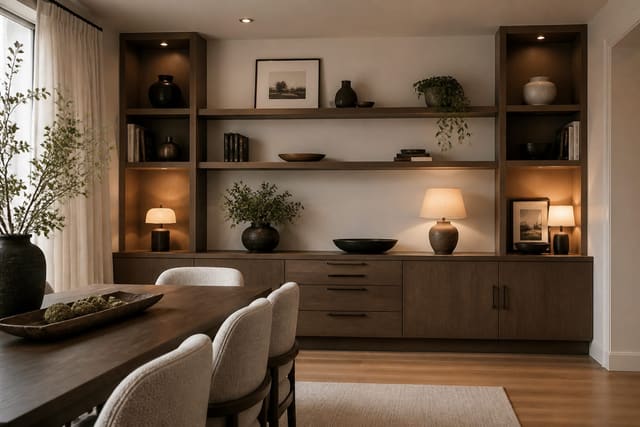
An everyday table looks its best when it relates to the room rather than only to itself. Pull a color or a material from a nearby rug, the dining chairs, or a sideboard so the centerpiece feels rooted instead of dropped in. A sideboard close by also gives the centerpiece a home base when you clear it; many credenza and sideboard arrangements double as the staging spot where the tray lives during meals, which keeps the styling practical instead of precious. Repeat one element, like the greenery or a candle color, over on that sideboard so the two surfaces read clearly as a matched set.
Think about the table from a seated height as well as standing over it. Most of the time you live with this table sitting down, with your eye around 45 inches off the floor, so an arrangement that looks balanced from above can feel top-heavy from a chair. I check the centerpiece from a seat before I call it done, lowering anything that crowds the line of sight. A runner or a single placemat under the grouping can also define the styled zone, signaling at a glance which third of the table is decoration and which two-thirds are reserved for plates.
Common mistakes to avoid
The most common mistakes to avoid start with height. A tall centerpiece forces guests to crane around it, so anything over about 12 inches belongs to a special occasion, not to everyday life. The second mistake is styling the entire table; covering the place-setting zones means you have to clear the whole surface every single meal, which guarantees you will quietly give up. Keep the styling to the center third and leave both ends open and ready.
Over-cluttering is the next trap. More than three or four objects on an everyday table reads like a junk drawer; edit hard and aim for a grouping of three. People also forget scale and plop a tiny 6-inch bud vase onto a 96-inch table, where it simply vanishes; match the centerpiece to roughly a third of the table's length. Finally, skip anything fragile or genuinely precious for everyday duty, because the table you use daily is no place for a piece you would panic about the moment someone reaches across for the salt.
Watch the upkeep, too. Real flowers look wonderful but die in 5 to 7 days and turn an everyday display into a recurring task, so for a table you rarely fuss over, a sturdy potted plant, dried stems, or a bowl of fruit holds the look for weeks with almost no effort. And resist letting the centerpiece become storage; the second a stack of mail or the car keys lands beside the vase, the whole arrangement reads as a drop zone rather than a deliberate styling moment, so give those stray items a tray on the sideboard instead and let the table hold only what you chose on purpose.
Use AI design to preview your dining table styling before you commit
Table styling is easy to overthink and surprisingly hard to picture from a product page, because the same bowl looks generous on one table and stranded on another. Re-Design makes it concrete: upload a photo of your dining table and the room around it, and the AI design tool can show a low greenery centerpiece, a layered three-object grouping, or a clean single-vessel look scaled to your actual table.
I like using it to settle proportion before buying anything at all. Upload your table, generate a tall-arrangement version and a low-and-simple version, and you can see at a glance which one keeps the sightlines open and which one quietly dominates the whole room. That preview saves you from ordering a centerpiece that looks perfect online and lands all wrong the second it sits on your real table under your real light.