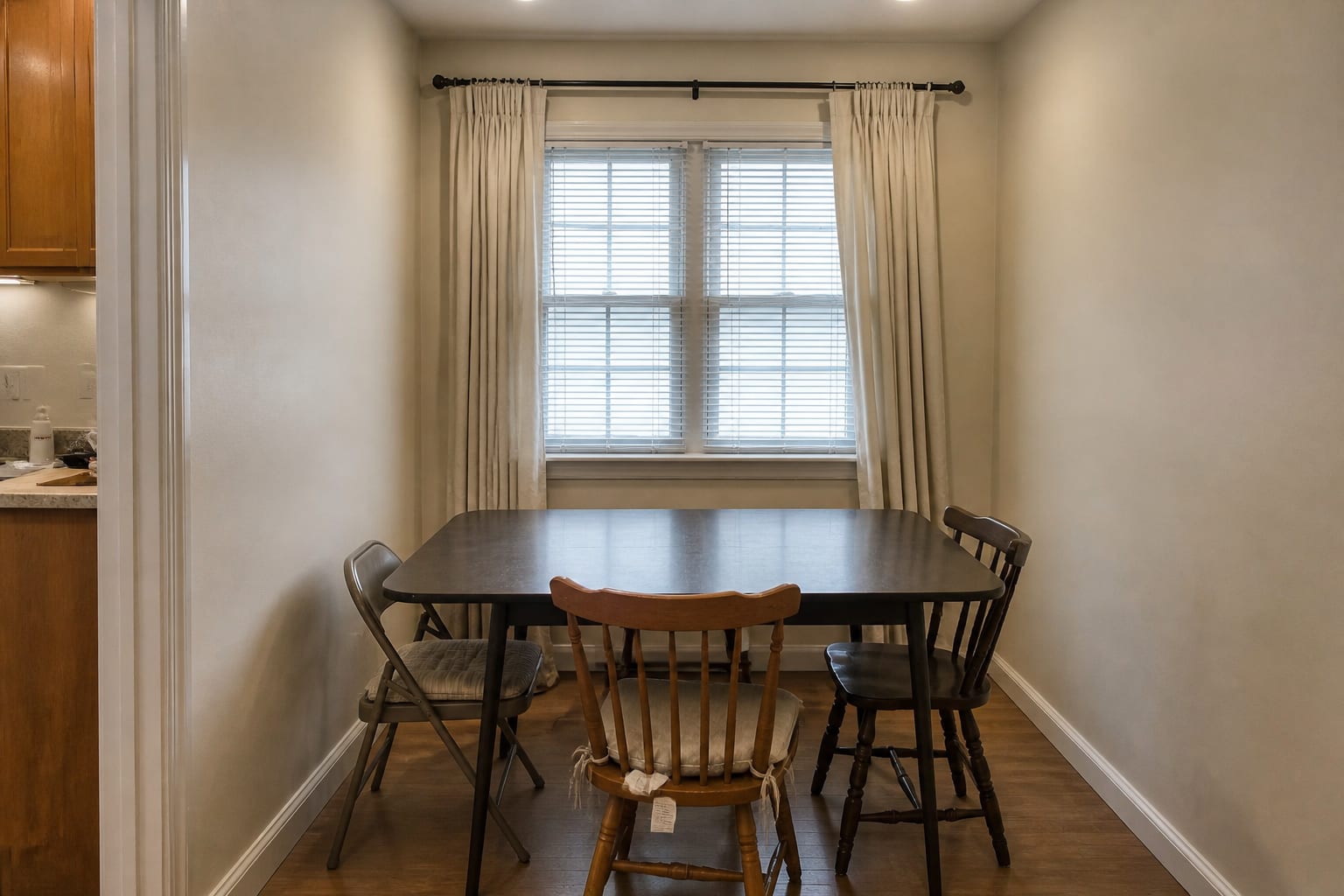
A banquette earns its corner the day nobody has to scoot a chair to sit down.
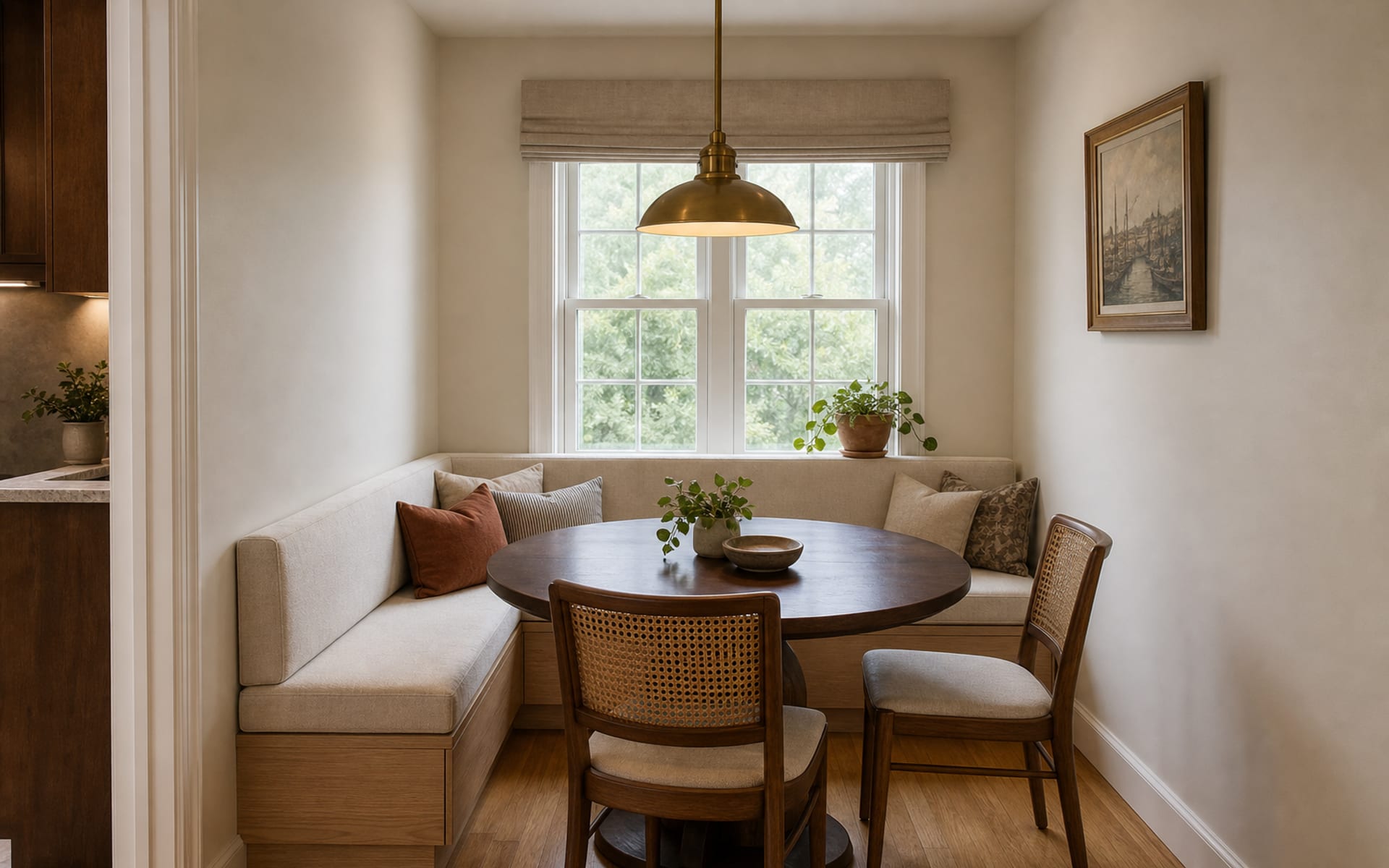
A small-nook banquette works when it hits three numbers: 18 to 20 inches of seat depth, an 18-inch seat height, and a table set 10 to 12 inches above the seat. Get those right and an awkward corner becomes the seat people actually choose. If it isn't comfortable for a full adult meal, it's just expensive storage with cushions. The broader planning discipline in AI Interior Design Small Spaces: Getting More From Every Square Foot applies directly here, since the idea has to survive the room you already have.
Why a banquette beats chairs in a small nook
Chairs need pullout space; a banquette lets people slide into the same footprint. In a 7-by-6-foot corner, removing two chair backs from the traffic lane can be the difference between a breakfast spot and a daily irritation. Before shopping, check the sight line from the doorway, the daily path through the nook, the main light source, and any fixed surfaces you can't change.
Photograph the room straight on, list the nonnegotiables, then make one change at a time. Keep clearances honest: 30 to 36 inches for a main path where possible, and 16 to 18 inches between seating and the table. Those numbers decide whether the design survives Monday morning, not just the photo.
What measurements decide comfort
Seat depth should land between 18 and 20 inches, with a finished height near 18 inches including cushion. A table height of 28 to 30 inches works once the seat and cushion are correct. A vertical back needs a loose pillow; a back that tilts too far makes eating awkward. For style direction that still respects these constraints, see Small Kitchen Makeover Ideas: High-Impact Changes Under 60 Square Feet.
| Nook type | Best setup | Why |
|---|---|---|
| Square nook | L-shaped bench + 36-inch round pedestal table | Round table clears knees and corner |
| Long narrow nook | Single-wall bench + two light chairs opposite | Chairs pull out into open floor, not a wall |
| Rental nook | Freestanding storage bench + wall cushions | No permanent carpentry, moves with you |
| Family nook | Performance fabric, no heavy lid | Kids can't safely lift a heavy storage top |
Run any custom piece through this list before buying. If it blocks a door, steals the only bright wall, makes a cabinet unusable, or needs a fixture you can't install, it isn't ready. A better version usually changes fewer things and makes those few things more precise.
How the shape changes by room
Use an L-shape when the nook has a real corner and one open side. Use a U-shape only when the table slides easily and adults can enter without crawling. Use a single-wall bench when the space is really a narrow wall, not a room. Keep Awkward Living Room Layouts open as a reference for photographing and prompting the space.
Fixed constraints shift by room. A bedroom nook needs quieter light since it affects rest; a kitchen nook needs task light and cleanup access. A bathroom punishes extra depth fast, especially if it eats into the standing zone. A rental needs an exit plan; an older house needs you to decide whether the original trim is an asset or an obstacle.
Pick the one viewpoint that matters most, usually the doorway view or the seat you'll use daily, and ask whether the change improves that view without creating a worse problem outside the frame. The strongest banquette isn't the most dramatic version; it's the one that makes the room easier to use.
What mistakes make banquettes fail
- Making the seat too deep turns dining into lounging and leaves adults sitting forward.
- Choosing a rectangular table in a square nook creates a permanent knee-and-corner problem.
- Adding hinged storage without a real storage need creates hardware wear and daily annoyance.
The deeper mistake is skipping the room's existing evidence: floors, window placement, ceiling height, plumbing, door swings, and natural light already tell you what the nook can become. If a plan fights all of that at once, it may photograph well but live badly. A single inspiration image also hides the dull constraints, the outlet, the radiator, the wet zone, the awkward window height. Translate inspiration into measurements and materials before you translate it into a cart.
How to preview a banquette before you commit
Re-Design starts from your actual photo instead of a blank mood board. Upload a straight, well-lit image showing the floor, ceiling line, windows, doors, fixed fixtures, and the corner you're worried about. Then ask for a controlled version that keeps the room architecture and daily path intact.
Try three focused prompts rather than one fantasy renovation:
- Preview an L-shaped banquette in your kitchen nook
- Test a built-in breakfast corner with storage
- Compare a round pedestal table with banquette seating
Judge results by usefulness, not drama. Did the preview keep the same window, floor, and doorway? Did it respect the 30 to 36 inch route the room needs? Did it preserve the sink access, bed clearance, or chair pullout that matters most? If it invents architecture or hides the hard part, rerun it with stricter instructions before spending money.
Frequently Asked Questions
What is the minimum size for a banquette nook?
A useful corner usually needs roughly 6 by 6 feet for a compact L-shape and a small round table, plus a clear route into the seat. Smaller footprints force cramped seat depth or block traffic.
Round or rectangular table for a corner banquette?
Round is safer in a square nook because it removes the sharp corner and lets people slide in easily. Rectangular works better on a long single-wall bench where there's no corner to clear.
How thick should banquette cushions be?
Four inches is a practical target for comfort without raising the seat too high. Thicker cushions need a lower bench base to keep the final seat height near 18 inches.
Can I build a banquette in a rental?
Yes. Start with freestanding benches, removable wall cushions, and a table that can move with you, and avoid drilling until the lease allows it. This keeps the setup reversible without losing the seating benefit.
Do banquettes work for adults?
They do when depth, height, back angle, and table clearance follow adult dimensions. Cute seats with poor geometry look great once and then stop being used.