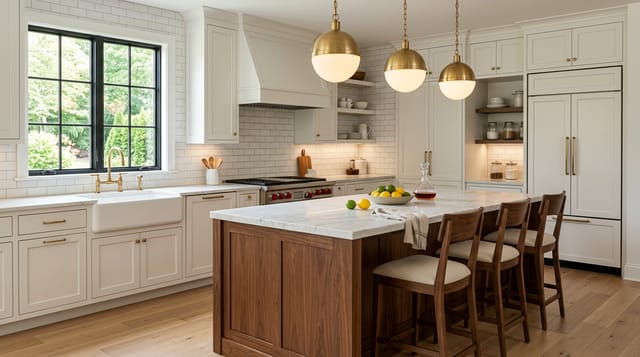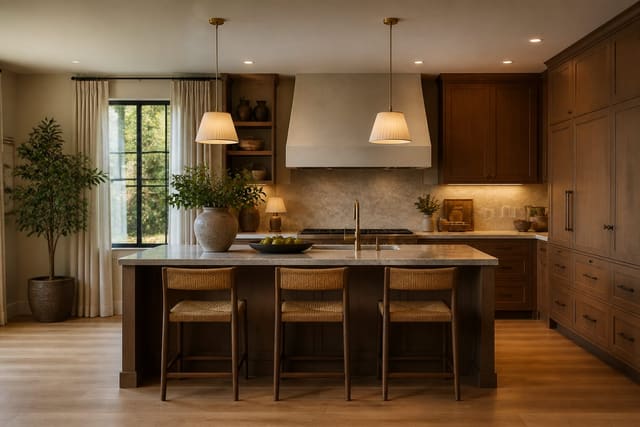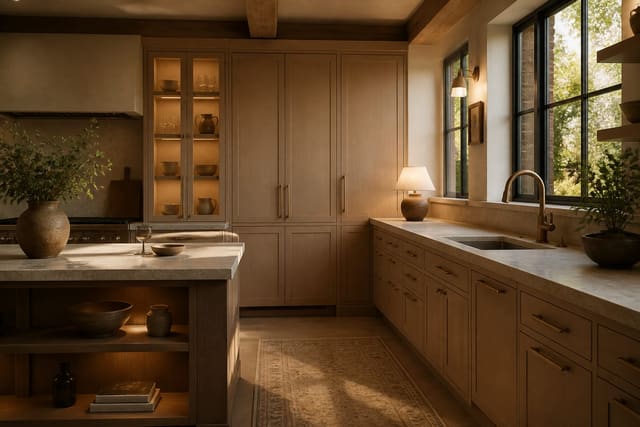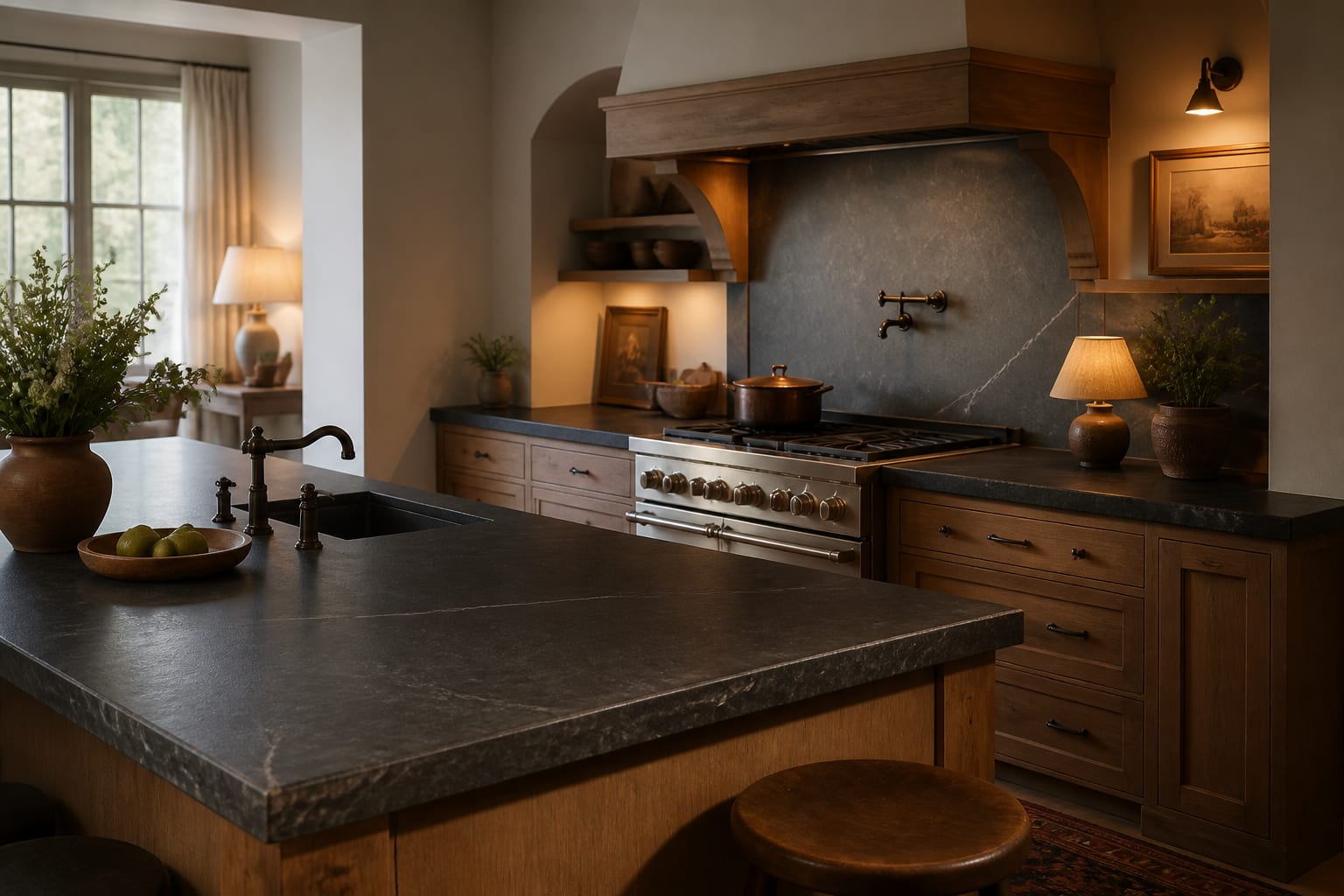
Soapstone gets ignored in most kitchen showrooms, which is a shame because it solves a problem quartz and marble cannot. My read is that it belongs in any kitchen where the owner wants a quiet, matte, slightly soft stone that ages into character rather than fighting it.
The honest answer is that soapstone is a metamorphic rock rich in talc, and yes, it is genuinely good for countertops because it is non-porous and almost completely immune to staining and acid etching. What is soapstone and is it good for countertops? It is a dense, naturally heat-resistant stone that you can set a hot pan on without a trivet, and it never needs sealing the way marble or granite does. The catch is hardness: it scratches more easily than harder stones, so it suits people who like a lived-in surface over a flawless one.
What soapstone actually is and how it behaves
Soapstone is quarried in large blocks and sawn into slabs the same way granite is, but its mineral makeup is closer to talc, which is why it feels faintly soft and warm under your hand. The architectural grade used for counters has a higher quartz content than the carving grade sculptors use, so it holds up far better than its reputation suggests. Colors range from soft grey-green when freshly cut to deep charcoal once oiled, often with subtle white veining.
The defining property is that it is non-porous at the surface. Spill red wine, leave a sliced lemon overnight, set down a hot cast iron pan straight off the burner, and the stone does not stain, etch, or scorch. That heat tolerance is real, not marketing, because the talc content makes it a poor conductor that shrugs off thermal shock. If you cook seriously and hate babying a surface, this is the strongest argument in its favor.
The other thing worth understanding is the feel. Soapstone has a faint warmth and a slightly waxy hand that granite and quartz never deliver, and that tactile quality is a big part of why people who choose it tend to love it. Slabs typically arrive at 1 1/4 inches thick, heavy enough that long runs need solid cabinet support, and fabricators cut and template it the same way they would any natural stone. Because the color goes all the way through, an exposed edge or a drilled faucet hole shows the same charcoal you see on top, with no laminated dark band giving away a thin veneer. For more ways to plan the surrounding layout, see my notes on AI kitchen design ideas.
The patina question, oiling, and maintenance
Freshly installed soapstone looks grey and a little dry. Wiping it with food-safe mineral oil darkens it to a rich near-black and pops the veining, and the standard routine is to oil it every few weeks for the first six to twelve months, then only occasionally. You do not have to oil it at all; left alone, it darkens unevenly over years through normal use, which some people prefer. Either path is valid, and neither requires the annual sealing that granite demands.
Worth saying plainly: the patina is the point, not a defect. People come from quartz expecting a surface frozen in time and are briefly startled when soapstone shifts and deepens. Reframe it and the appeal clicks, because the counter records how the kitchen is used and looks better at year five than at week one. If that idea bothers you at all, it is an honest signal that quartz or granite is the better fit for your temperament.
Scratches are the trade-off everyone asks about. Because the stone is around 2 to 3 on the Mohs scale, a dropped knife or a dragged pan can leave a light mark. The fix is genuinely easy: rub the area with 100-grit then 220-grit sandpaper and re-oil, and it disappears in a few minutes. That repairability is a feature, not a flaw, since you can never sand a chip out of quartz or buff an etch mark out of marble. Realistically you will collect a handful of faint marks over a year of cooking, and most owners stop noticing them entirely once the stone darkens.
There is no sealing step, ever, which quietly removes the biggest chore of owning granite. Cleaning is just soap and water, with the occasional mineral-oil wipe if you want the deep color maintained. If you are weighing a workstation extension like a kitchen peninsula, soapstone's seamless field joints and through-body color make long runs look intentional rather than pieced together.
How soapstone compares to marble and quartz
Against marble, soapstone wins decisively on practicality. Marble etches the moment acid touches it, while soapstone ignores acid entirely, so the soapstone-vs-marble decision usually comes down to whether you want bright Carrara white or moody charcoal. Against quartz, the choice is about authenticity: quartz is engineered, perfectly uniform, and scratch-resistant but heat-sensitive, whereas soapstone is real stone that tolerates hot pans but takes scratches. Put simply, quartz hides wear and soapstone wears honestly, and which of those you find reassuring tells you most of what you need to know about the right pick.
Price-wise, expect $70 to $120 per square foot installed for soapstone, which overlaps mid-grade granite and sits below premium quartz. Availability is the one practical hurdle: fewer suppliers carry it, lead times can run longer, and slab sizes are sometimes smaller, so a large island may need a seam where a quartz slab would not.
Style-wise it is more flexible than its dark reputation suggests. Charcoal soapstone reads modern against flat-panel cabinets, classic against shaker fronts, and farmhouse against open shelving and a deep sink. It pairs beautifully with warm metals, so it is worth coordinating your cabinet hardware in unlacquered brass or bronze to echo the stone's depth rather than fighting it with cold chrome.
Common mistakes to avoid
The most common mistake is choosing carving-grade soapstone instead of architectural grade. Carving stone is softer and scratches far too readily for a working counter, so confirm with your fabricator that the slab is countertop rated. A second common mistake is expecting a flawless, museum surface; soapstone is for people who accept a few honest marks, and anyone who wants pristine forever will be happier with quartz.
Here is what to check before you commit:
- Confirm the slab is architectural grade with measurable quartz content, not soft carving stock.
- Inspect the actual slab in person, because veining varies widely from block to block.
- Decide upfront whether you will oil it, since that changes the showroom color you should match to.
- Ask about edge profiles, as soapstone takes a clean eased or chiseled edge but not delicate ogees.
Use AI design to preview soapstone before you commit
A soapstone sample chip never shows you what a full charcoal counter does to a room, and that gap is exactly where people second-guess the choice. With Re-Design you upload a photo of your current kitchen and re-render it with dark oiled soapstone in place, so you can judge how the near-black surface reads against your cabinet color and wall paint before a single slab is ordered.
The useful part is iteration. Upload one photo, then compare an oiled charcoal version against the lighter unoiled grey, swap the cabinet tone underneath it, and see which combination actually feels right in your light. That AI design preview turns an abstract material debate into something you can look at directly, which is far more reliable than guessing from a two-inch sample.