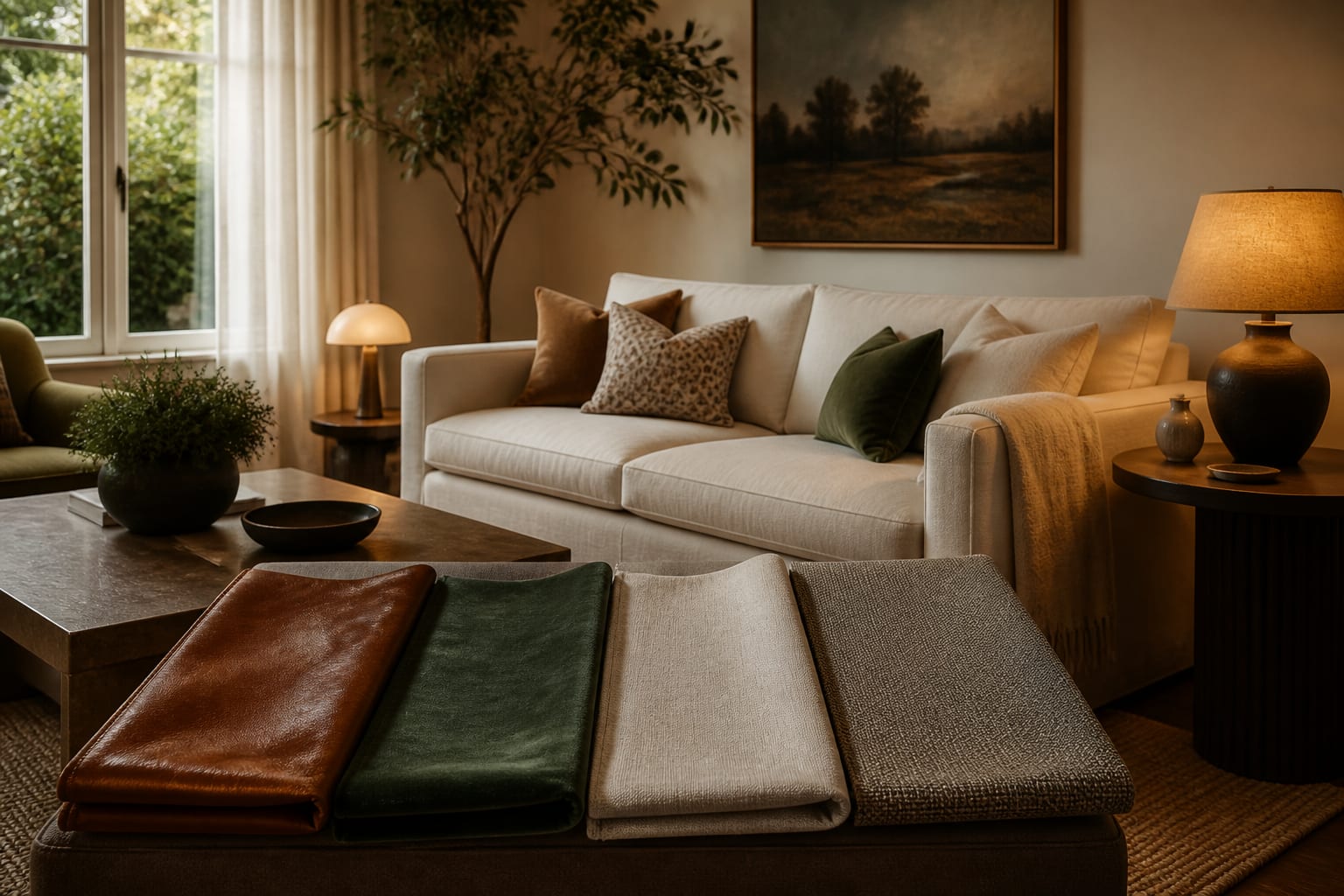
For most living rooms, performance fabric is the safest all-around sofa material because it resists stains and abrasion, while leather lasts longest, linen looks best but wears fastest, and velvet splits the difference on durability and upkeep. The right pick depends on your household, not the showroom sample.
How do leather, linen, velvet, and performance fabric compare?
These ranges are typical for mid-market sofas, not absolutes.
| Factor | Leather | Performance fabric | Linen | Velvet |
|---|---|---|---|---|
| Rough cost (material) | $$$$ | $$ | $$ | $$$ |
| Durability (years) | 15-20 | 10-15 | 5-8 | 8-12 |
| Spill resistance | High | Very high | Low | Medium |
| Cleaning | Wipe + condition | Spot clean, water-safe | Pro clean | Brush + spot clean |
| Pets & kids | Good (scratches show) | Best | Poor | Fair |
| Feel | Cool, firms with age | Soft, varies | Crisp, breathable | Plush, warm |
Leather and performance fabric are the long-haul options; linen and velvet are the look-led picks. To settle the overall direction before fixating on the couch, see AI living room design ideas.
Price swings widely within each category. A bonded or split leather can undercut mid-grade fabric but cracks within a few years, while full-grain runs past $40 per square foot and lasts far longer. Performance fabric in the $40-$70/yard range genuinely resists stains. Velvet spans a $30 polyester that flattens fast to a $120-plus cotton or mohair blend that holds its pile for a decade — grade beats category name every time.
How durable is each material under daily use?
Durability depends on how a material ages under your specific household. Leather scratches, but scratches buff out and develop patina; top-grain holds up 15 to 20 years. Performance fabric's tight weave and stain-resistant finish shrug off juice, marker, and paws better than anything else, which is why it dominates family rooms.
Linen is gorgeous but shows every wrinkle and water ring, with a realistic 5-to-8-year life. Velvet sits in the middle, hiding crumbs but marking when water sits on it. A sofa swap is worth planning as part of a broader living room refresh, since it sets the comfort tone for the whole space.
Check the rub count (Martindale rating), which measures abrasion cycles before wear shows. Look for a rating above 25,000 for daily use, and above 40,000 with kids or pets — performance fabrics routinely clear that bar, while delicate linens often don't. Also check cushion construction: a high-density foam core wrapped in feather keeps its shape far longer than an all-feather cushion needing daily plumping.
Which material fits your room and budget?
Match the material to your household first, aesthetics second:
- Kids and pets: performance fabric, in a mid-to-dark tone.
- Formal, low-traffic room: velvet or linen, where the look earns its fragility.
- Long-term investment piece: top-grain leather, budgeting $40+ per square foot of hide.
- Allergy sensitivity: leather or tightly-woven performance fabric, both trap less dust than open weaves.
Color and material interact with hard surfaces in the room, so coordinate tones with features like fireplace surround ideas before locking in a leather's warmth or a velvet's coolness. Upgrading from basic fabric to quality leather can add 30 to 50% to the price, which usually pays off on a piece you'll own for a decade-plus.
Color within a material changes upkeep as much as the material itself. A mid-tone or patterned performance fabric hides marks far better than a pale solid, which looks great for a week and shows everything by month two. Warm brown leather patinas gracefully; pale grey flags every scuff. For a light sofa with young kids, removable washable covers are the compromise worth specifying at purchase.
How can AI design help you choose a sofa material?
Swatches lie. A 4-inch square of velvet tells you nothing about how an entire sofa will read against your walls and floor. Upload a photo of your living room to Re-Design to render the same sofa shape in cognac leather, slubby linen, and deep velvet to see what actually suits your light and palette.
AI design also makes the cost-versus-look tradeoff visible: generate a performance-fabric version next to the velvet you're tempted by, and seeing them in your real room often settles the debate faster than a showroom visit. It also shows scale — a plush velvet sectional that looks great in a swatch can swallow a small room whole. It's free to preview and far cheaper than reupholstering a sofa you got wrong.
Frequently Asked Questions
What is the most durable sofa material?
Top-grain leather typically lasts longest, 15 to 20 years, because scratches buff out and the material develops patina rather than wearing thin. Performance fabric is a close second at 10-15 years and handles spills and abrasion better than leather, making it the more practical pick for busy households.
Is performance fabric worth the cost over regular fabric?
Yes, for most households. Performance fabric in the $40-$70/yard range resists stains, abrasion, and daily wear far better than standard fabric, often clearing rub counts above 40,000 cycles, which pays off quickly if you have kids, pets, or heavy daily use.
Does velvet stain easily?
Velvet resists dry crumbs and light dirt well because of its pile, but it marks visibly when water or liquid sits on it. Regular brushing keeps the nap looking fresh, and spot cleaning works for most spills if you act quickly.
How do I know if a fabric will hold up over time?
Check the Martindale rub count on the spec sheet: look for above 25,000 for normal use and above 40,000 with kids or pets. Also check cushion fill, since high-density foam wrapped in feather holds shape longer than all-feather cushions.